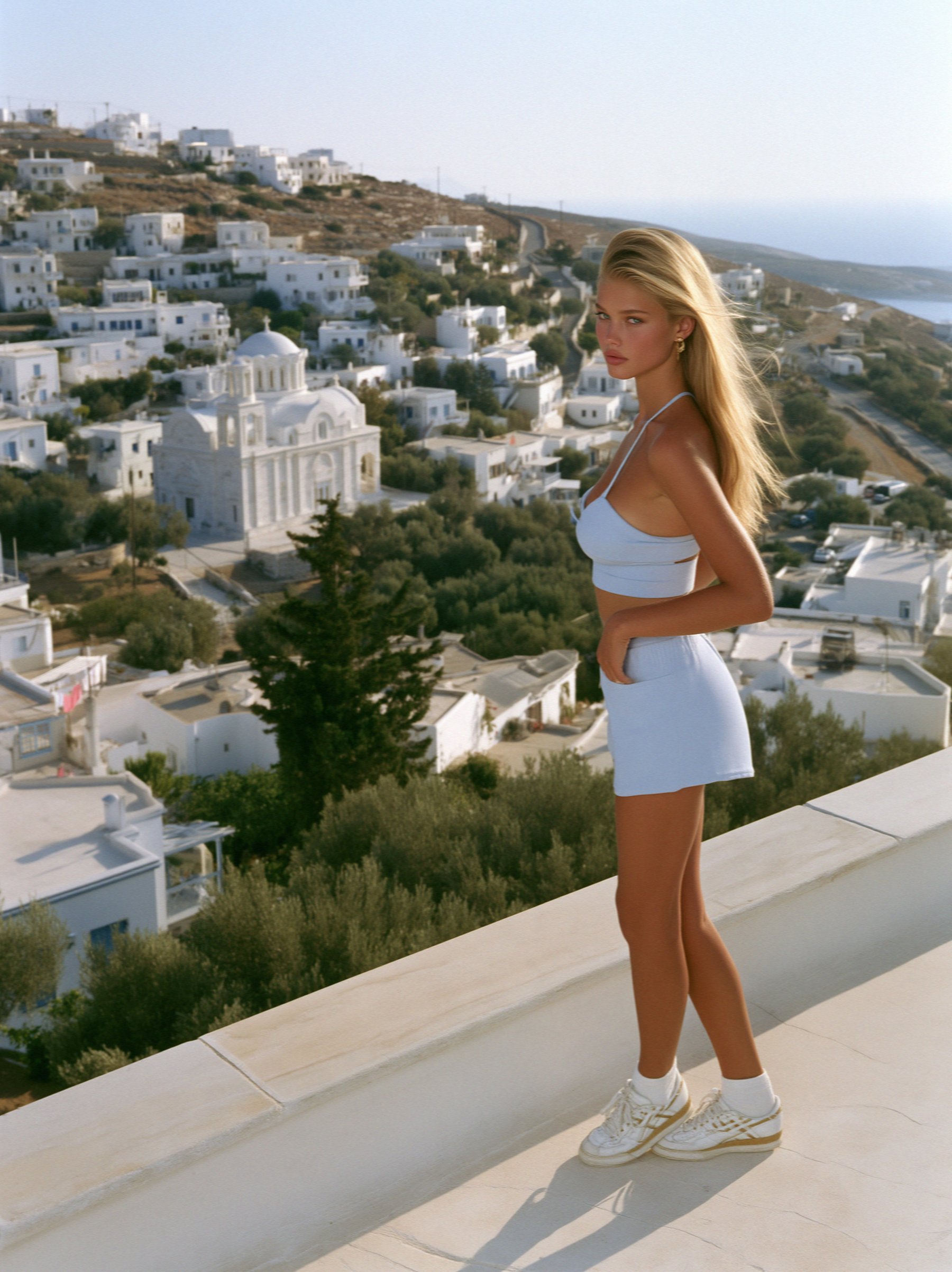
Most people see Paros first through a ferry window, on their way somewhere else. The big boats from Piraeus call at Parikia, unload half their passengers and a line of lorries, and carry on to Naxos, Ios and Santorini. For years the island had a reputation as a place you changed boats. That is a little unfair to it, and it is also the reason it is so easy to reach.
I came over from Naxos in early October on the big ferry, about three quarters of an hour across the channel, with a mountain I had climbed the day before shrinking behind me. Paros was lower, softer and greener at the edges than I expected, and it kept surprising me in small ways: a church that will not let you count its doors, a hillside of cold marble galleries five kilometres from the port, a road paved in stone that walks you downhill from one village to the next.
This is the island as I would plan it for a friend. When to come, how the two towns differ, which coast to swim from when the wind is up, how to do Antiparos, where to sleep and what to eat. Each part has a longer guide of its own, linked as you go.
What Paros is like
Paros sits in the middle of the Cyclades, directly west of Naxos across a narrow channel. It is round-ish, gently mountainous in the middle rather than dramatic, and ringed by bays. The interior rises to a central ridge with villages tucked into its folds; the coast is a long run of sand, granite and small harbours.
There are two towns that matter. Parikia, on the west coast, is the port and the capital, with the ferries, the buses and the island’s great Byzantine church. Naoussa, on the north coast, is the old fishing harbour that became the island’s smart address. Around them are the inland villages, Lefkes, Prodromos, Marpissa and Marathi, and on the east coast the beach villages of Piso Livadi, Logaras and Drios.
What runs through all of it is marble. Parian marble was the finest white stone in the ancient world, quarried underground in the hills above Parikia, and it is still in the island’s walls, steps, door frames and churches. The Venetians who ruled here in the Middle Ages built a castle wall out of broken temples. You feel it underfoot everywhere.
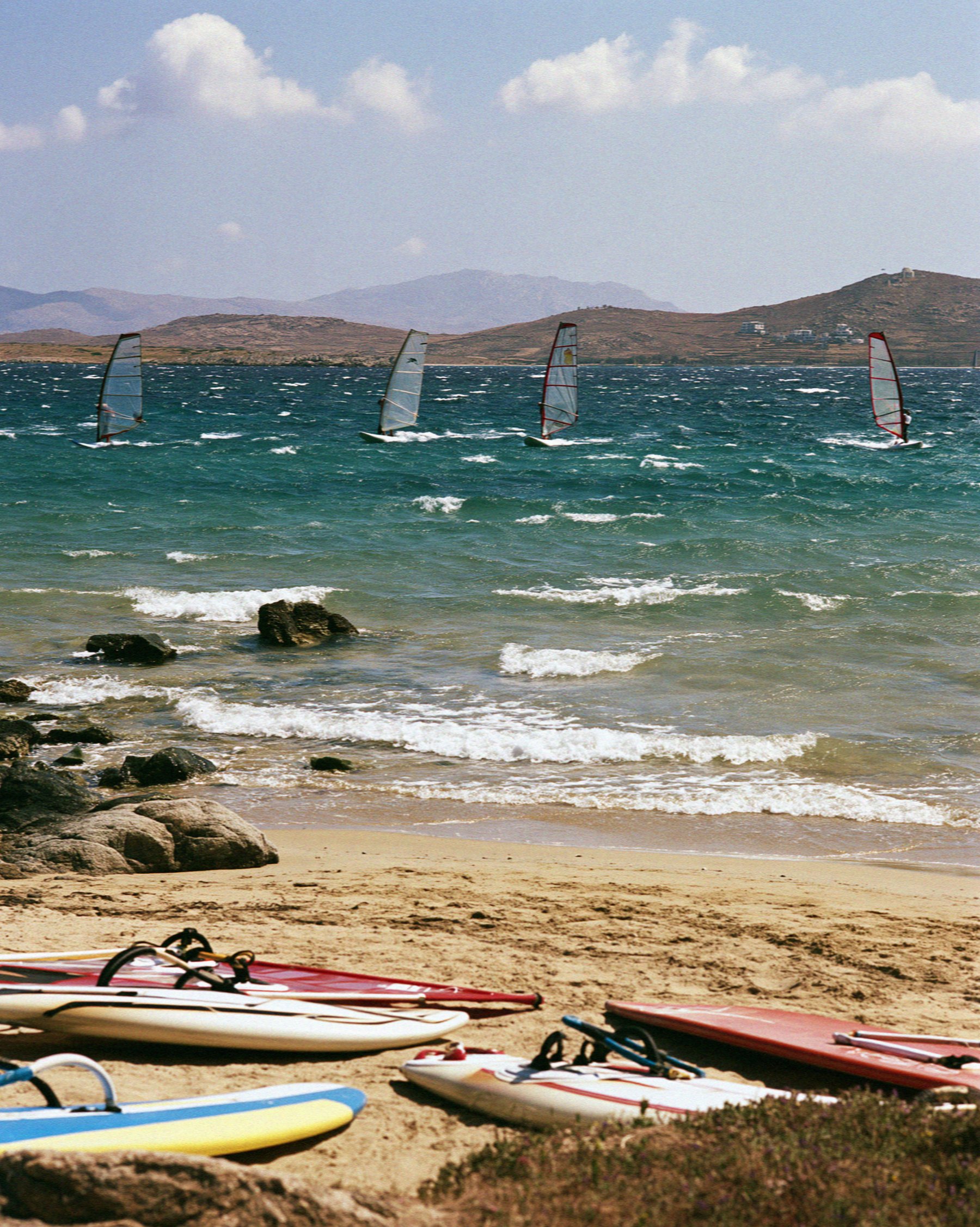
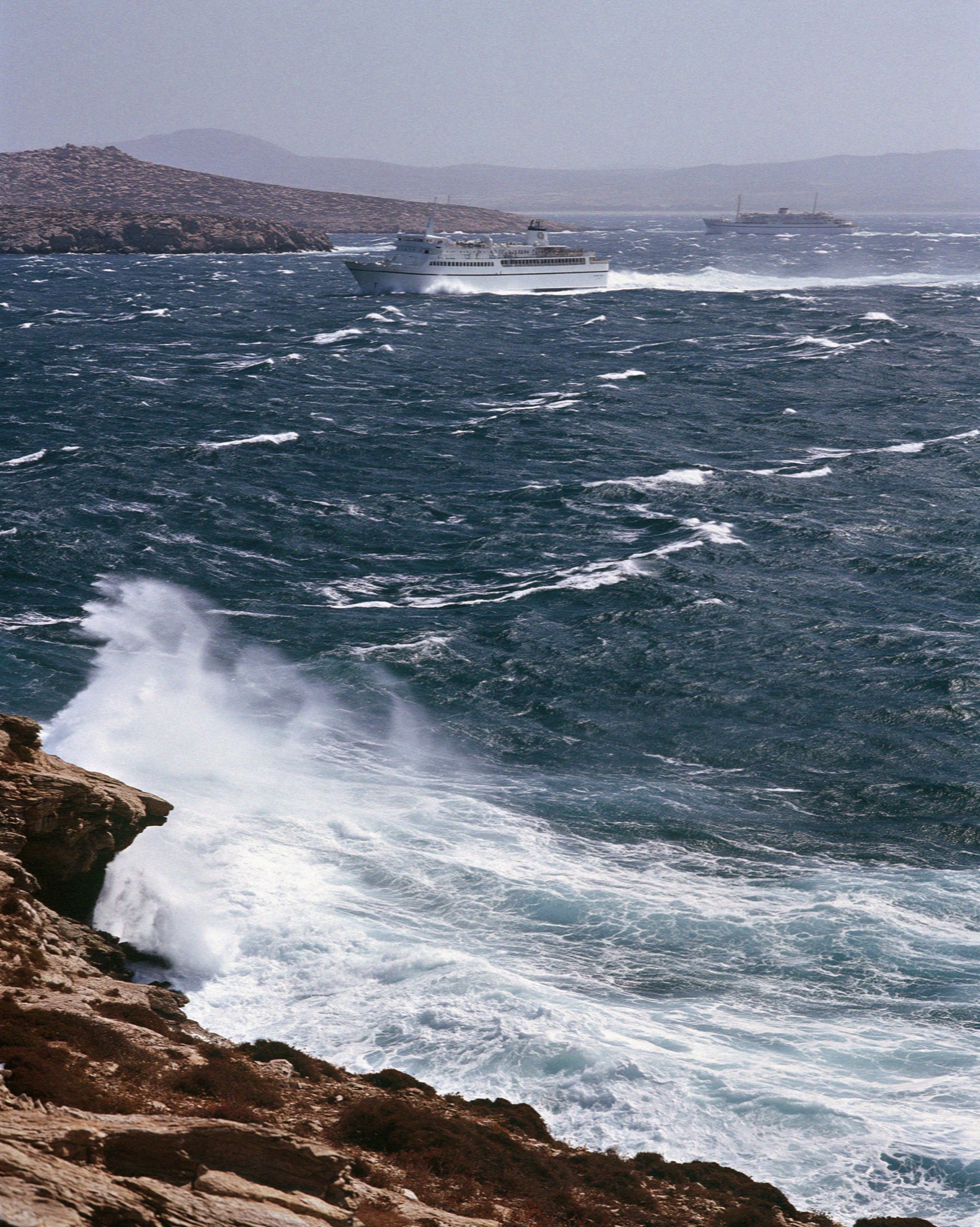
The other thing that shapes Paros is the meltemi, the dry north wind that blows hardest from mid-July to the end of August. It is why Golden Beach is a windsurfing ground, and why the beach you choose depends on the forecast as much as on taste.
It is more polished than its neighbour in places, especially in Naoussa, but it is not Mykonos. It has a working capital, farming villages and families on the beaches.
When to go
For most people the answer is June or September. The sea is warm (around 21°C in June and 23°C in September), everything is open, and the island has room in it. September is my choice, because the meltemi usually eases, the water has had the whole summer to warm up and the August prices start to fall.
July and August are hot, windy and full. The sea is at its warmest, around 23 to 24°C, but the north wind blows hard for days at a time, ferries fill, and rooms in Naoussa cost what they cost on Mykonos. Book everything early if those are your weeks.
Early October is a quieter pleasure. The sea is still about 21°C, and I swam at Piso Livadi in the first week of the month with the umbrellas already folded for the year. Some beach places and hotels have closed by then, and the evenings want a jacket, but the walking is perfect and the villages are back to themselves.
April and May are for walking and wild flowers, with the sea still cool. From November to March much of Paros closes and the ferries thin out.
Each month, with the sea temperature, the meltemi and the prices, is set out in my guide to the best time to visit Naxos and Paros.
Parikia
Parikia is where you arrive, and it is a better place to spend time than its role as a ferry port suggests.
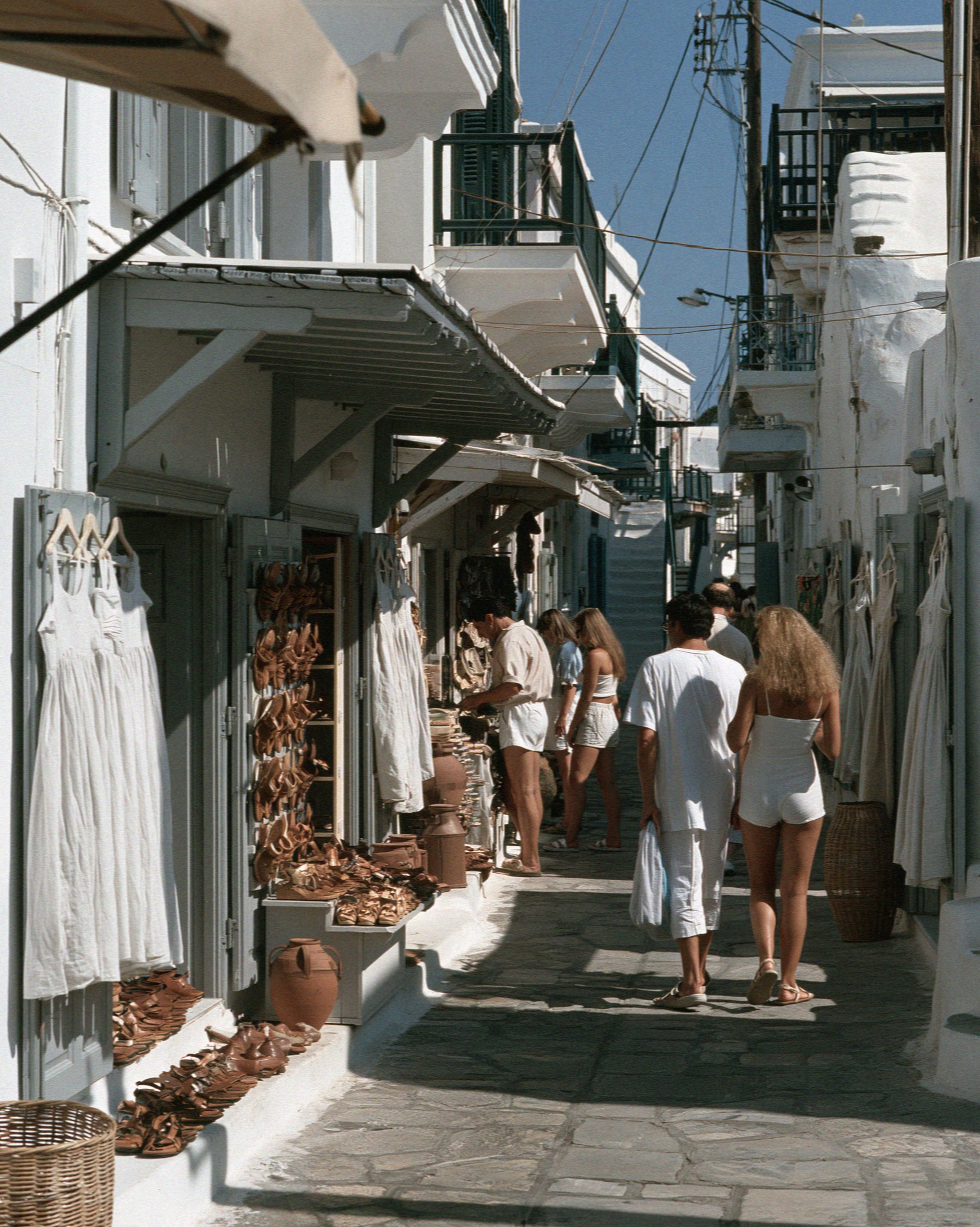
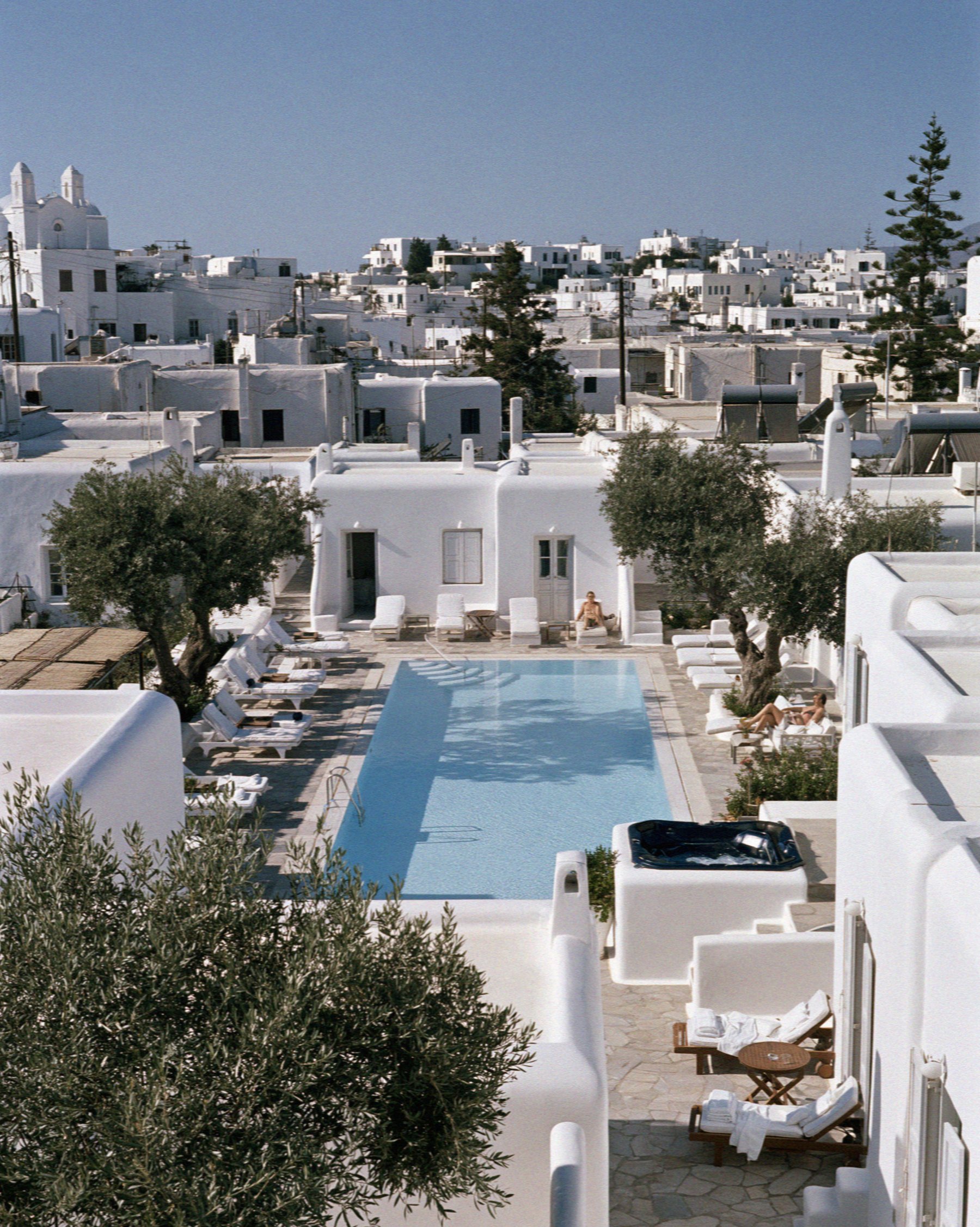
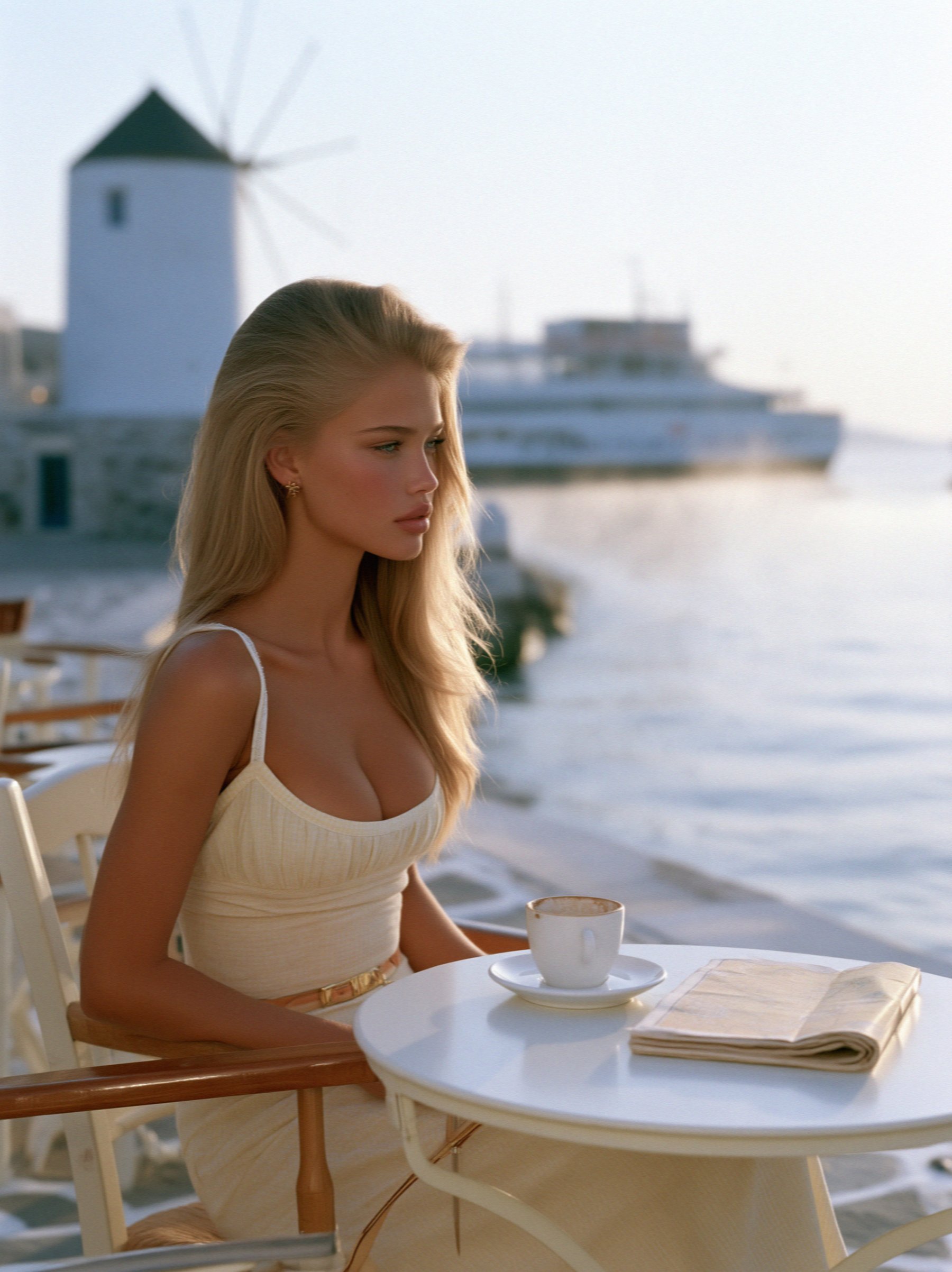
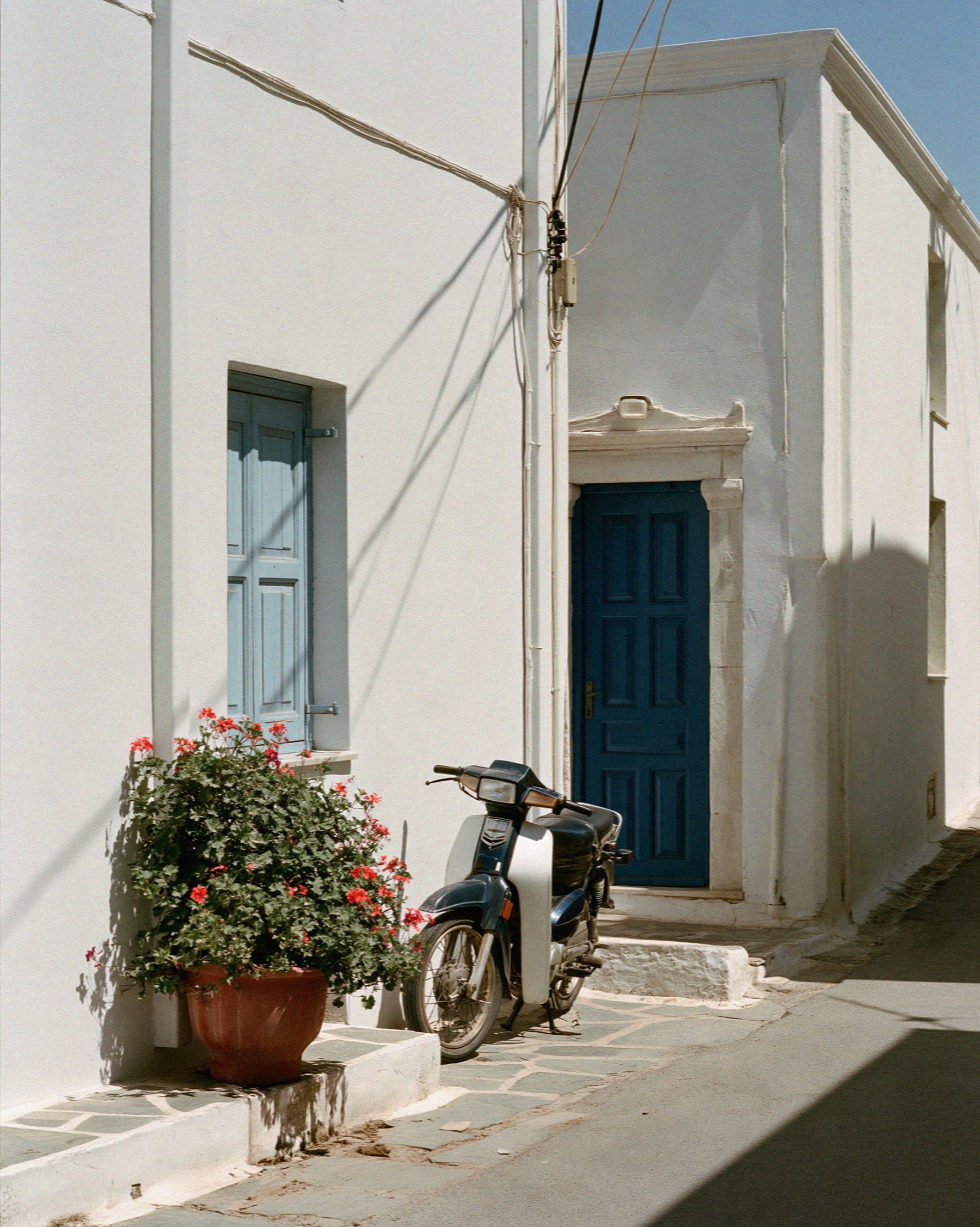
The quay is the busy part: a windmill on the waterfront, cafes facing the boats, scooter hire, ticket agencies and a steady traffic of suitcases. Step back one street and the noise drops away. The old town runs behind the harbour as a tangle of white lanes, with the old market street threading through it and churches at every bend.
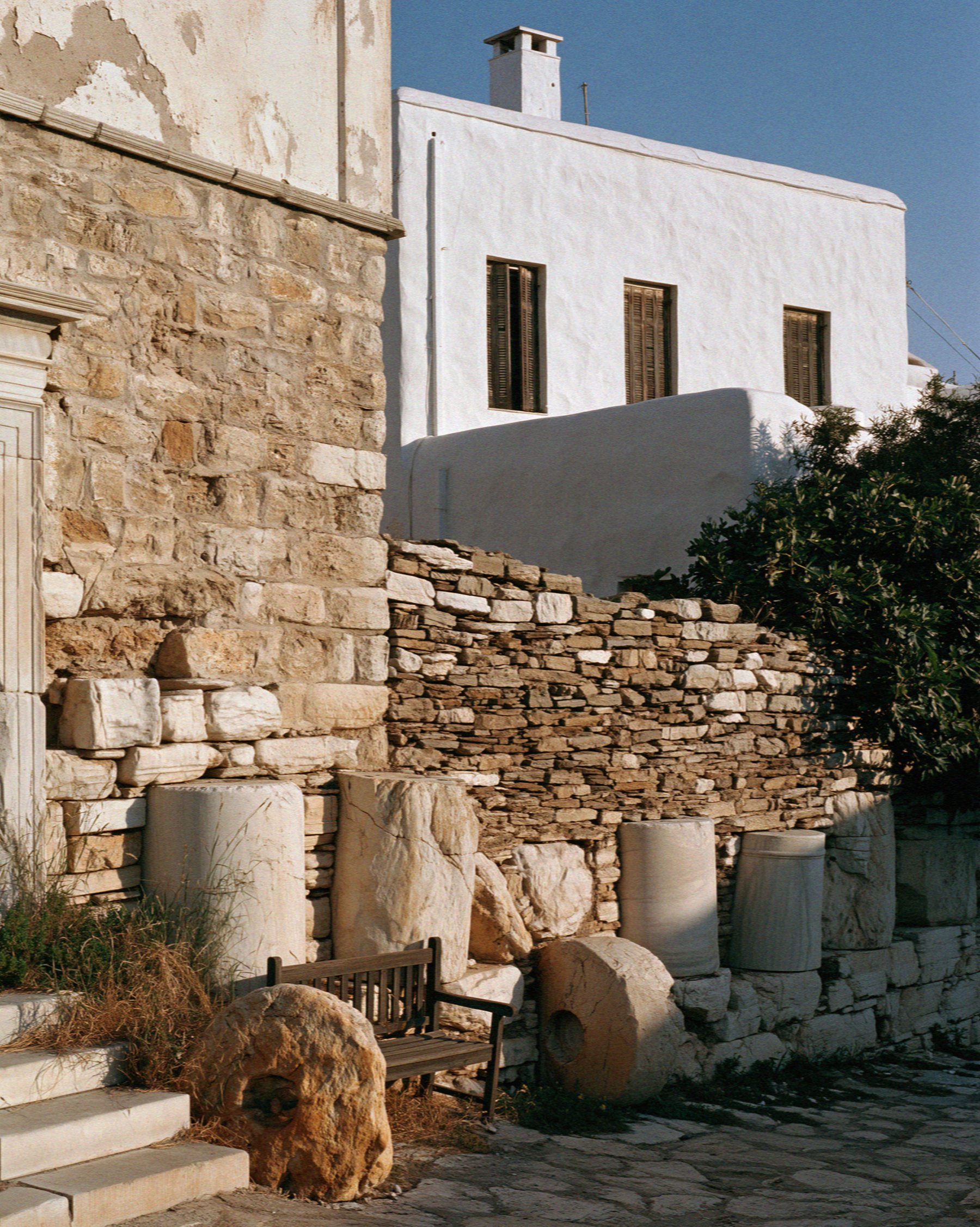
At the top of the old town is the Kastro, the medieval castle quarter. Its wall was built in the 13th century by the Venetian dukes of Naxos, and they built it from whatever was to hand, which on Paros meant marble from ancient temples, including a temple of Athena whose foundations are still on the hill. You can see column drums laid sideways in the masonry and fragments of carved stone set into the wall like bricks. Houses have been built into it since, and the little church of Agios Konstantinos sits on top.
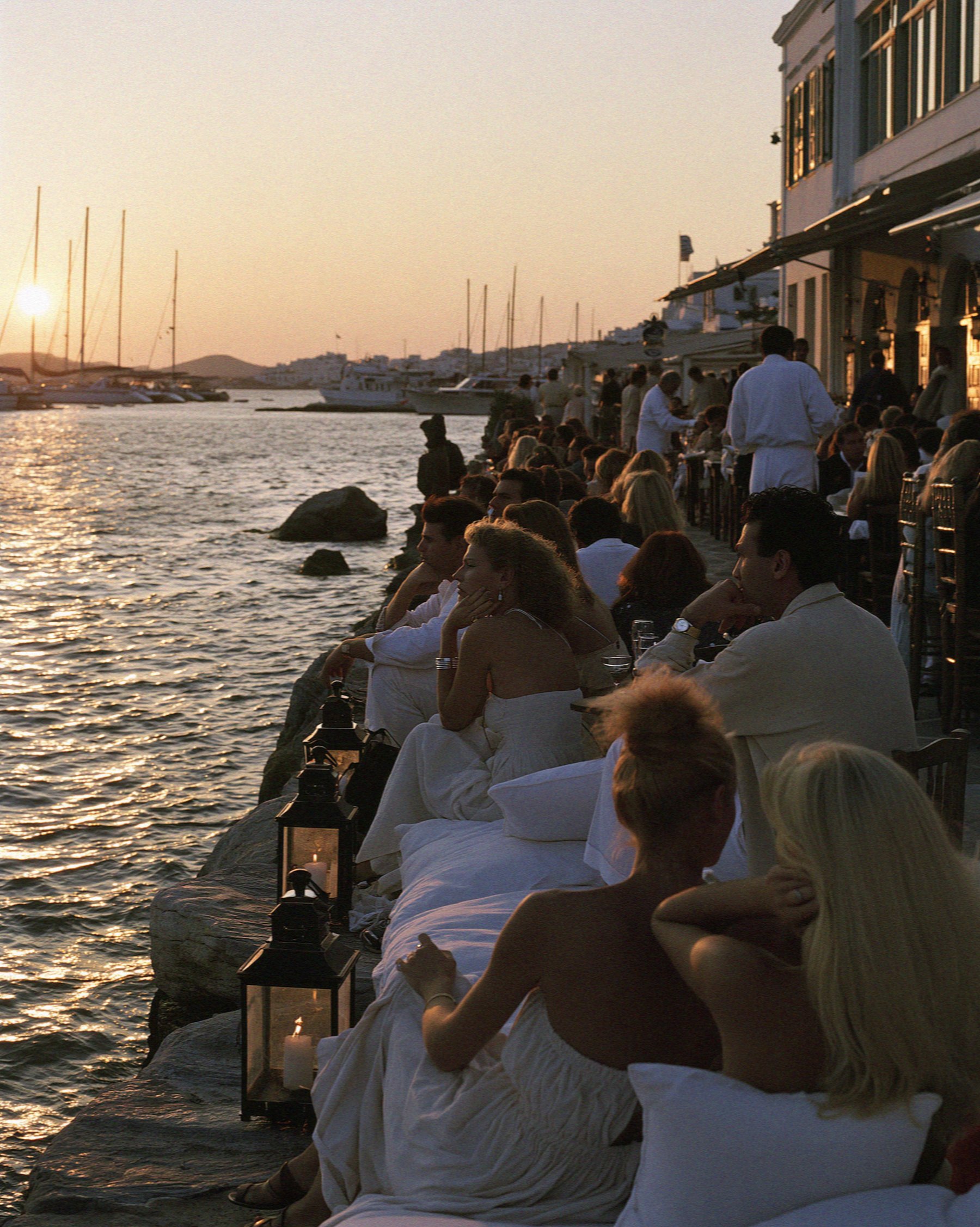
West of the Kastro, the seafront turns into the sunset side of town, a run of bars and tables facing the open sea. The beaches near Parikia are modest, and the better ones, Krios and Marcello, are across the bay and reached by a small boat from the harbour in season.
The harbour, the church, the museum, the Kastro and a walk for your first morning are all in my guide to Parikia: the church of a hundred doors, the Kastro and the old town.
The church of a hundred doors
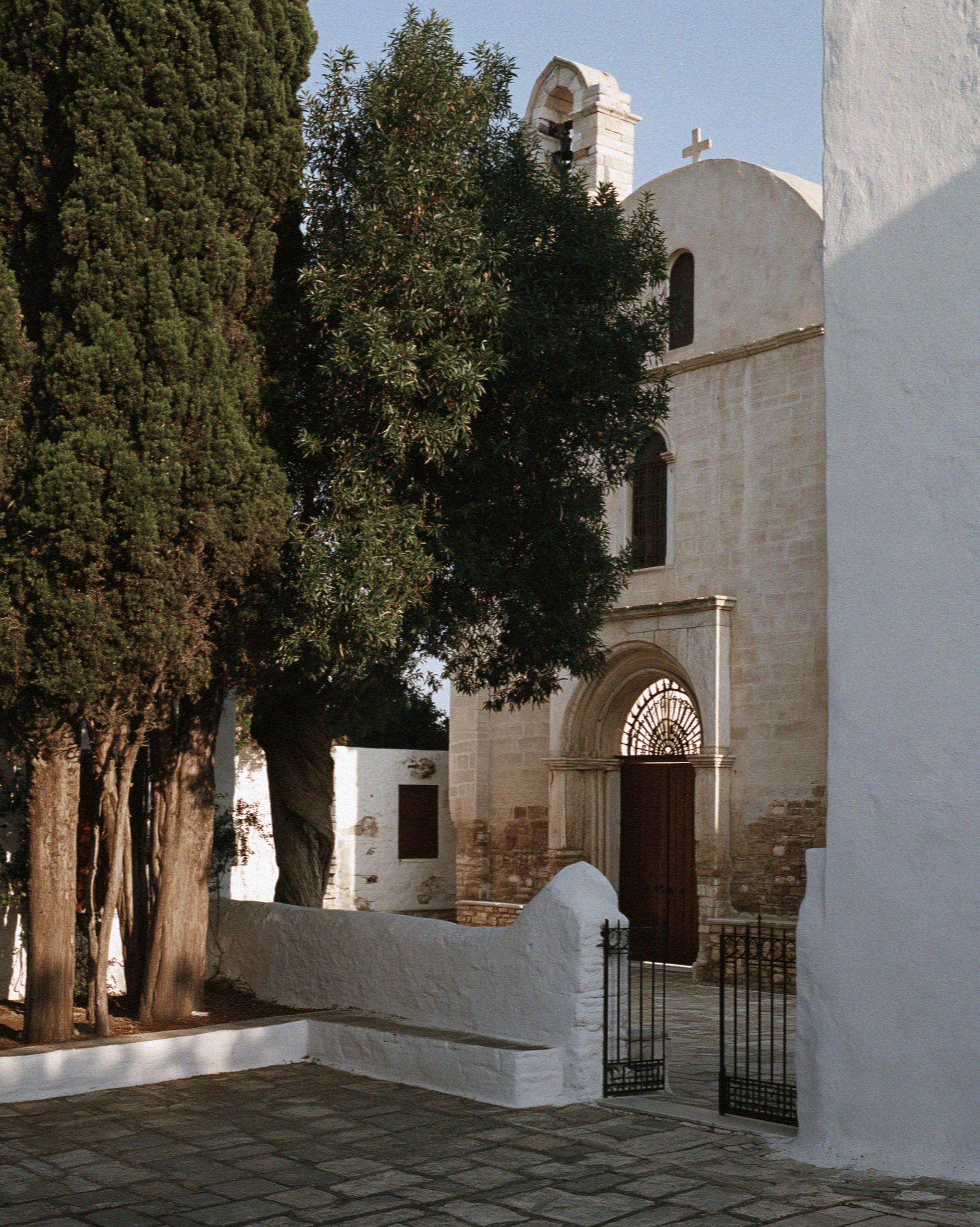
A few minutes from the ferry, set back behind its own wall and shady trees, is Panagia Ekatontapyliani, Our Lady of a Hundred Doors. It is the great church of Paros, and it does not look like much from the street.
Inside it is something else. Tradition says the first church here was founded by Saint Helen, mother of Constantine, in the 4th century, on her journey to the Holy Land. It was rebuilt in the 6th century under Justinian, the emperor who built Hagia Sophia in Constantinople, and the building you walk into carries that age in its low dark vaults, its candles and its smell of wax.
The legend is the part everyone remembers. The church is said to have ninety-nine doors that can be counted, and a hundredth, hidden, which will appear on the day Hagia Sophia becomes an Orthodox church again. Counting them is harder than it sounds, because there are doors within doors, bricked-up doorways, small openings and arches that might or might not qualify. I tried, which is what everyone does, and I wrote about how that went in Ninety-Nine Doors.
A small Byzantine museum inside the complex keeps icons and church treasures. The church opens every day from morning to evening, with hours that shift around services, so go early or late in the afternoon. Cover your shoulders and knees. On 15 August, the Feast of the Assumption, this is the centre of the island’s biggest festival, and Parikia fills.
Behind the church is the Archaeological Museum of Paros, which is small and worth an hour. It opens 08:30 to 15:30, is closed on Tuesday, and costs 5 euros (3 reduced), with last entry twenty minutes before closing.
Naoussa
Naoussa is the town on the north coast that people mean when they say Paros is beautiful.
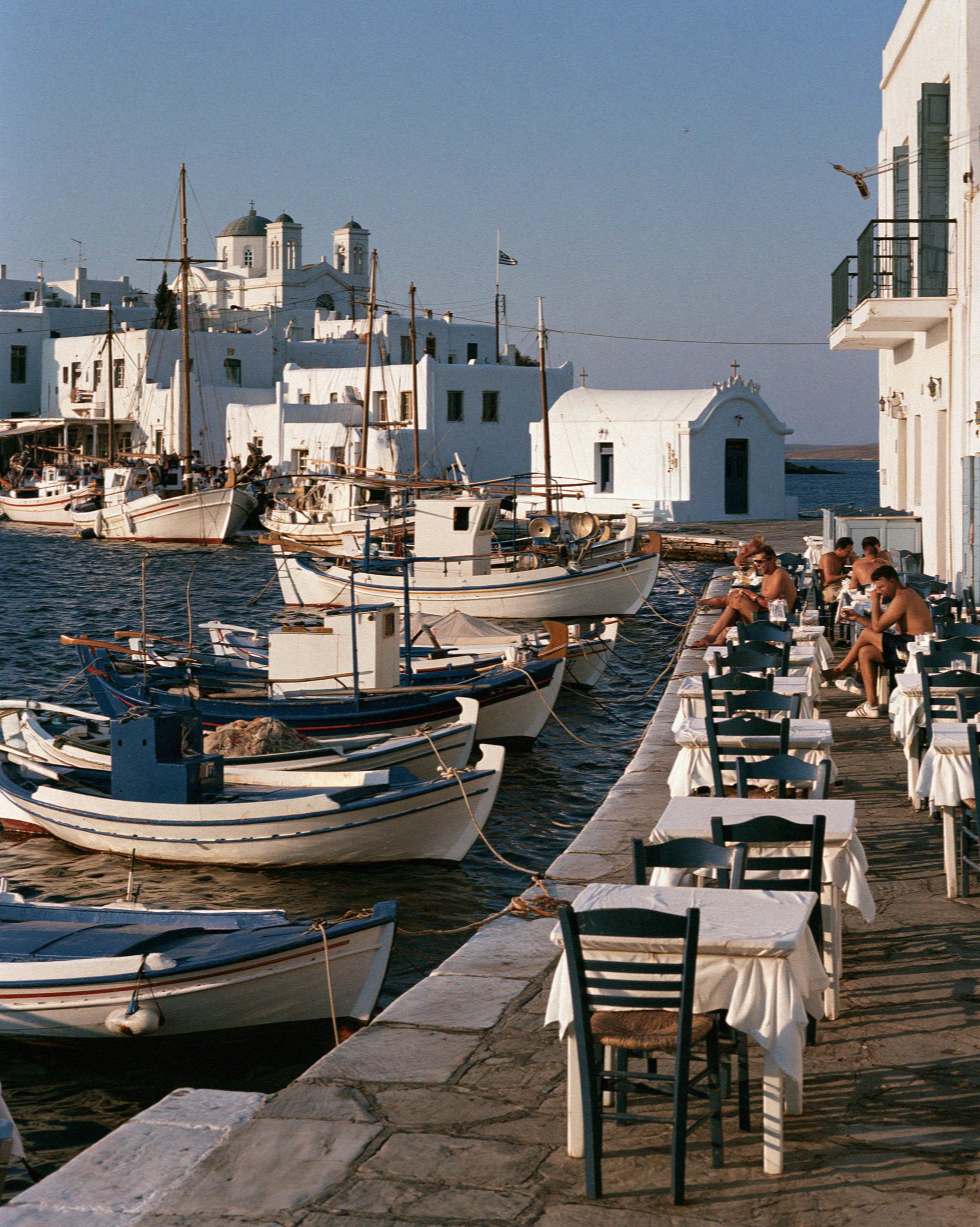
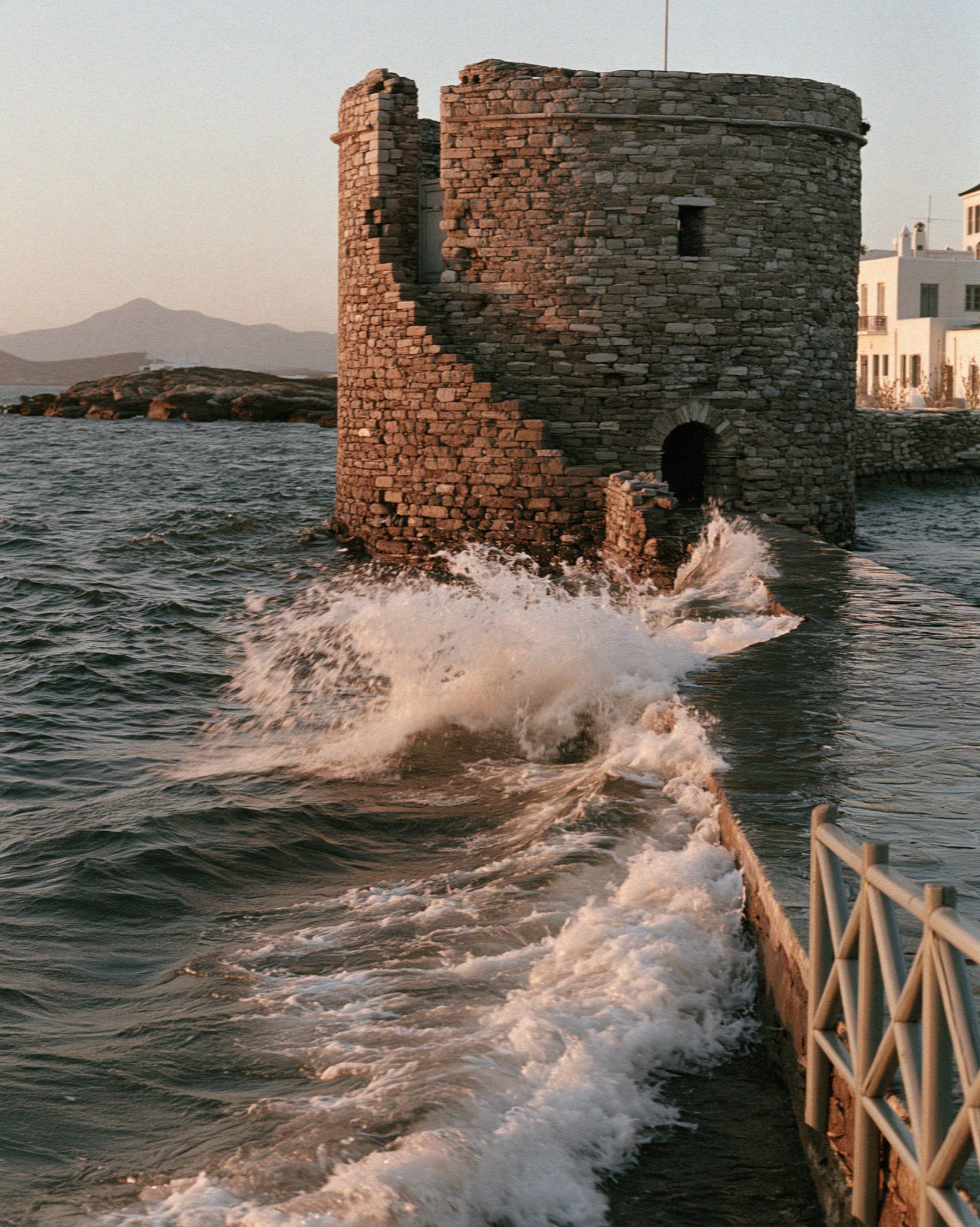
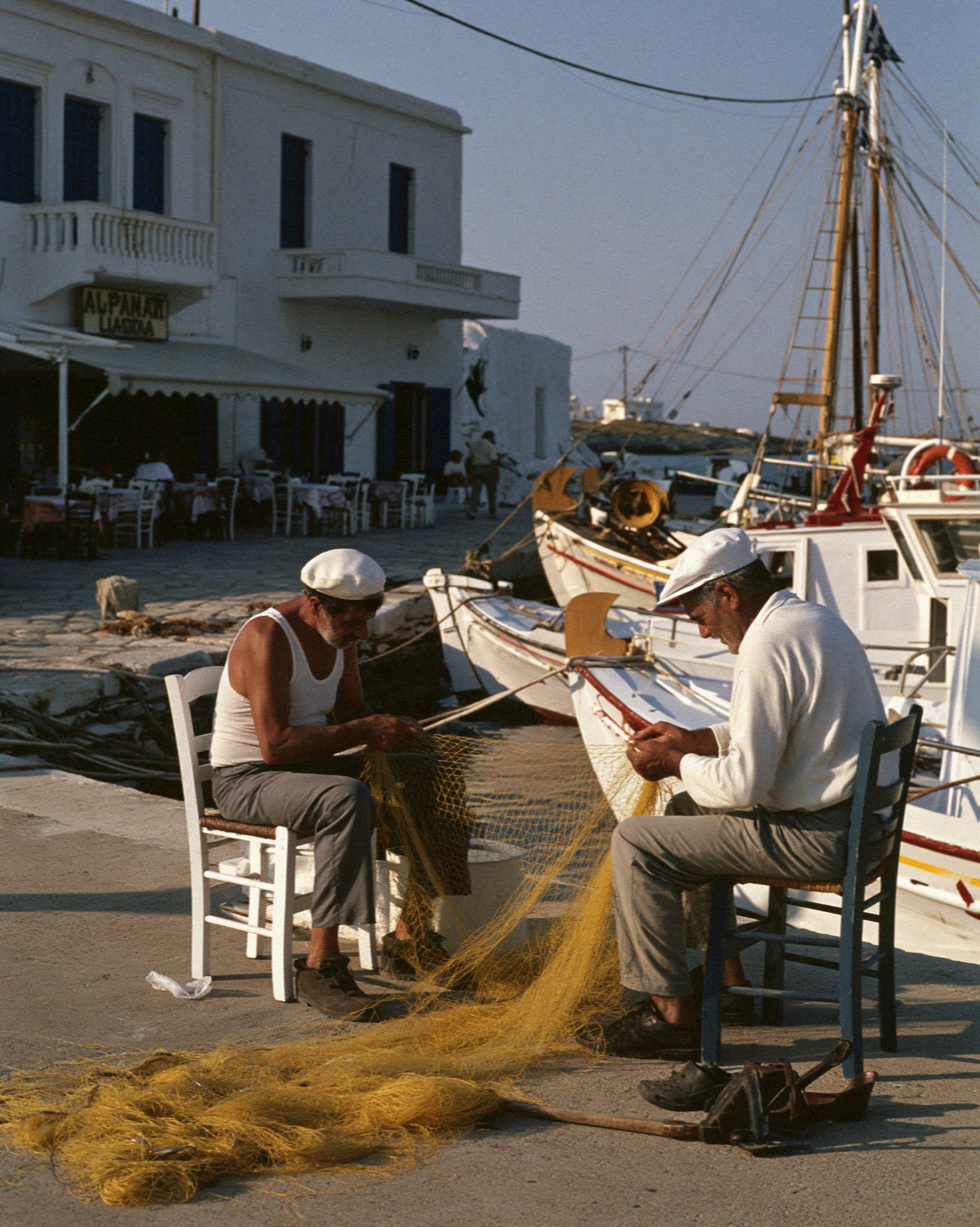
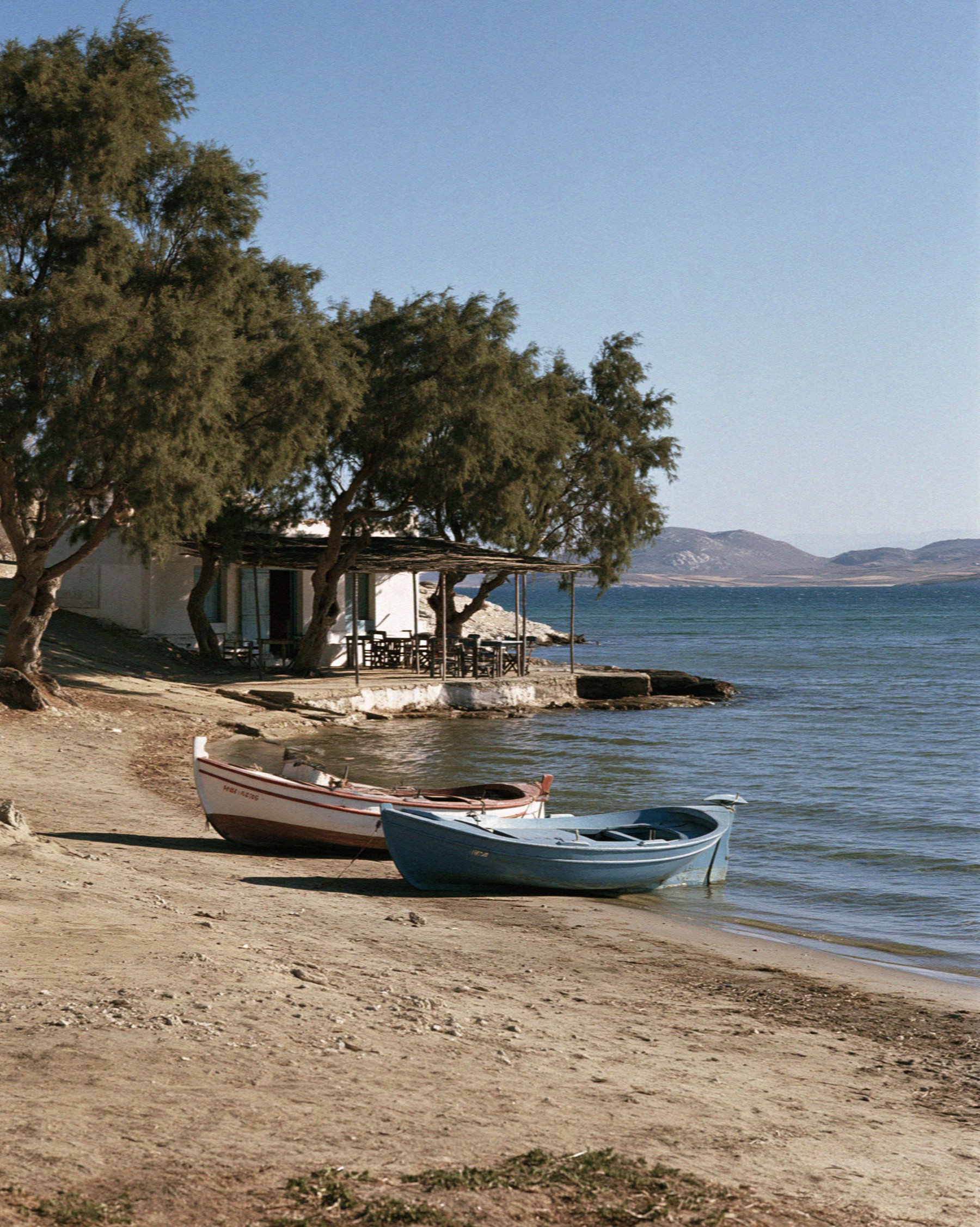
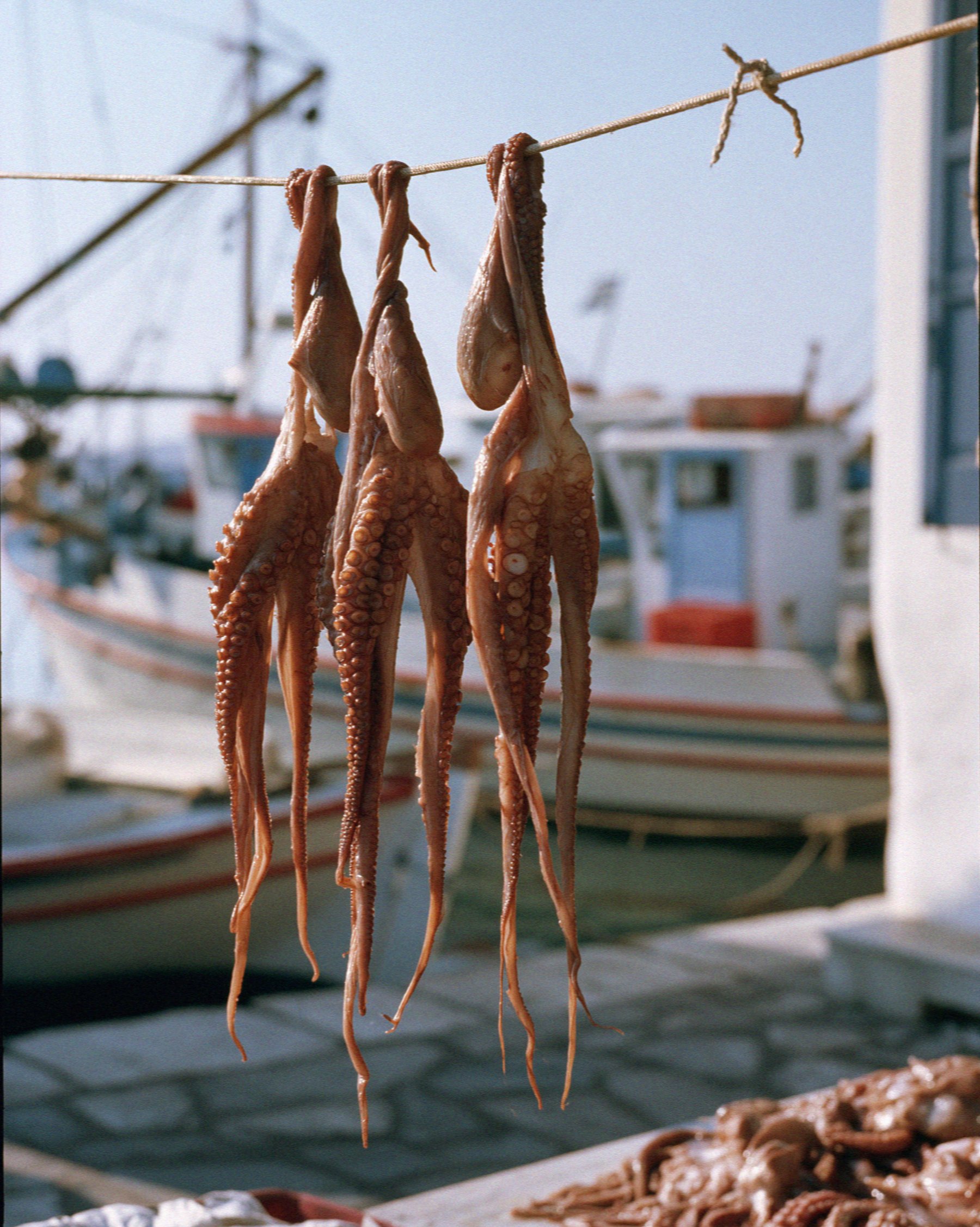
It grew up as a fishing village around a small, enclosed harbour, and the harbour is still the heart of it. Wooden caiques painted blue, red and yellow are tied up at the quay, octopus hangs drying on lines in the sun, and the tavernas set their tables so close to the water that the boats sit almost among the diners. At the mouth of the harbour stand the ruins of a Venetian fort, partly in the sea, reached along a narrow breakwater that gets wet when the wind is up. Beside it is the little white chapel of Agios Nikolaos.
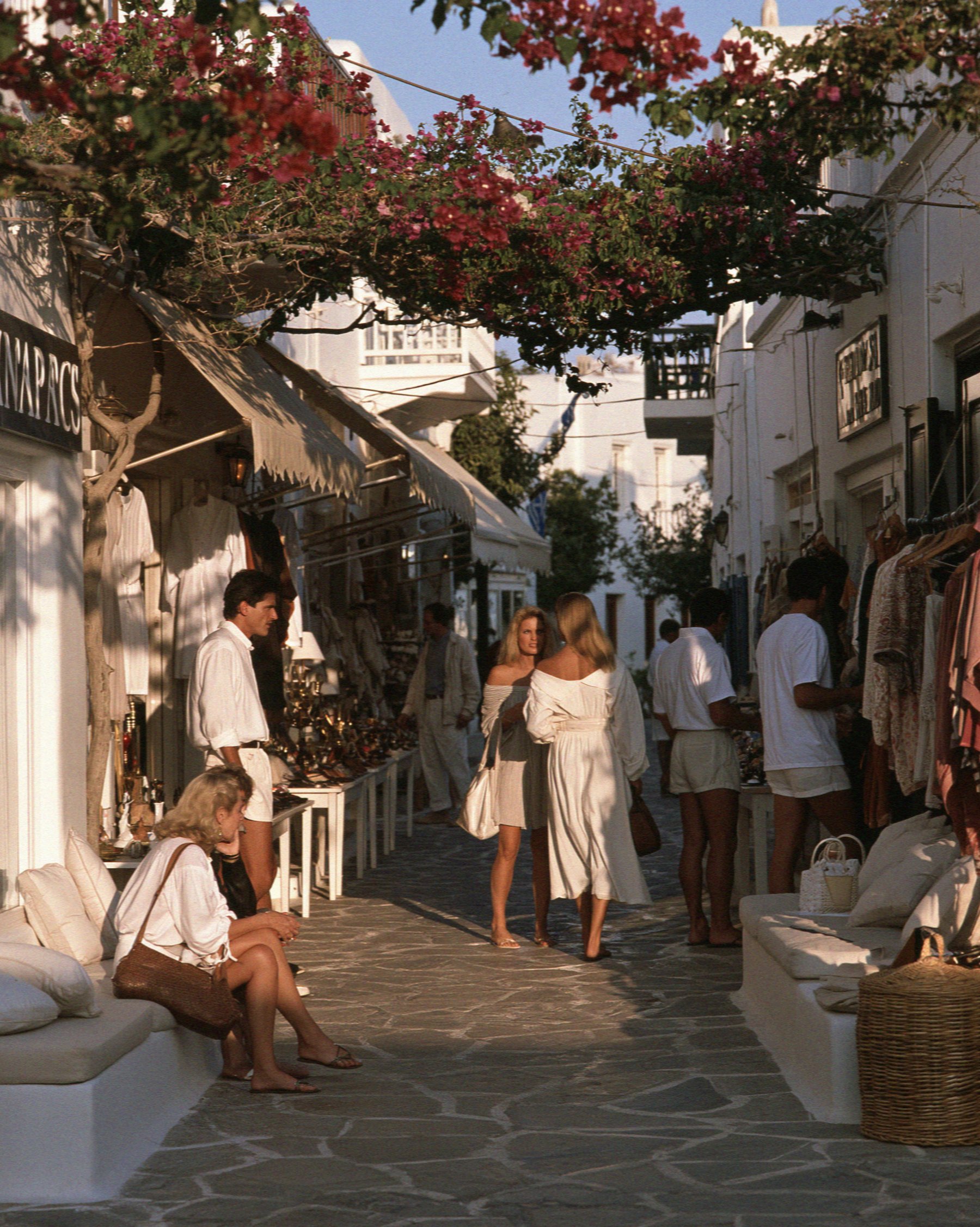
Behind the harbour the lanes climb, white and narrow, full of small shops and bars. In summer this is the island’s smartest evening: dinner by the water, drinks, a slow walk round the harbour as the lights come on over the boats. It costs more than Parikia, and in August it is very full.
Naoussa is also the gateway to the north coast. Kolymbithres, with its sculpted granite rocks, and Monastiri, in Paros Park, are across the bay, reached by road or by water taxi in season, and Santa Maria and Lageri are along the coast to the east.
My own few days on Paros went inland and to the east coast, so Naoussa is a town I would send you to rather than one I can claim. For a first summer visit I would put it first. Come in the late afternoon, walk out along the breakwater before dark, and book dinner.
The harbour, the fort, where to eat and drink, Paros Park and staying in Naoussa are all in my guide to Naoussa: the harbour, the Venetian fort and the evenings.
Lefkes and the Byzantine road
The best day I had on Paros was inland.
Lefkes sits high in the middle of the island, among olive trees and pines, and it was once the capital, built there because pirates had to work to reach it. It is a village of white houses climbing a hill, arches over the lanes, small cafes and a big marble church, Agia Triada, bright enough to make you squint. In October it was almost silent: a radio somewhere, a man painting a door, very little else.
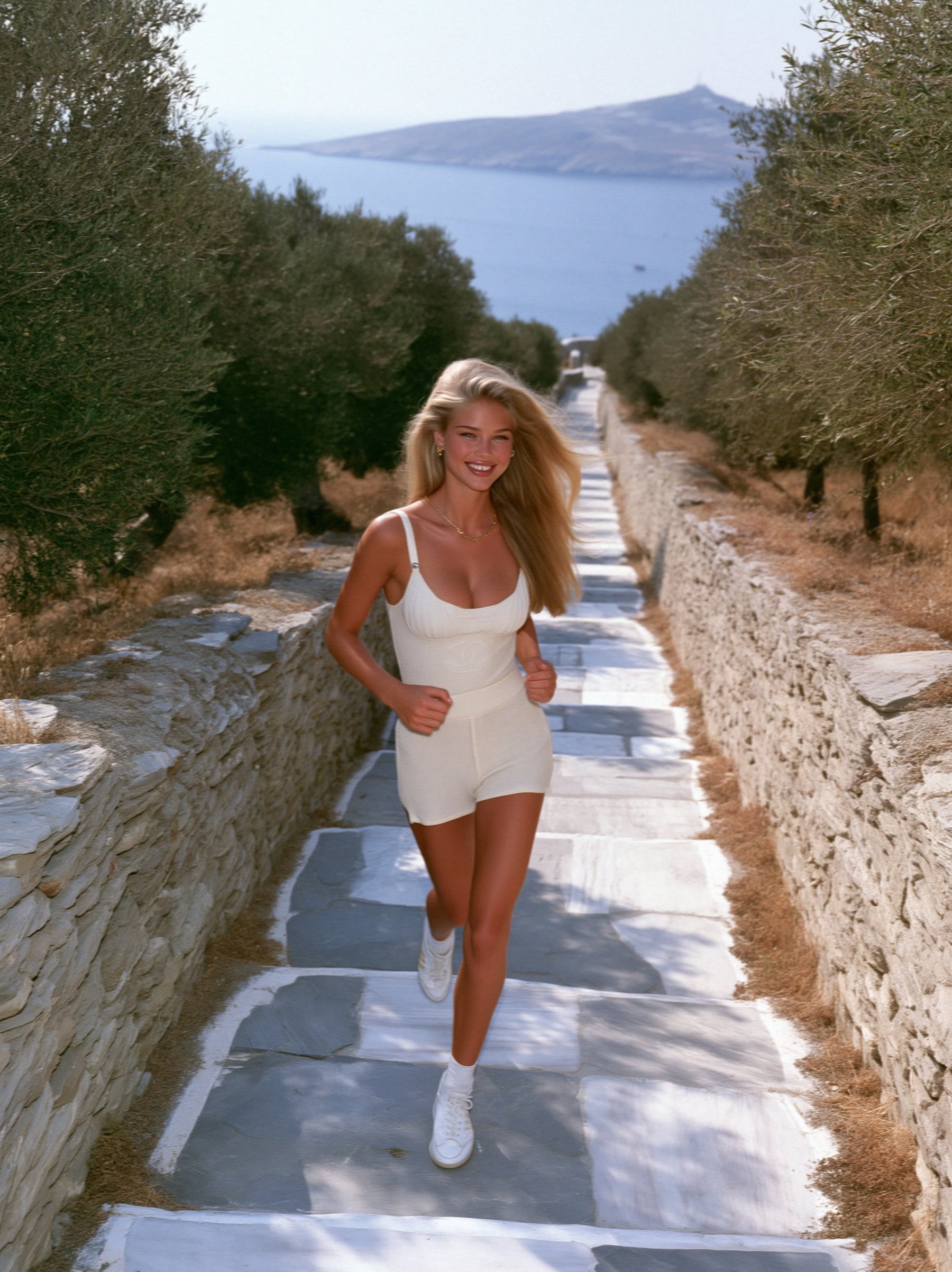
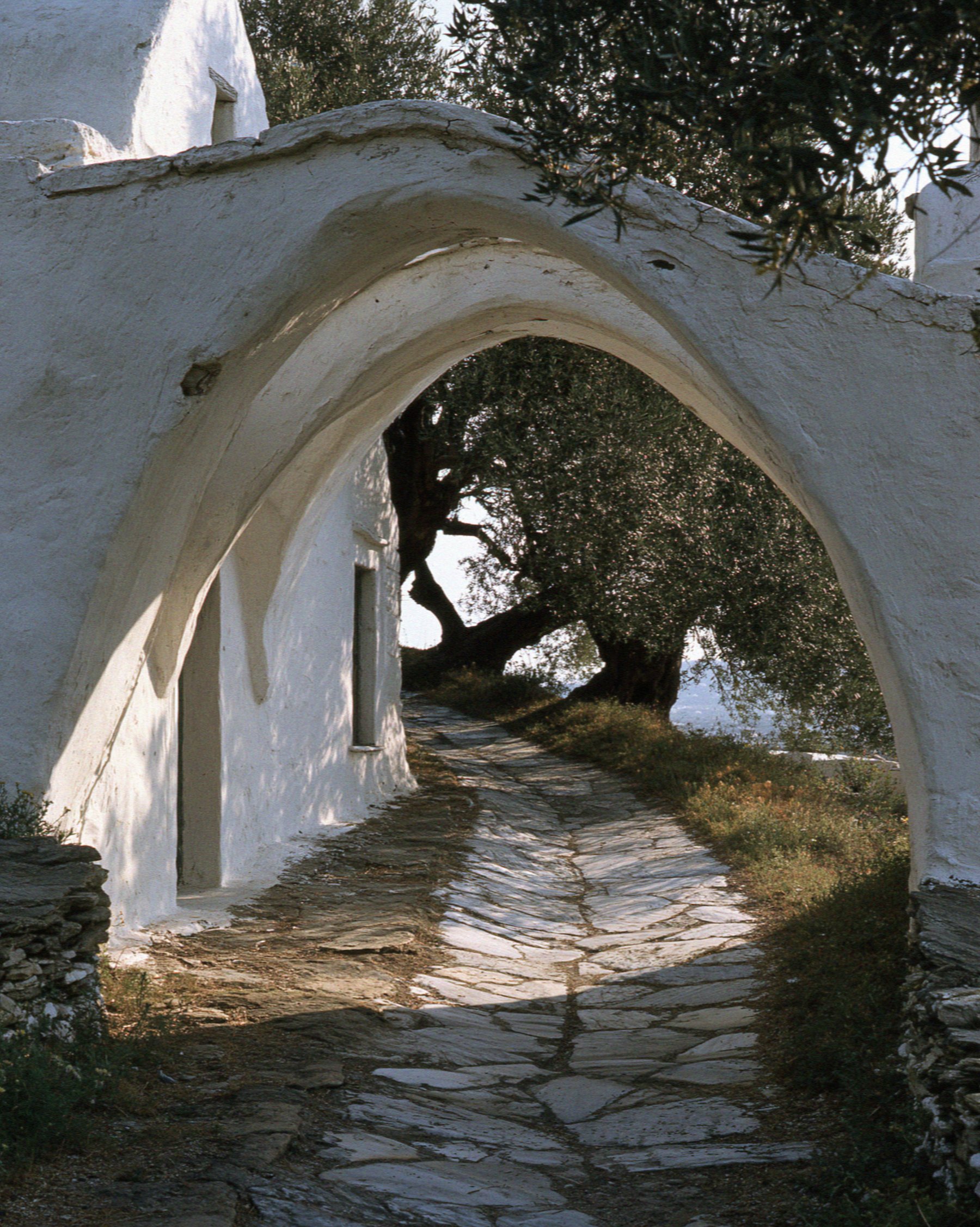
From the edge of the village, an old paved path runs downhill to Prodromos. It is called the Byzantine road, and long stretches of it are laid with marble slabs, grey and white, worn into a shallow groove by centuries of feet and hooves. It takes about an hour to an hour and a half to walk the 3.5 kilometres down, with little stone bridges over dry streams, terraces, olive trees growing out of the walls, and Naxos across the water to the east. There is not much shade, so go in the morning or the late afternoon, take water, and wear shoes with some grip, because the slabs are smooth.
At Prodromos you leave the path under an arch between two churches. From there you can carry on to Marpissa and down to Piso Livadi on the east coast, about six kilometres from Lefkes in all, and finish with a swim in the harbour, which is exactly what I did. Then the bus back to Parikia.
On the way up to Lefkes, the bus passes Marathi and the ancient marble quarries, which belong in the same day. The quarries, the village, the walk, the bus times and when to go are all in my guide to Lefkes, the Byzantine road and the marble quarries of Paros, and the day itself is in my diary The Stone That Lets the Light In.
The marble
If you want to understand why Paros mattered in the ancient world, get off the Lefkes bus at Marathi.
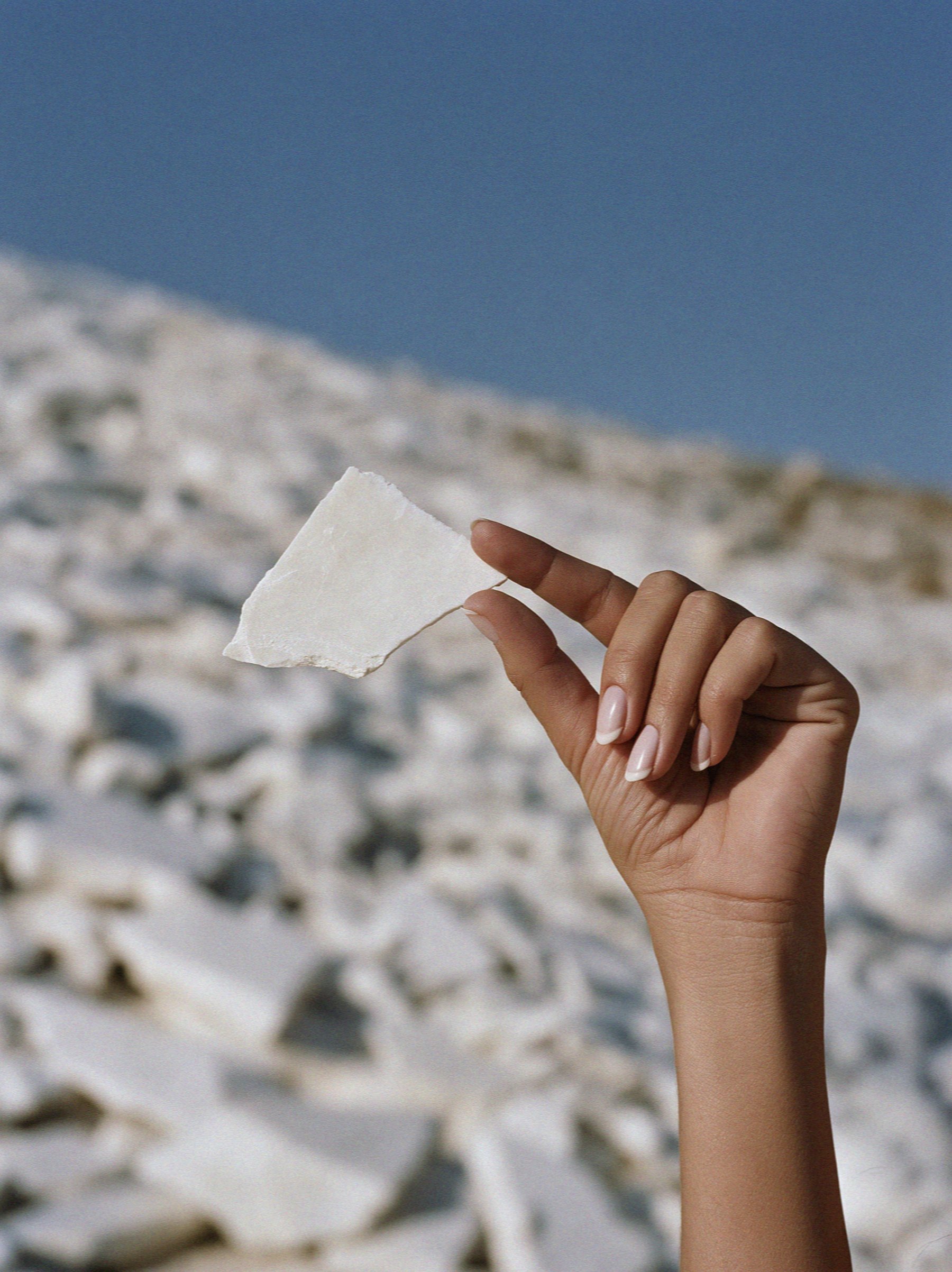
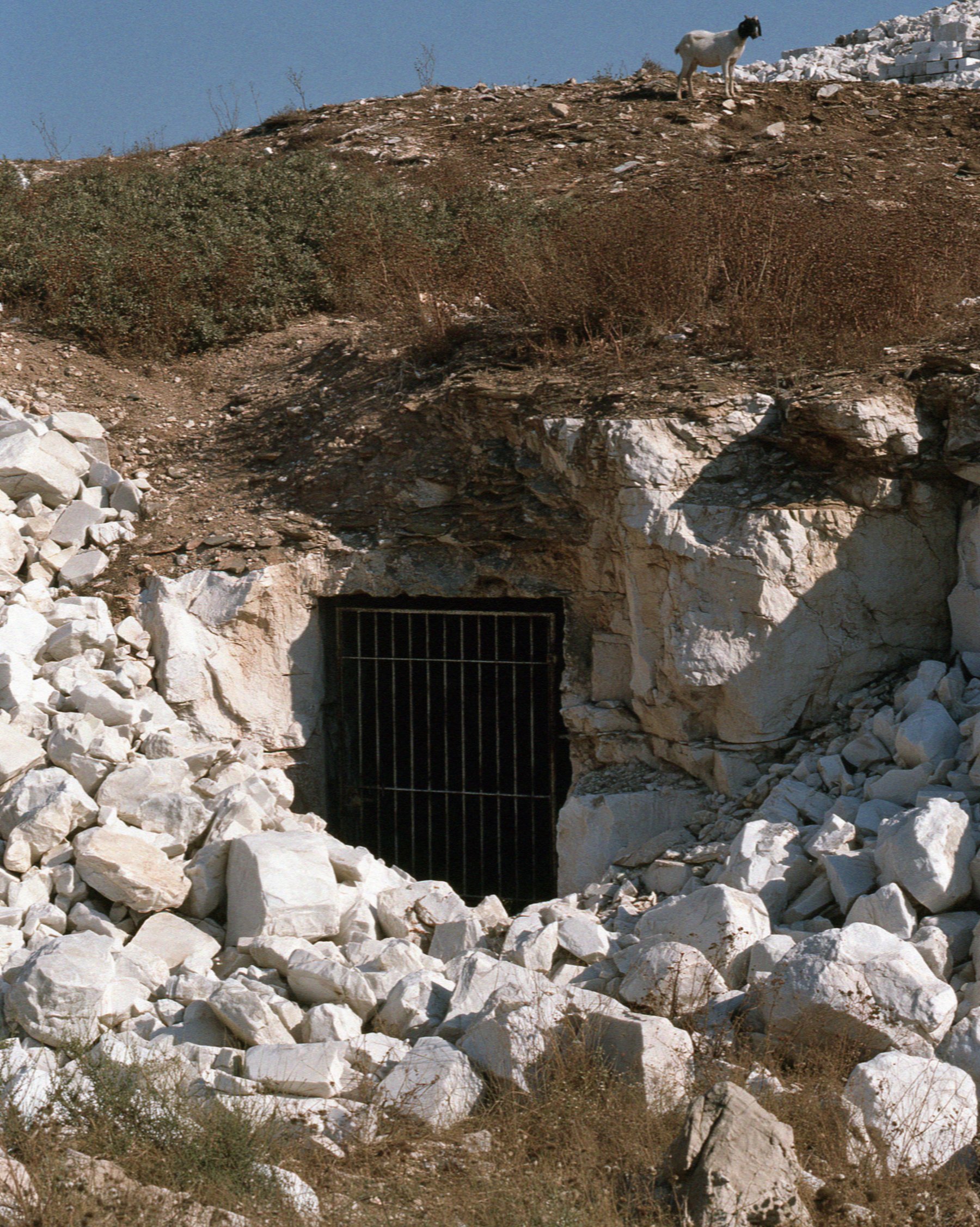
About four to five kilometres from Parikia, a path climbs from the road through scrub and spoil heaps of broken white stone to a hillside cut with dark, square openings. These are the ancient quarries of Paros. The finest marble here lay in seams deep inside the hill, and the ancient quarrymen followed it underground in long galleries, working by lamplight. The stone they took out was called lychnites, from the Greek for lamp. One explanation is the lamps they worked by. The other is the marble itself, which is translucent enough to let light a little way into it, so that sculpted skin seems to glow just below the surface. Nobody has settled which came first.
That quality is why Parian marble travelled. It is traditionally linked with sculpture that every museum-goer knows: the Hermes of Praxiteles at Olympia, the Winged Victory of Samothrace and the Venus de Milo in the Louvre are all thought to have been carved from it. In the 1840s a French company worked the quarries again, and their marble is said to have gone into Napoleon’s tomb in Paris.
Today the galleries are closed behind grilles for safety, and you look in rather than walk in. Stand at the entrance on a hot day and the air coming out of the hill is cold. There is no ticket and no visitor centre yet, though local associations have been pushing since 2022 for the hillside to become a park. Bring water and decent shoes, and give it an hour. I still have a thin chip of the stone that I picked up from the ground there.
The beaches
Paros has a generous coastline, and the choice comes down to which way the wind is blowing.
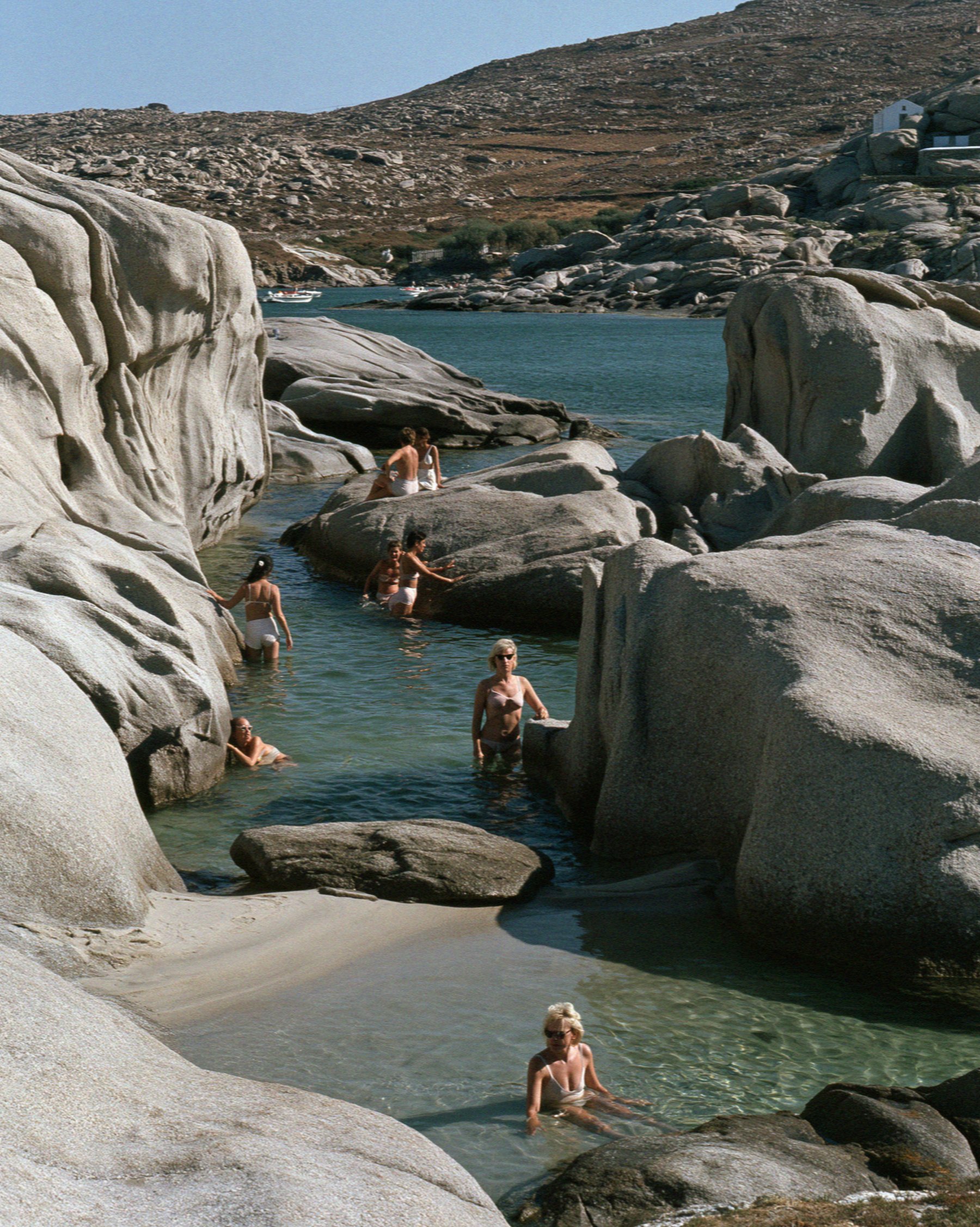
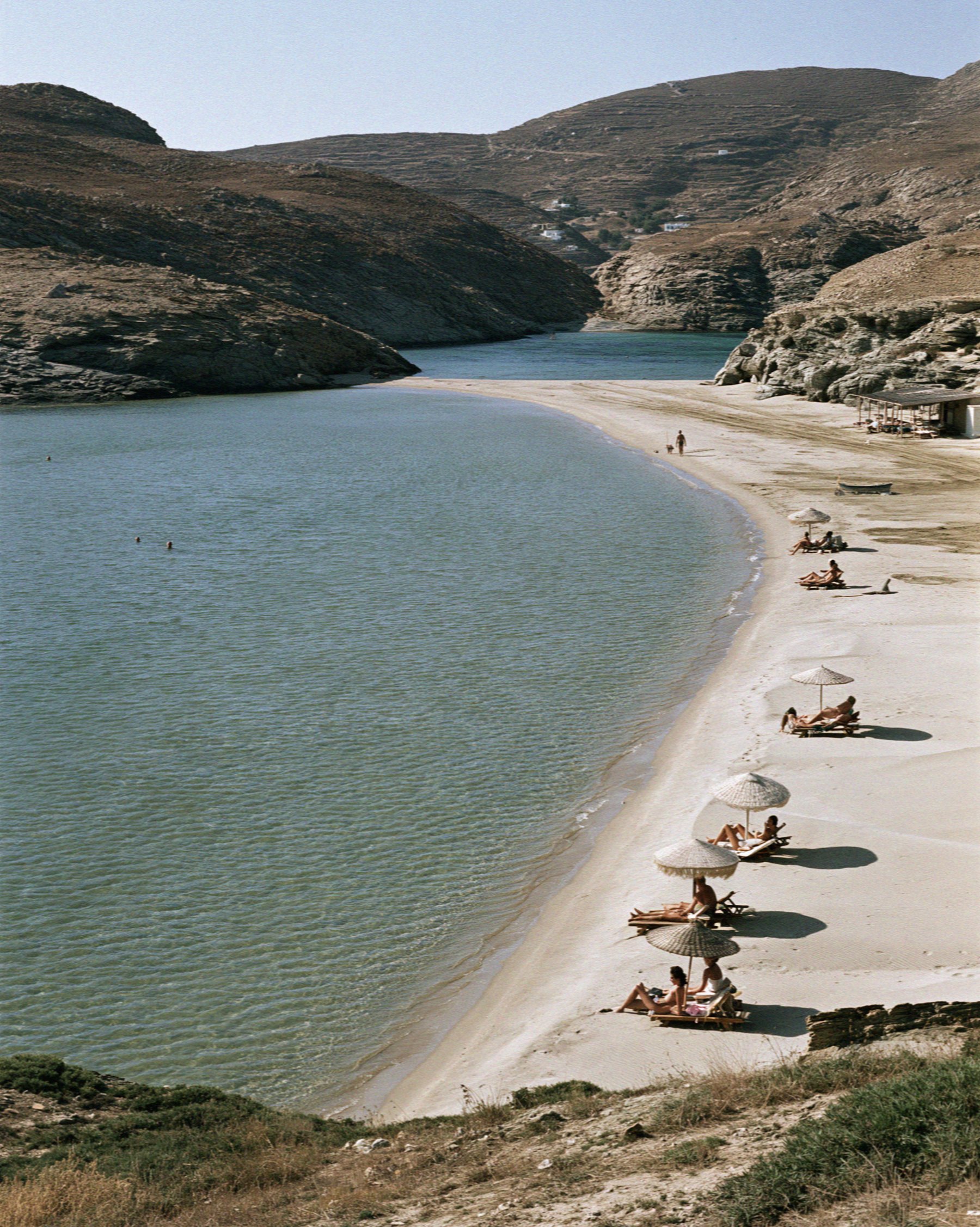
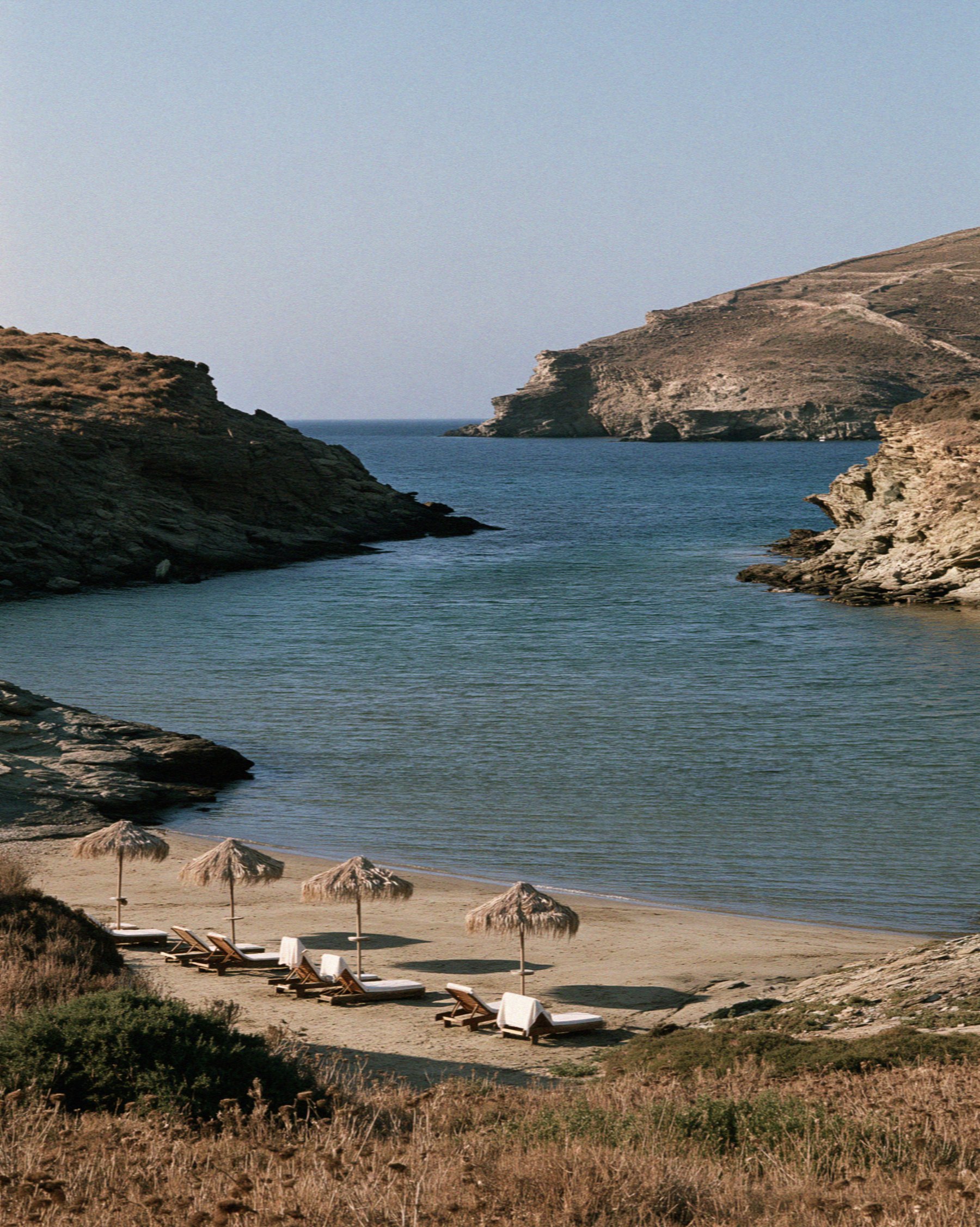
On calm days the north is the obvious place. Kolymbithres, across the bay from Naoussa, is a string of small sandy coves between smooth, wind-carved granite rocks, very pretty and very popular. Monastiri, inside Paros Park on the headland, is sheltered and clear. Santa Maria and Mikri Santa Maria, east of Naoussa, are long and shallow, and Lageri, reached by water taxi from Naoussa, is the quiet one. Piperi is right in Naoussa for a quick swim.
When the meltemi blows, head south or to the sheltered side. Faragas, on the south coast, is the classic answer on a windy day. Aliki and Kalogeros are on the same side of the island. Near Parikia, Krios and Marcello across the bay are pleasant, simple and reached by a small boat from the harbour.
The east coast is the windsurfers’ side. Golden Beach and New Golden Beach are long stretches of sand where the wind blows steadily and big windsurfing events are held, while the kitesurfers cross to the west coast, to Pounda beach right beside the little port for Antiparos (there is a second, quieter Pounda on the east coast, known for its beach bar). Logaras and Piso Livadi are gentler and good for families, with tavernas a few steps from the sand. The sea at Piso Livadi was still warm enough in October for a long swim out to the harbour mouth and back.
Buses from Parikia and Naoussa reach most of these in season, and the Naoussa water taxis cover the northern coves.
I have described every beach, with which wind suits it and how to get there, in my guide to the best beaches in Paros.
The best things to do
Paros rewards a mix: one morning of history, one long walk, one boat, and as many swims as the wind allows.
The essentials are the ones above: Ekatontapyliani, the museum and the Kastro in Parikia, a sunset in Naoussa, the inland day, and a boat to Antiparos or beyond.
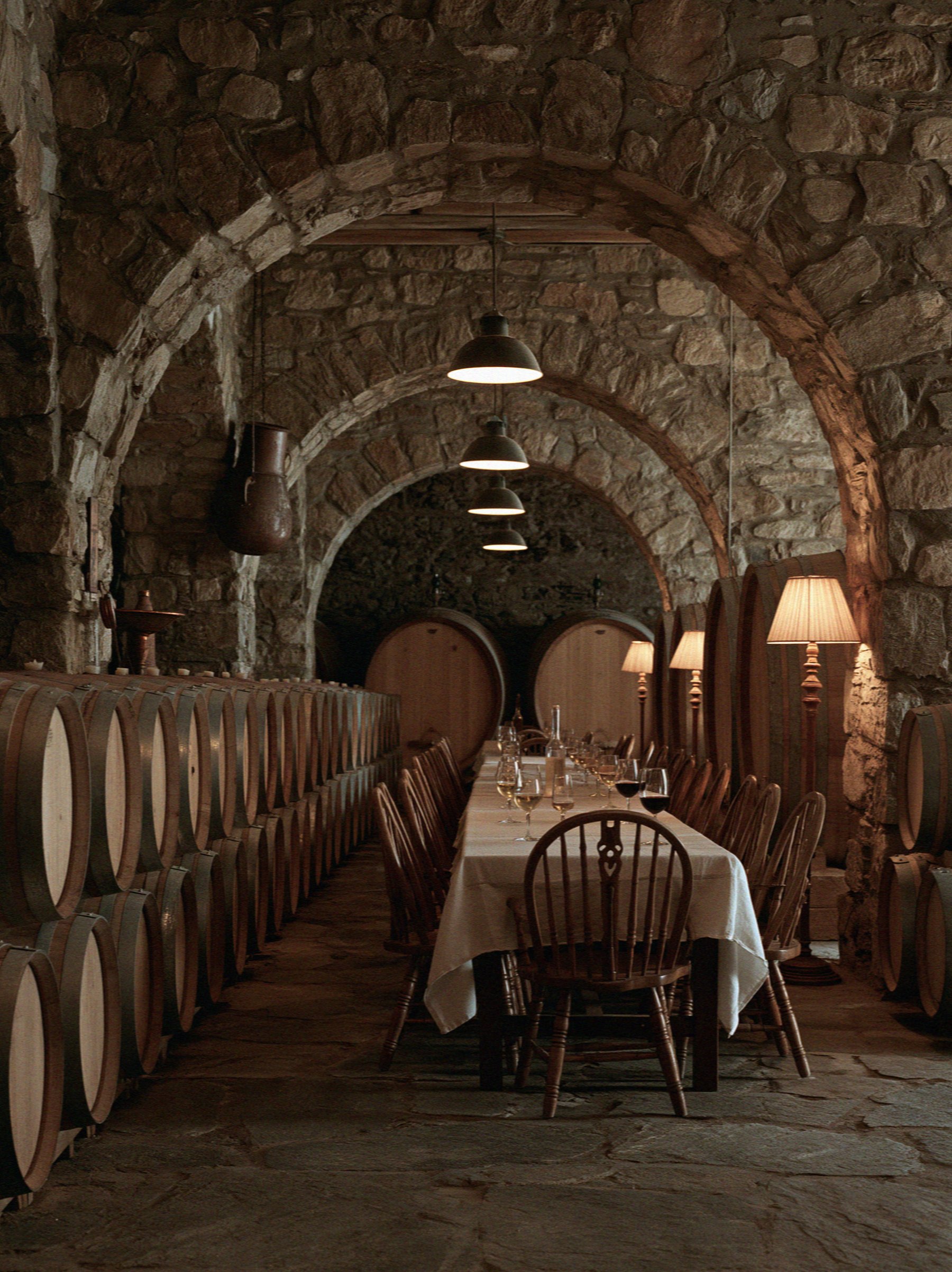
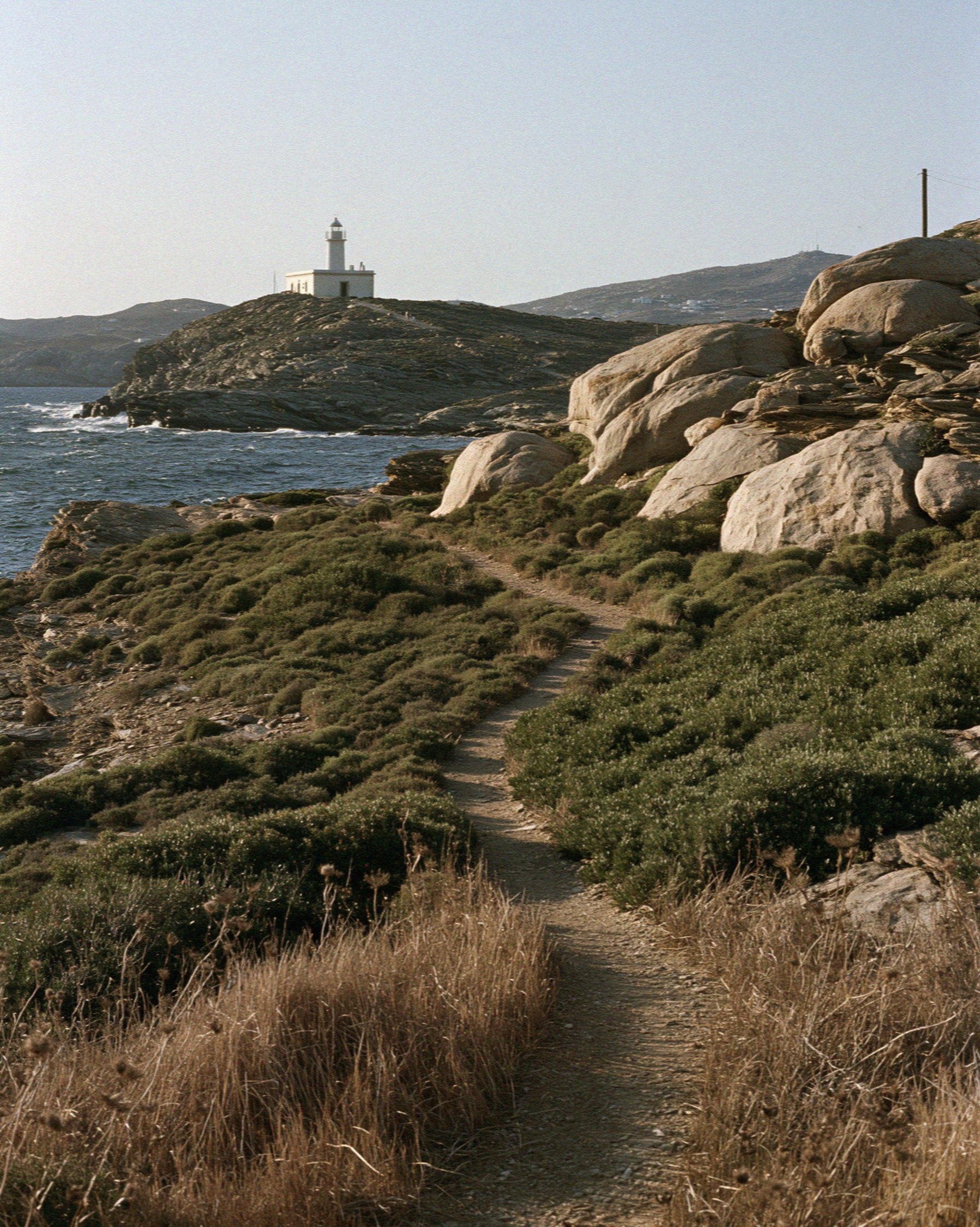
Then there are the quieter things. Paros Park, on the headland across the bay from Naoussa, is a free nature park open all year, with footpaths, a small lighthouse, the monastery of Agios Ioannis Detis and the sheltered beach at Monastiri. The Valley of the Butterflies, Petaloudes, a short drive south of Parikia, is a green, shaded gully where tiger moths gather from late May into July; outside those weeks it is simply a pretty walk. And in Naoussa, the Moraitis winery, run by the same family since 1910, offers cellar tours and tastings of the island’s wines; check the days before you go.
If I had to choose three for someone else, they would be the Byzantine road in the morning, an evening in Naoussa, and a boat day out to Despotiko and the Blue Lagoon on a calm day.
The full list, ranked, with opening times and the things I would skip, is in my guide to the best things to do in Paros.
Antiparos
Antiparos is the small island off the west coast of Paros, and it makes the easiest day trip in this part of the Cyclades.
The car ferry leaves from Pounta, on the west coast of Paros, and takes about seven minutes. In summer it runs every twenty to thirty minutes, in winter every thirty to sixty, and a foot passenger ticket costs about 1.50 euros, in cash, on board or on the quay. In season there is also a passenger boat from Parikia, about thirty minutes and around 7 euros, which saves you getting to Pounta.
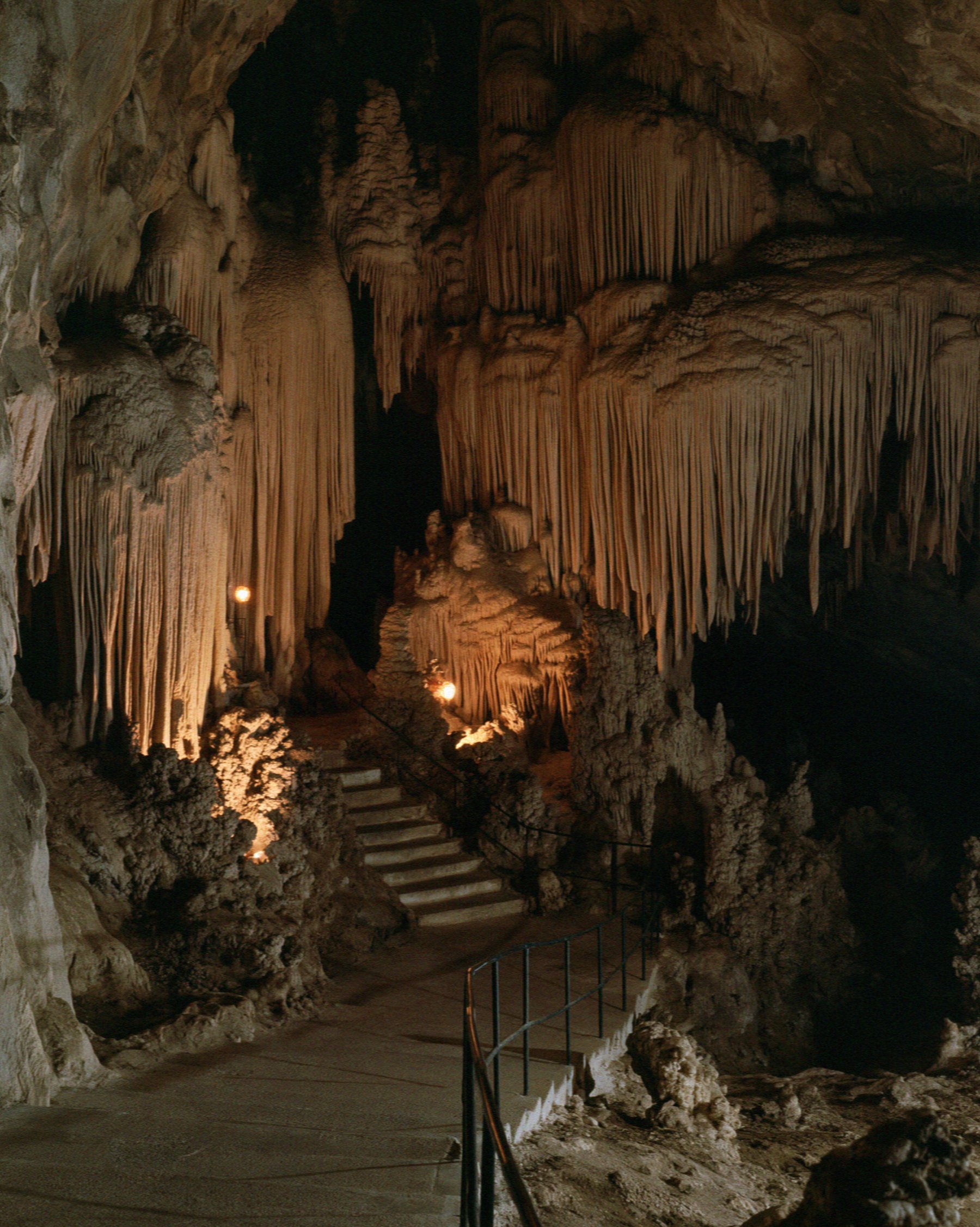
The town is one long pedestrian lane of shops and cafes with a small Venetian kastro at the top, and much quieter than Naoussa. The cave, about eight kilometres away with a bus in season, is the great sight: open daily through October from 10:00, with the last visitors let in at 15:30, and a 6 euro ticket that also covers the folklore museum in town, and a great many steps down.
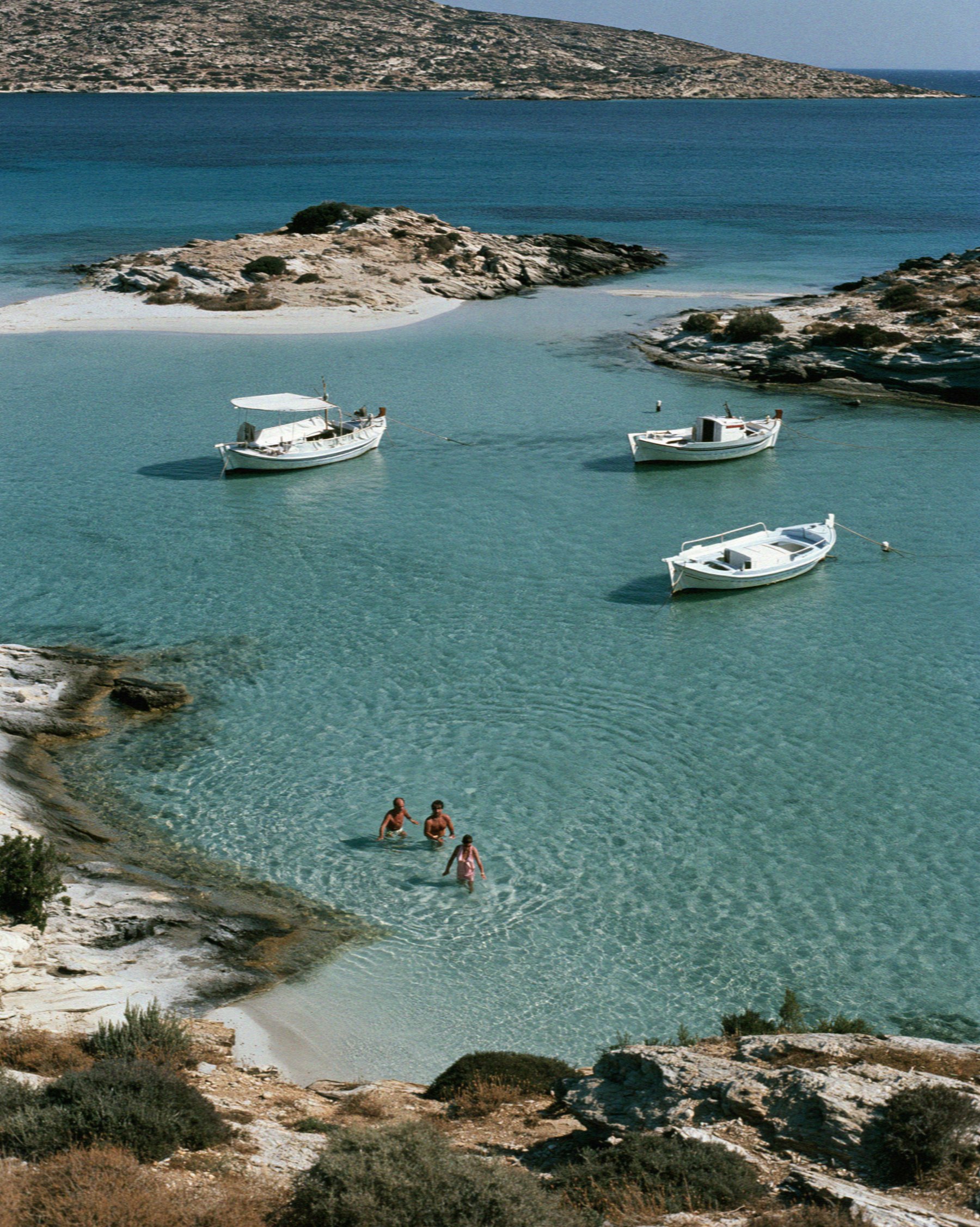
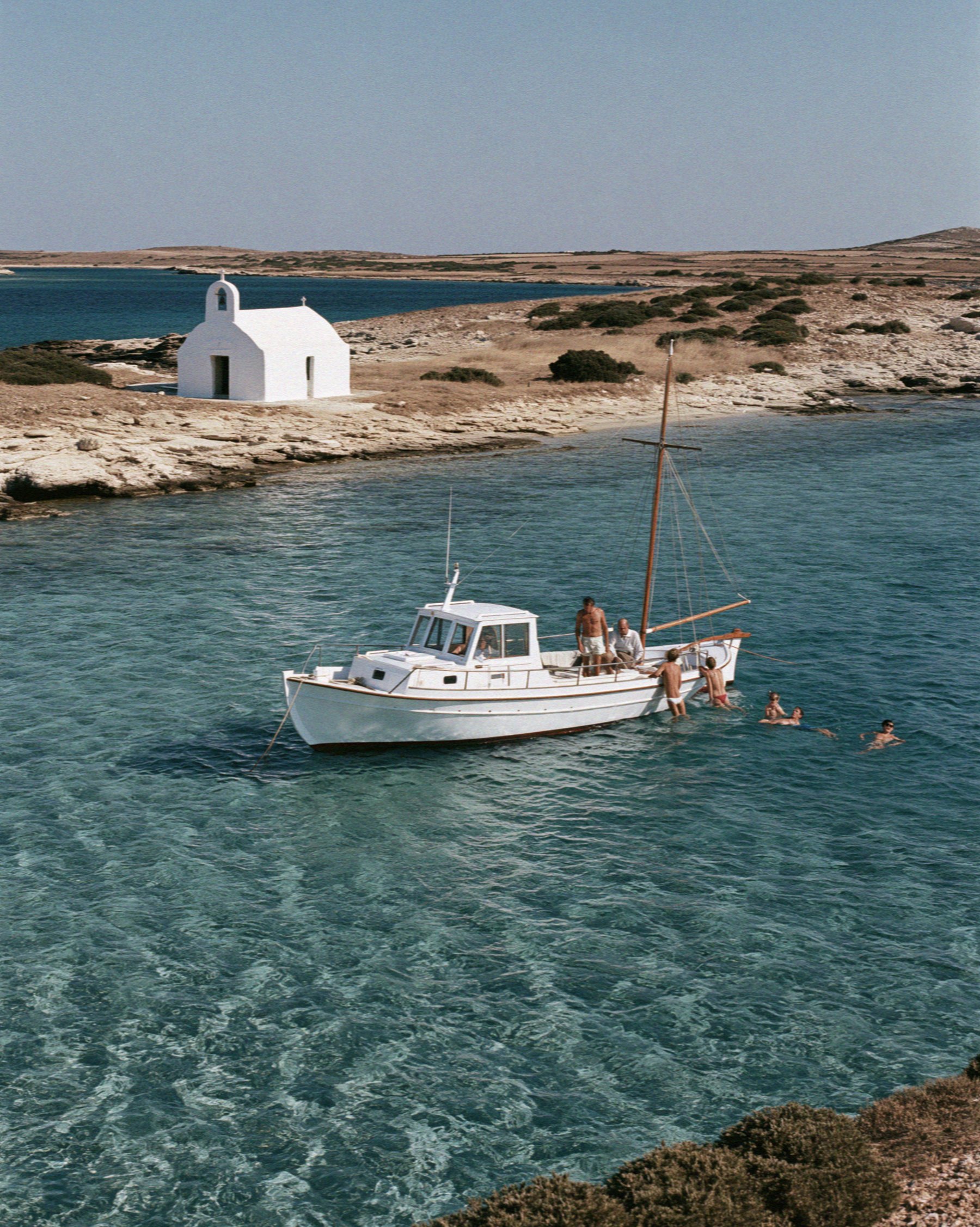
Or skip the land altogether and go by boat. Day boats from Parikia, Naoussa, Piso Livadi and the west coast ports go to the Blue Lagoon among the Panteronisia islets, the sea caves, and Despotiko, the empty island where an ancient sanctuary of Apollo is being excavated. Expect about 85 euros for a half day and 90 to 145 for a full day with lunch.
I would give Antiparos a whole day: an early crossing, the cave in the morning before the heat, a swim, and lunch in town. The crossings, the cave, the beaches and the boat trips are all in my guide to an Antiparos day trip from Paros.
Where to stay
The big decision on Paros is Naoussa or Parikia, and they suit different trips.
Naoussa is the prettier and livelier base, with the harbour, the best restaurants and the north coast beaches close by. It is where the island’s smartest hotels are. Cosme, part of the Luxury Collection, looks down on the town from the hillside; Cove Paros and Lilly Residence (adults only) are nearby, and Avant Mar is on the water at Piperi. Out towards Kolymbithres, Parilio, one of the Design Hotels, is a quieter, more architectural choice. Senia and Opal are smaller options in and around town.
Parikia is the easier base, especially without a car, because every ferry and bus starts here. Argonauta is the name to know in town, and just south of it, near the beach at Parasporos, Andronis Minois is the luxury choice. Mythic, an adults-only retreat in the hills near Agia Irini, suits those with a car. It is less polished than Naoussa in the evening, but you will save money and time.
The beaches are the third option. Seesoo, Poseidon of Paros and Parocks are among the hotels on or near the sand, good for a slower week with a car.
For a sense of what you will pay in season: simple rooms run from about 70 to 130 euros a night, good mid-range hotels from about 130 to 280, and the luxury end from about 300 to 800 and up. August is the most expensive by some distance; June and September are noticeably kinder. Expect most of the beach hotels to be shut between about November and April.
Which base suits which trip, and the hotels I would book in each at every price, are in my guide to where to stay in Paros.
What to eat
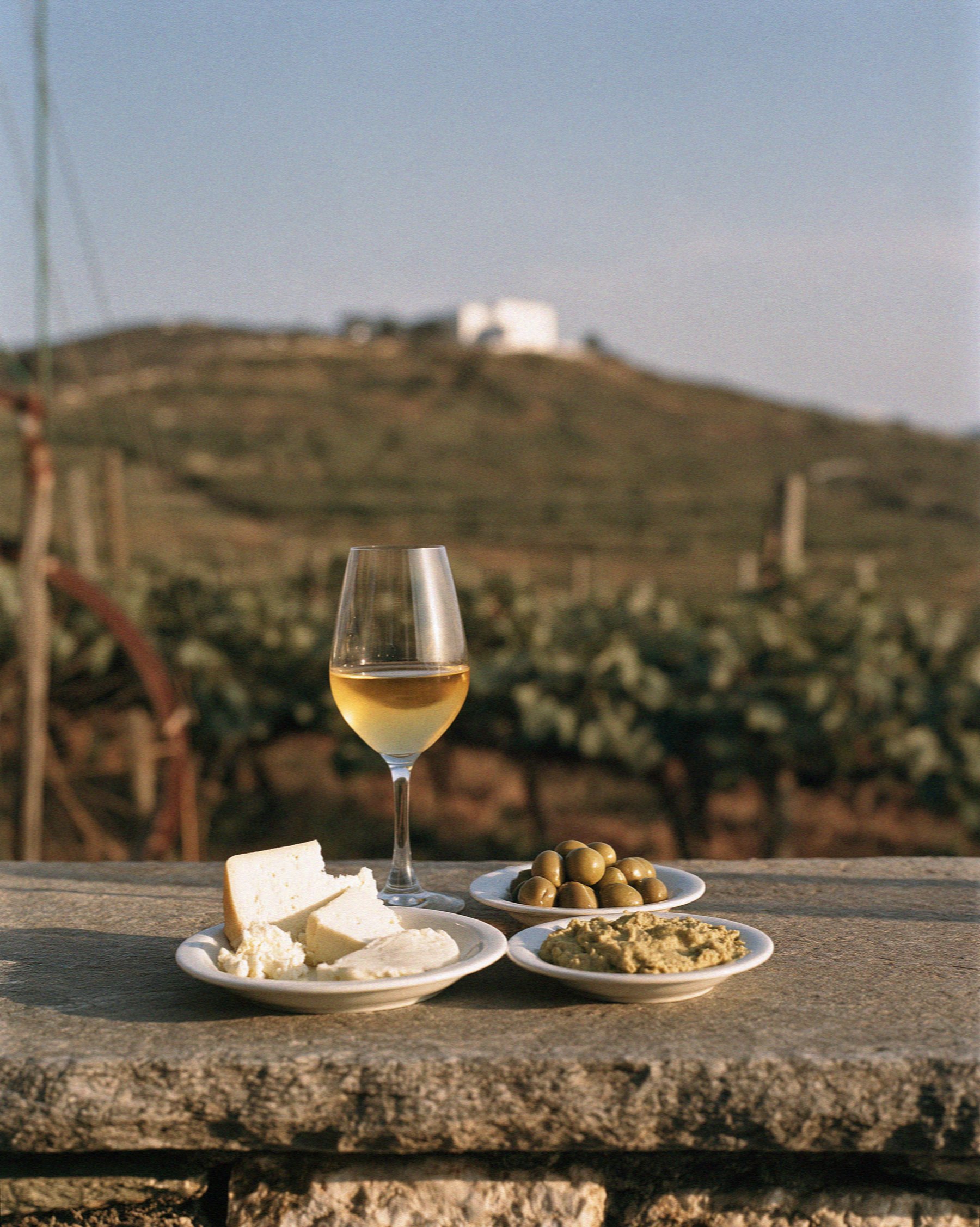
Paros eats from the sea first. Grilled fish, octopus dried on the line and then charred, small fried fish, squid and whatever came in that morning. The island’s own speciality is gouna, mackerel split and dried in the sun, then grilled. There is fava, the yellow split pea purée that every Cycladic island makes slightly differently, local cheeses, and wine from the island’s own grapes, Monemvasia in the white wines and Mandilaria in the red.
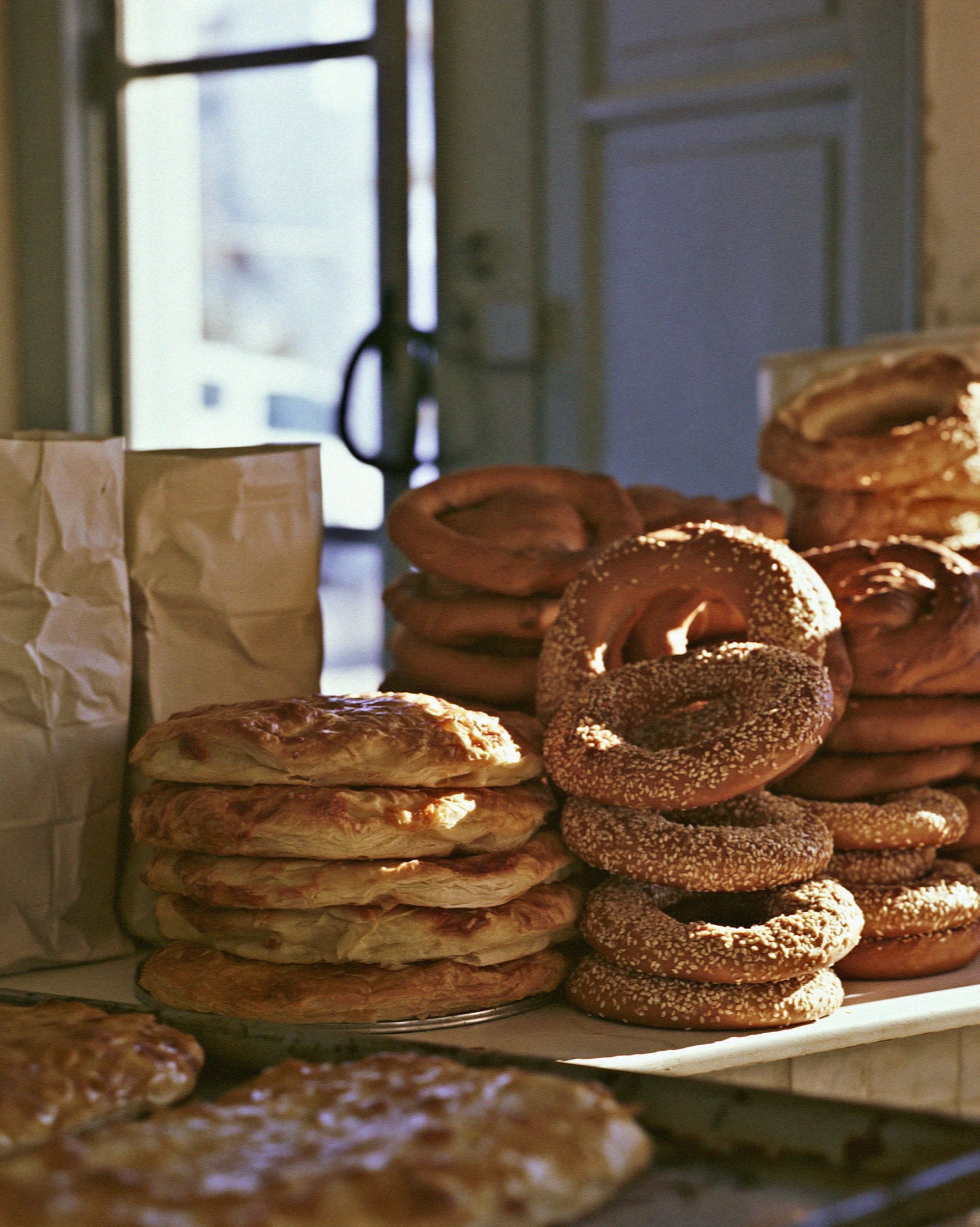
Naoussa has the best-known tables: Mario on the harbour for creative Greek cooking, long-standing Barbarossa on the waterfront, Sigi Ikthios for fish, Yemeni, and Siparos on the Santa Maria side of the bay. For one grand evening there is Matsuhisa at the Avant Mar hotel. In Parikia, look at Levantis in the old town and Magaya by the water; in Piso Livadi, the tavernas on the harbour are the place for fish. And for something cheap, a bakery cheese pie and a coffee is the best breakfast on the island.
The island eats late, as Greece does. Lunch from about two, dinner rarely before nine, and in July and August the well-known places in Naoussa need booking.
The dishes to look for, from a souvlaki in Parikia to a long dinner on the harbour in Naoussa, are in my guide to where to eat in Paros.
Getting there and getting around
Paros is very easy to reach, which is a large part of its appeal.
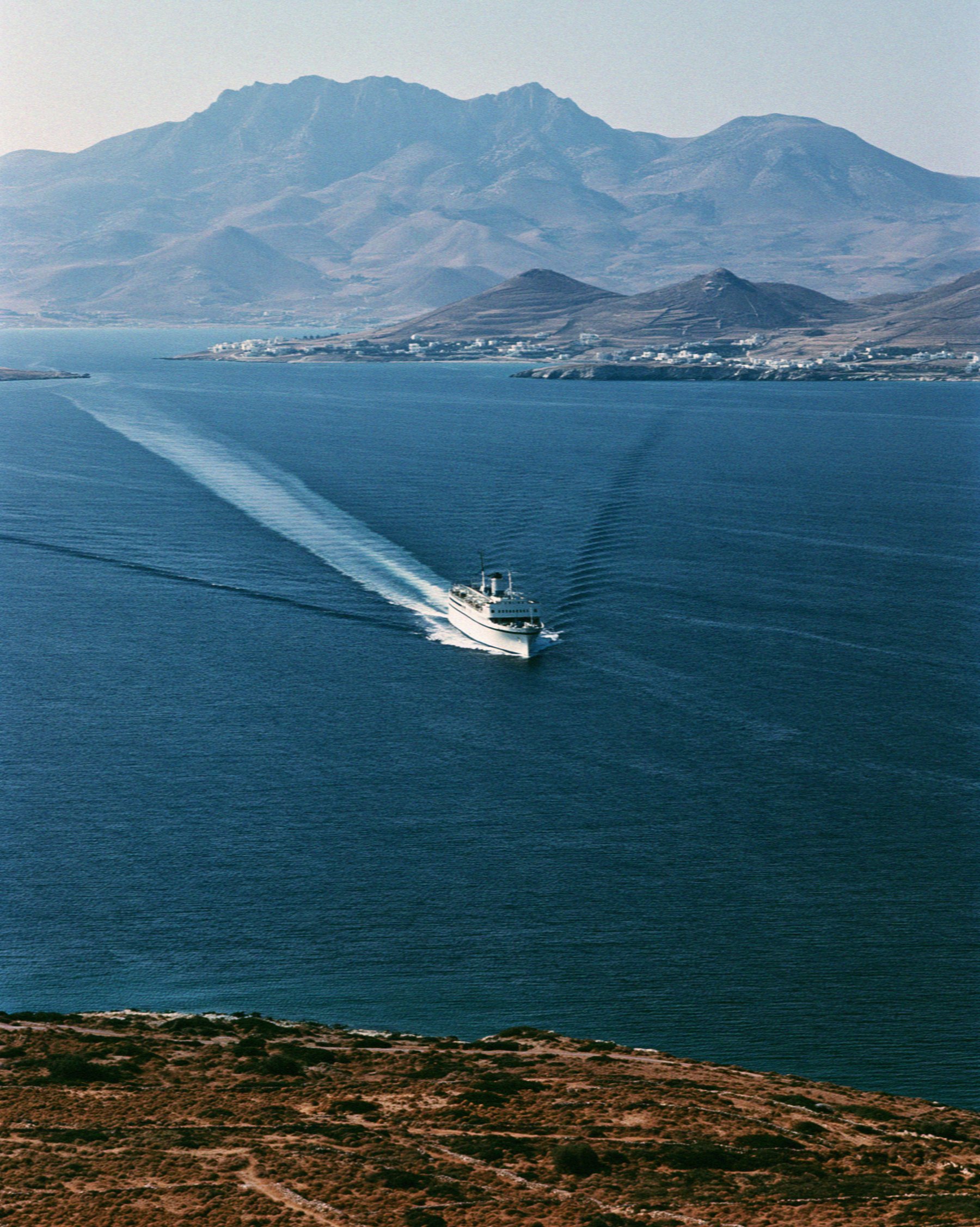
From Piraeus, the Blue Star conventional ferries take about four to five and a half hours, run all year and cost from about 50 euros. The Seajets fast boats take from about 2 hours 40 minutes to nearly four hours and run mostly in season. There are also sailings from Rafina and Lavrio in summer. Flights from Athens to Paros take about forty minutes, with Olympic and Sky Express. The airport is being enlarged, but for now think of it as a domestic airport.
Paros is also a hub for the islands around it. Naxos is under an hour away on most crossings, and Milos about an hour and 45 minutes by fast boat; I left for Milos on a catamaran a little under two hours long. Mykonos and Santorini are both straightforward in season.
On the island, the KTEL buses fan out from Parikia: very often to Naoussa in season, and also to Lefkes and the east coast villages, to Pounta for Antiparos, and to the airport. In 2026 they take cards only. A car or scooter makes the far beaches easy; in August, book one ahead.
How to arrive, by sea or by air, and how to hop between the two islands is in my guide to getting to Naxos and Paros, and between them.
A few days on Paros
Three days is enough for a first taste. Five lets the island breathe.
Spend the first day in Parikia: the church in the morning, the museum before it closes at 15:30, the Kastro, and a drink on the sunset side. On the second, go inland, getting off the bus at Marathi for the quarries, then up to Lefkes, down the Byzantine road to Prodromos and on to Piso Livadi for a late swim. On the third, go north to Naoussa, with a morning at Kolymbithres or in Paros Park, a slow afternoon in the lanes and dinner by the harbour.
A fourth day is for Antiparos. A fifth is a boat day or a slow one on the east coast, whichever the wind allows.
The whole route, with timings, costs and where to sleep for it, is in my Paros itinerary.
Paros or Naxos, or both
People ask which of the two islands to choose, and the honest answer is both if you can, because they sit across one short channel and are very different.
Paros is the more social of the two, with the prettier evening town, more polished hotels and Antiparos a seven-minute crossing away. It suits a first trip to the Cyclades, couples, and anyone who wants good dinners and lively harbours without Mykonos prices.
Naxos is bigger, higher and more agricultural. It has the Portara and the Venetian Kastro in its main town, long sandy beaches down the west coast, a mountainous interior of marble villages and unfinished giants lying in the quarries, and the highest summit in the Cyclades. It suits walkers, families who want long shallow beaches, and anyone who likes to eat well and simply. I had three days there before Paros and moved my ferry to get them.
If you have a week, split it, four and three in whichever order the ferries suit. The crossing is short and cheap, so the two islands work very well as one trip. Everything on the other island is in my complete guide to Naxos.
Practical things to know
Money. Cards are taken almost everywhere, and the buses take nothing else in 2026. Carry a little cash for the Antiparos ferry on the quay, small kiosks and some village cafes.
Museums and sites. Most state sites in the Cyclades, including the archaeological museum in Parikia, close on Tuesday. Last entry is twenty minutes before closing, and they close entirely on a handful of public holidays, including 25 March, 1 May, Easter, Christmas and New Year’s Day; check before you go.
The wind. Check the forecast every evening in summer. A strong north wind means the south coast or a sheltered bay, and it can delay or cancel the smaller boats.
Churches. Cover your shoulders and knees at Ekatontapyliani and the village churches, and keep quiet during services.
Steps. Many small hotels in Parikia and Naoussa have stairs and no lift, so ask before you book if that matters.
The climate fee. Your bill will carry a small government levy per room per night, in summer about 2 euros at a modest place and up to 15 at a five-star. The hotel collects it but does not keep it.
The season. Many hotels, beach bars and restaurants close from November to March or April, and the ferry timetable shrinks to the essential services.
What to pack
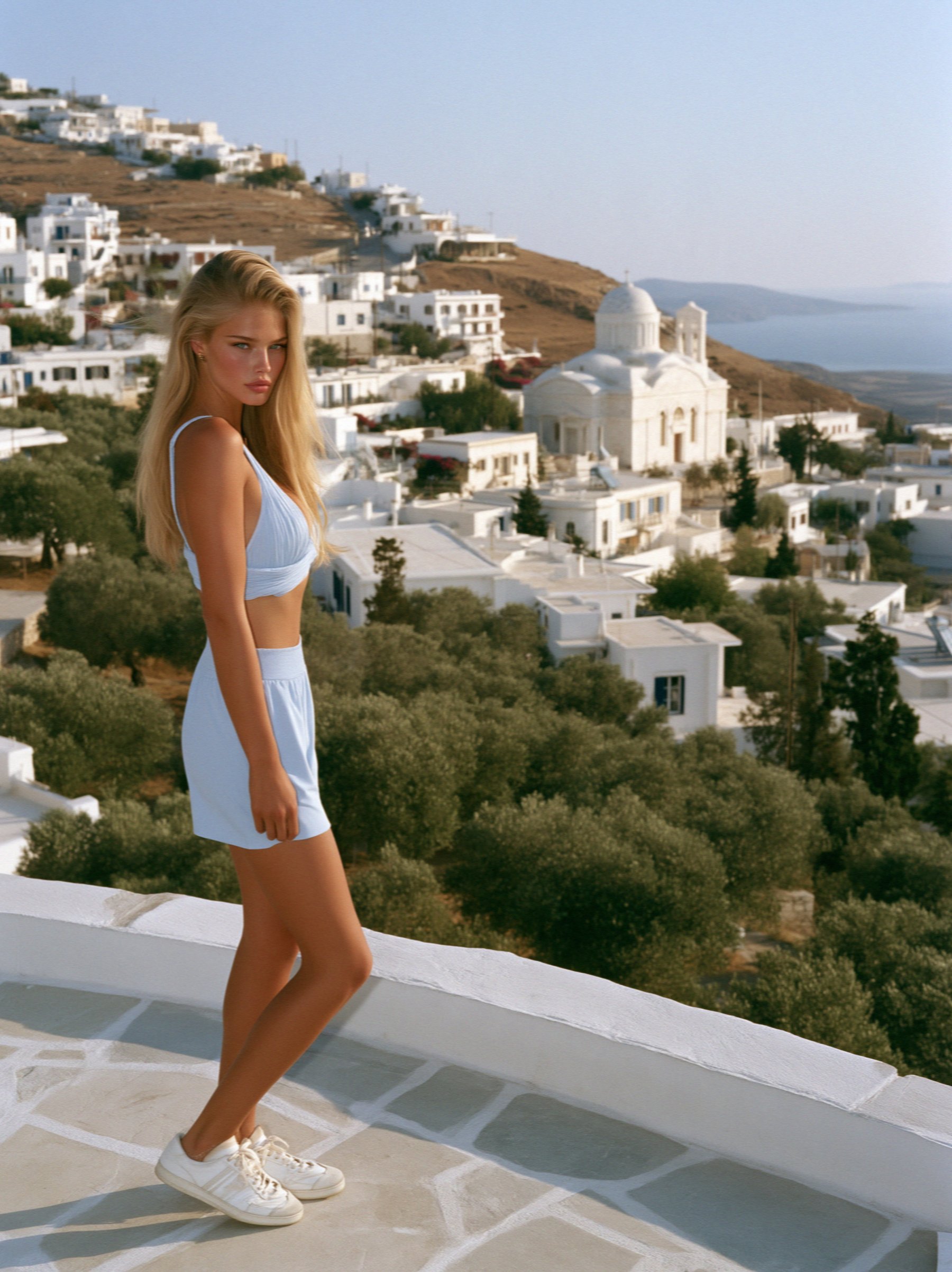
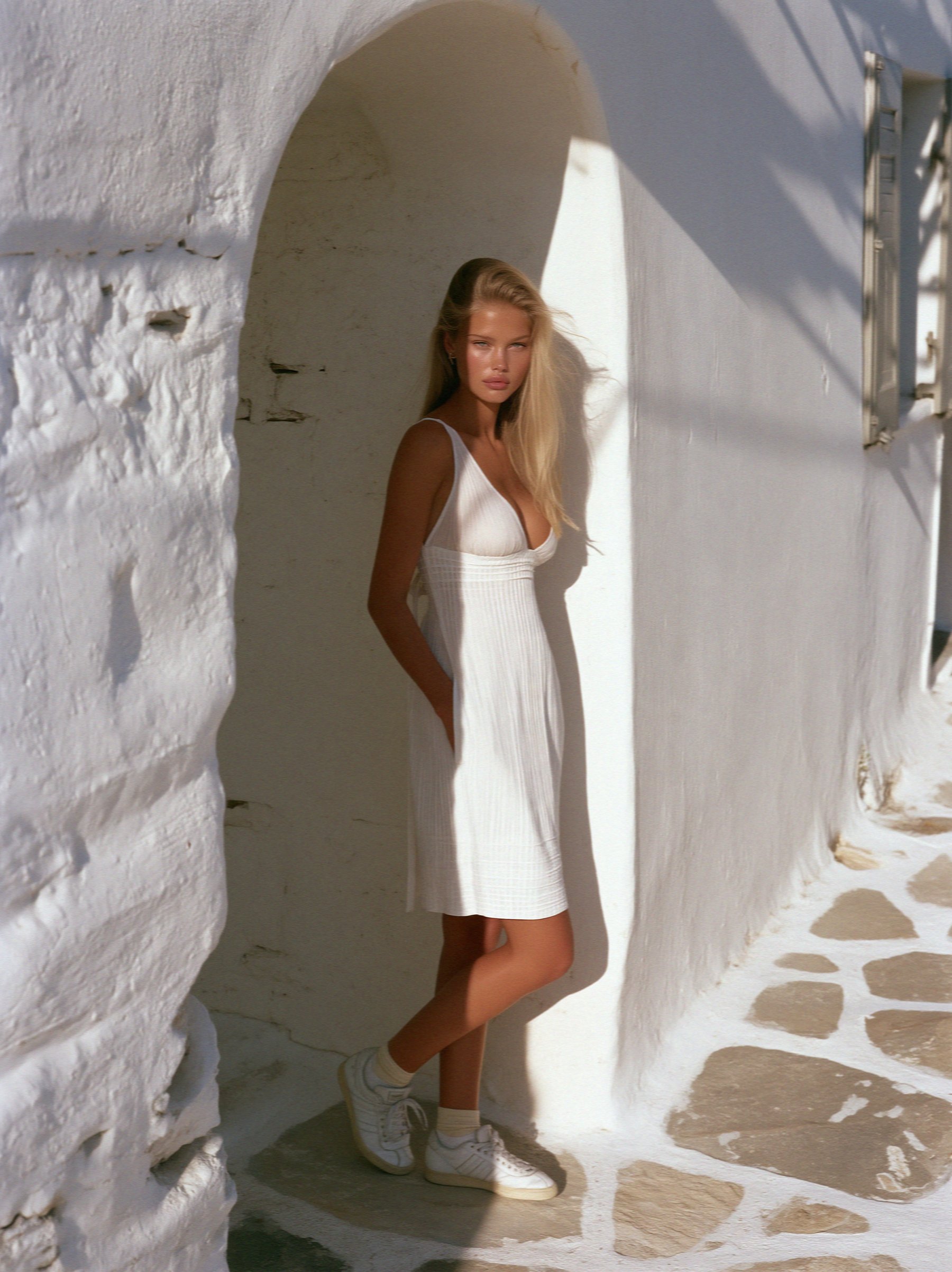
Shoes with grip for the marble paths and the Byzantine road, and something easy for the beach. Mine were white tennis shoes, and by Prodromos they were no longer very white. A hat and proper sun protection, because the inland paths have almost no shade.
Two swimsuits, a light cover-up for the lanes, and something for your shoulders in the churches. A warm layer for the evenings, which are breezy on the water even in summer and properly cool by October.
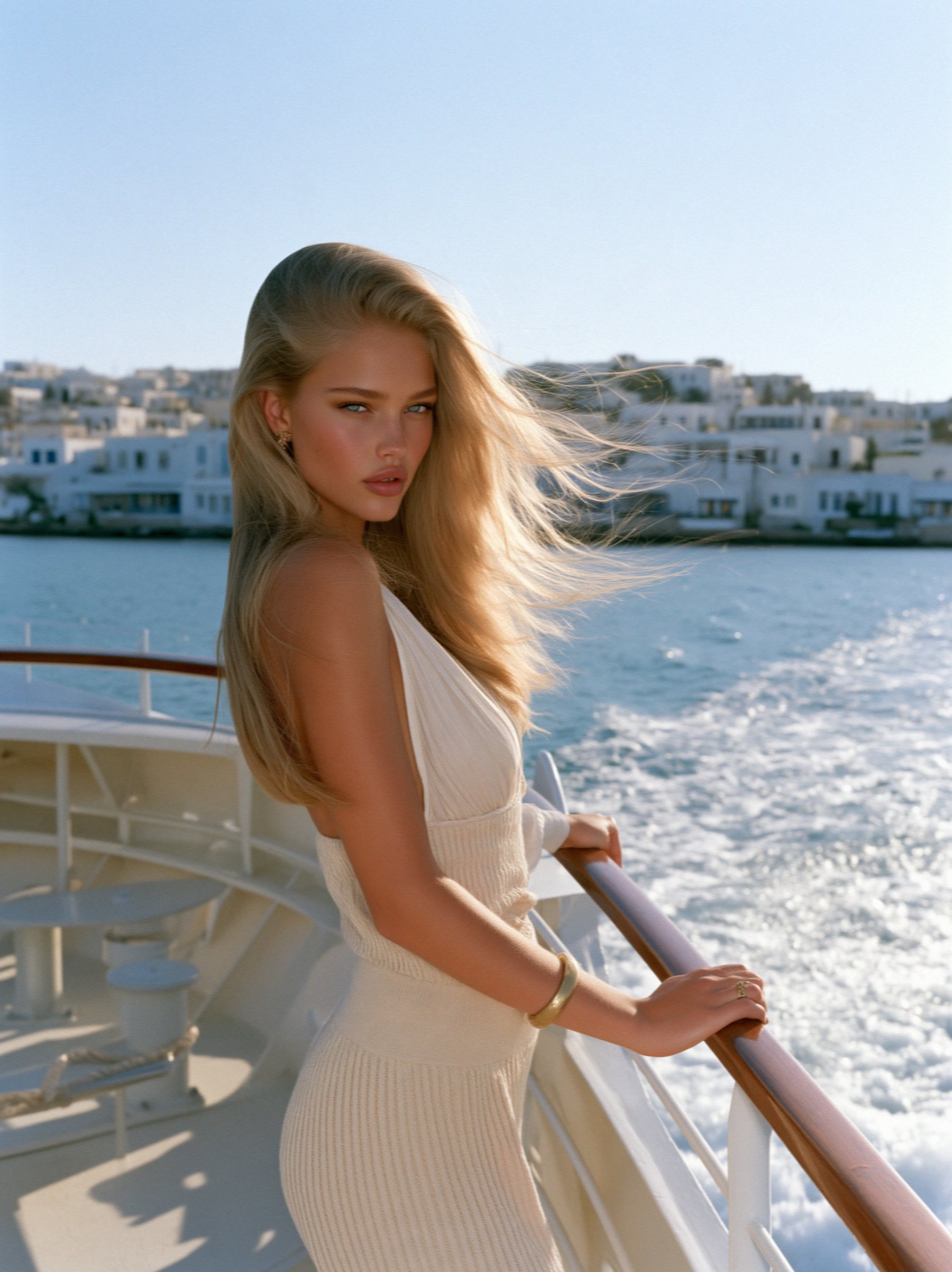
And a hair tie. The meltemi is not interested in your hair.
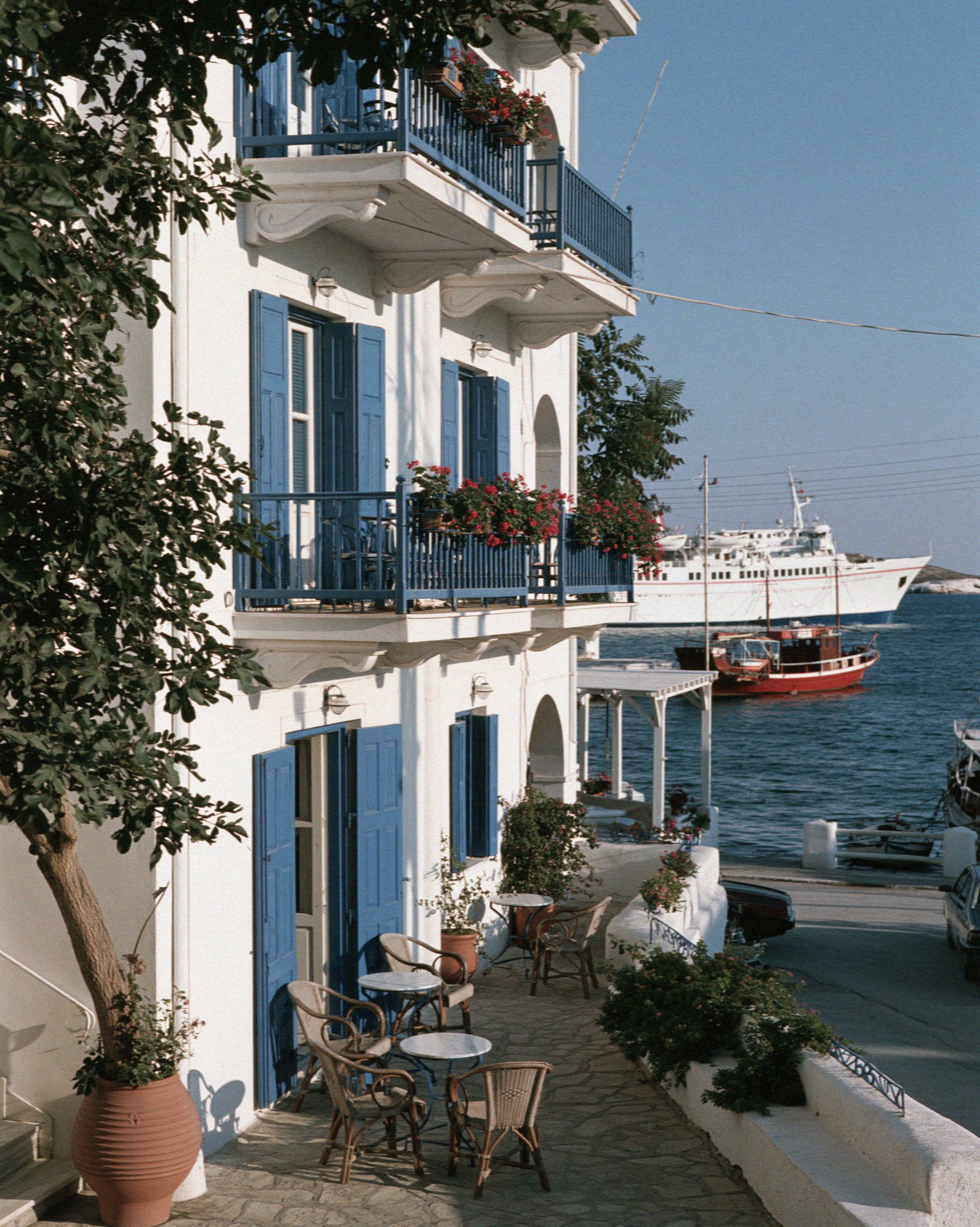
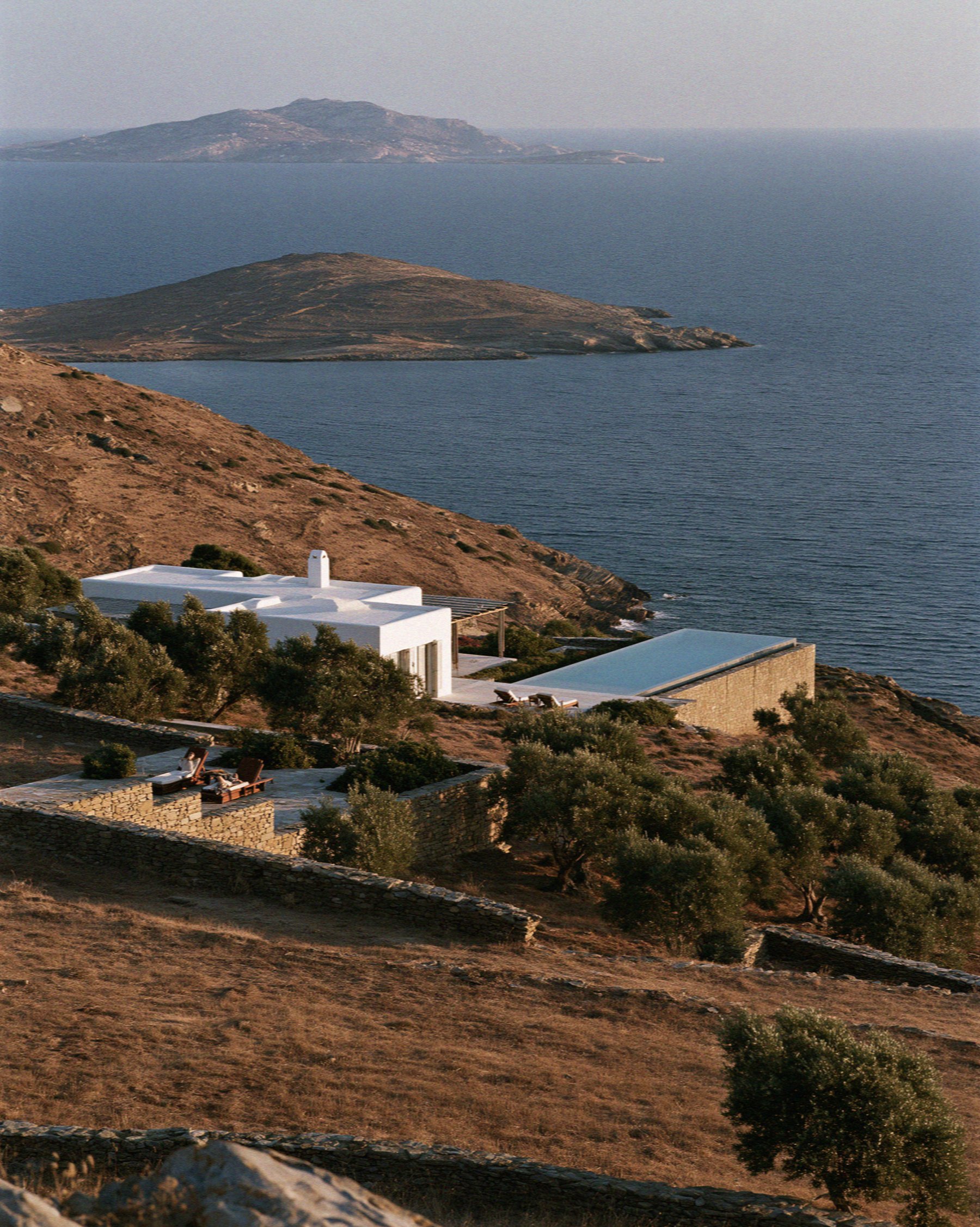
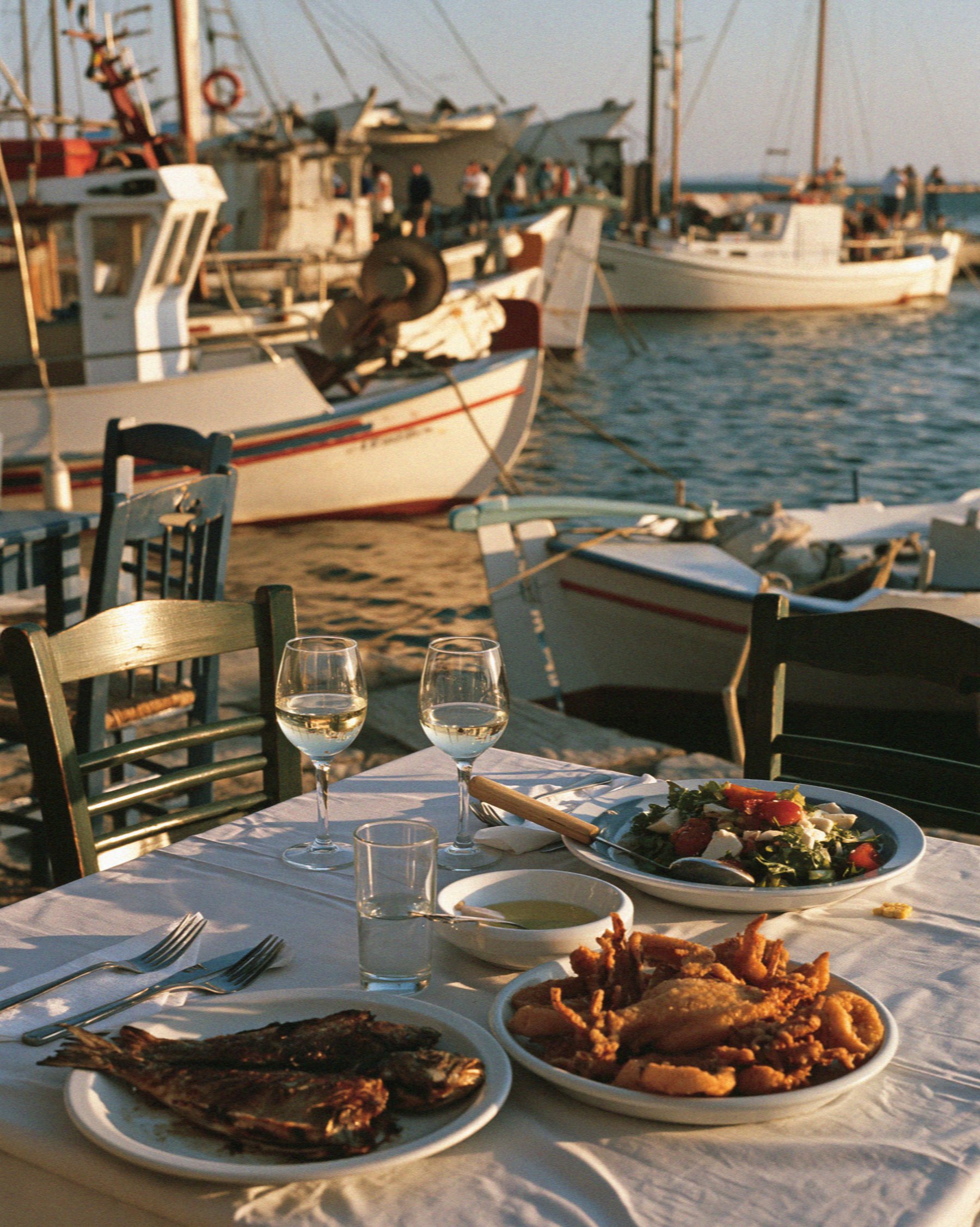
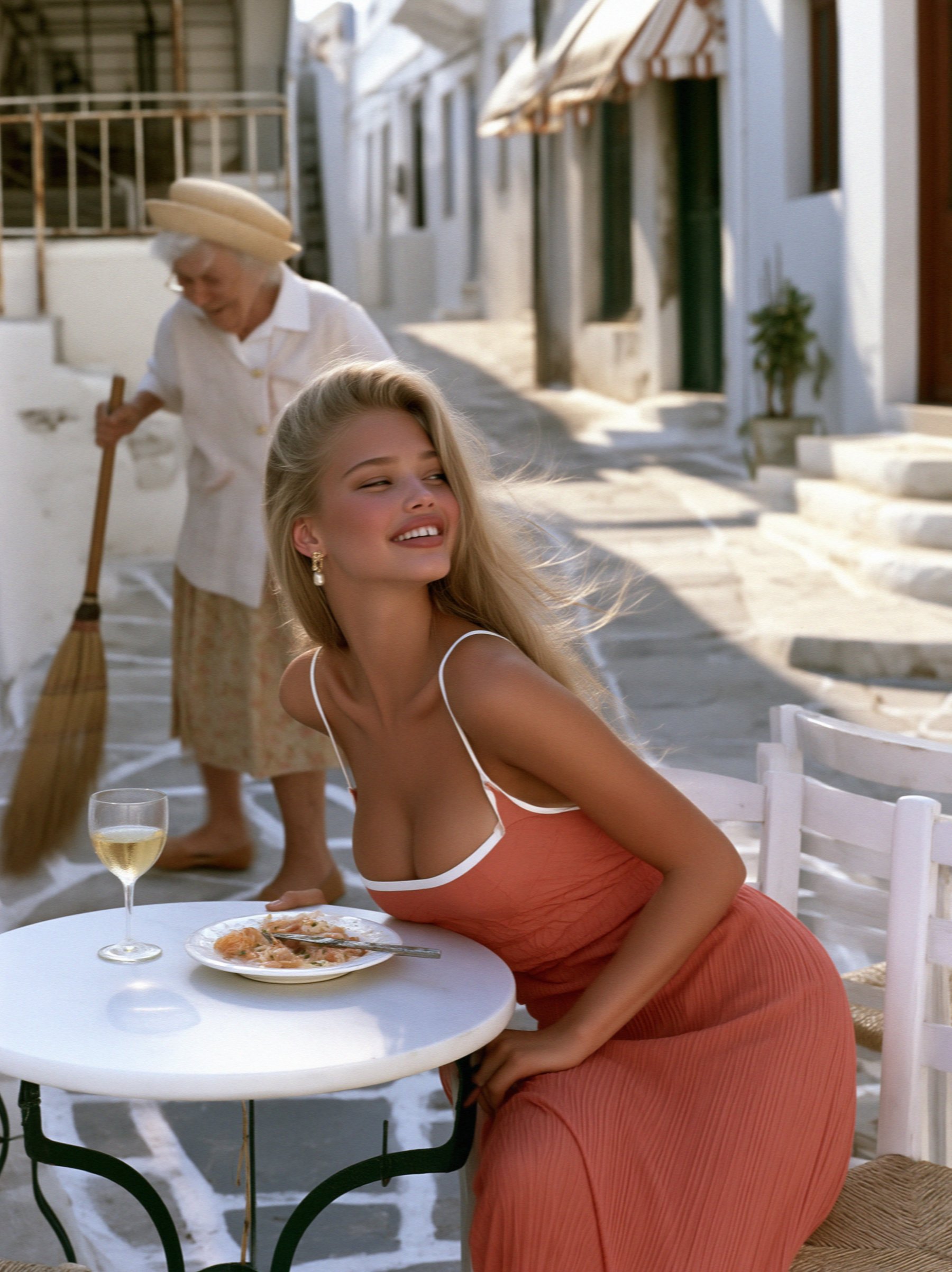
More images from Paros

Your Paros Guides
Everything here in detail, guide by guide.
- The Best Things to Do in Paros
- Parikia: the Church of a Hundred Doors, the Kastro and the Old Town
- Naoussa, Paros: the Harbour, the Venetian Fort and the Evenings
- Lefkes, the Byzantine Road and the Marble Quarries of Paros
- The Best Beaches in Paros
- Where to Stay in Paros: Naoussa, Parikia or the Beaches
- Where to Eat in Paros and What to Order
- An Antiparos Day Trip from Paros
- A Paros Itinerary: 3 to 5 Days
- Getting to Naxos and Paros, and Between Them
- The Best Time to Visit Naxos and Paros
Paros Travel Diaries
Frequently Asked Questions
How many days do you need on Paros?
Three days covers Parikia, the inland villages and the Byzantine road, and an evening in Naoussa. Five gives you time for Antiparos and a boat day to the Blue Lagoon and Despotiko, or a slow day on the east coast beaches.
Is it better to stay in Naoussa or Parikia?
Naoussa is prettier and livelier, with the best restaurants and the north coast beaches close by. Parikia is more practical, especially without a car, because every ferry and bus starts there, and it is usually cheaper.
How long is the ferry from Naxos to Paros?
About 45 to 70 minutes on the conventional ferry, or 25 to 30 minutes on a fast boat. There are several crossings a day in season, and the slow boat costs only a few euros.
How do you get from Paros to Antiparos?
Take the car ferry from Pounta on the west coast of Paros, which takes about seven minutes and runs every twenty to thirty minutes in summer. In season a passenger boat also runs from Parikia in about thirty minutes.
What is the best beach on Paros?
On a calm day, Kolymbithres for its granite rocks or Santa Maria for long, shallow sand. When the north wind blows, Faragas on the south coast is the sheltered choice, and Golden Beach is for windsurfers.
Do you need a car on Paros?
Not necessarily. The buses from Parikia reach Naoussa, Lefkes, Piso Livadi, Golden Beach and the Antiparos ferry, and they take card payment only. A car or scooter for a day or two makes the far beaches and villages much easier.
When is the best time to visit Paros?
September first, then June: the water is warm, nothing has closed and the crowds of July and August have thinned. Early October is still warm enough to swim, and April and May are best for walking.
What is the Byzantine road on Paros?
An old paved path, much of it laid with marble slabs, running about 3.5 kilometres downhill from Lefkes to Prodromos. It takes an hour to an hour and a half, and you can continue to Marpissa and Piso Livadi for a swim.