Start where the ferry leaves you. Parikia is the island’s port and its oldest town, and it is the right first day whatever else you plan, because everything on Paros, the buses, the boats and the roads, begins at that quay. From there the island unfolds in a sensible order: up into the hills, over to the north coast, across the strait to Antiparos, and finally out onto the water.
This is the route I would give a friend, five days with a three-day version at the end, what it costs and where to sleep. Parts of the first two days follow what I did on the island in October; the rest is what I would do with more time. For the full picture, see my complete guide to Paros.
How to split the days
Three days covers the essentials: Parikia, the inland villages and the old road, and Naoussa.
Four days adds Antiparos, which is only seven minutes away by ferry.
Five days leaves room for a day on the water around Antiparos, or a lazy one on the east coast beaches.
In late July and August the meltemi can cancel boats for days, so keep the sea days for the calmest forecast and put a walking or town day in the windiest slot.
Day one: Parikia
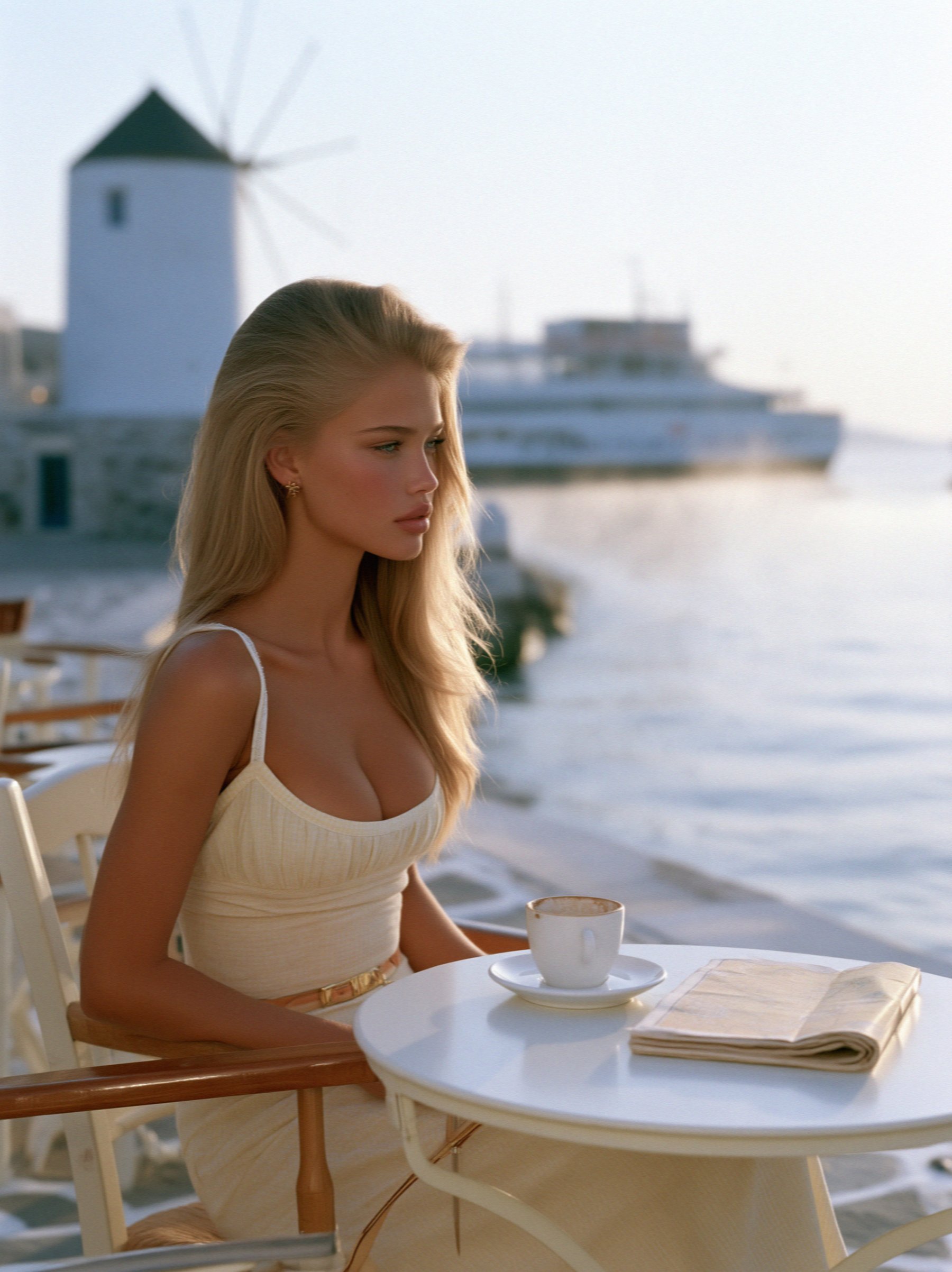
Begin at the harbour, with a coffee facing the boats and the windmill on the quay. Then walk five minutes into the town to Panagia Ekatontapyliani, Our Lady of the Hundred Doors, a church far older inside than it looks from the street. Tradition takes it back to Saint Helen in the 4th century, with a rebuilding under Justinian in the 6th. Try counting the doors; I tried, lost count in the thirties, and wrote about it in Ninety-Nine Doors.
Behind the church is the archaeological museum, open 08:30 to 15:30, closed on Tuesdays, for 5 euros. Then lose yourself in the old town along the market street and climb to the Kastro, where the Venetian dukes of Naxos built a wall in the 13th century out of marble taken from ancient temples, column drums and all.
In the afternoon, take the small boat across the bay to Krios or Marcello for a swim. In the evening, walk round to the west side of the town for a drink as the sun goes down over the water. The town in detail is in my guide to Parikia.
Day two: Lefkes and the Byzantine road
This is the day I would not swap for anything. Take the morning bus from Parikia towards Lefkes and ask to be let off at Marathi, about 5 km up the road, for the ancient marble quarries. The galleries are gated, but you can look in from the entrance and walk among the broken white stone on the hillside. This is where the finest Parian marble, lychnites, was cut underground by lamplight.
Catch the next bus on to Lefkes, the old inland capital, built high in the middle of the island where pirates would have had to work to reach it. Walk the lanes, see the big marble church of Agia Triada and have a coffee or an early lunch.
Then walk the Byzantine road down to Prodromos, roughly 3.5 km of old marble paving, mostly downhill; allow an hour or so, more if you stop. Carry on through Marpissa to Piso Livadi, about 6 km in all from Lefkes, for a swim and fish at a harbour taverna, then take the bus back to Parikia. My own version of this day is in The Stone That Lets the Light In, and the walk is laid out step by step in my guide to Lefkes and the Byzantine road.
Day three: Naoussa and the north
Take the bus to Naoussa, the island’s prettiest town, and give it the whole day. In the morning, walk out along the breakwater to the ruined Venetian fort at the harbour mouth, then wander the lanes behind the old harbour before the heat.
Around midday, take a small boat across the bay to Kolymbithres, with its smooth granite coves, or to Monastiri inside Paros Park, where you can walk the headland paths to the little lighthouse before you swim. In the late afternoon, if it is open that day, the Moraitis winery in Naoussa runs cellar tours and tastings.
Then come back to the harbour for the evening, which is what Naoussa does best: tables by the water, the caiques tied up beside you and the lights coming on. Book dinner ahead in summer. My guide to Naoussa has where to eat and drink.
Day four: Antiparos
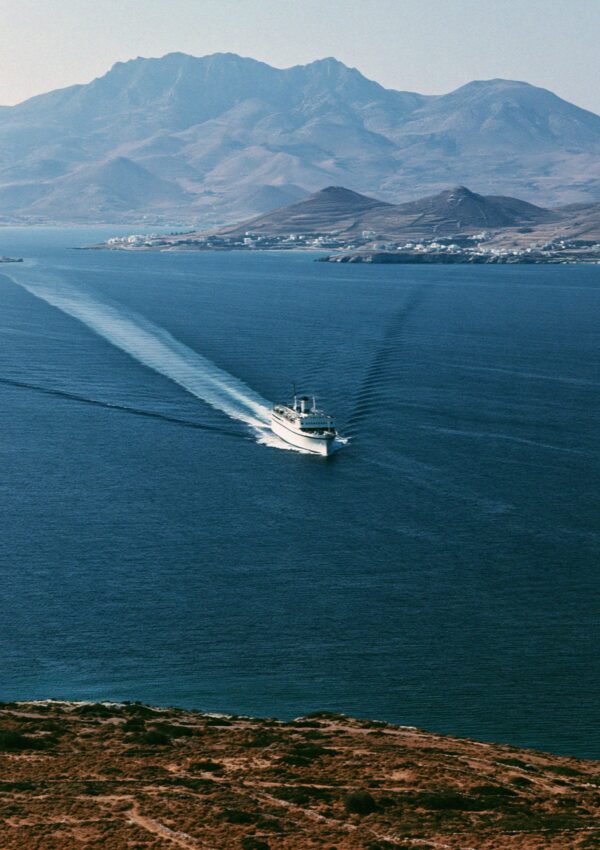
Take the bus or drive to Pounta on the west coast, and cross on the little car ferry, about seven minutes and under two euros, cash only, for a foot passenger. Or, in season, take the passenger boat straight from Parikia, about half an hour.
Go to the cave first, about 8 km from the town, open 10:00 to 16:00 every day through October, with last entry at 15:30. The 6 euro ticket also covers the folklore museum in town. Then come back for a swim at the beaches just south of the town and a long lunch in the main lane, and take an afternoon ferry back. Everything is in my Antiparos day trip.
Day five: a boat day or the east coast
If the sea is calm, spend the day on a boat. Trips to the Blue Lagoon among the Panteronisia islets and to Despotiko, the uninhabited island with its excavated sanctuary of Apollo, leave from Parikia, Naoussa, Aliki, Pounta and Piso Livadi, with swimming stops in coves you cannot reach by land.
If the wind is up, or you would rather stay ashore, make it an east coast day instead: Golden Beach to watch the windsurfers, a quieter swim at Logaras, and a fish lunch at Piso Livadi. In early summer, the Valley of the Butterflies at Petaloudes, about 5 km south of Parikia, is a short and shady detour.
If you only have three days
Do day one in Parikia, day two in Lefkes and on the Byzantine road, and day three in Naoussa, with a swim at Kolymbithres or Monastiri. That gives you the church, the marble, the old road and the island’s best evening.
What the days cost
Paros is a reasonable island to travel around on a budget. The KTEL buses take card payment only in 2026 and cover every stop on this route. The Antiparos ferry is under two euros for a foot passenger, and it takes cash only, unlike the buses, the passenger boat from Parikia about 7 euros, the archaeological museum 5 euros and the cave 6 euros.
Budget roughly 85 euros a head for a shared half day on the water and up to about 145 for a full day with lunch, checking the price for the boat you choose. A car or scooter makes days three to five easier, and should be booked well ahead for August.
Rooms run from about 70 euros a night for a simple double in high summer to 300 or more for luxury.
Where to sleep for this route
The most practical plan is to split the stay: the first nights in Parikia, which suits days one, two and four because the buses and boats leave from there, and the last nights in Naoussa, for the evenings, the north coast and the boats from its harbour.
If you would rather unpack once, stay in Parikia without a car, or in Naoussa with one. Either way, spend your final night in Parikia if you are catching an early ferry. My guide to where to stay in Paros has named hotels in both towns.
Frequently Asked Questions
Is three days enough for Paros?
Three days covers Parikia, Lefkes and the Byzantine road, and Naoussa. Four adds Antiparos, and five leaves room for a boat trip to the Blue Lagoon and Despotiko or a day on the east coast.
Can you do Paros without a car?
Yes. The KTEL buses link Parikia with Naoussa, Lefkes, Piso Livadi and Pounta for the Antiparos ferry, and boats cross the bays. A car or scooter helps for the far beaches.
Should you stay in Parikia or Naoussa for an itinerary?
Split it if you can: Parikia for the first nights, because the buses and ferries start there, and Naoussa for the last ones, for the evenings and the north coast.
Is one day enough for Antiparos?
Yes, for the town, the cave and a swim. The ferry from Pounta takes only seven minutes, so you can be back in Paros for dinner.
What is the best day trip from Parikia?
Lefkes and the Byzantine road: the bus up to the marble quarries and Lefkes, the walk down the old marble path to Prodromos, then on to Piso Livadi for a swim and the bus back.
Read also: Lefkes, the Byzantine Road and the Marble Quarries of Paros | An Antiparos Day Trip from Paros | Victoria’s Complete Guide to Paros