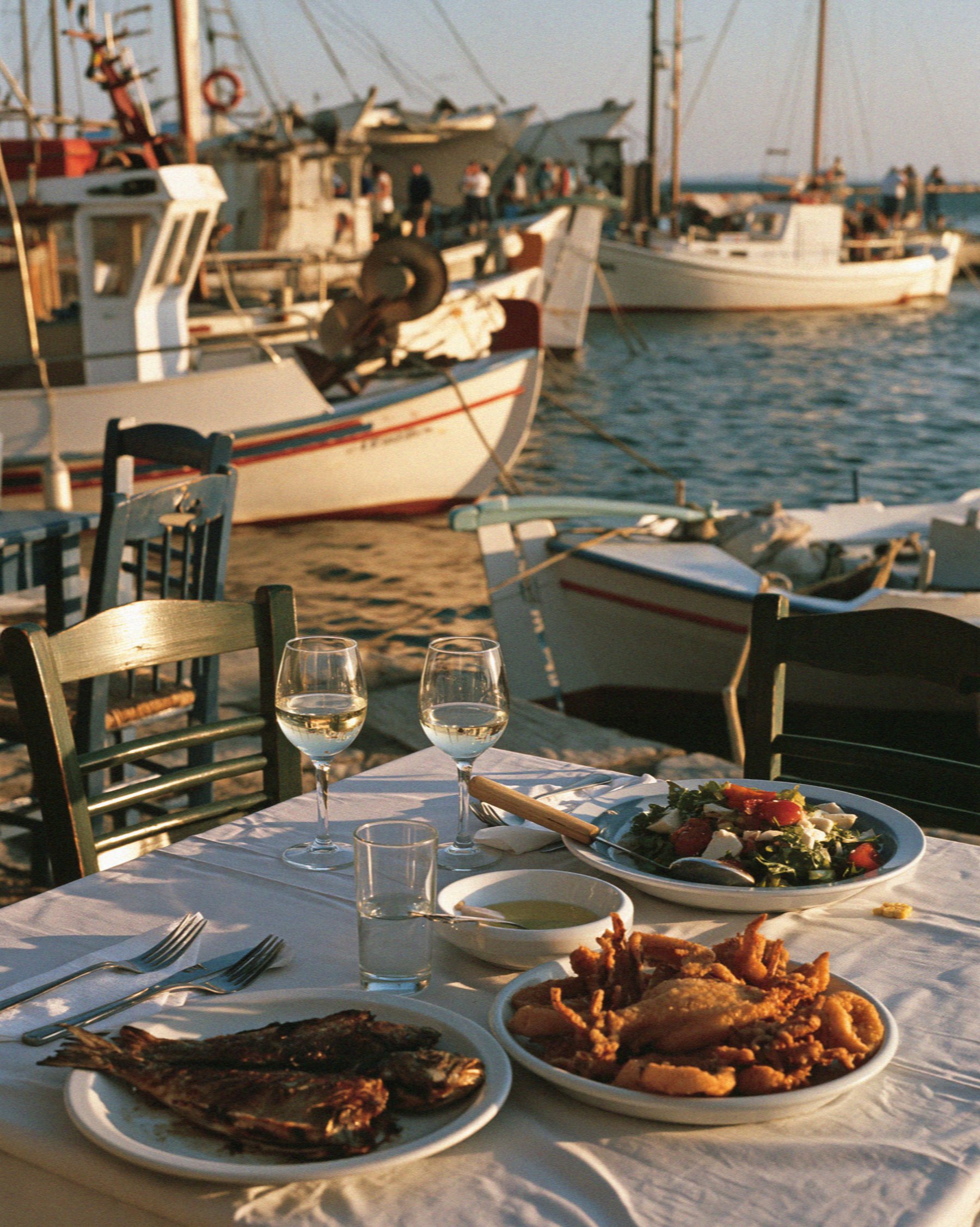
Look along any quay on Paros and you will see what dinner is going to be. In Naoussa there are octopus hung out on lines to dry beside the tables. In Piso Livadi the boats come in a few metres from where you sit. Paros is a fishing island before it is anything else, and the best meals here are the simplest: something from the sea that morning, a plate of fava, a cold glass of the island’s own white.
This is where to eat, town by town, what to order when you get there, and how to make sure you get a table in August. The island as a whole is in my complete guide to Paros.
What Paros cooks
Start with the sea. Grilled fish, sold by weight and chosen from the ice; octopus, dried in the sun and then grilled; calamari, sardines and small fried fish to share. The island speciality to look for is gouna, mackerel split open and dried in the sun, then grilled, which tastes far better than it sounds and goes perfectly with a glass of wine.
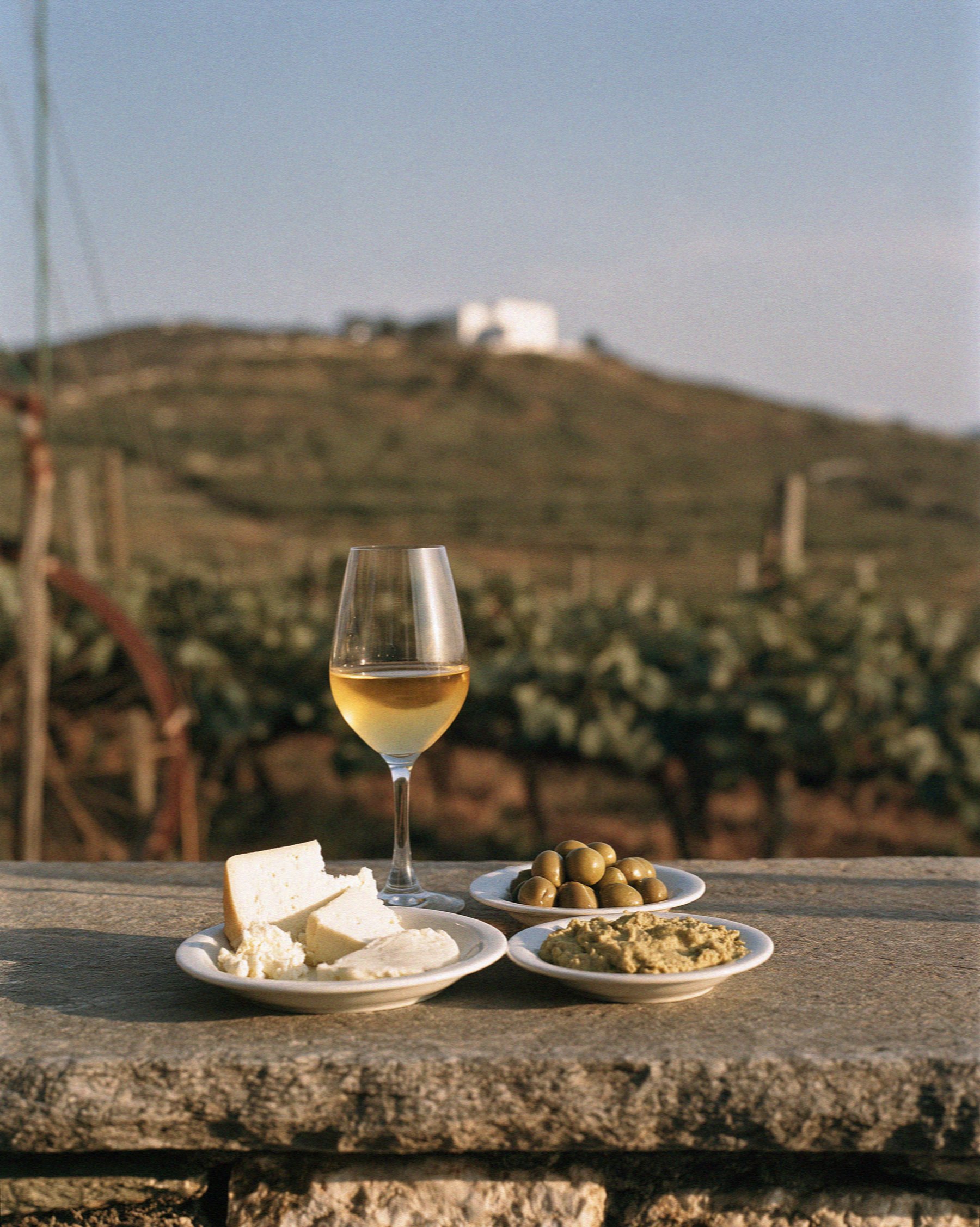
Then the things that come with it. Fava, the smooth yellow split-pea purée served with onion and olive oil, is on almost every menu. Paros makes its own cheeses, so ask what is local rather than ordering the feta by reflex. And the island grows its own wine, from grapes you rarely see elsewhere, which I come to below.
When you order fish, ask the price per kilo and see the fish weighed before it goes on the grill. This is normal everywhere in Greece, and nobody minds you asking.
Eating in Naoussa
More of the island’s good restaurants are packed into Naoussa than anywhere else, most of them around the old harbour or in the lanes just behind it. It is also the most expensive place to eat on Paros, and in July and August the best tables are booked days ahead.
Mario, right on the harbour, cooks creative modern Greek food and is one of the town’s best-known tables. Barbarossa, also on the harbour, has been there for years and is the place for meze and a glass of ouzo almost on the water’s edge. Sigi Ikthios is the fish specialist, and Yemeni is another good, popular choice in town. Out along the road to Santa Maria, Siparos sits right by the sea, a short drive from the harbour and a good reason to make it.
At the top of the range, Matsuhisa, at the Avant Mar hotel by Piperi beach, brings the famous Japanese name to the island, with prices to match.
My advice is to book one of the harbour places for your best evening, and then wander the lanes on the other nights, where the smaller tavernas are often just as good and easier to get into. More on the town itself is in my guide to Naoussa.
Eating in Parikia
Parikia is less of a dining destination than Naoussa, and that is part of its charm. The prices are kinder, the tables are easier to get, and some of the best food on the island is here.
Levantis, in the old town, is as dependable as anywhere in Parikia, and a fine place for a proper dinner without the Naoussa prices. Magaya, a restaurant and beach bar by the water at Parikia, is the more relaxed alternative. Along the waterfront by the port, you will find plenty of tavernas aimed at ferry passengers; walk a few lanes back into the old town and the food usually improves.
For a sundowner before dinner, walk round to the west side of town, where the bars face the sunset over the bay. The rest of the town is in my guide to Parikia.
Lunch in Lefkes
Lefkes, the old capital high in the middle of the island, is the place for a long, slow lunch, preferably after walking somewhere. The village is all white lanes and arches among olives and pines, and it has a few cafés and tavernas around its little squares.
When I came up in October, it was the woman running a café in the village who pointed me down the old path to Prodromos, and nobody seemed in any hurry about anything. That is the rhythm of Lefkes. Sit in the shade, order whatever the kitchen has that day, and then walk the old marble road down the hill to the east coast. The walk itself is in my guide to Lefkes and the Byzantine road.
In the quiet months some places keep short hours or close altogether, so in October and later it is worth checking what is open before you come up with a lunch plan.
Fish by the harbour
For fish, go where the boats come in.
Piso Livadi, on the east coast, is a small fishing harbour with a handful of tavernas on the quay, and Ouzeri Halaris there is the name people mention for fish and meze. It is the natural end to the walk down from Lefkes, and the kind of place where lunch drifts into the middle of the afternoon without anybody noticing.
In Naoussa, the harbour tavernas are the classic setting, with the caiques tied up beside you, and Sigi Ikthios and Barbarossa are both good places to order the catch. Aliki, in the south-west, also has tavernas by its small harbour, quieter than either.
Wine on the island
Paros has made wine for a very long time, and its two local grapes are worth trying while you are here. Monemvasia makes the island’s whites, fresh and quite aromatic, and Mandilaria makes its reds, deep in colour. You will find both by the glass or the carafe in most tavernas, and a cold glass of local white with grilled fish is the island in one order.
The easiest way to learn more is to visit Moraitis, the family winery in Naoussa, founded in 1910, which runs cellar tours and tastings. Check which days it is open before you go, as this changes with the season. It is one of the best afternoons on the island when the wind is too strong for the beach, and it is in my list of the best things to do in Paros.
Cheap and good
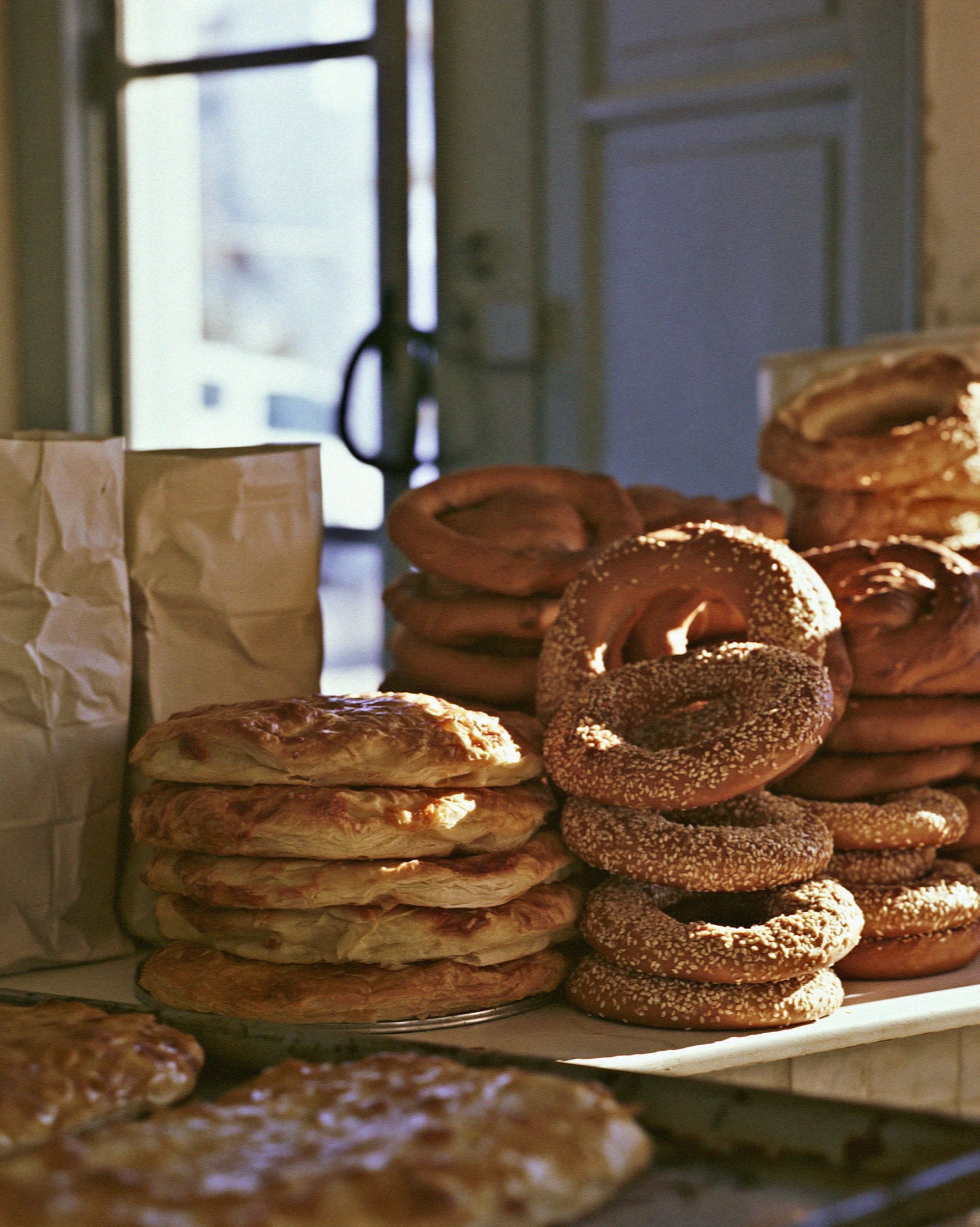
Eating well on Paros does not have to be expensive. Bakeries in every town sell cheese pies, spinach pies and sweet pastries for a few euros, and a pie eaten on a harbour wall is a very good breakfast. The cheese pies I remember most were from a harbour bakery on Naxos, but the Parian ones hold their own.
Souvlaki and gyros shops in Parikia and Naoussa will feed you for very little, and they stay open late. For a sit-down meal, a village taverna away from the harbours will almost always be cheaper than anything on the water, and often better. A carafe of house wine costs a fraction of a bottle.
How to book
In July and August, book the well-known Naoussa restaurants several days ahead, and the very best ones a week or more for a weekend table. In June and September a day or two is usually enough, and in the quieter months you can usually walk in.
Out of season much of Naoussa and the beach restaurants shut, usually from November until spring, so check before you set out for a particular place. Most take bookings by phone or online. Ask for a table by the water when you book, not when you arrive.
Frequently Asked Questions
What food is Paros known for?
Fresh fish and seafood, especially sun-dried octopus and gouna, which is mackerel dried in the sun and grilled. Fava, local cheeses and the island’s own wines from the Monemvasia and Mandilaria grapes are also worth trying.
Where are the best restaurants in Paros?
Naoussa has the greatest concentration, including Mario and Barbarossa on the harbour and Sigi Ikthios for fish. In Parikia, Levantis is a reliable choice, and Halaris in Piso Livadi is known for fish.
Do you need to book restaurants in Paros?
In July and August, yes, especially in Naoussa, where the best tables go days ahead. In June and September a day or two is usually enough, and out of season you can often walk in.
Is Paros expensive for food?
Naoussa’s harbour restaurants are the priciest on the island. Parikia, the village tavernas and the bakeries are much cheaper, and a pie or a souvlaki costs only a few euros.
Can you visit a winery on Paros?
Yes. Moraitis, a family winery in Naoussa founded in 1910, runs cellar tours and tastings. Check the opening days before you go.
Read also: Naoussa, Paros: the Harbour, the Venetian Fort and the Evenings | Lefkes, the Byzantine Road and the Marble Quarries of Paros | Victoria’s Complete Guide to Paros