Hôtel du Cap, Cap d’Antibes. Wednesday, 6 May 2026.
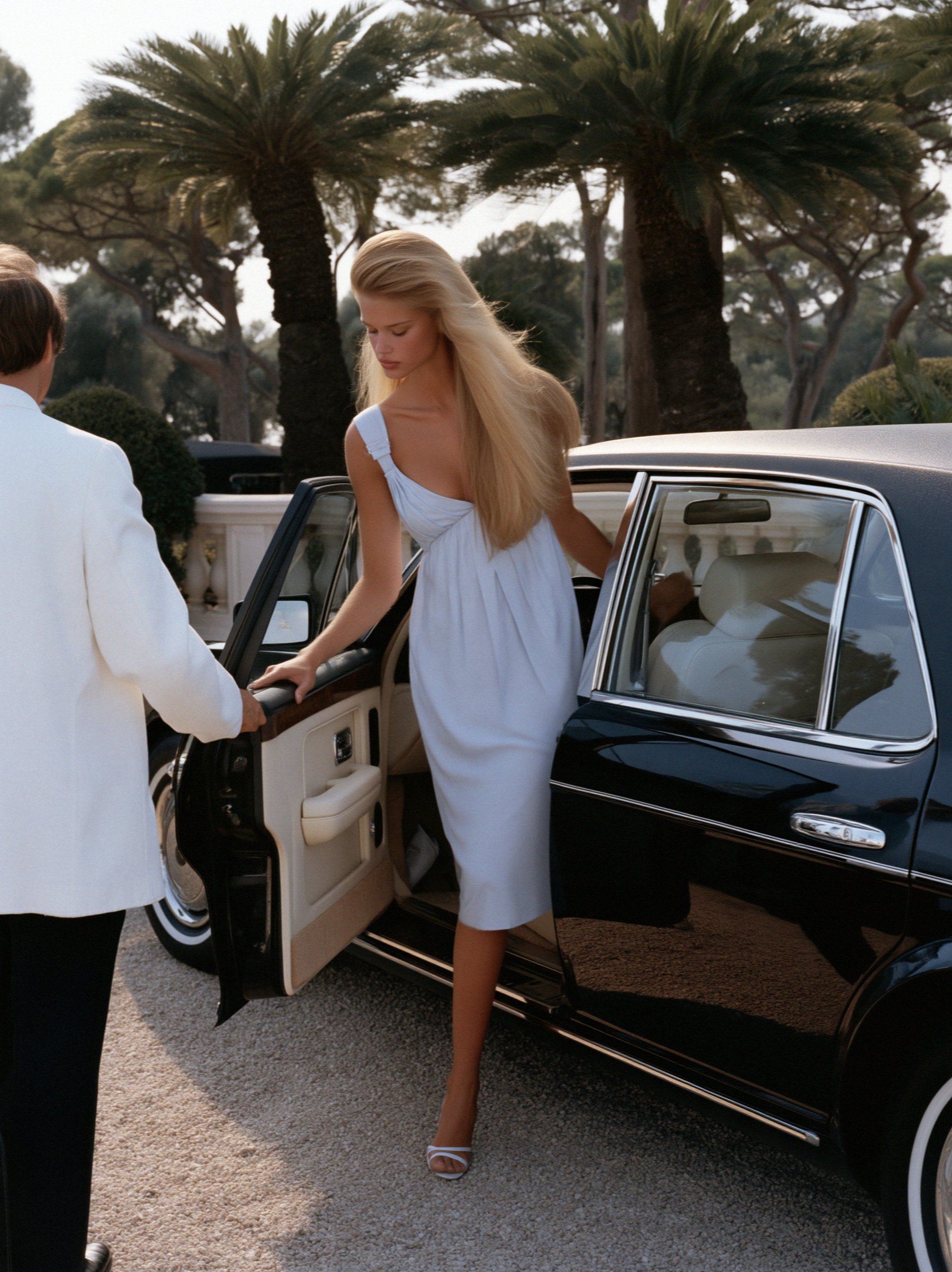
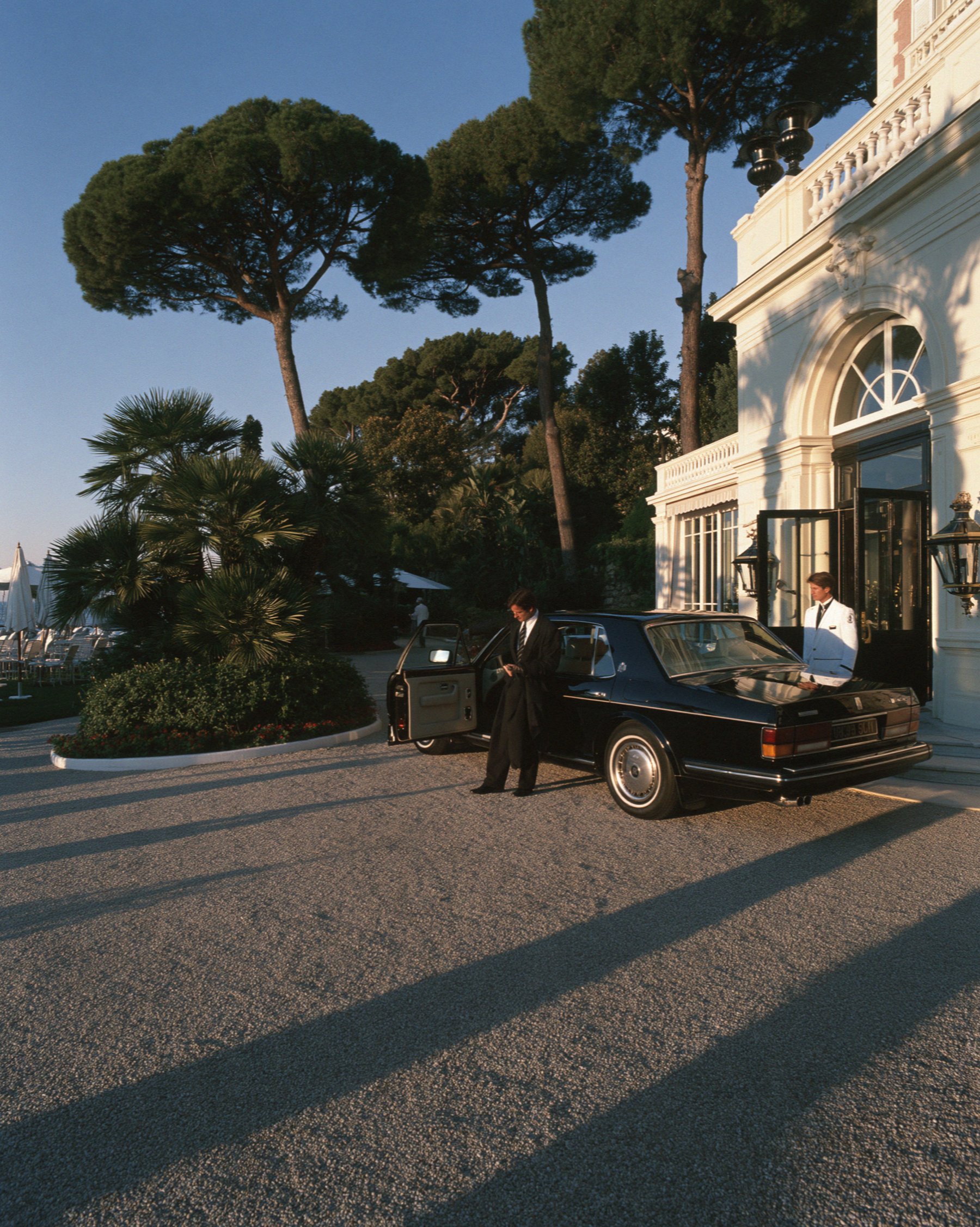
The car was at the door at half past eight.
Not the small one from yesterday. The big black one, the old one, which the hotel brings out when it wants you to feel you are leaving for somewhere important. I was only going into town.
Pierre held the door. He wished me a good day in the voice he uses for everyone, and then, as I got in, in a lower one.
“Shoes on, today.”
I laughed most of the way down the drive.
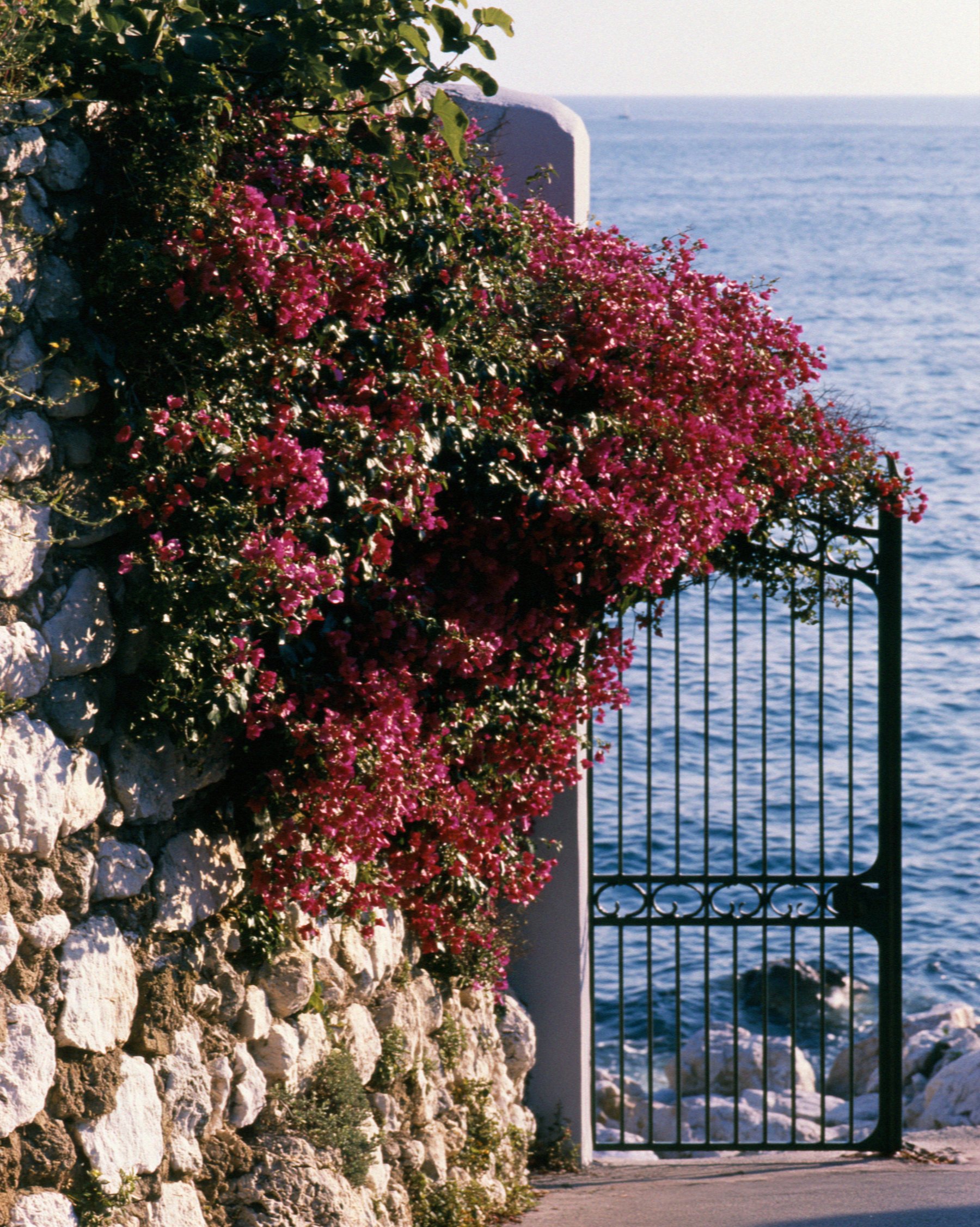
The road into Antibes runs round the edge of the Cap, past walls with bougainvillea spilling over the top and gates you will never see behind. Ten minutes. The window down. The sea on the right, then the ramparts, then the old town closing in around the car.
He had rented a studio for two days.
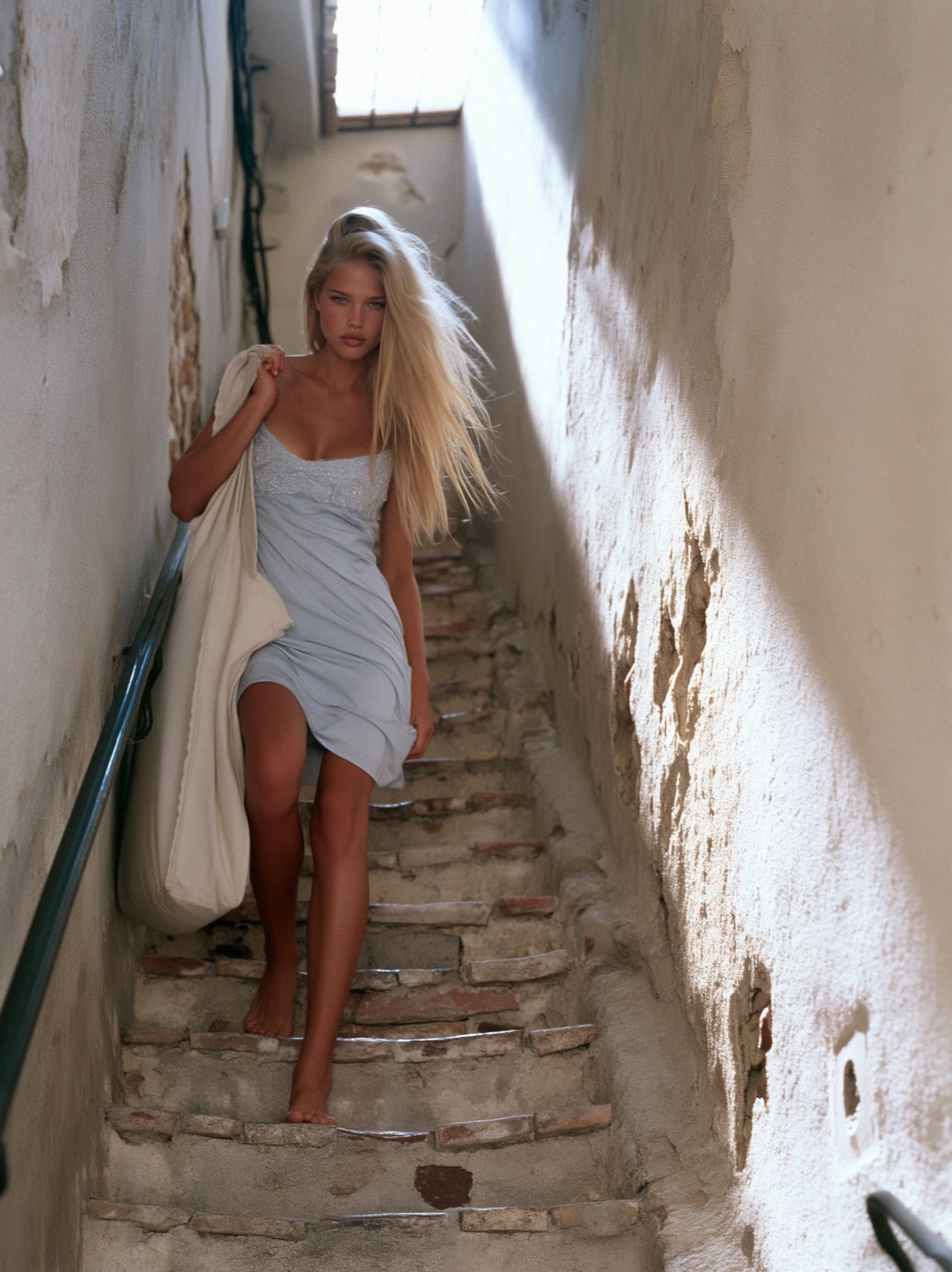
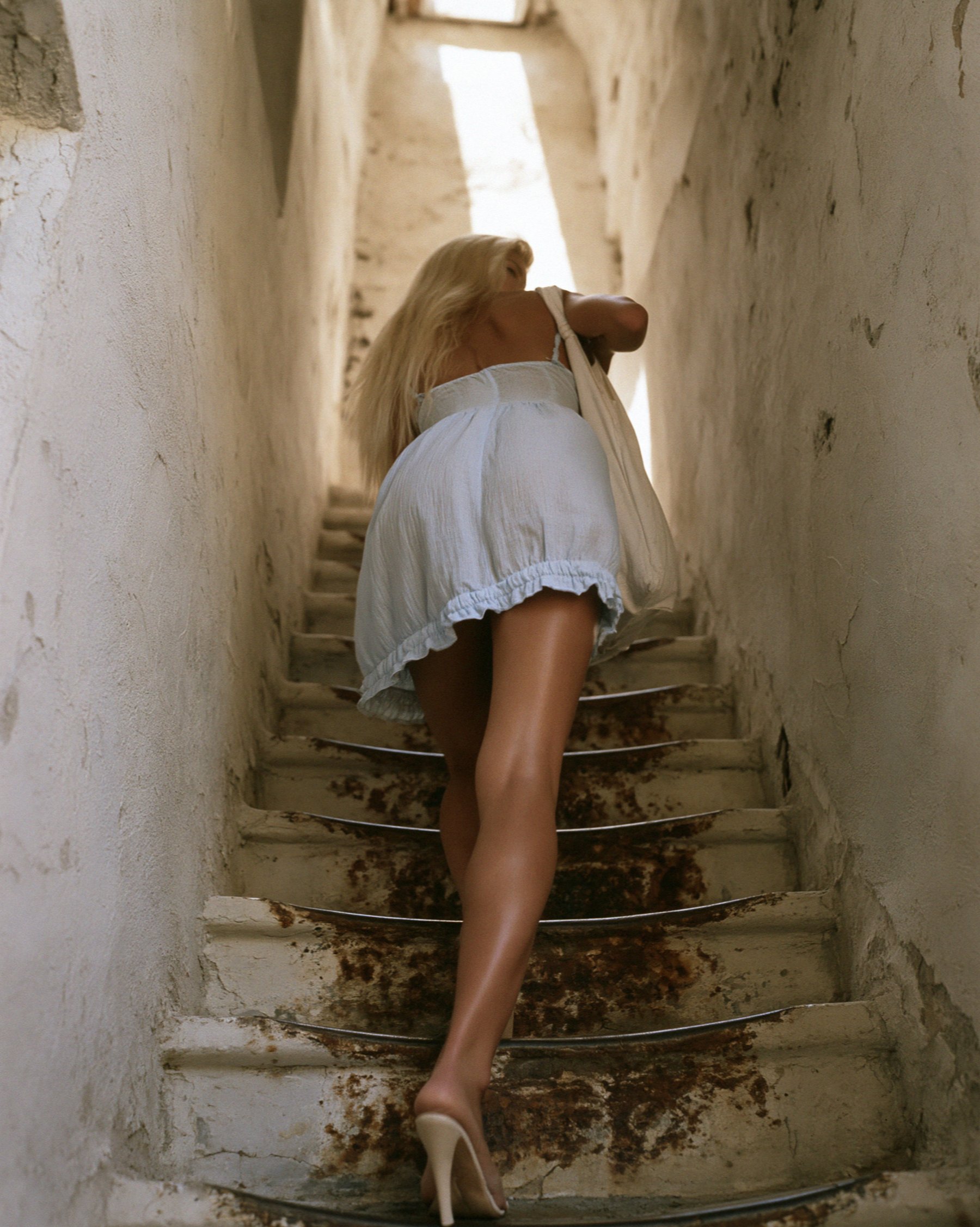
It is at the top of a narrow house in the old town, three flights of stone stairs, each one more worn than the last, and a door at the top that sticks. Somebody has been photographing people up there since the sixties. You can tell. Nothing has ever been thrown away.
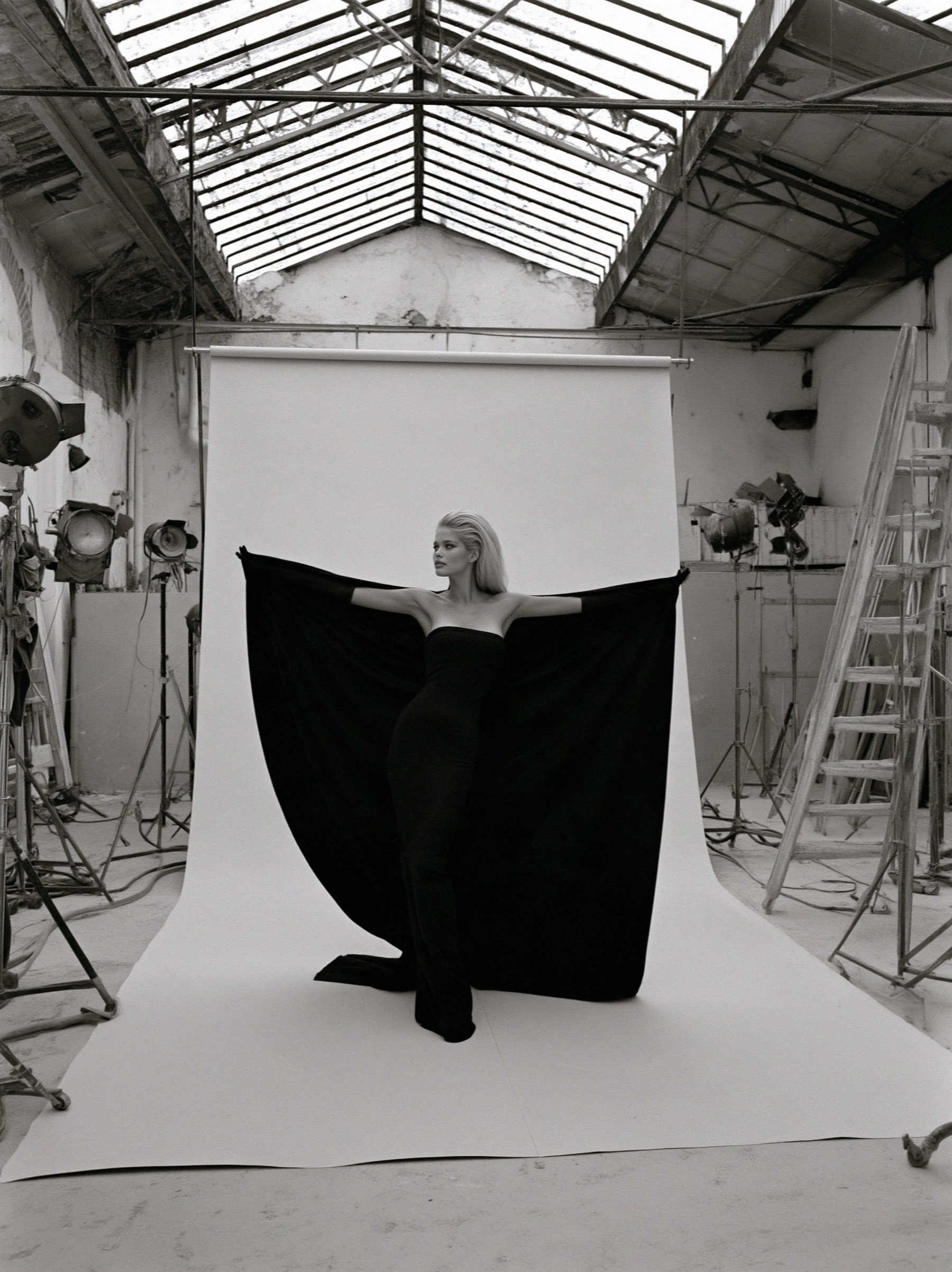
A big north window in the roof, so the light comes down cool and even and never moves. A wooden floor painted grey, then painted again, with every colour of every backdrop ever used up there flecked across it somewhere. A long roll of white paper hanging from a pole near the ceiling and pulled down across the floor in one clean curve, so that there is no corner. No wall, no floor. Just white.
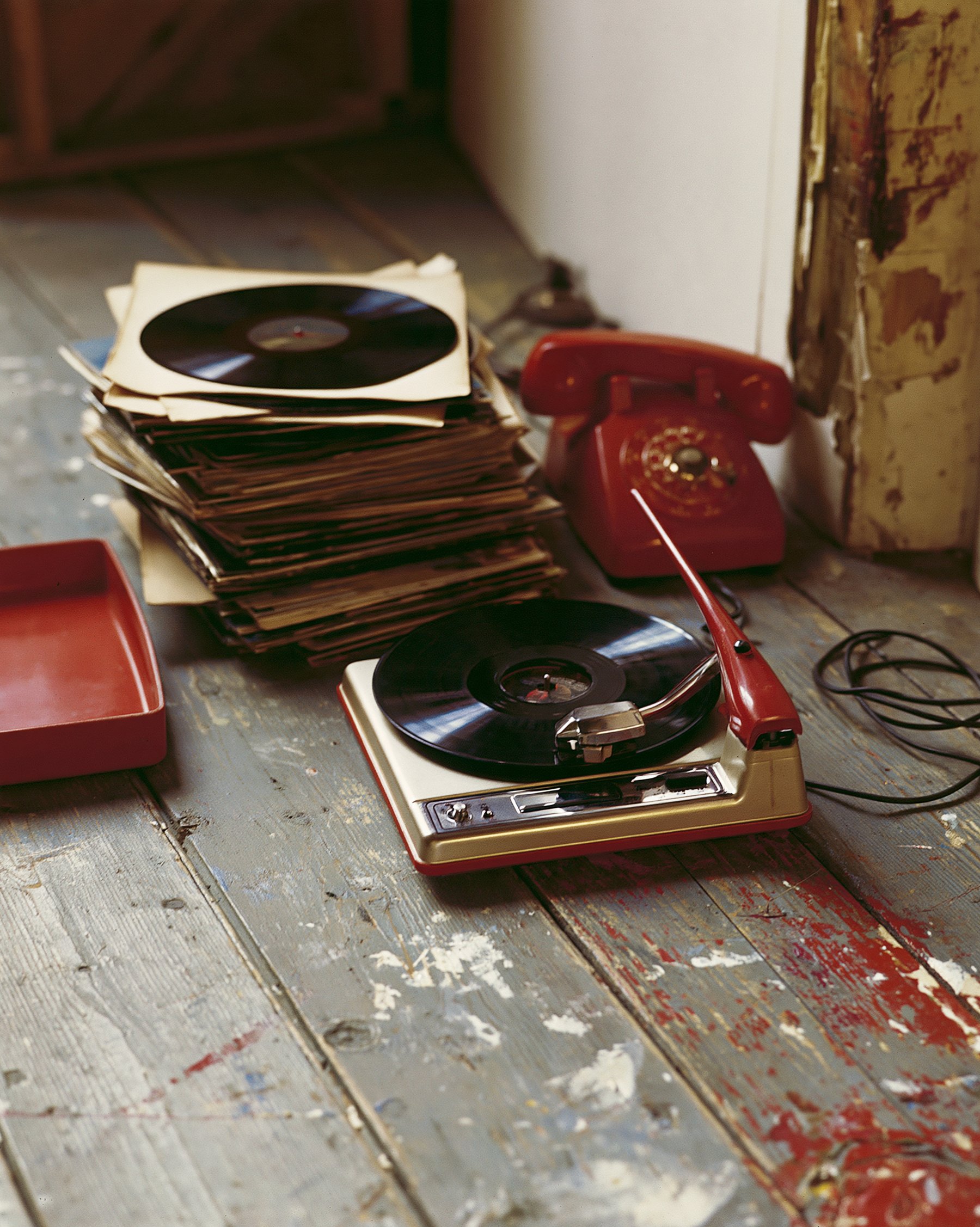
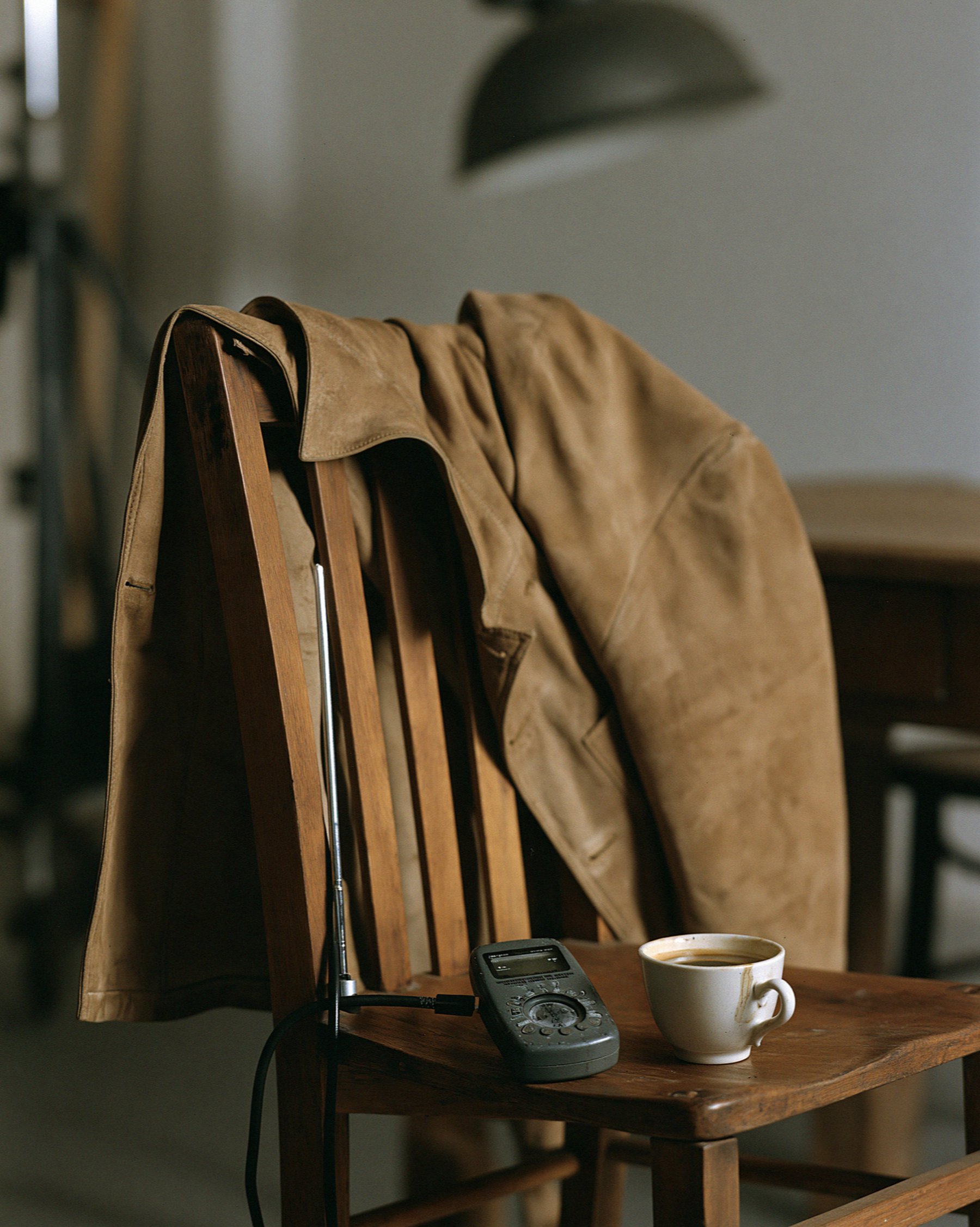
A black leather sofa with a split in one arm. A record player on the floor and a stack of records leaning against it. A telephone the colour of a tomato that does not ring.
The first thing I thought when I came through the door was Blow-Up.
The second was that he had known I would think it, and that this was why he had chosen it.
I should explain about the sixties.
I have a weakness for old clothes that is closer to an illness. Vintage Chanel mostly, bought one piece at a time over years, from shops that smell of cedar and old ladies who sell with great reluctance. A wool jacket with a chain sewn into the hem so it hangs straight. A little black dress from a year when I was nowhere near being born. I do not keep them for best. I wear them, which horrifies the people who sell them to me.
The team has watched this for a long time with the patience of people who know they will end up carrying the garment bags. Somewhere in the winter, over a dinner, one of us said that if we were ever going to do it properly, all of it, the eyes and the hair and the shoes and the film, it should be here, the week the whole town fills up with cinema. Nobody remembers who said it first. Everybody claims it.
So we did not do a nod to the sixties.
We went all the way in.
He did not say so. He was already up a ladder, doing something to a light.
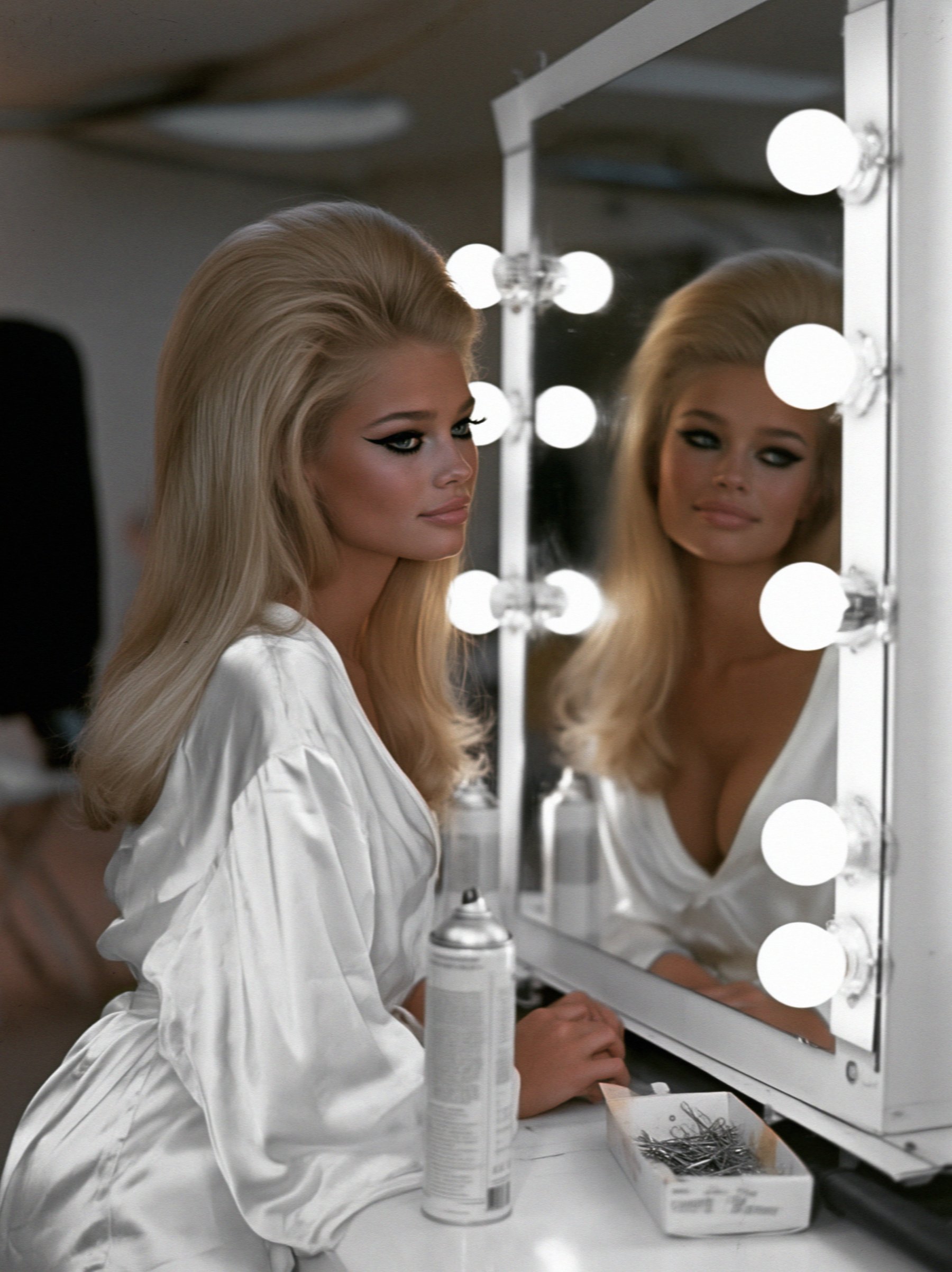
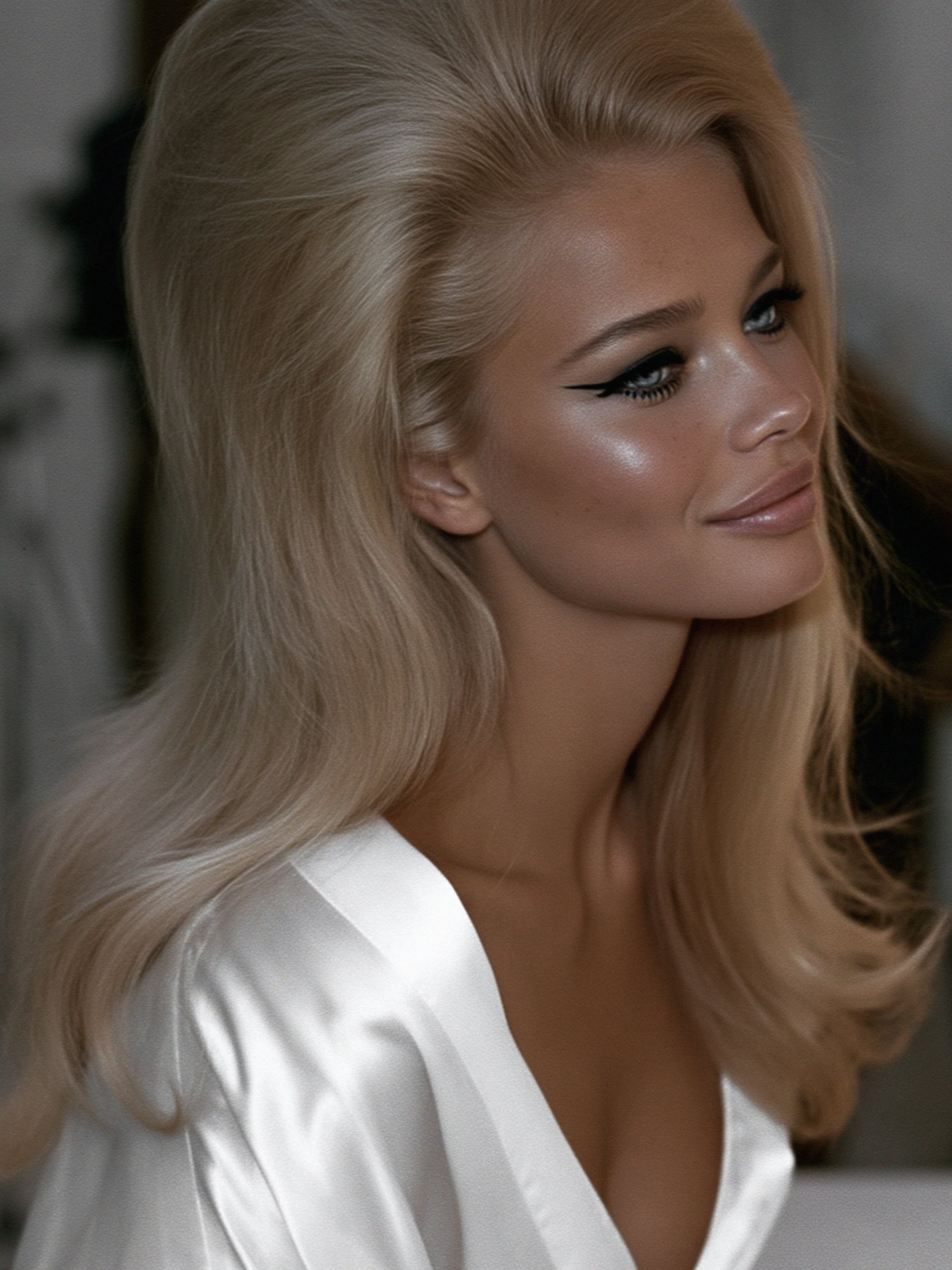
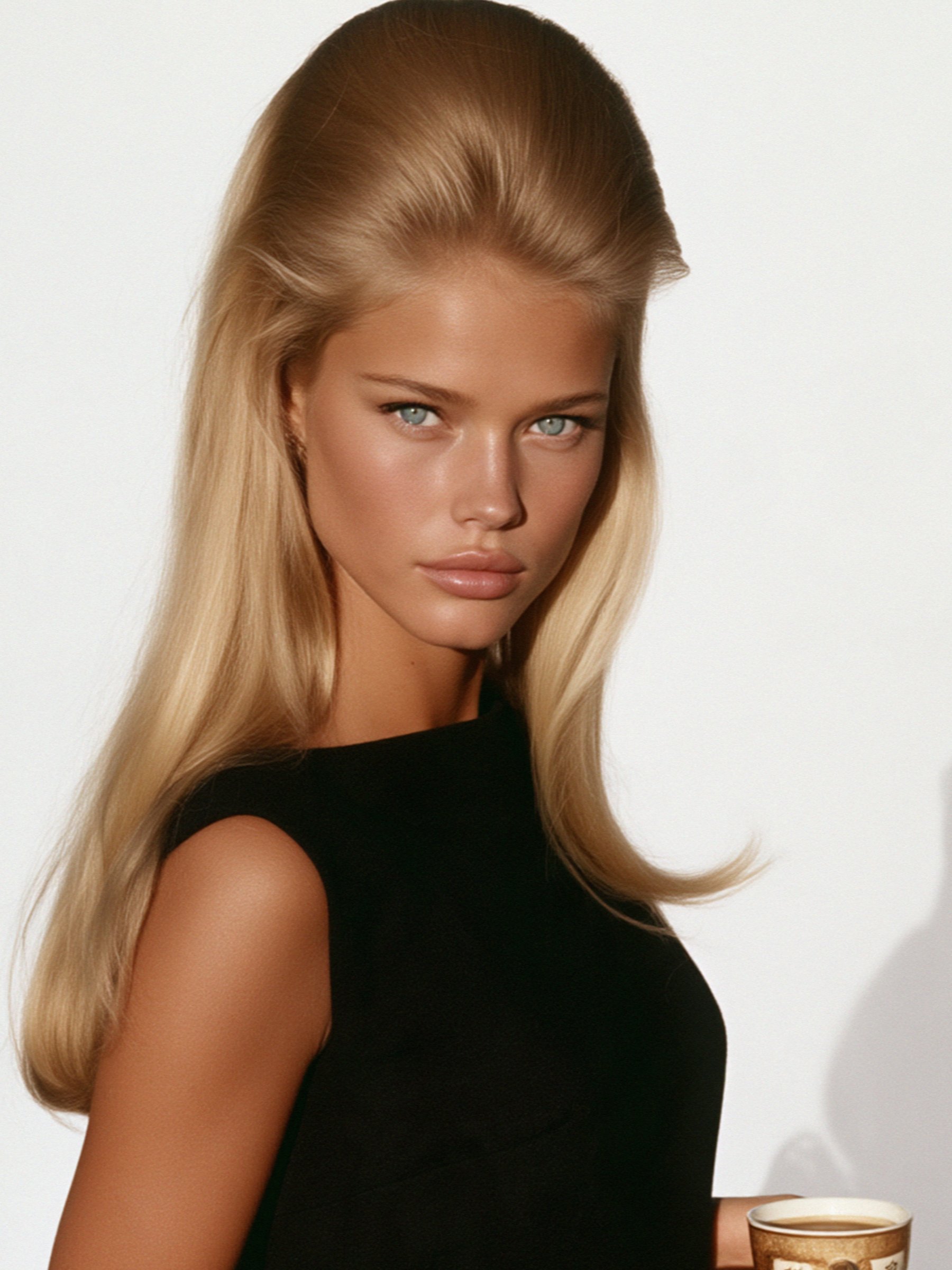
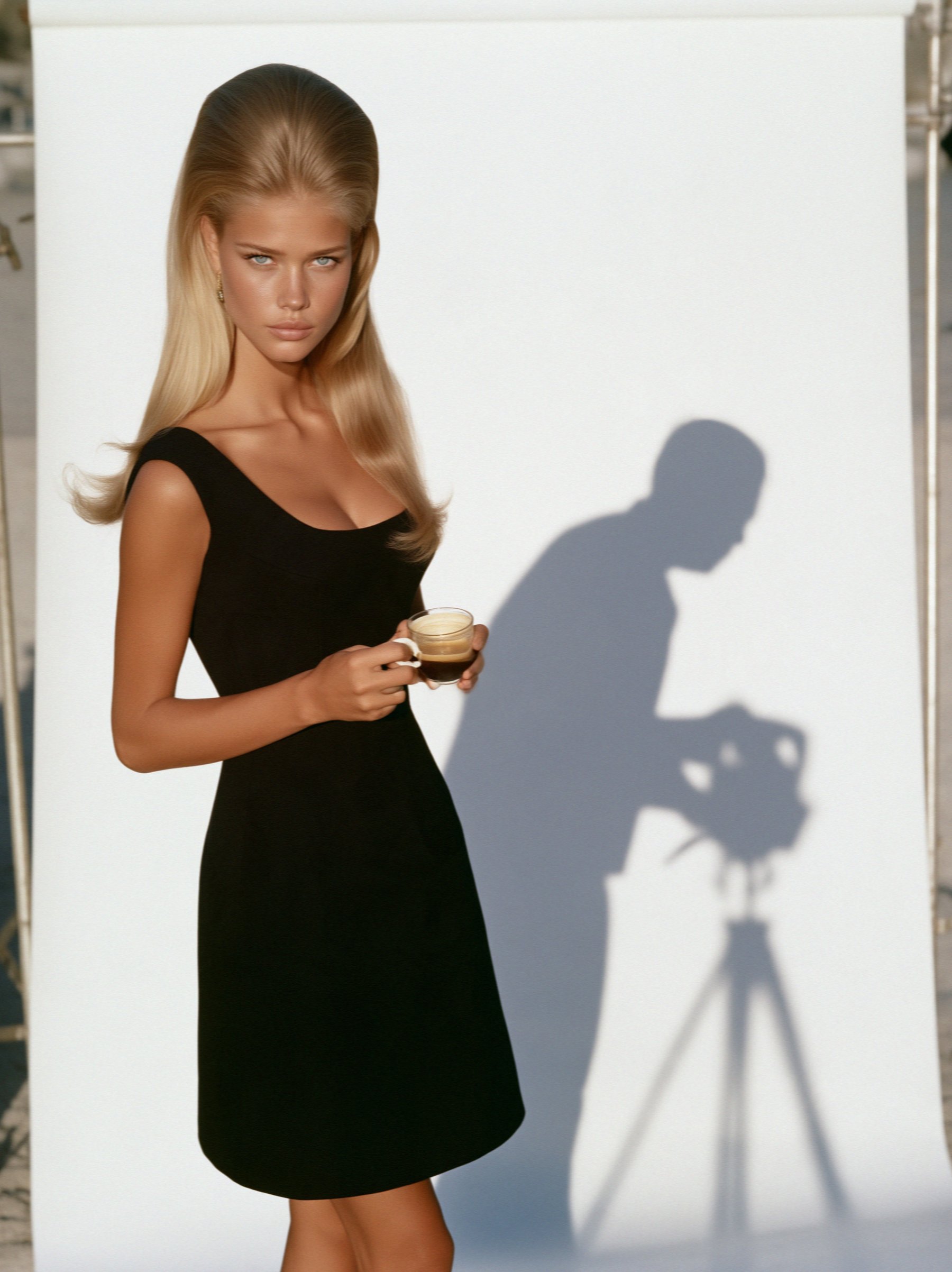
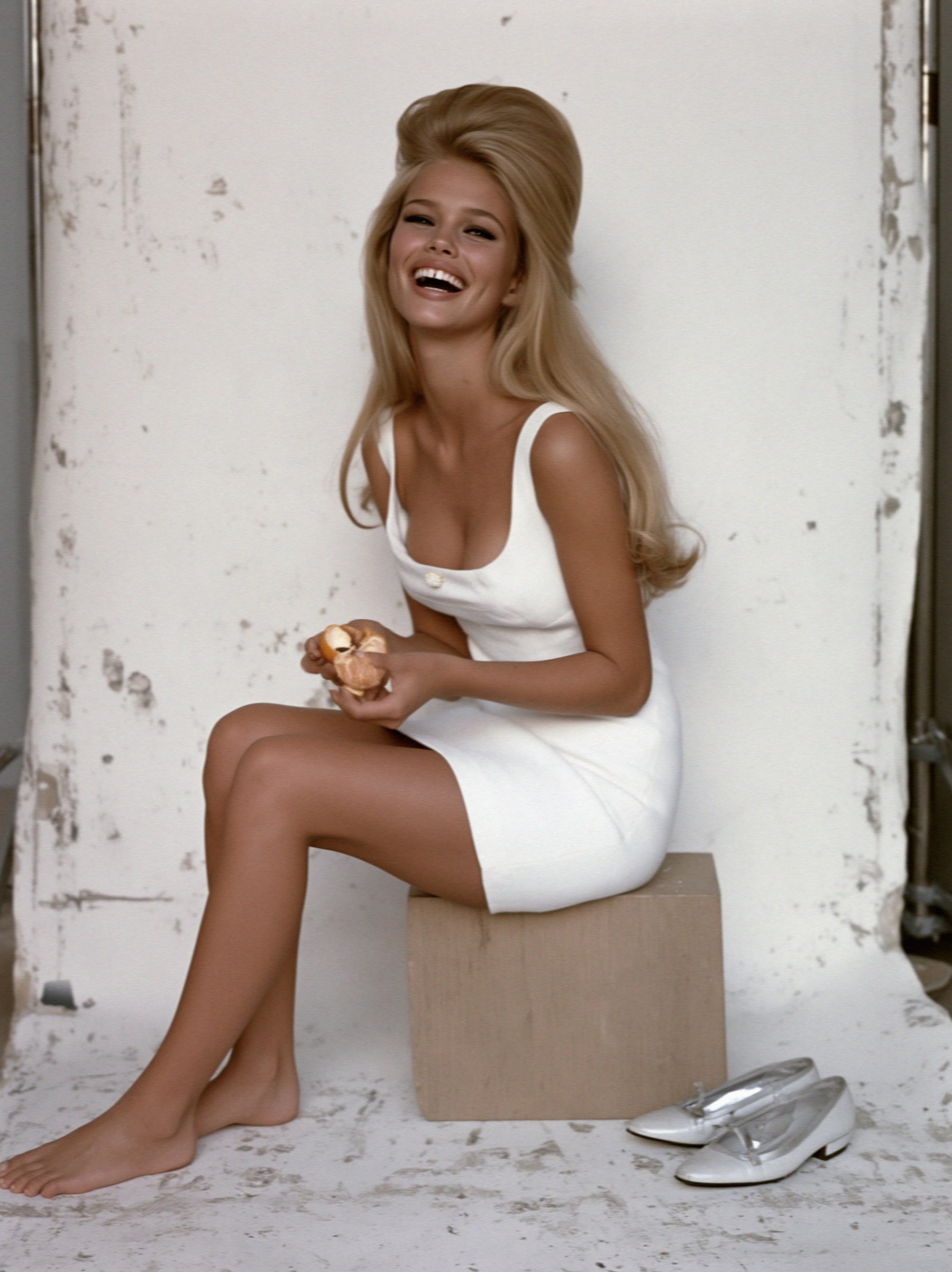
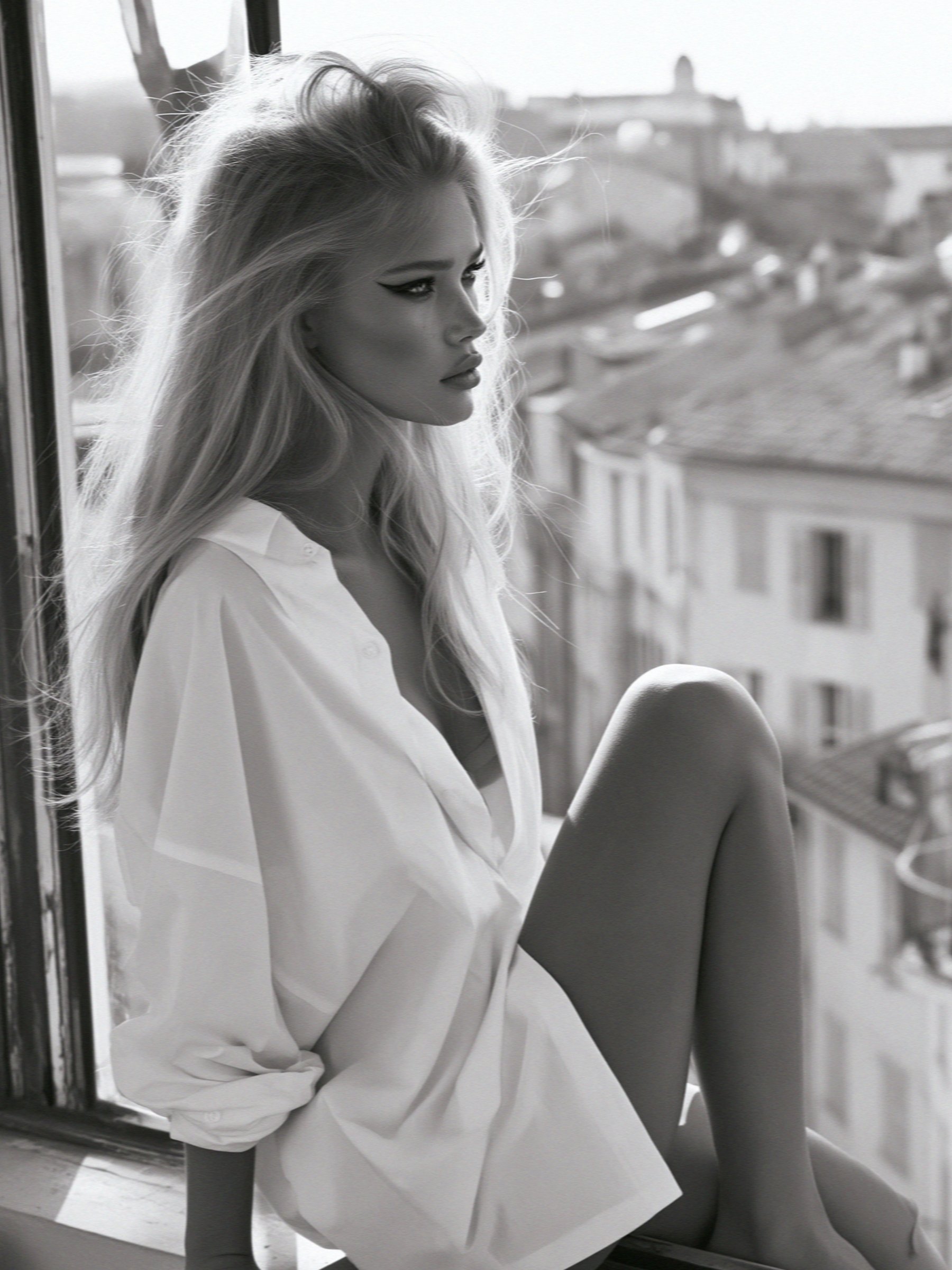
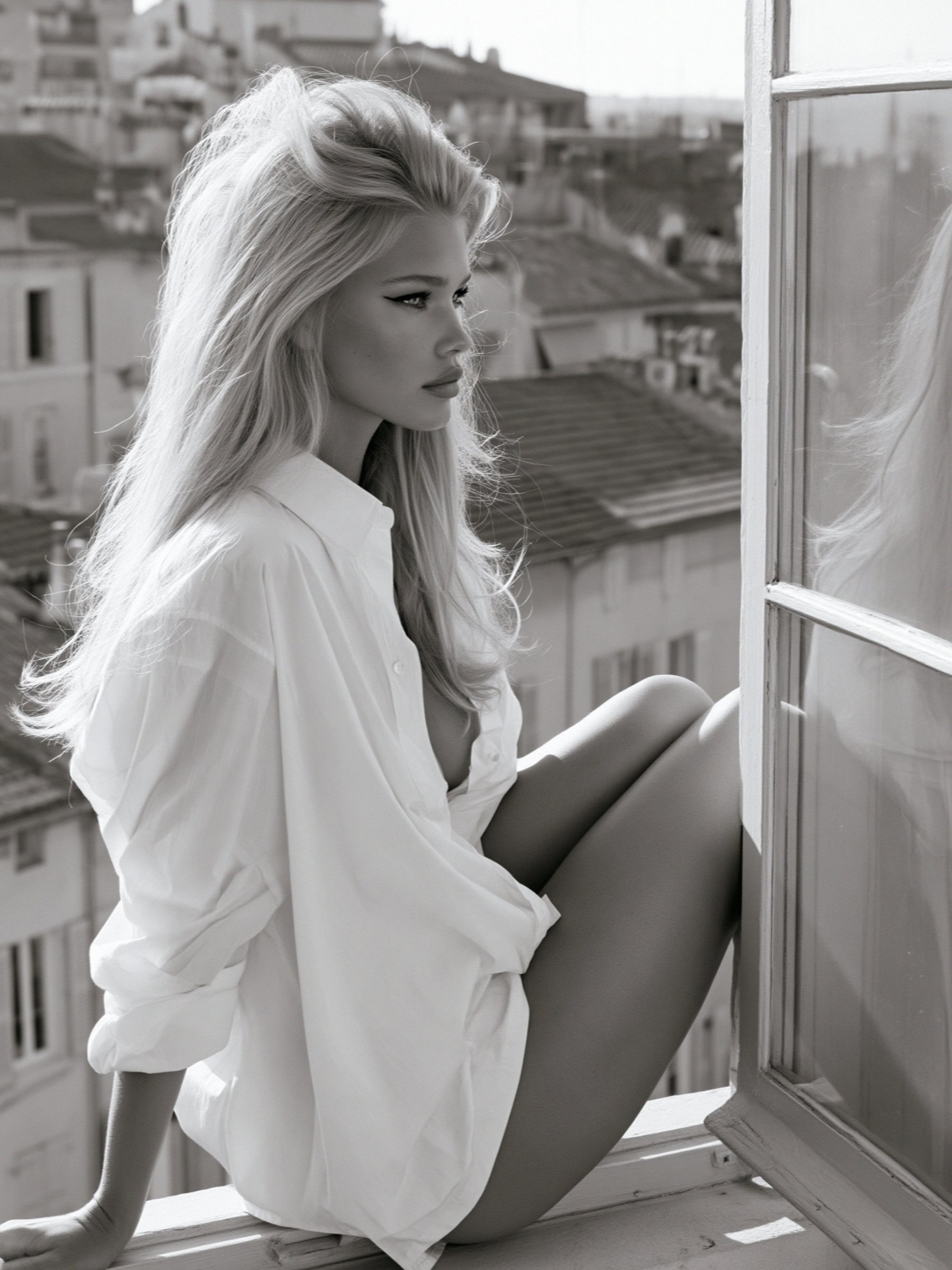
Hair and make-up had set up under the window, at a mirror with bulbs all the way round it, half of them working. Two hours. A line of black drawn along each eye as if with a ruler. My hair backcombed and lifted until I was a good inch taller and could feel it move when I turned my head.
In the mirror I looked like somebody’s mother in an old photograph.
I looked like someone I would have liked to meet.
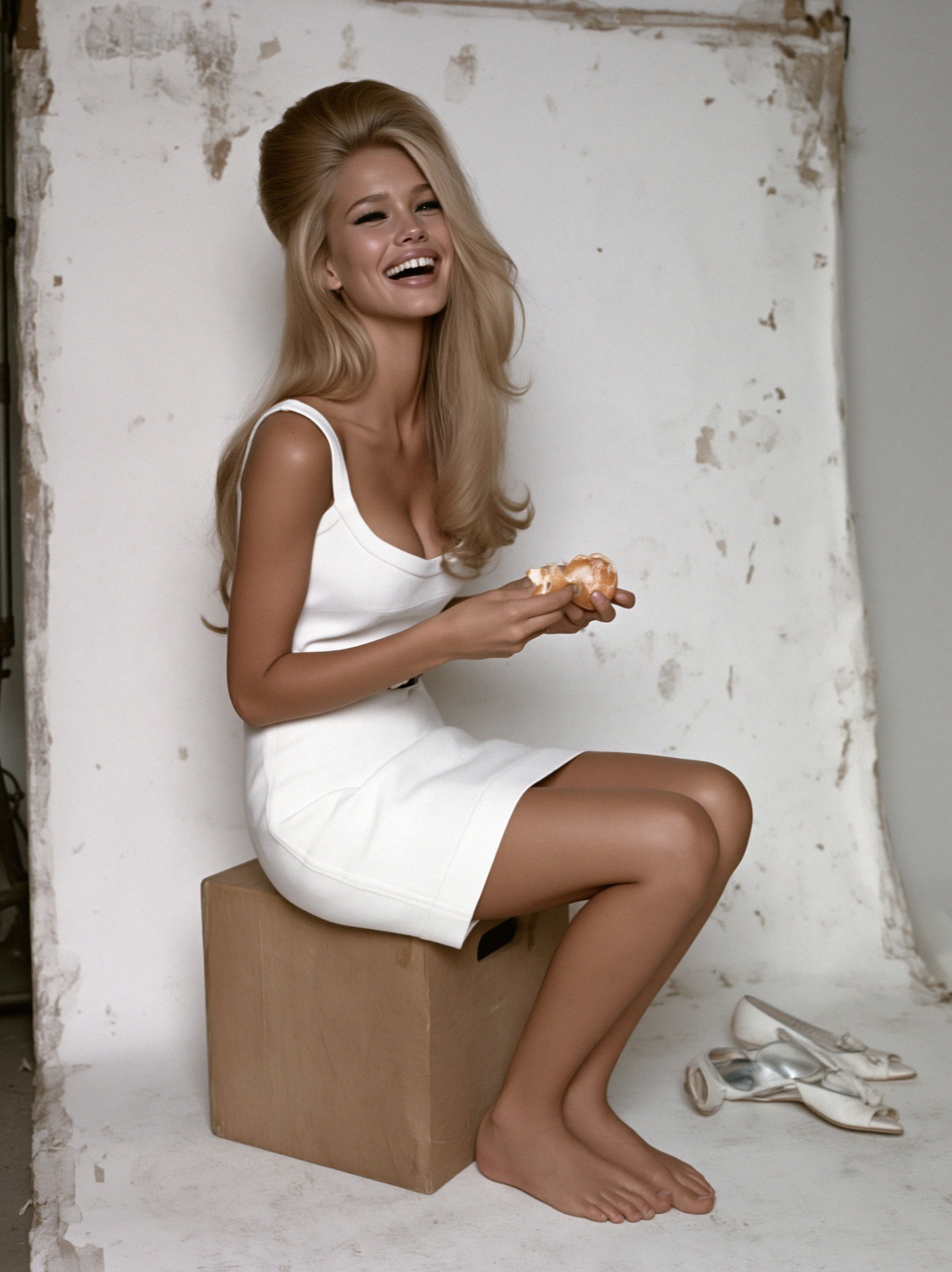
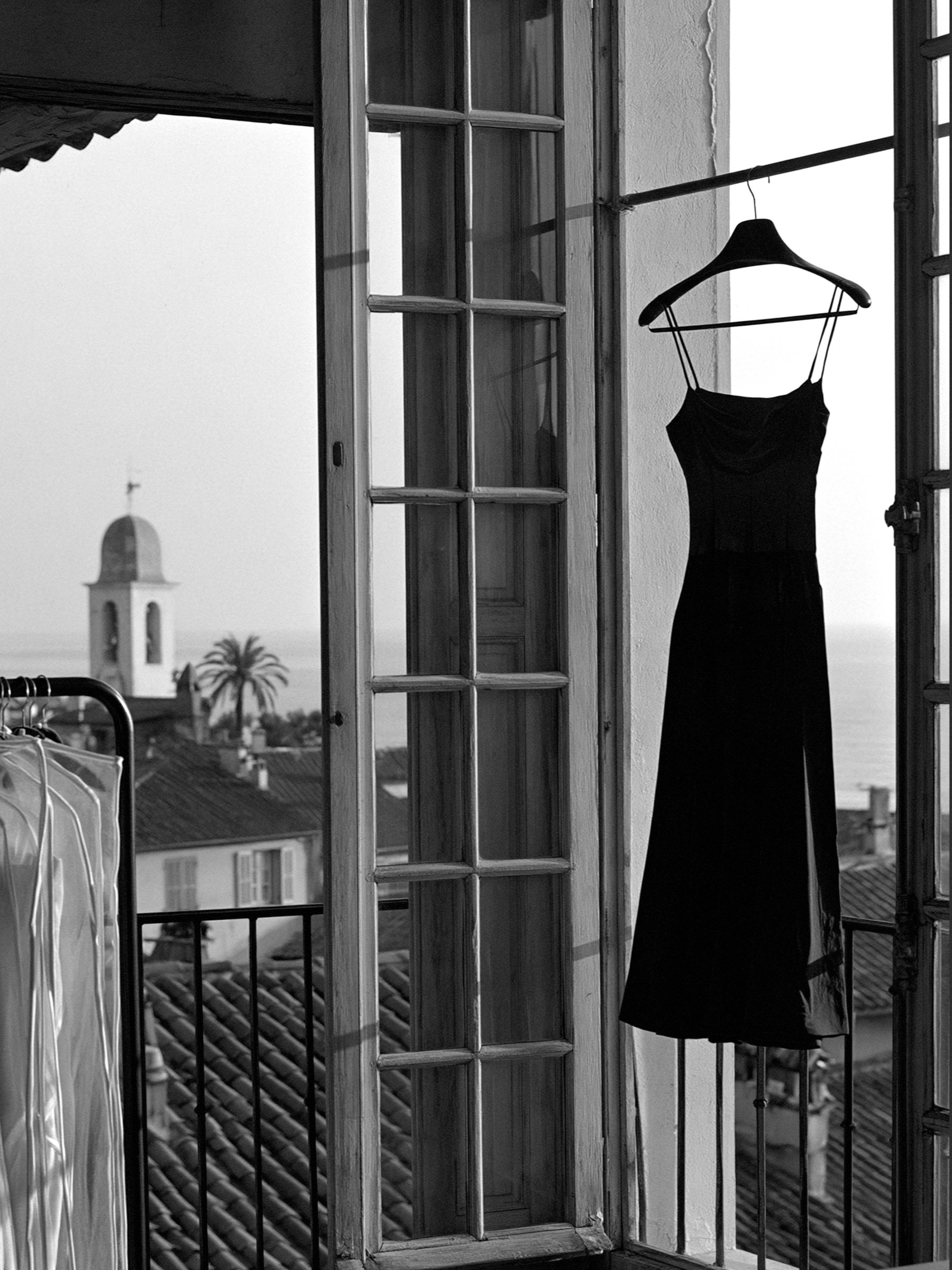
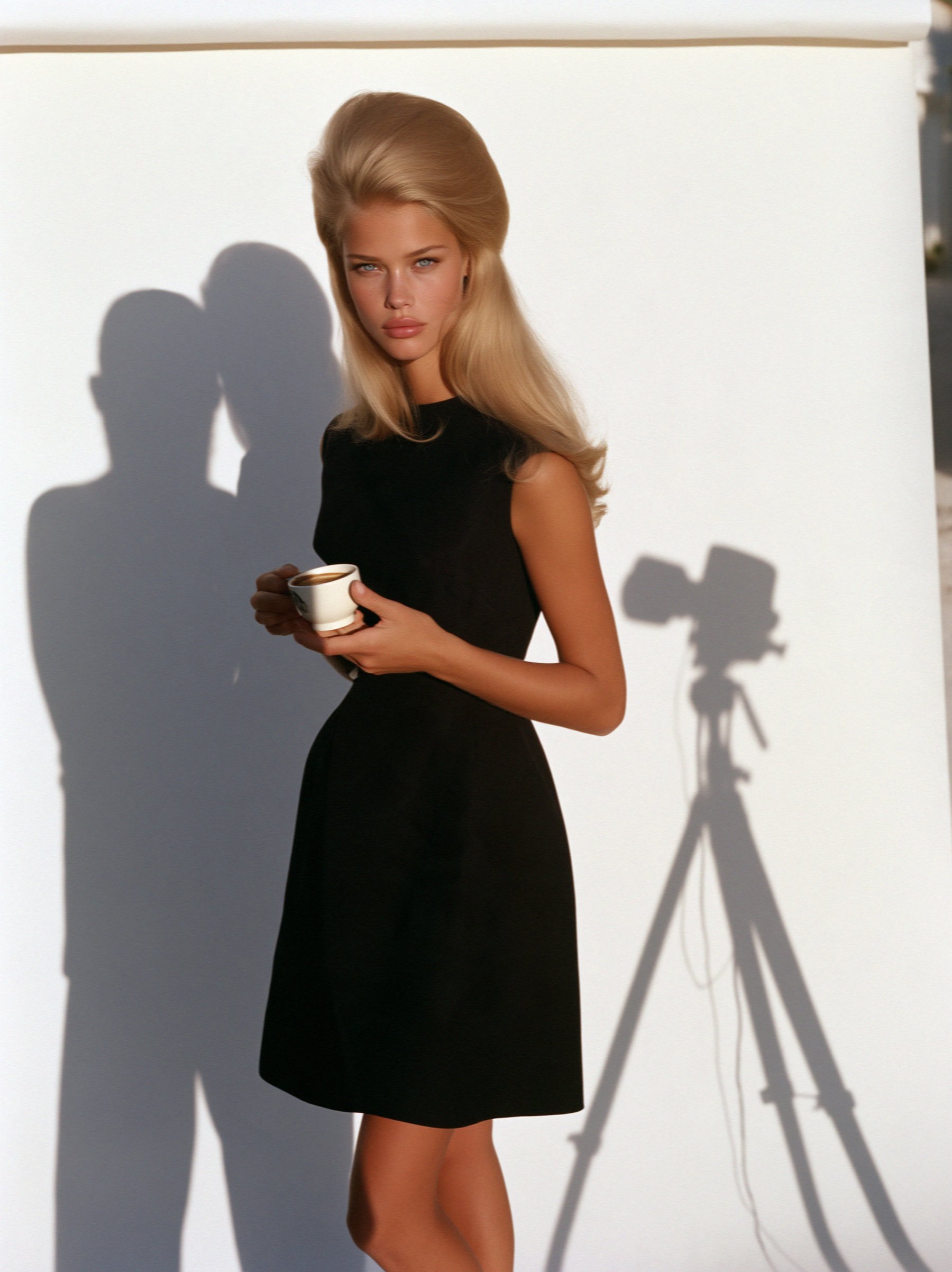
Then the clothes. A white shift dress that stopped well above the knee. Pale tights. A black dress cut so the skirt would turn if you so much as thought about turning. Low heels you could actually stand in for six hours, which is the thing nobody tells you about that decade.
It is a strange feeling, being dressed as a film actress from before you were born. You stand differently almost at once. Your chin goes up. You hold a cigarette you have not got.
I caught myself walking across the studio like someone going to collect an award. Hair and make-up caught me too, said nothing, and smiled into the hairspray.
I should say something here, because people assume.
I do not love modelling. I never really did. Not the part where you stand where you are told, in clothes somebody else chose, for a picture somebody else will decide about, in a room you will never see again. I gave it a year once, properly. I was good at it. And then I chose to do much less of it, because I wanted to be on the other side of the thing. The side that makes it.
What I love is this.
A white room, and a question nobody has answered yet.
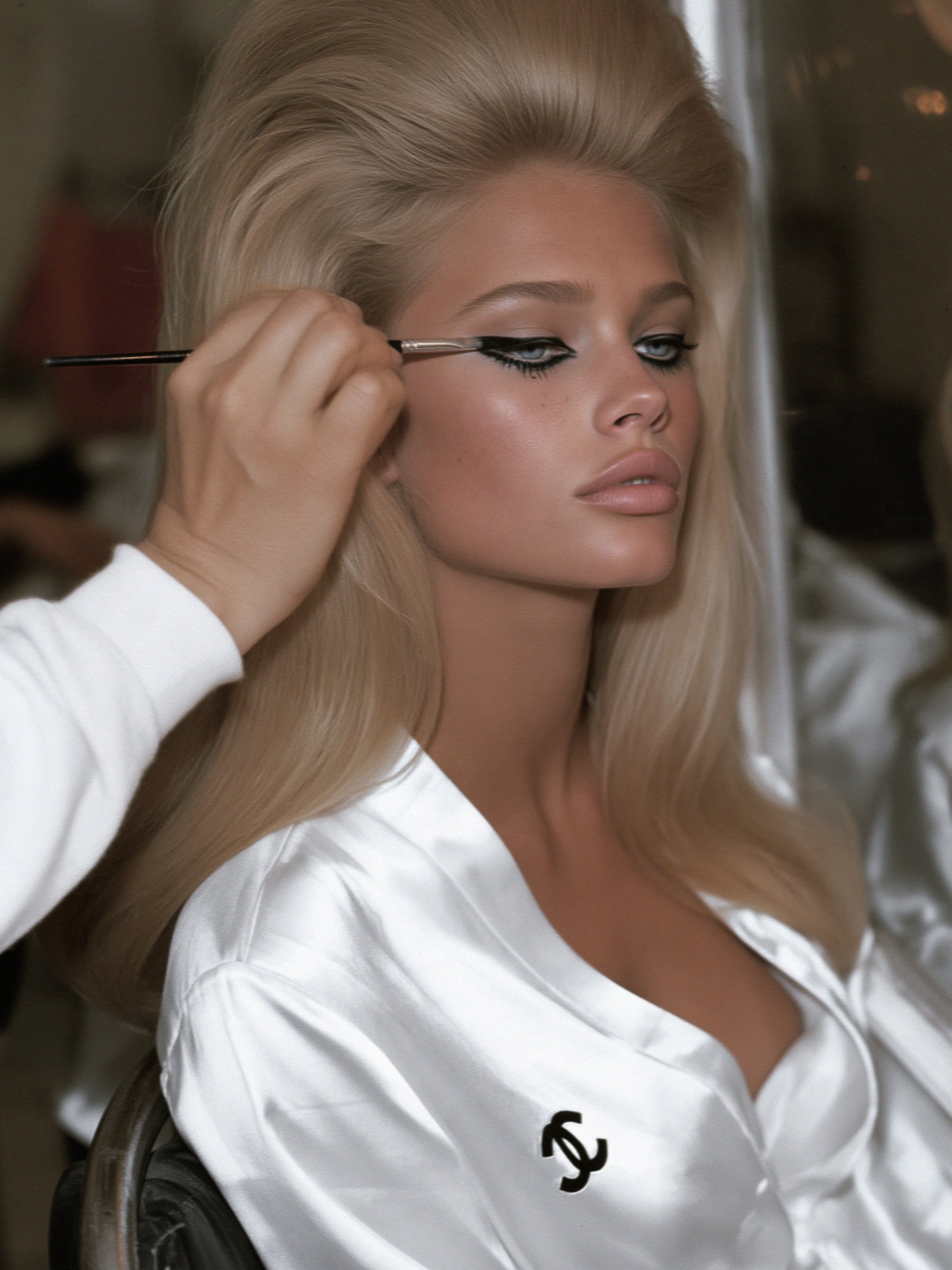
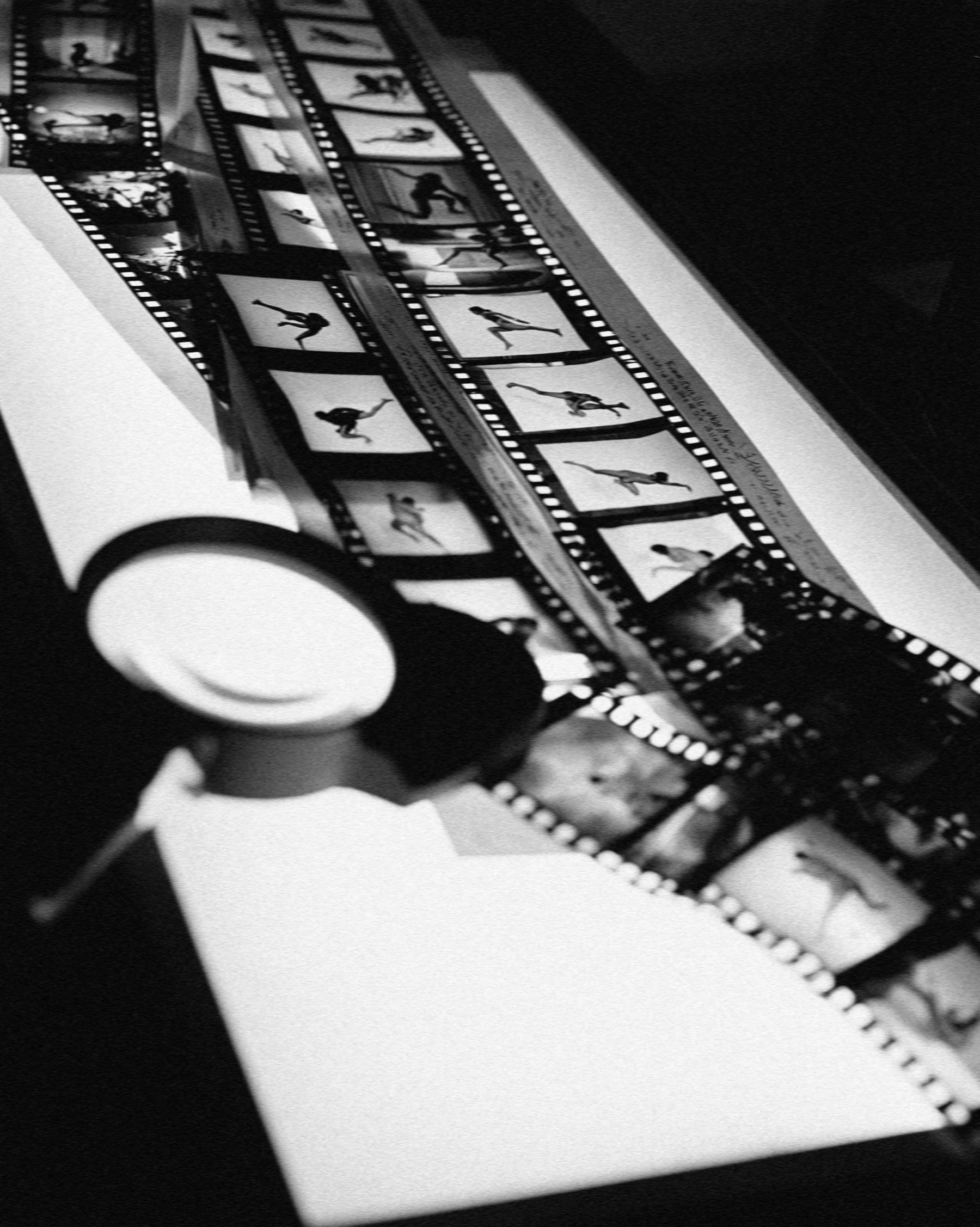
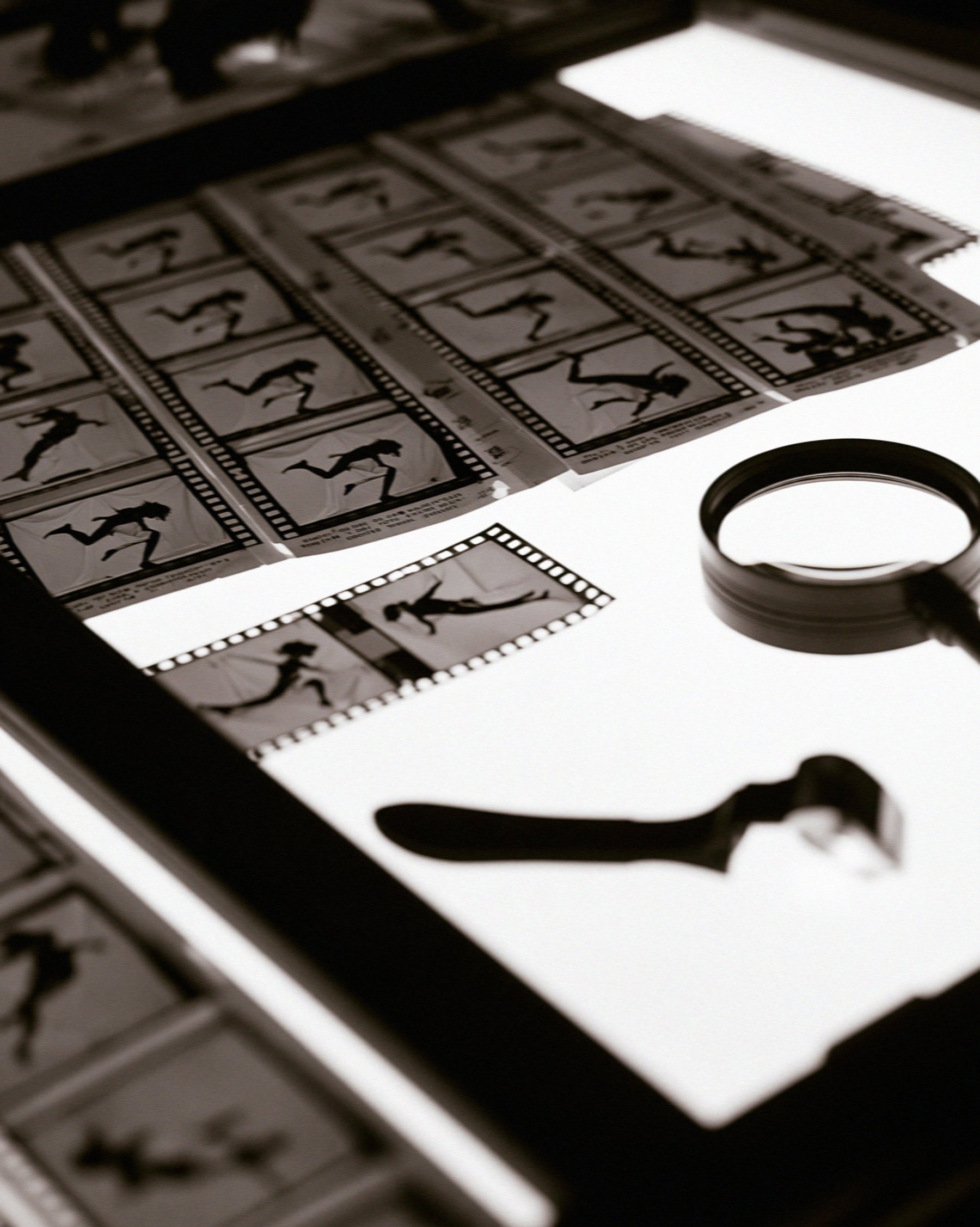
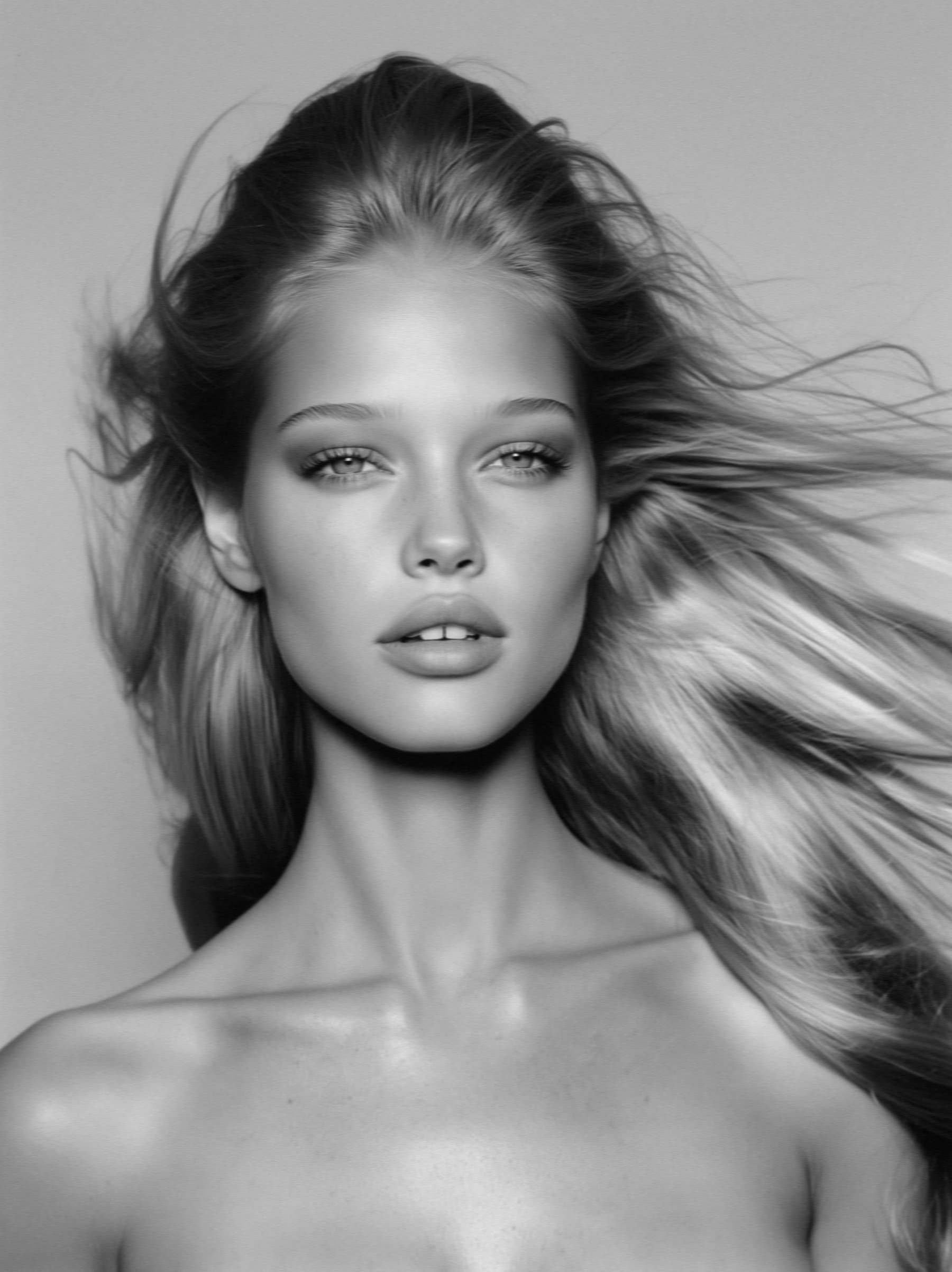
We were doing what all of us call the Avedon thing, as though it belonged to us. White paper, black and white film, and movement. Not posing. Moving, and letting the camera find the half second where everything goes right. Jumping. Turning. Throwing my hair out and letting it land wherever it liked.
He hardly speaks when he works. He puts music on, something old, and then he waits.
He does not tell me what to do.
He waits for me to stop performing.
That is the whole trick, and it took me years to understand it. The first twenty frames are always me being a model. He lets them go by. Then I get tired, or bored, or I simply forget, and I do something real, and somewhere behind the lights I hear the shutter go very fast, and then one word.
“Again.”
It is almost the only thing he says all morning.
I jumped until my calves shook. I spun in a black dress until the skirt went out like an umbrella and the room went round with it. I stood very still in sequins while he moved the light an inch, and then another inch, and then back to where it had been.
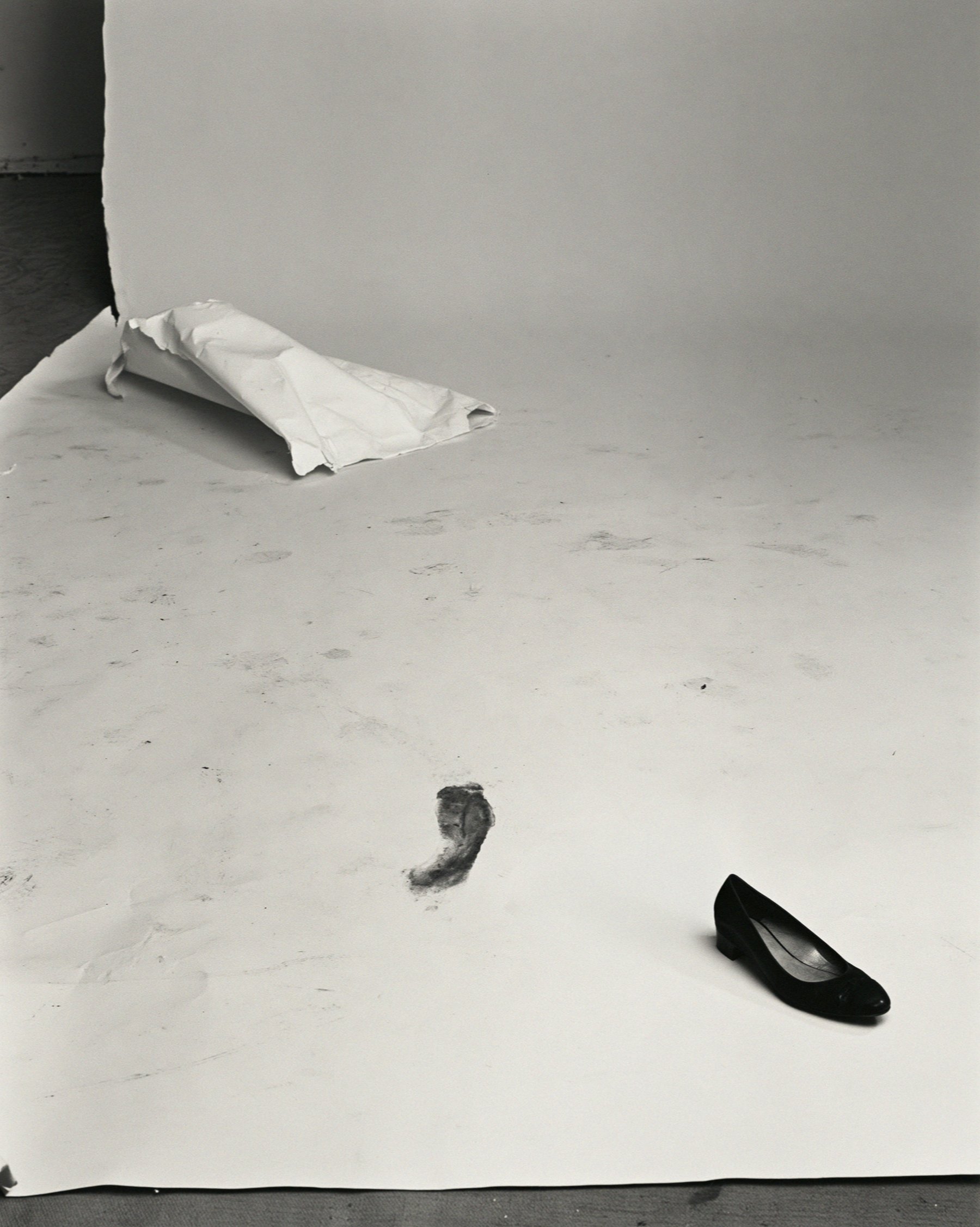
The paper gets dirty. You would not think about it, but it does. Footprints, scuffs, a heel mark where I landed badly. Every so often somebody tears off the used length and pulls fresh white down off the roll, and it is like turning to a clean page.
I trust him completely. I have said that before, and I mean it more every year. I put myself in front of his camera the way you put yourself in the hands of a very good pilot. I do not need to watch him. I know he is there.
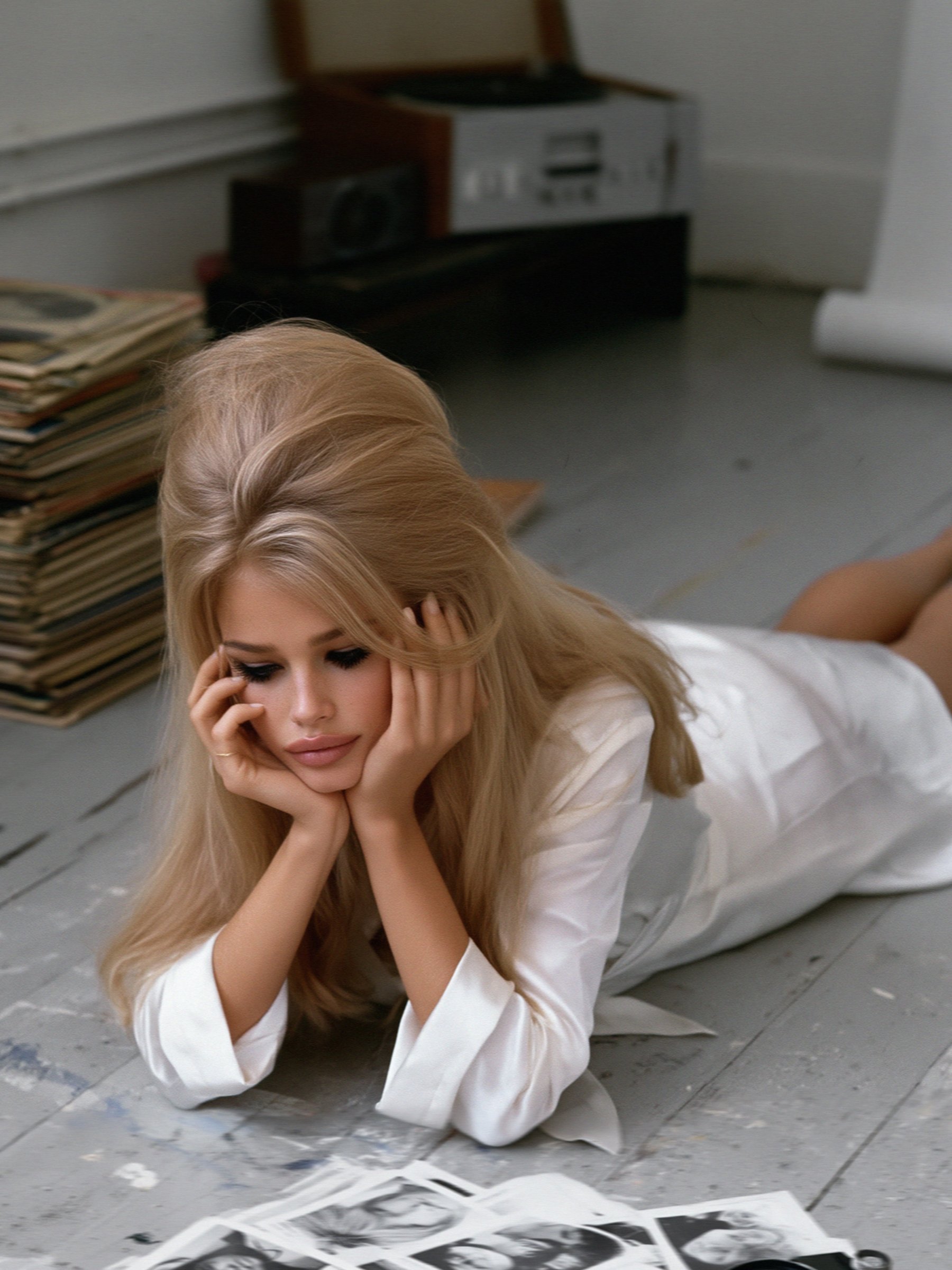
He is always there. That is the strange thing about him. Wherever I am, at a market, on a terrace, asleep on a lounger with my mouth open, he is somewhere close by, and almost never where I can see him. You could go through every picture of me from the last few years and not find him once.
You would only find what he saw.
At one o’clock we stopped and walked down to the Place Nationale for lunch.
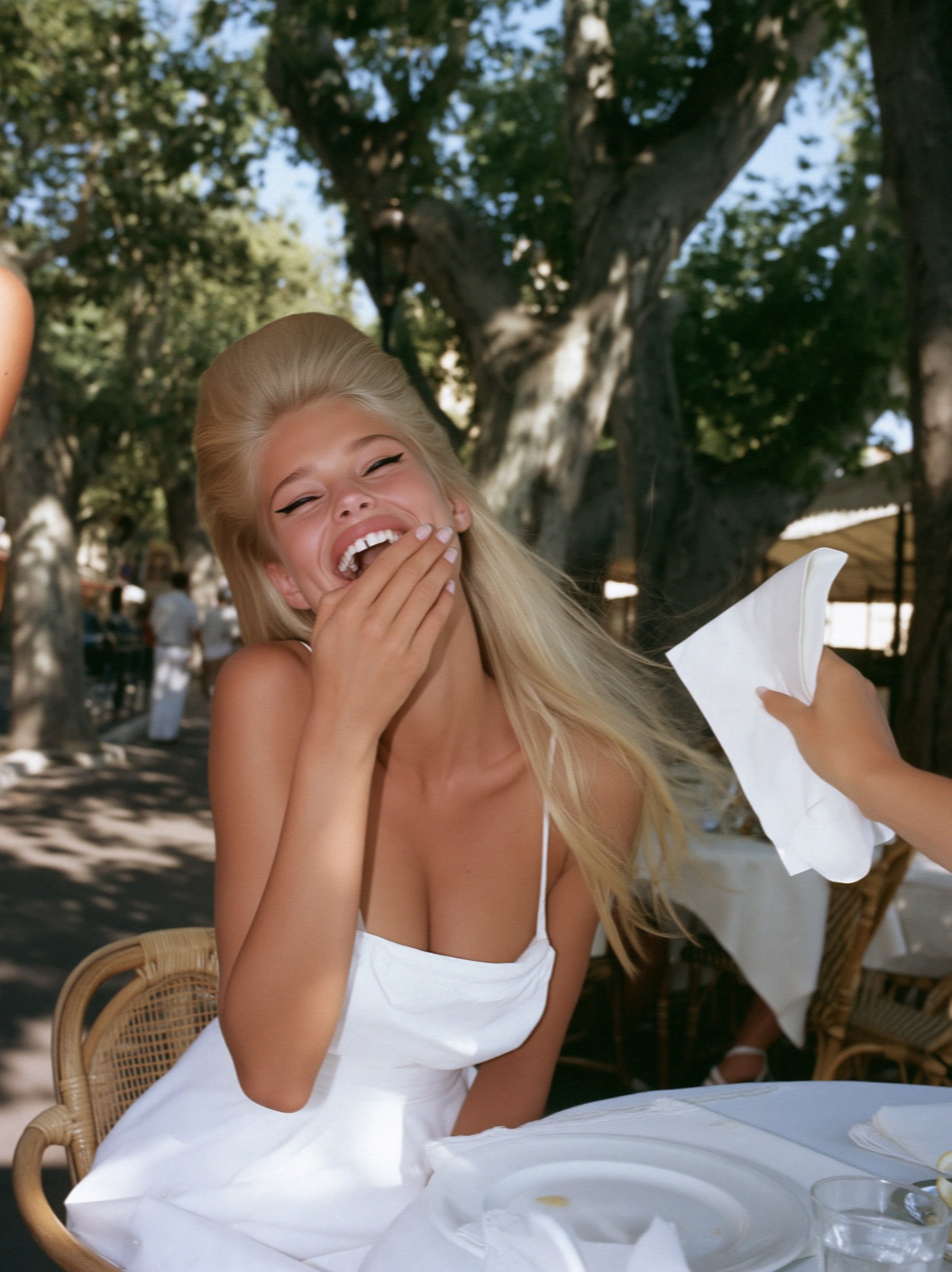
I still had the eyes on and the hair up, in a white dress and flat shoes, and the waiter looked at me as though I had arrived from another decade, which in a way I had. He pulled my chair out with a little bow, the kind you only do for someone in a film.
On the way across the square, an old man on a bench lifted his hat to me. Properly lifted it, off his head and back. A woman with a shopping basket stopped and told me, in a French so fast I only caught half of it, that I looked exactly like an actress she had seen on the Croisette when she was a girl. She could not remember the name. She said it did not matter. She said I had the same way of walking.
I have been told a great many things about how I look.
I do not think anything has ever pleased me as much as that.
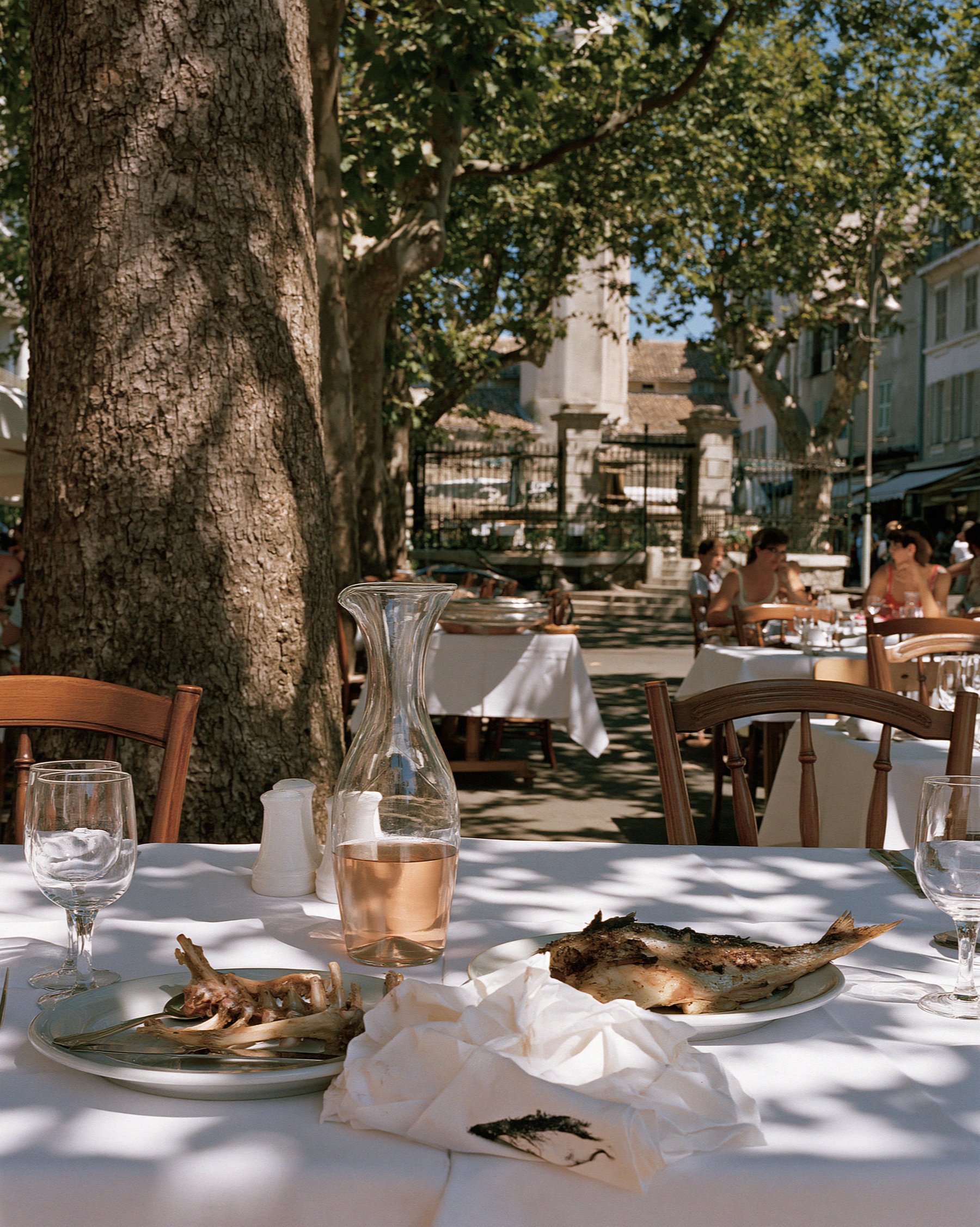
We sat under the plane trees. A carafe of rosé, tomatoes with nothing on them but salt, a whole fish between us that nobody could agree on how to take apart.
Somebody brought up the ram.
Somebody always brings up the ram.
I laughed until the eyeliner was in danger, and hair and make-up threatened me with a napkin.
I do not know how to explain how much I like them. We have been together a long time now, longer than some marriages, in worse hotels than this one and in better ones, in rain and in mountains, through a dinner in Burgundy so bad that it has become one of our favourite evenings.
Nobody has to be anybody at that table.
We went back up the three flights and did two more hours. The light from the roof went warm towards the end, and he stopped before it was finished, the way he always does, as though he did not want to use it all up.
The car brought me back to the Cap at six.
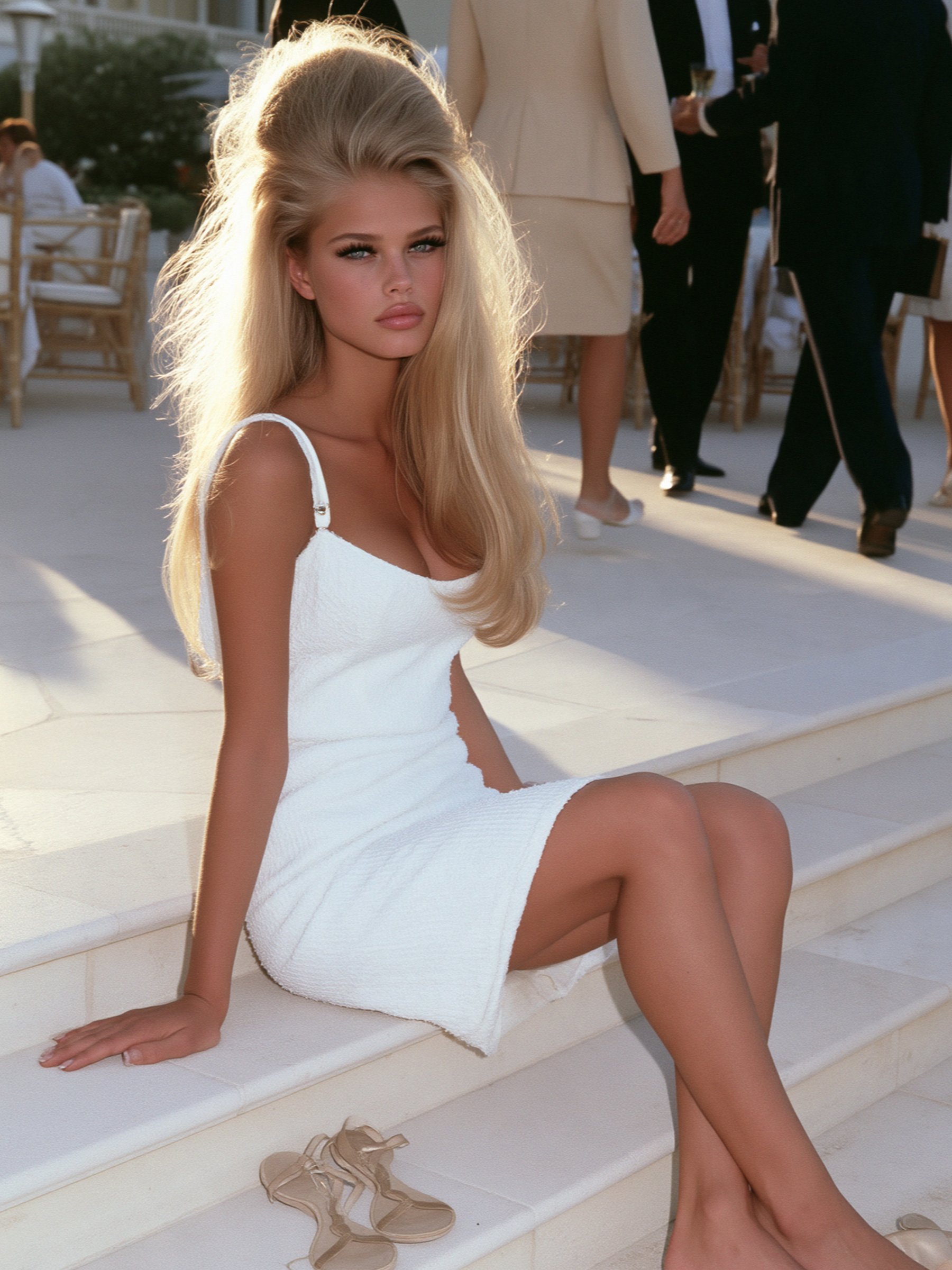
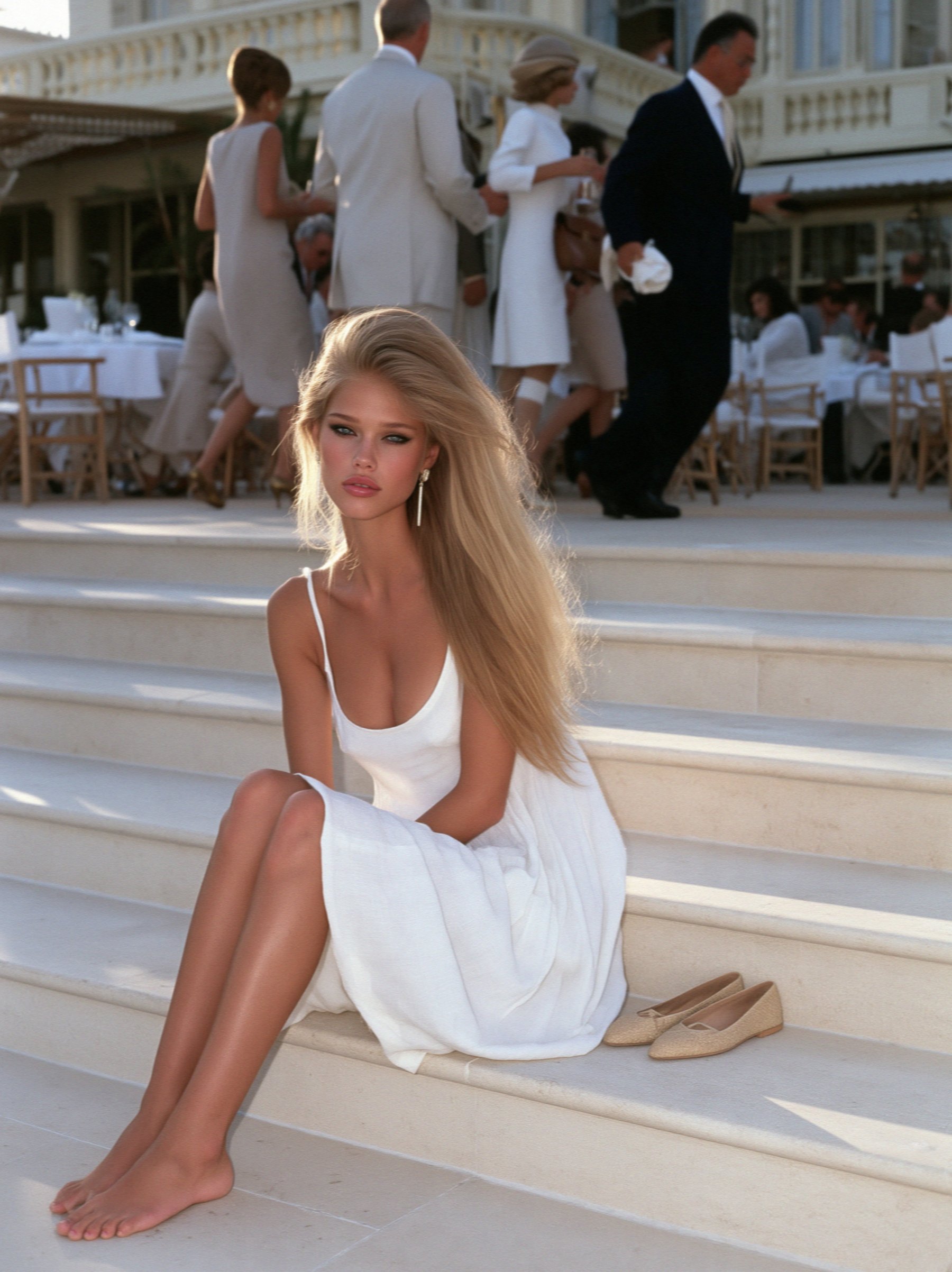
I sat on the steps by the terrace with my shoes off, in spite of Pierre, and watched the film people arrive for dinner. A woman I did not know stopped and asked who had done my eyes. A man behind her, one of the producers, said I looked as though I had walked out of a picture they had all been trying to make for years.
I told them it was a secret.
Both things.
On the way up I passed the door with the little gold plate.
I did not try it.
I am learning, slowly, that not everything has to be opened today.
Upstairs the hair came down in thirty-eight pins. I counted them out on the bedside table, next to the key.
At ten there was a knock.
Hair and make-up, with the photographer’s laptop under one arm and strict orders that I was only to look at the ones with a star on them.
I was not ready for them.
I mean that plainly. I have been photographed for most of my adult life, and I know, more or less, what I look like.
These were not what I look like.
A girl in mid-air with her legs tucked under her and her hair still going up after the rest of her had stopped. The black dress turning, a perfect circle, my face somewhere inside it. One very still frame in the sequins with the edge of the film showing round it, like something found in a drawer.
They did not look like 2026.
They did not look like me pretending to be 1966 either.
They looked as if somebody had simply been there, then, and kept them.
I went through them twice, sitting on the floor, and then once more with hair and make-up beside me, and neither of us said very much. At the end the lid came down, and I was told, “He’s pleased,” which from him, passed on by somebody else, is the equivalent of fireworks.
I know what is in them now.
A day. A white room. Three people who have looked after me for years without ever once making me feel looked after.
I do not think I have ever thanked them properly.
I am not sure they would let me.
V.
More images from Antibes