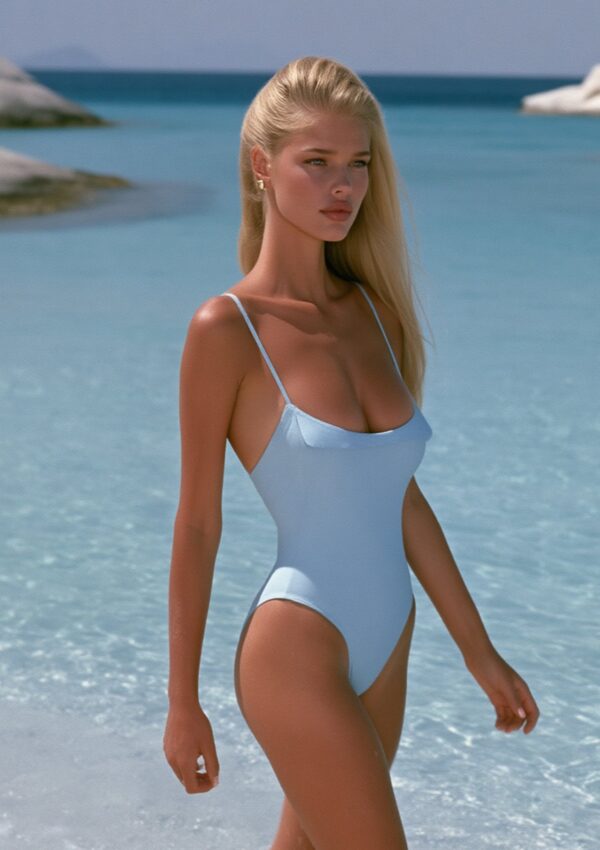
Most islands in the Cyclades are sold on their villages. Milos is sold on its rock. The famous pictures are of stone, not houses: a cove of smooth white ash on the north coast, sea stacks and arches off the south-west, cliffs on the south banded red and yellow and cream like the layers in a road cutting. The villages are lovely, and I will come to them, but the ground is the reason people come.
I crossed from Paros in October, on a catamaran that took a little under two hours, after a stretch on Naxos and Paros. The boat turned into a deep bay that very nearly cuts the island in two, and the port of Adamas was waiting inside it, low and quiet, with brown hills all round. It was not the arrival I expected after those two islands, and by the end of the first afternoon I had stopped expecting anything and started paying attention.
This guide is how I would plan Milos now: when to come and how the wind changes everything, where to sleep, which coast to swim on, how to see the parts that can only be reached by boat, what to eat and how many days to give it. Each part has a fuller guide of its own, linked as you go.
What Milos is like
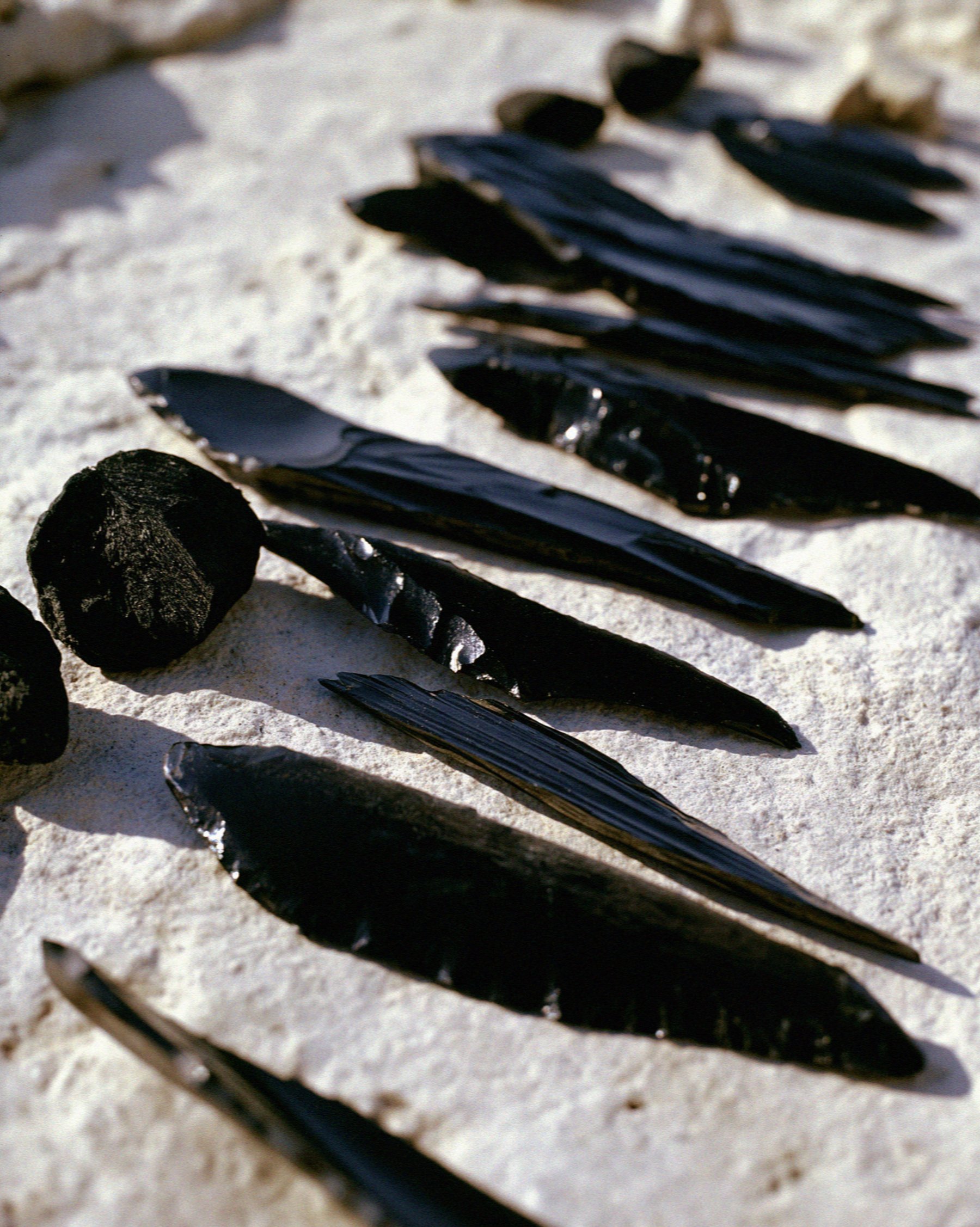
Milos is shaped roughly like a horseshoe around its bay, and almost everything about the island follows from the fact that it is volcanic. The bay itself is volcanic in origin. The white rock at Sarakiniko is compacted ash and pumice. The colours in the southern cliffs are minerals. And the black glass called obsidian, which cools from lava too fast to crystallise, was what first brought people here.
That last part is worth a moment. Milos obsidian was being carried across open water from roughly 11,000 years ago, which makes it some of the earliest evidence anywhere in the Mediterranean of people deliberately going to sea. The island has been worked for its stone ever since: sulphur until the middle of the last century, and minerals such as bentonite and perlite still today. You notice it as you drive, in the cuts in the hillsides, the old loading rails above the sea, the trucks on the main road.
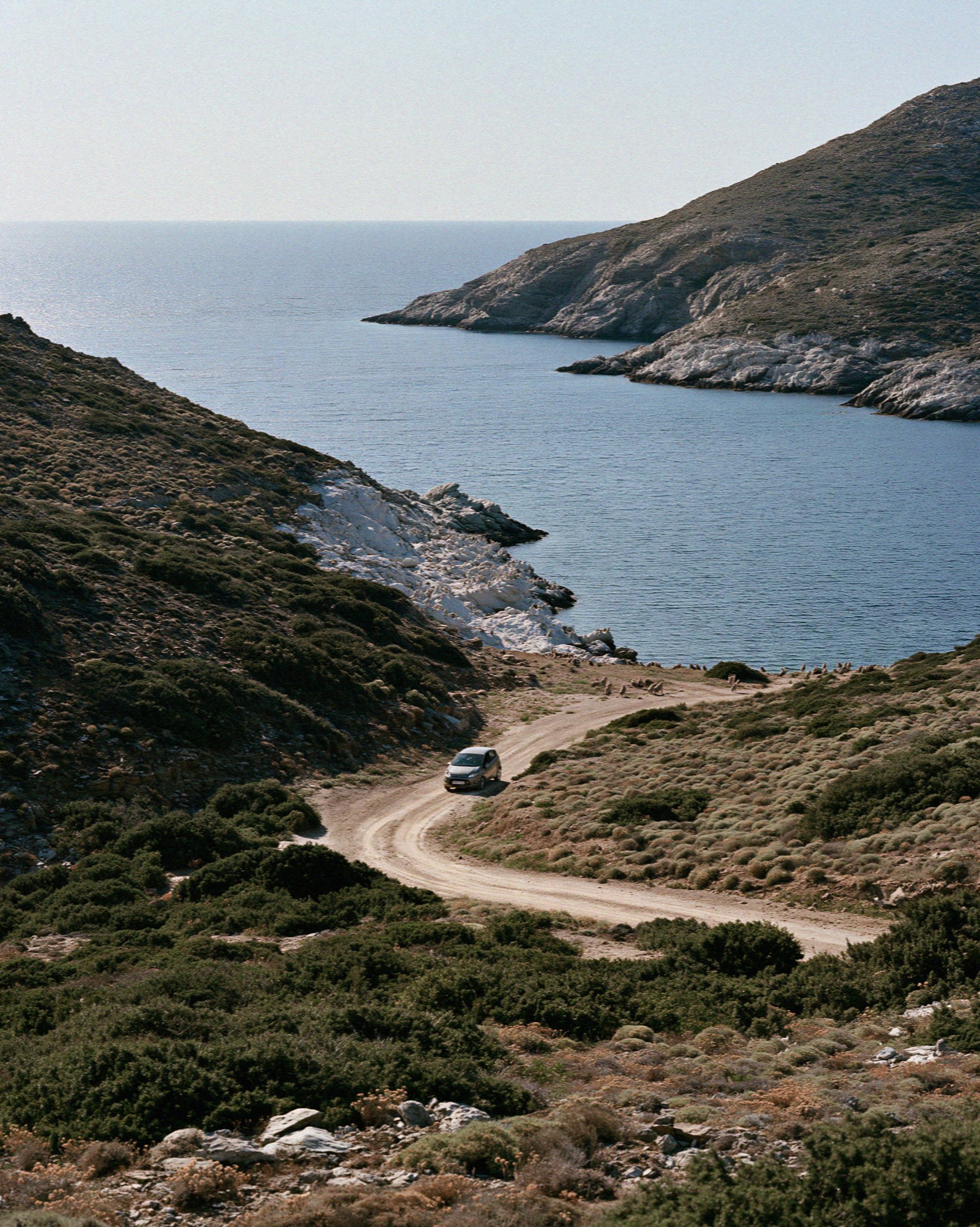
The island divides neatly in two. The eastern half holds nearly all the people, the paved roads and the villages: Adamas on the bay, Plaka and Trypiti on the hill above, Pollonia in the north-east, and the little fishing coves of the north coast. The western half is wild, high and nearly empty, a long network of dirt tracks running out towards Profitis Ilias, the highest point at 748 metres, and a coast that is easiest to see from a boat.
It is also an island with roughly 70 beaches, more than almost any of its neighbours, and with one statue the whole world knows. The Venus de Milo was found here in 1820, in a field below Plaka, and is in the Louvre now. There is a cast in the museum in Plaka and a small plaque where she came out of the ground.
When to go
June and September are the months I would choose for most people. The sea is warm, the boats and beach bars are running, and there is room on the roads and the rocks. By September the water has had the whole summer to warm up and sits at about 25°C.
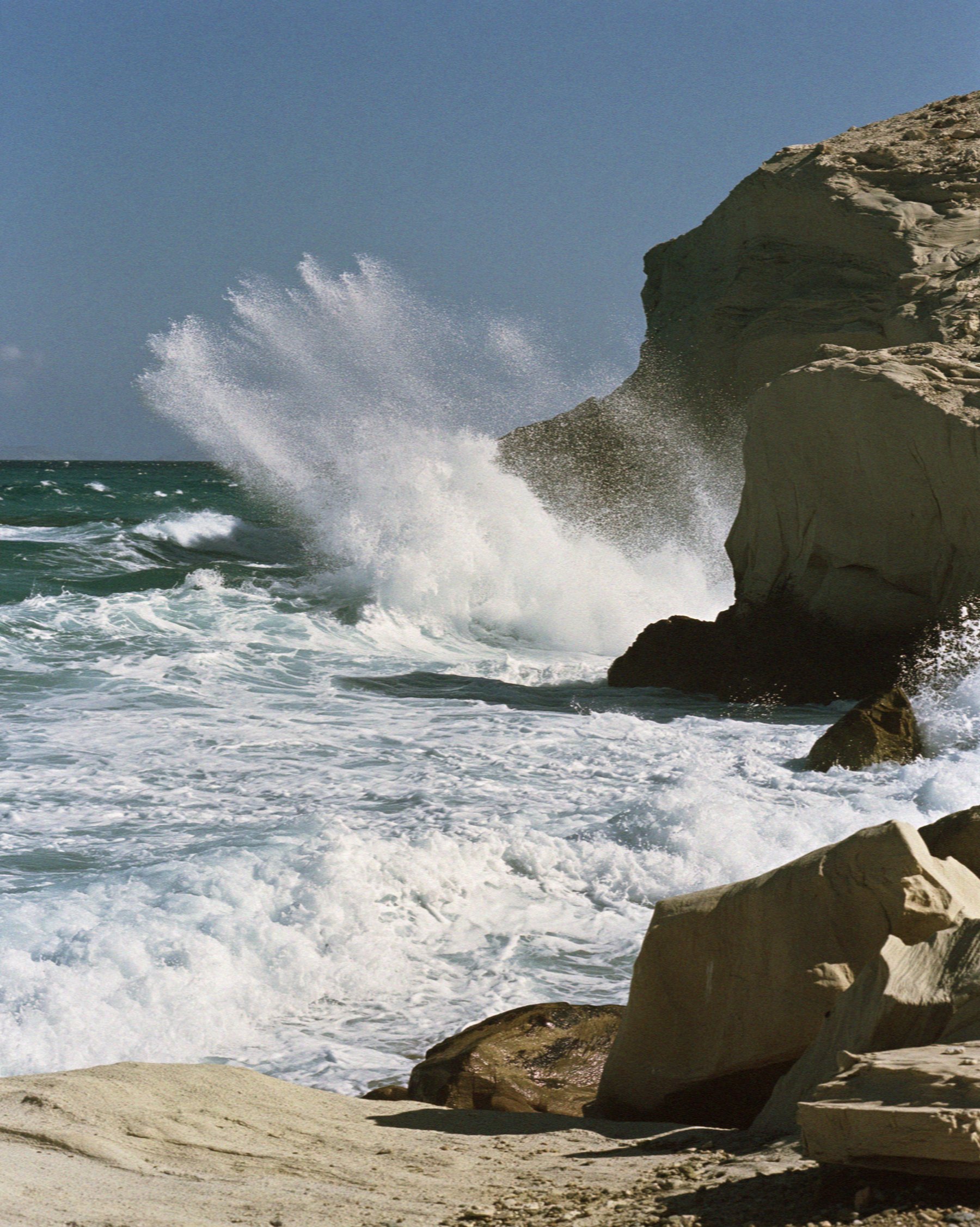
July and August are the busiest and the most expensive, and they are the months of the meltemi, the strong north wind of the Aegean summer. On Milos it matters more than most places, because its two most famous sights, Sarakiniko and Kleftiko, are both on coasts the north wind can shut. A day of strong meltemi can make the north coast unswimmable and cancel the boats to Kleftiko, and it can blow for several days at a time.
May and October are quieter and cheaper. The sea is cool in May; in early October it is still warm, which is when I came, and I swam every day I was there. By late October some places are closing, and from November to April most hotels, beach bars and boats are shut and the island goes back to its own life.
I have gone through every month, with the wind, the water and what is actually open, in my guide to the best time to visit Milos.
Adamas and the bay
Adamas is the port and the practical centre of the island. The ferries come in here, the buses all start here, the boat tours leave from the quay, and the car hire offices line the waterfront. It is not the prettiest village on Milos, but it is the most useful, and on a warm evening the harbour front of cafes and tavernas facing the boats is a perfectly good place to be.
The Mining Museum is a short walk along the seafront road from the port, and it is the best first hour you can spend on the island. It was founded in 1998 by the mining company S&B Industrial Minerals, and it explains, with minerals, tools, photographs and a small film room, why Milos looks the way it does. I went on my first day, while I waited for my room, and the case of obsidian blades upstairs changed how I saw the rest of the island. It keeps shorter hours out of season, so check before you go. I wrote about that first day in The Stone That Keeps an Edge.
Around the bay there are easy beaches within reach of town. Papikinou is the long strip just east of the harbour, shaded by tamarisks, and further round, near the airport, Achivadolimni is long, calm and sheltered from the north, which makes it a good fallback on a windy day.
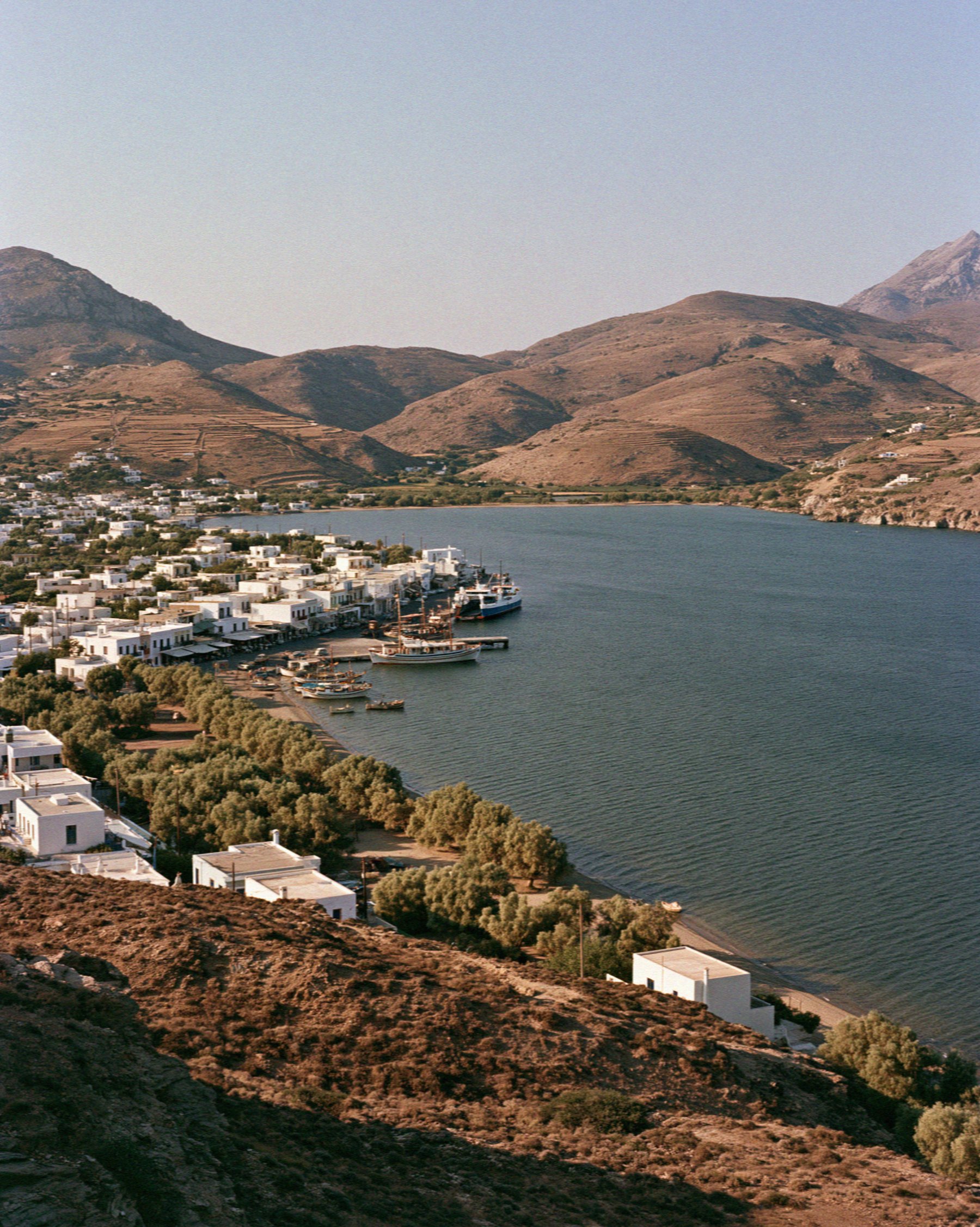
Adamas is the base I would suggest to anyone arriving without a car or staying only two or three nights. Everything that moves on Milos moves from here.
Plaka and the Kastro
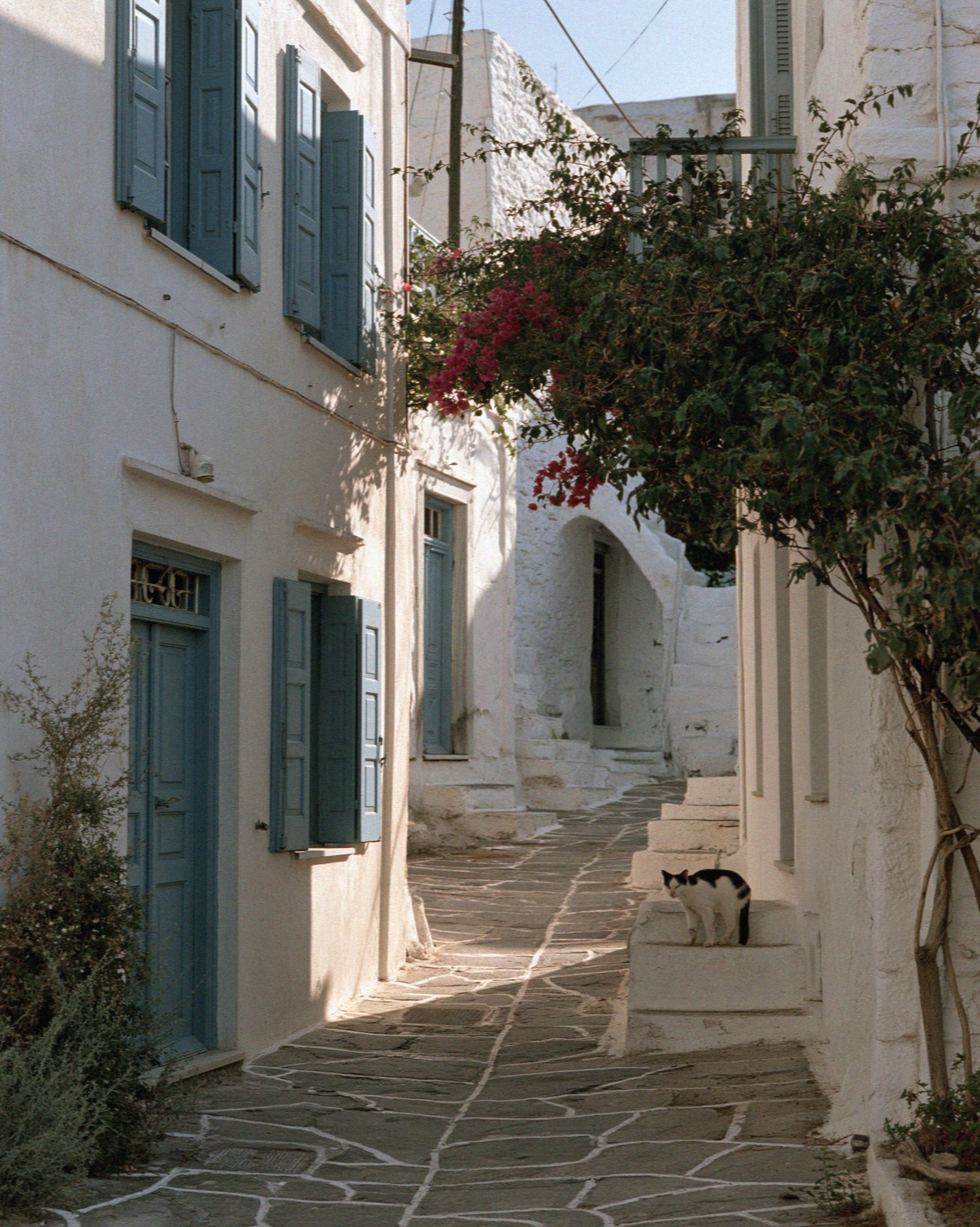
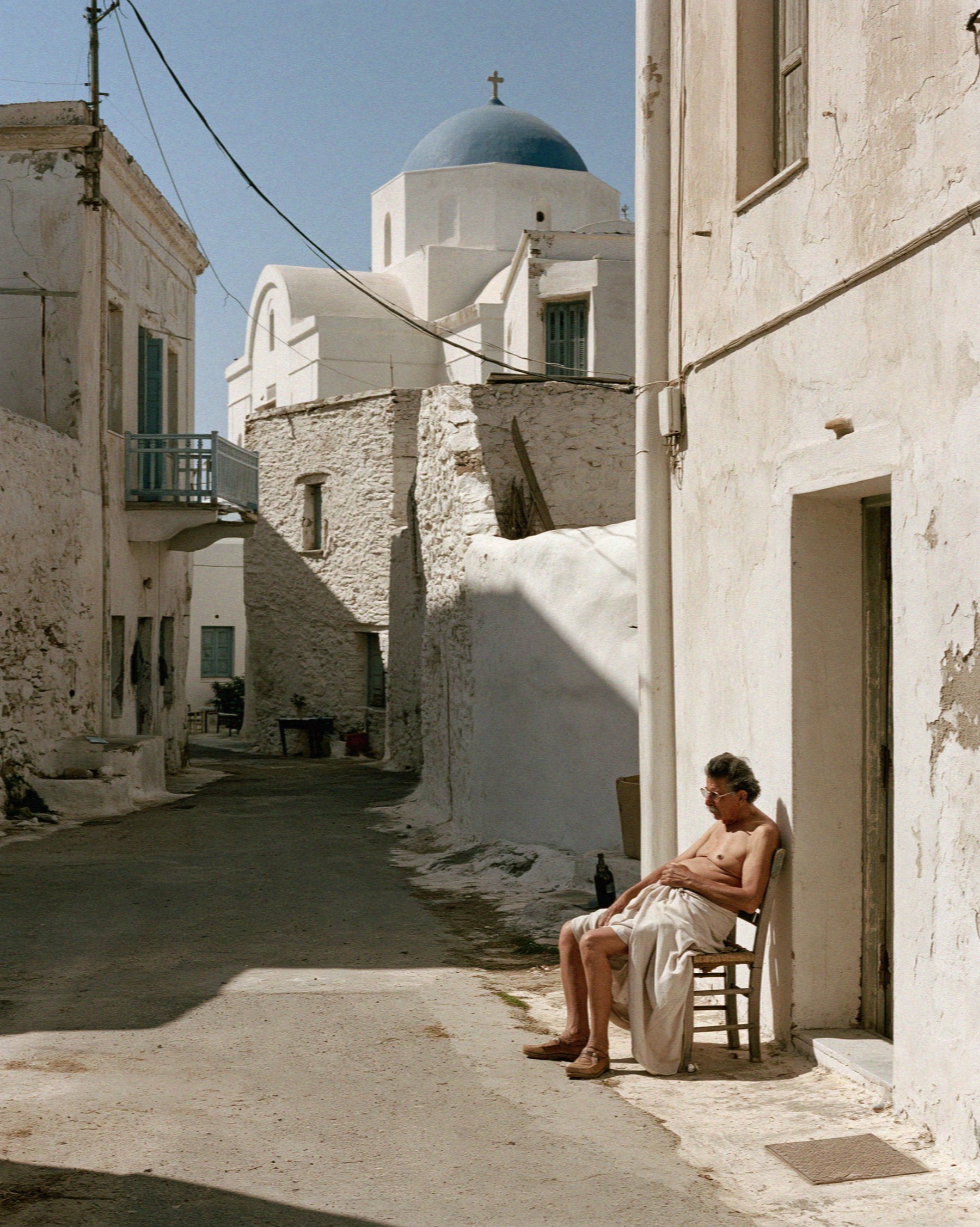
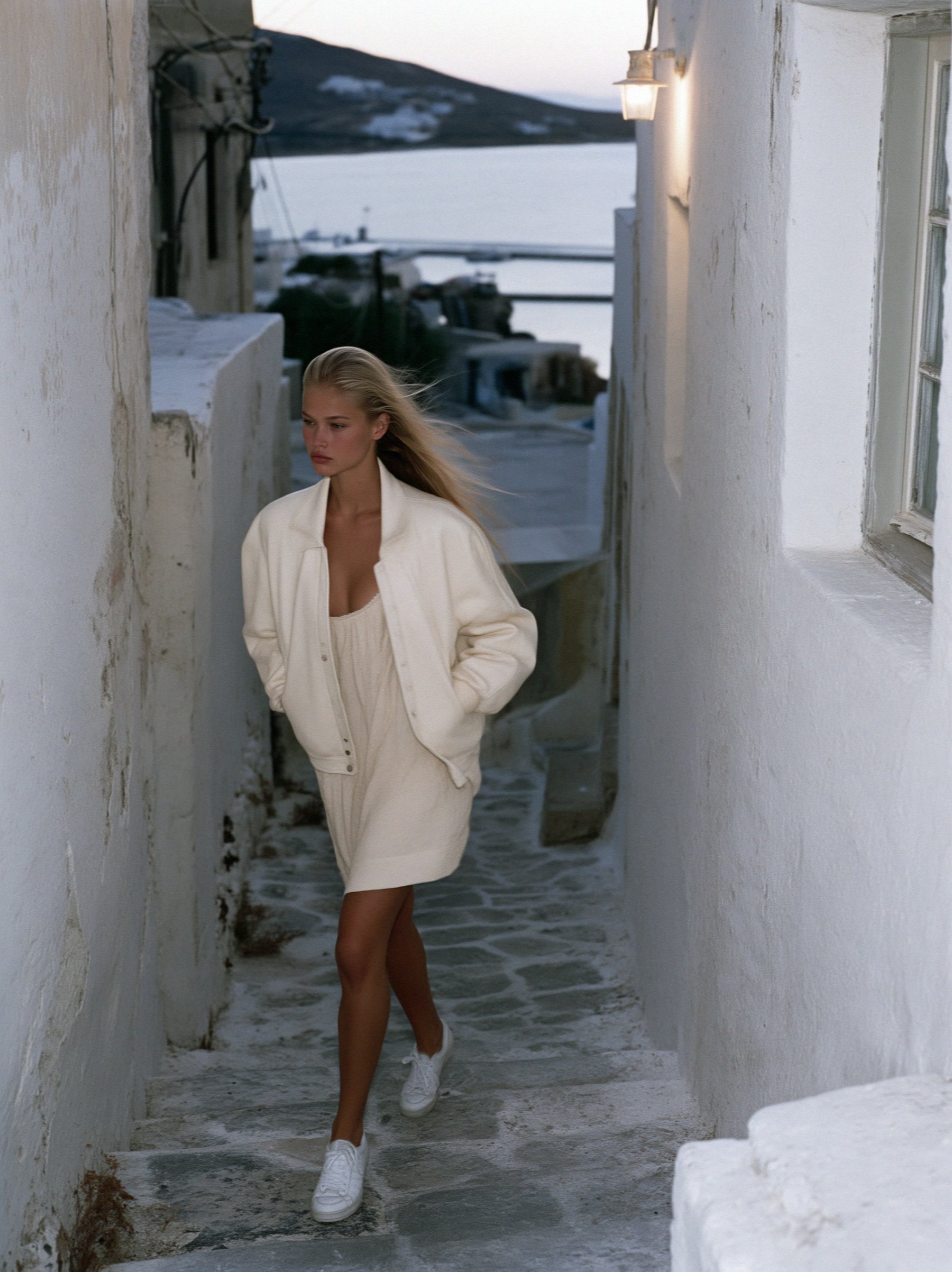
Plaka is the capital, set high on the hill above the bay about four or five kilometres from Adamas. It is a village of white lanes, blue doors and small shops, mostly closed to traffic, and it is at its best in the late afternoon and evening, when the day heat has gone out of the lanes and people come up for the sunset.
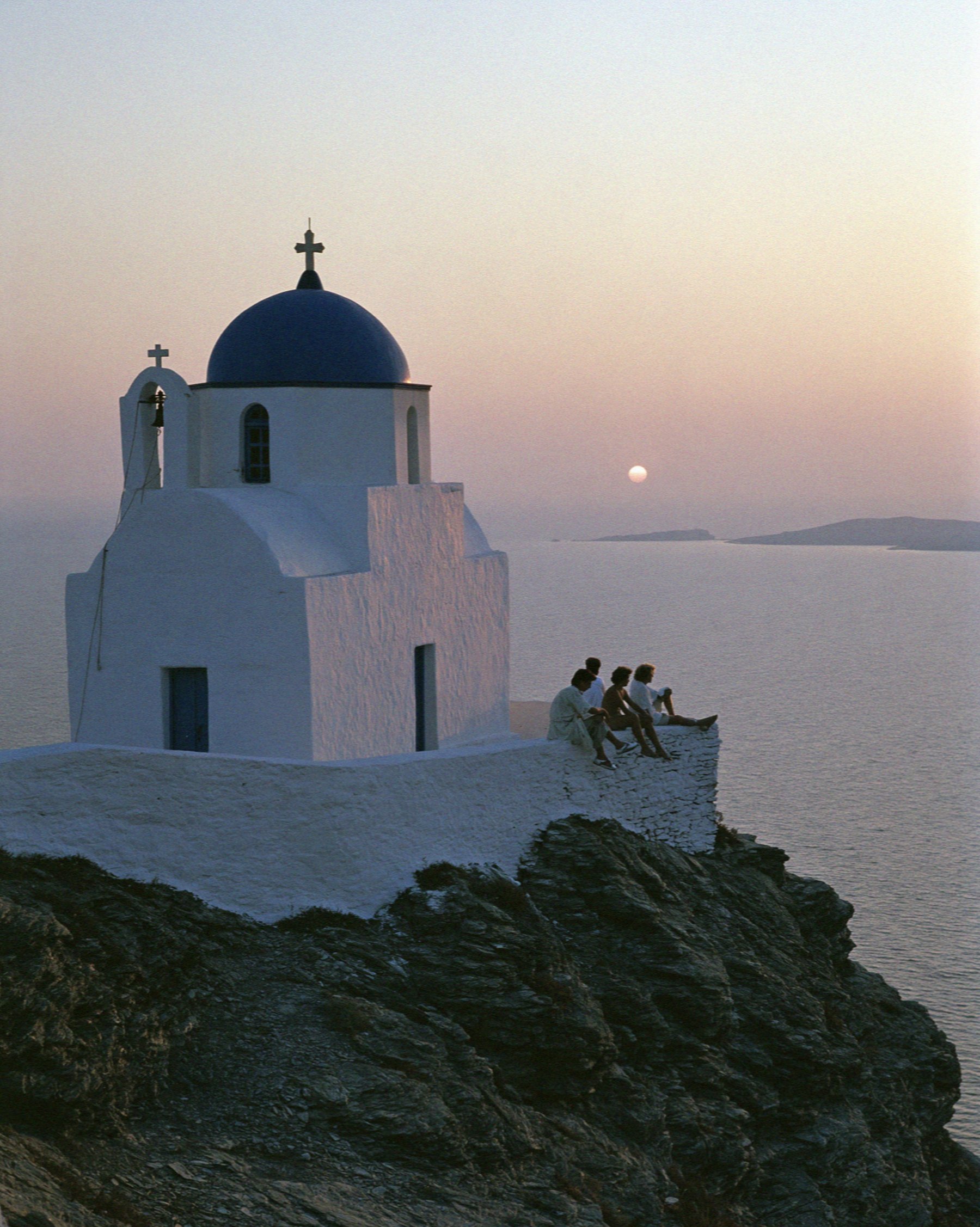
The sunset is what they come for. Above the village is the Kastro, the rock where a Venetian castle stood from the 13th century. Little of the castle itself survives; the outer houses of the old settlement once doubled as its walls. A path of steps climbs from the lanes to the top, past the church of Panagia Thalassitra, to a small church at the summit and a view over the whole bay, the west of the island and the open sea. It is free and it is a real climb, and at golden hour in summer you will share it with a crowd, so go up early and claim a place on the wall.

Plaka has two museums. The Archaeological Museum holds finds from the Bronze Age settlement at Phylakopi and a cast of the Venus de Milo; it opens 08:30 to 15:30 in summer, closed on Tuesdays, for €5. The Folklore Museum is nearby. Just below, Trypiti runs along the same ridge with its windmills and a few good tavernas, and below Trypiti are the catacombs and the ancient theatre, which I would see in the same morning as Plaka.
I walked up to the Kastro on my third day, after the catacombs, and wrote about it in The Colour of the Boats. The two hundred or so steps are easier at the end of the day than in the middle of it.
Klima and the syrmata villages
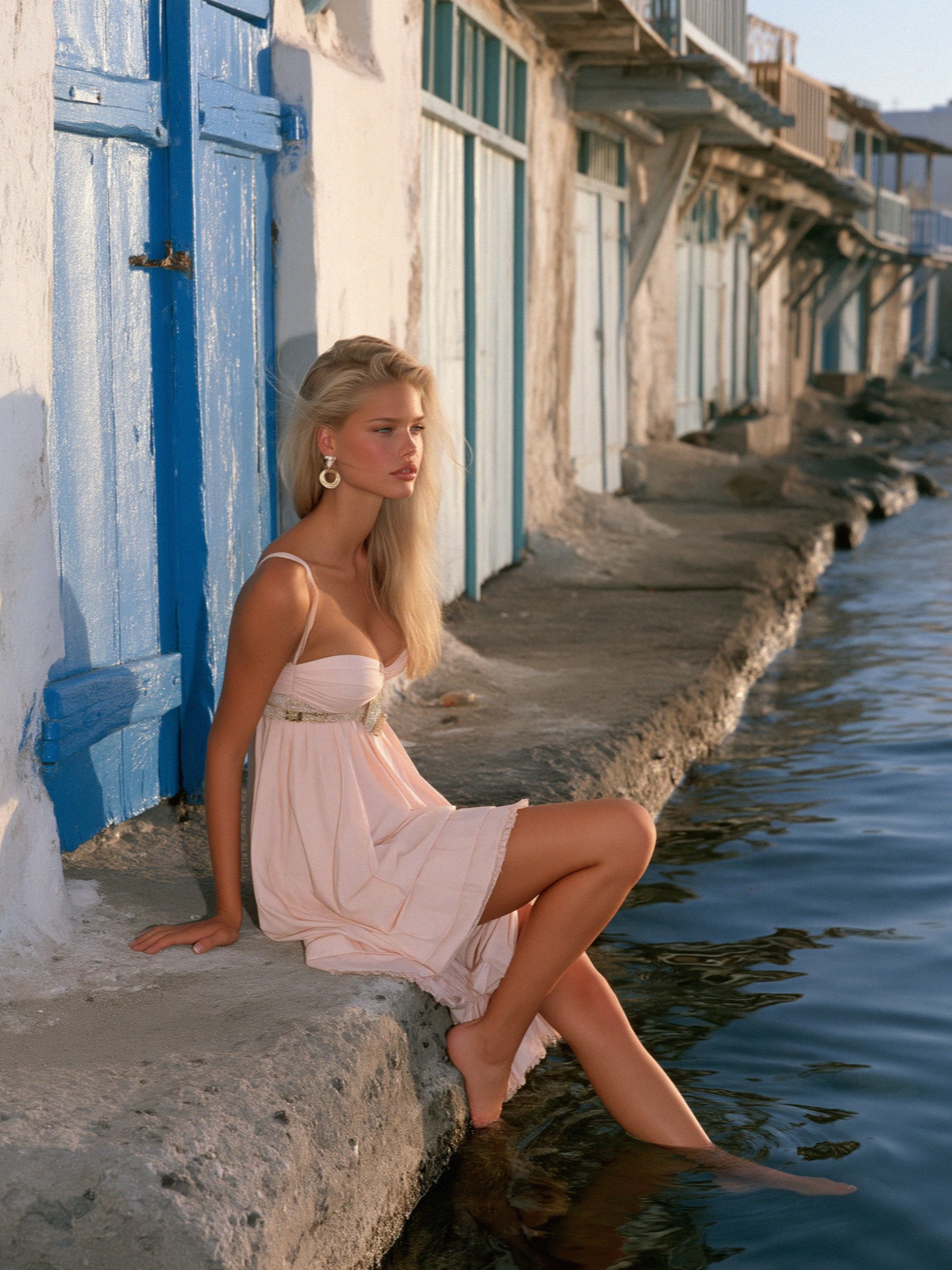
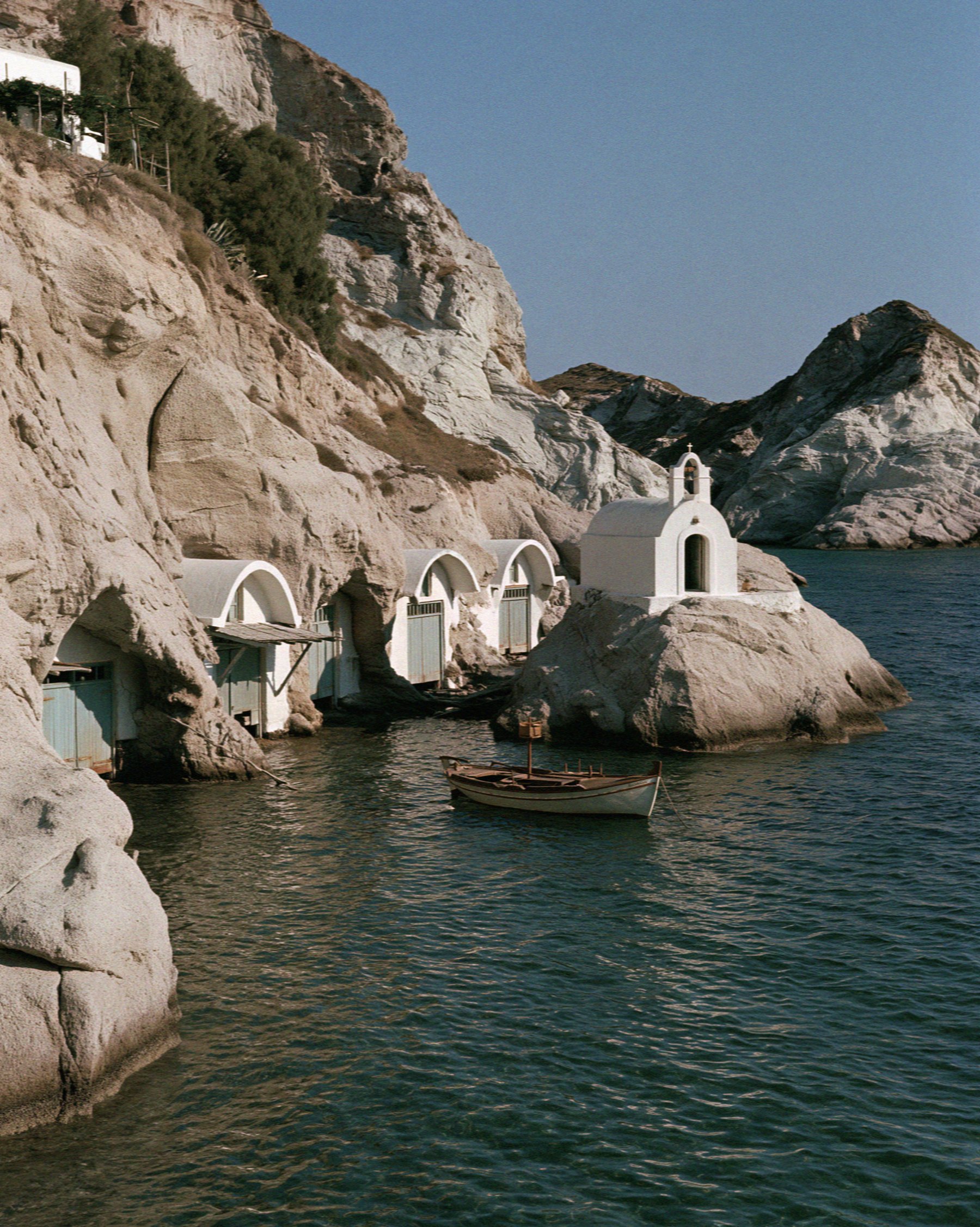
Below Plaka and Trypiti, at the water’s edge, is Klima, the village most people picture when they think of Milos after Sarakiniko. It is a single row of syrmata, the old fishermen’s boat houses: a garage cut into the rock at sea level for hauling the boat up in winter, and a room built above it. Their doors and shutters are painted in strong, bright colours, and from the water the row looks like a strip of ribbons.
Klima is about 5.5 kilometres from Adamas, down a narrow winding road. There is no bus and very little parking, so arrive early, or park higher up and walk down. There is no beach either, but you can swim off the rocks at the end of the row, and at dusk the light on the doors is the reason to come. I swam there in the last of the evening and ate at the long table at the end of the row afterwards.
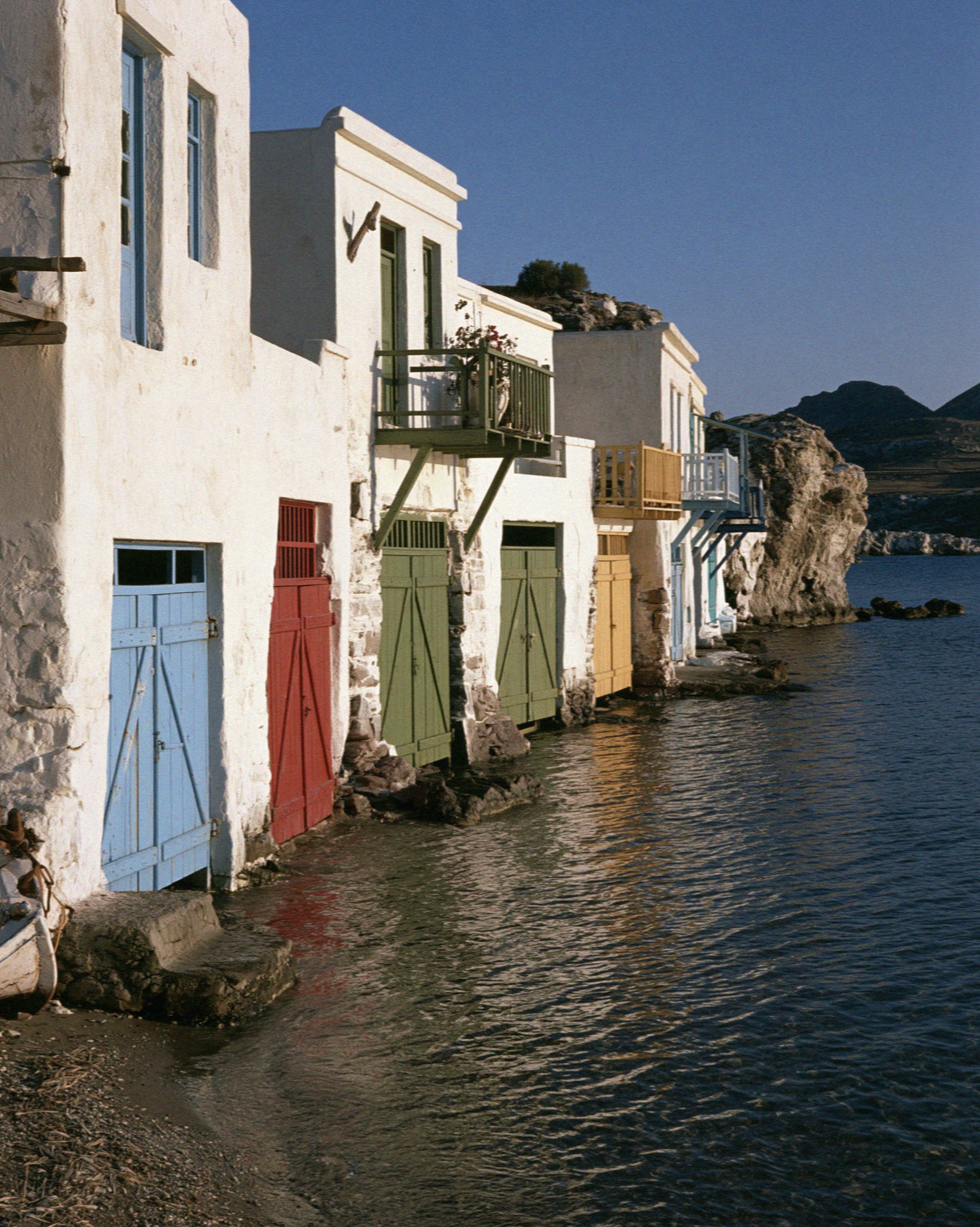
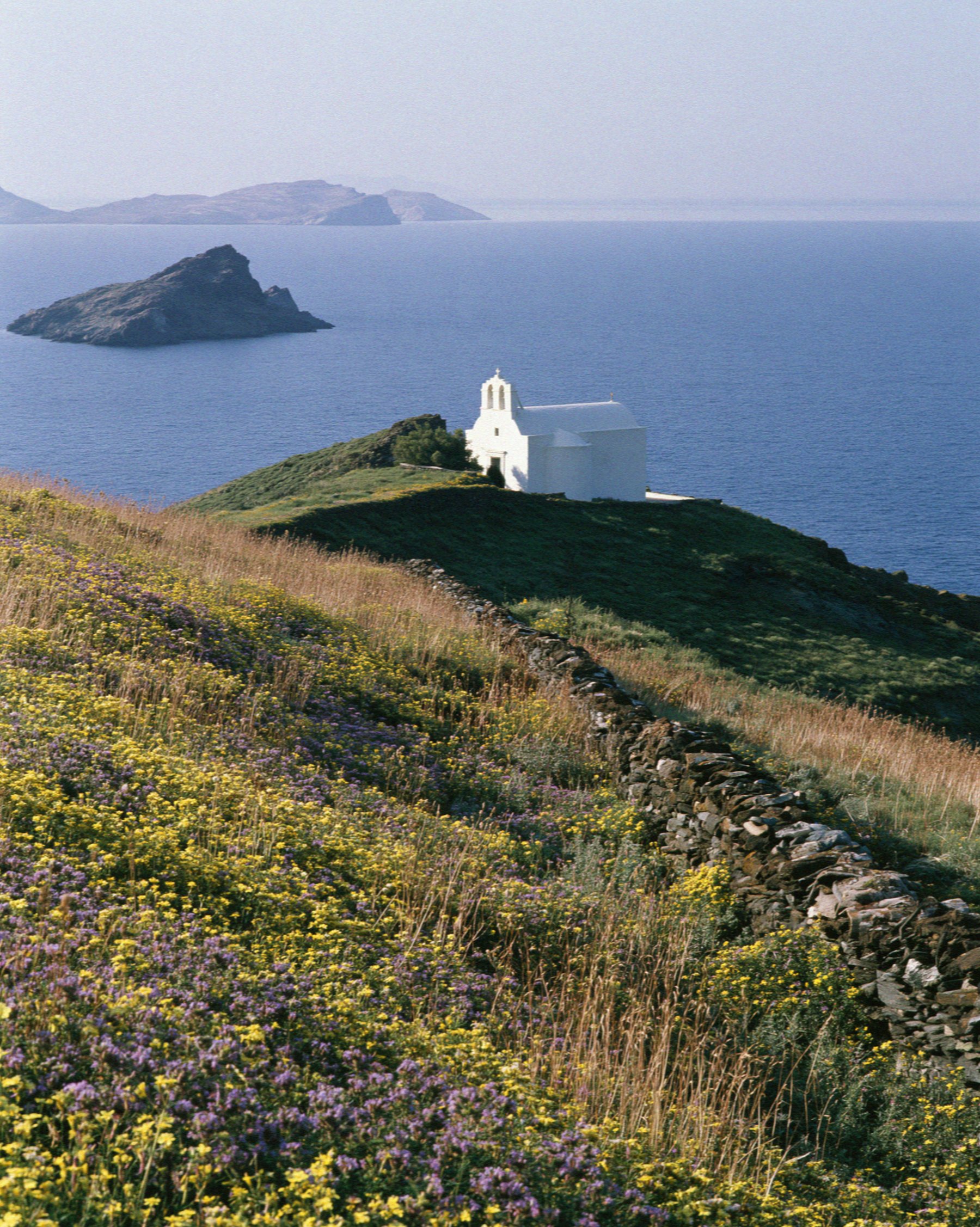
Klima is not the only one. Syrmata line several coves on the north and west coasts. Mandrakia is a tiny harbour with a taverna above the water; Firopotamos has a small pebble bay, a white chapel on the point and some of the clearest water on the island; Fourkovouni, Areti and Skinopi are quieter still. You can stay in a restored boat house in some of them, if you book months ahead.
I have written up each village, with how they connect and a loop to drive them in one day, in my guide to Plaka, Klima and the villages of Milos.
Sarakiniko and the white coast
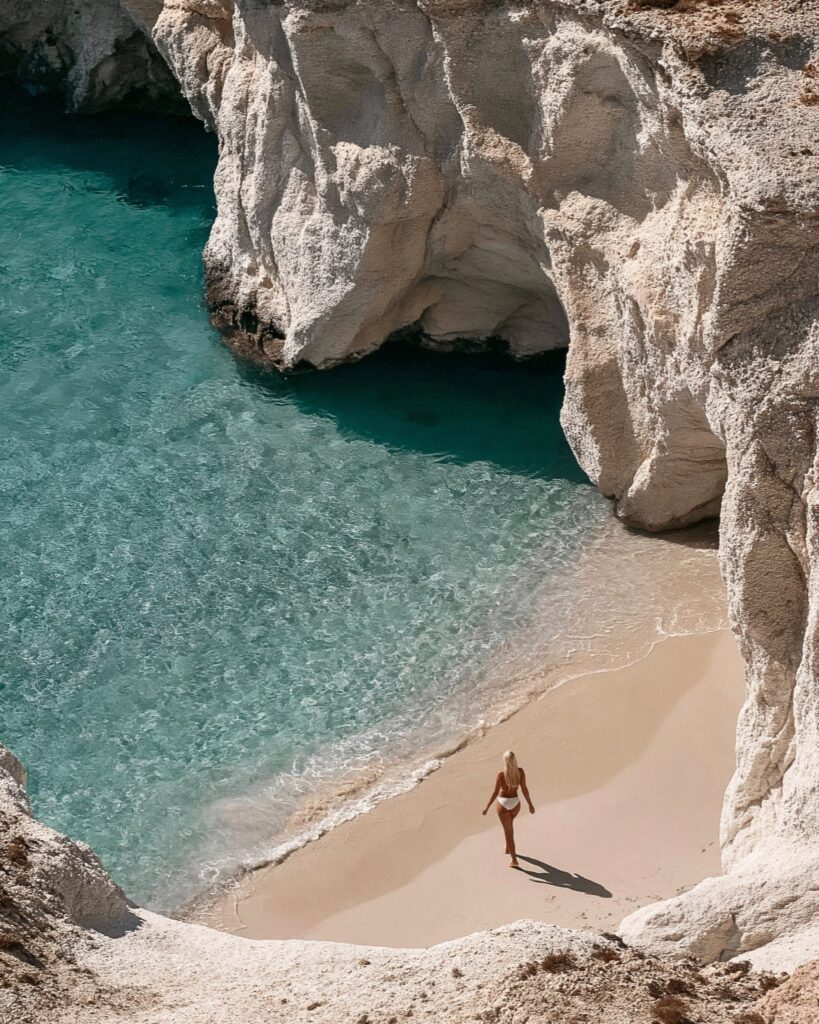
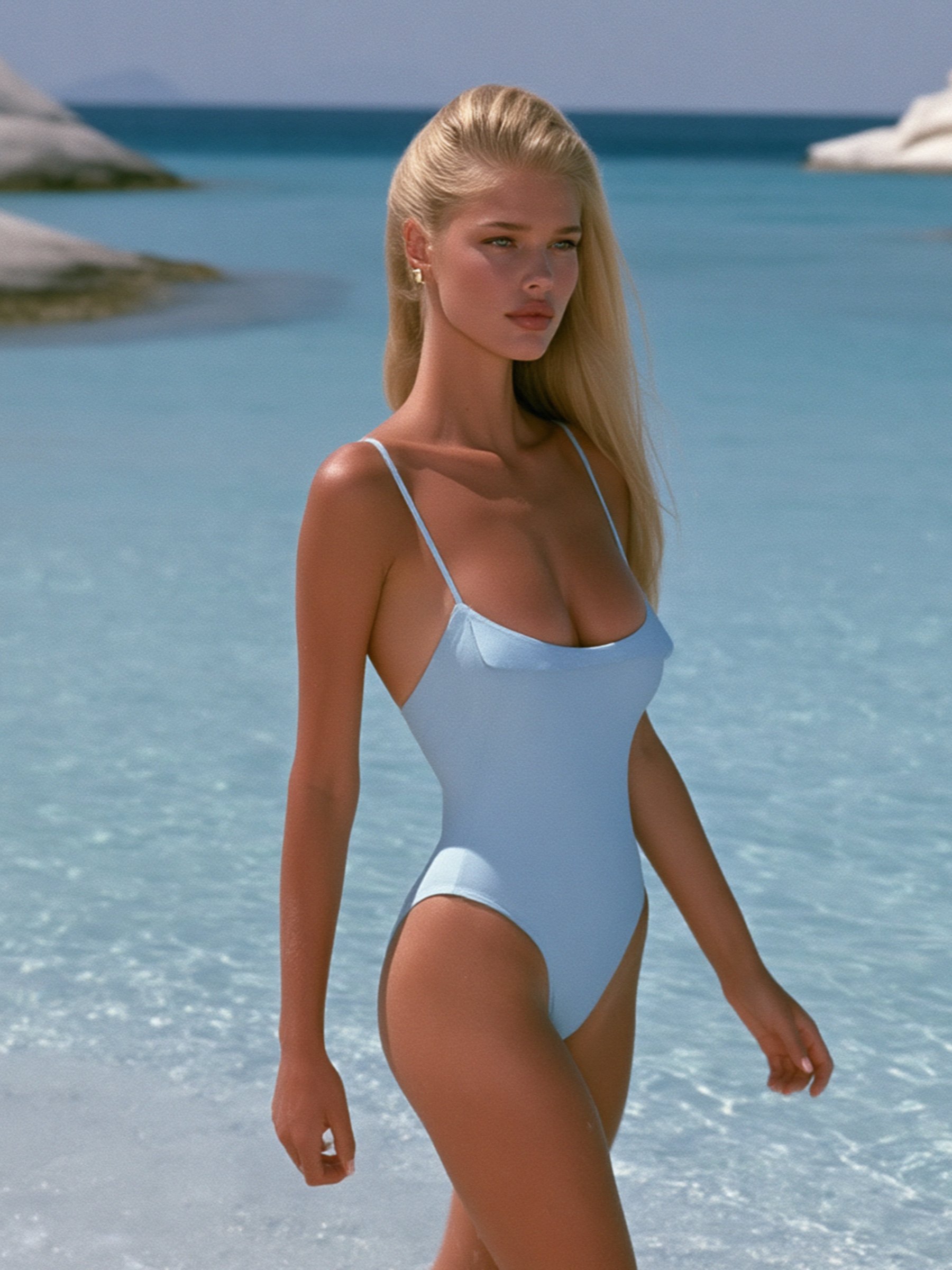
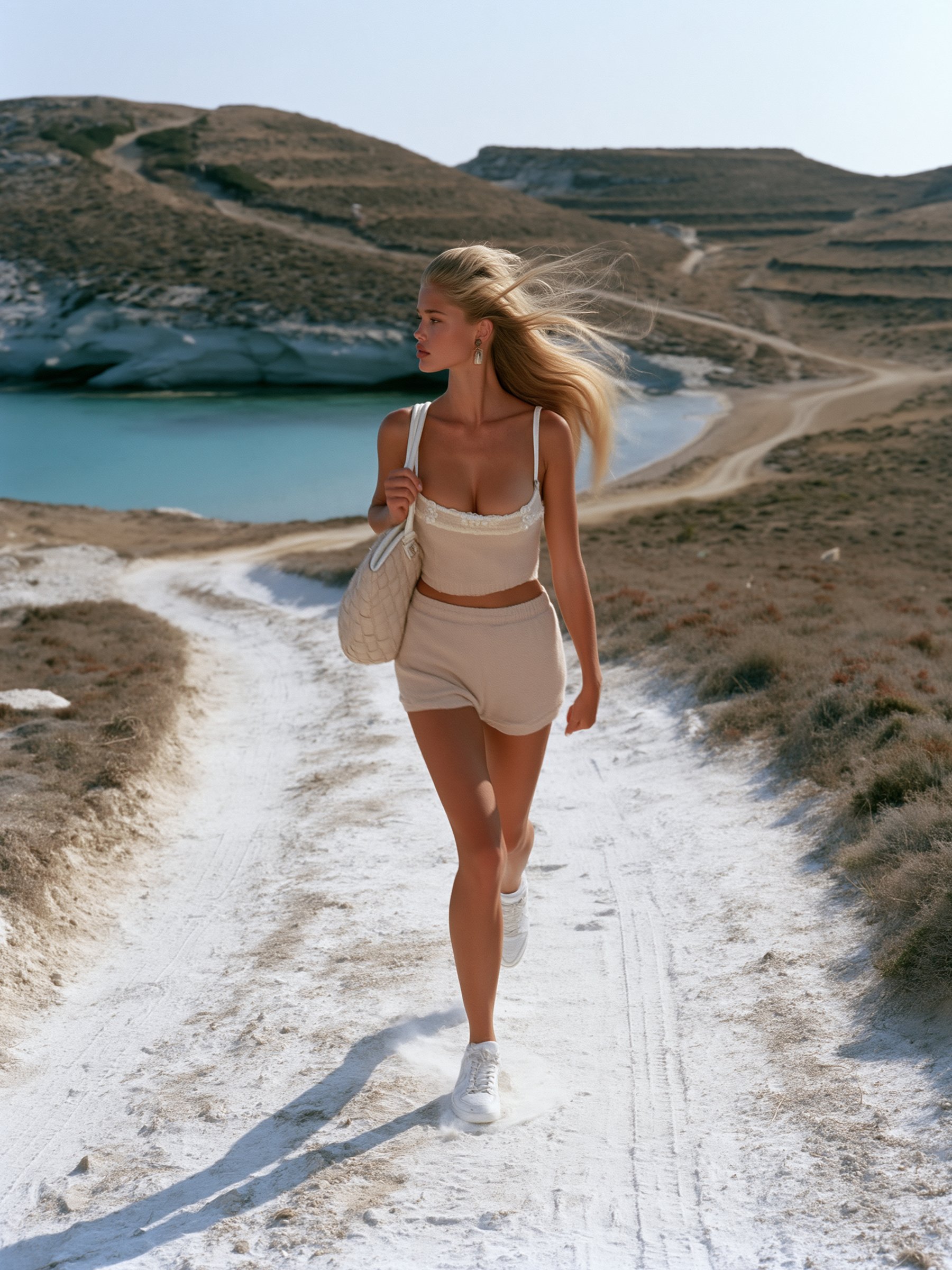
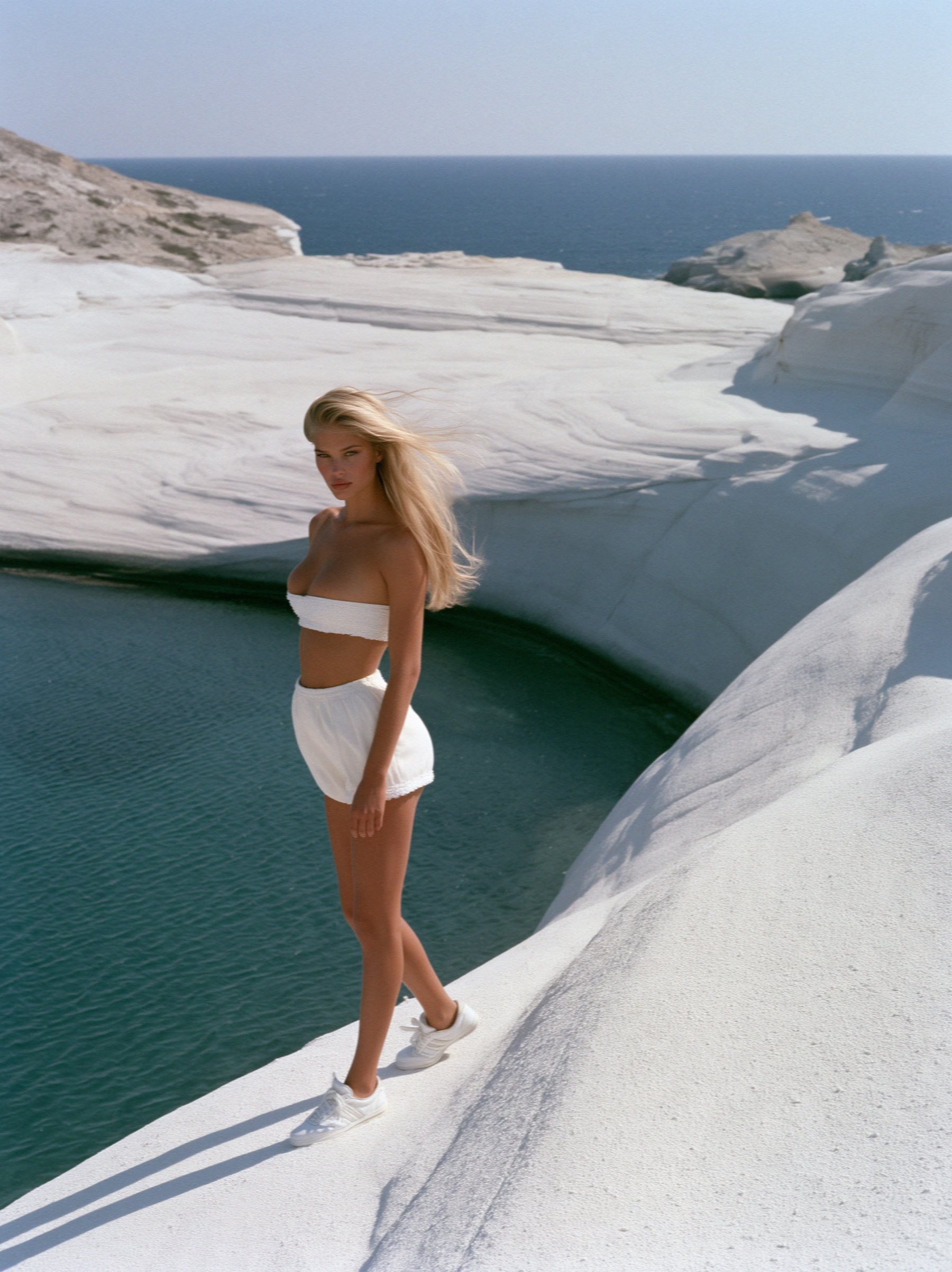
Sarakiniko is the image of Milos. It lies on the north coast about 4.5 kilometres from Adamas, a cove of pale volcanic ash and pumice that the wind and sea have worn into soft curves and ridges, with a narrow channel of deep water running into the rock. People jump into the channel from the sides; others climb down and swim. Underfoot the rock is fine and slightly gritty, and the white is fierce in the middle of the day.
I went in the afternoon of my first day and swam in the long channel, and the colour of the water inside it is not something a photograph exaggerates.
Three things to know. First, come early or late. By late morning in summer the rocks are crowded and the white throws the heat straight back at you. Second, respect the wind. Sarakiniko faces north, straight into the meltemi, and when it is blowing the swell runs into the channel and the edges are dangerous. People have drowned here. In 2026 the beach had organised lifeguard cover for the first time, two lifeguards from 10:00 to 18:00 from June, but that does not make a rough day safe. Stay off the edges and out of the water when the sea is up. Third, treat it gently. It has no formal protection yet, and locals have fought hard to keep it from being built on.
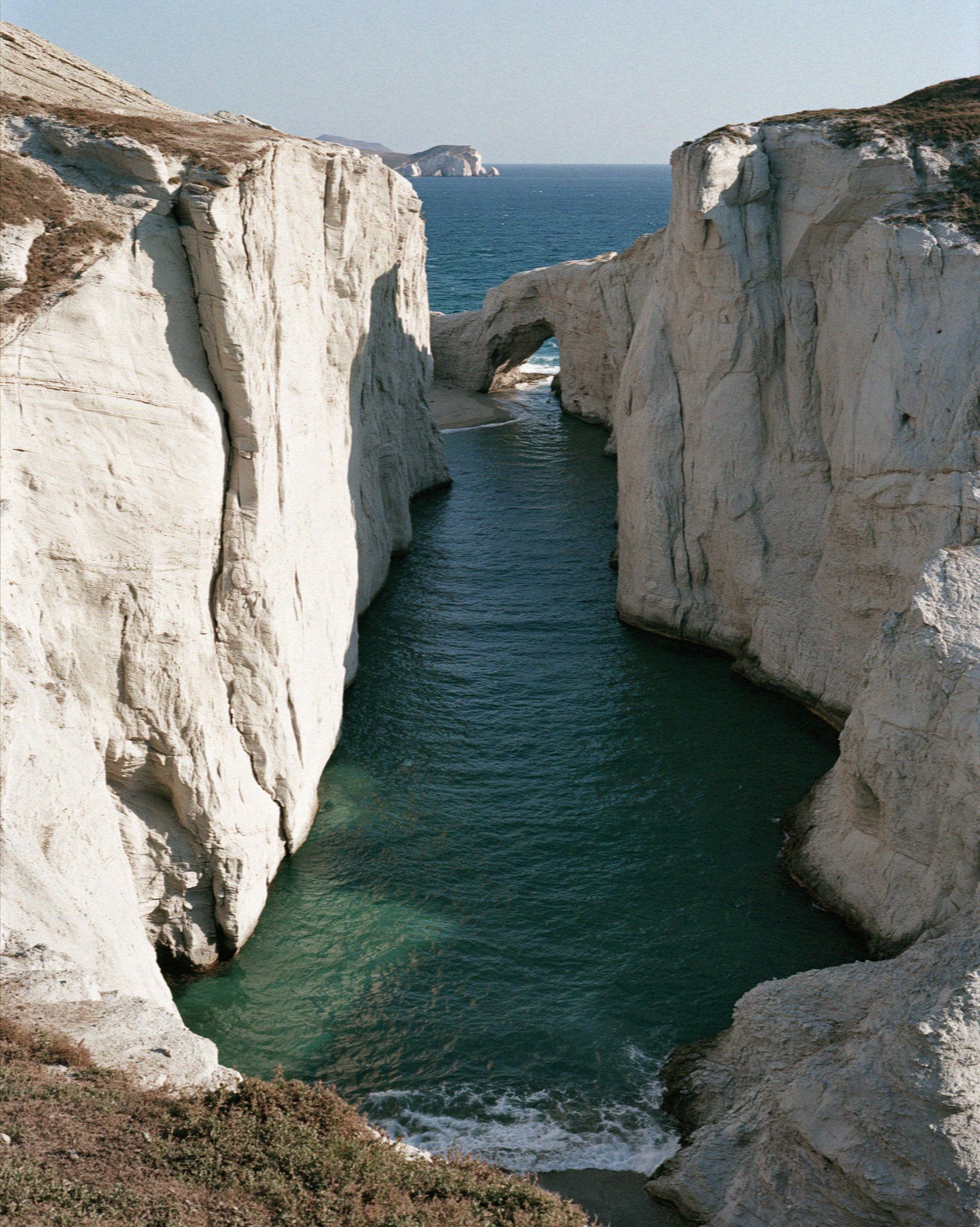
The north coast has more to offer within a short drive. Papafragas, near Pollonia, is a narrow inlet between pale rock walls with a sliver of beach at the end, reached by steps cut into the rock. And Firopotamos and Mandrakia are a few minutes west of Sarakiniko, if you want a coffee and a quieter swim afterwards.
Kleftiko and the boat day
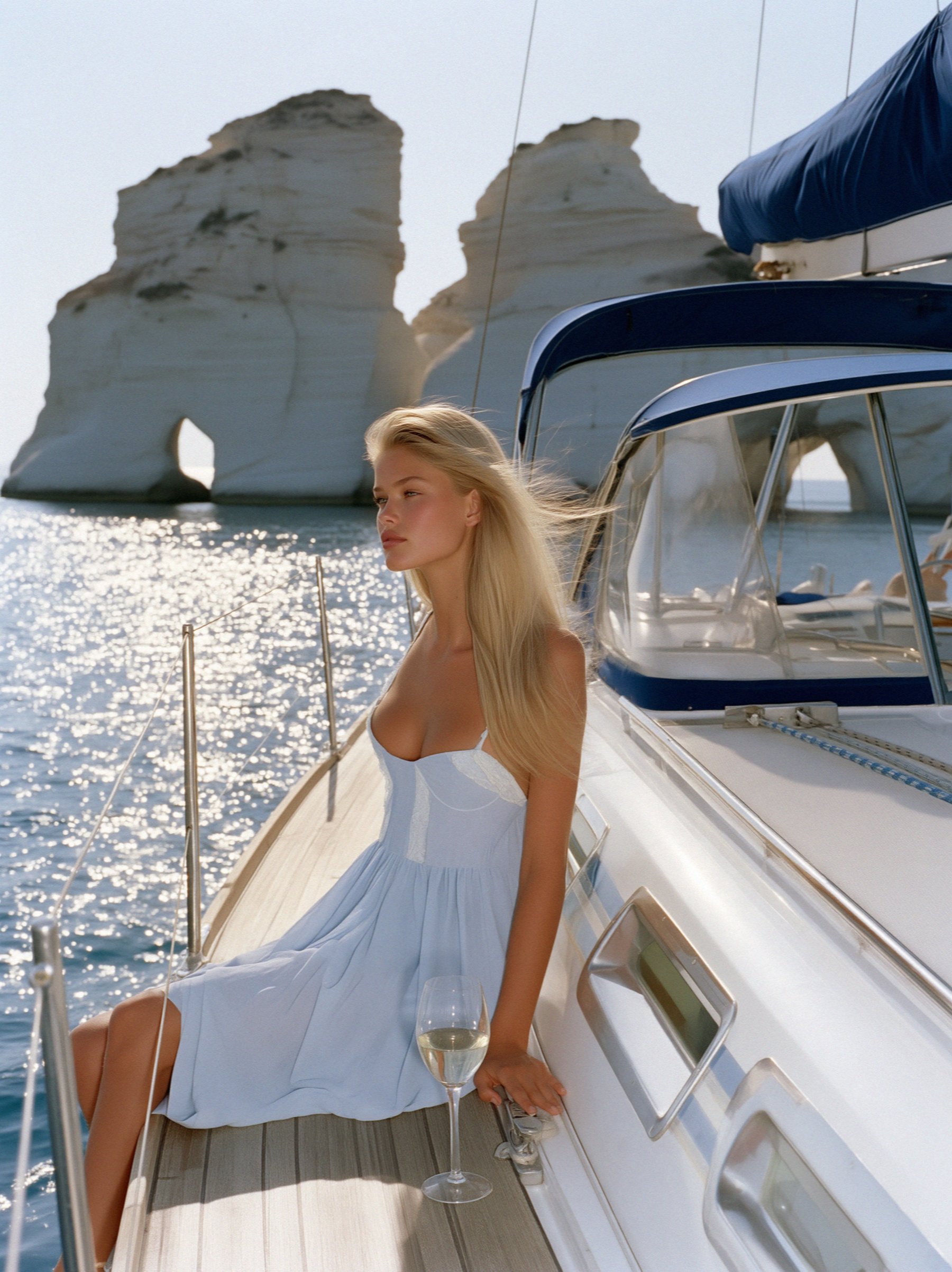
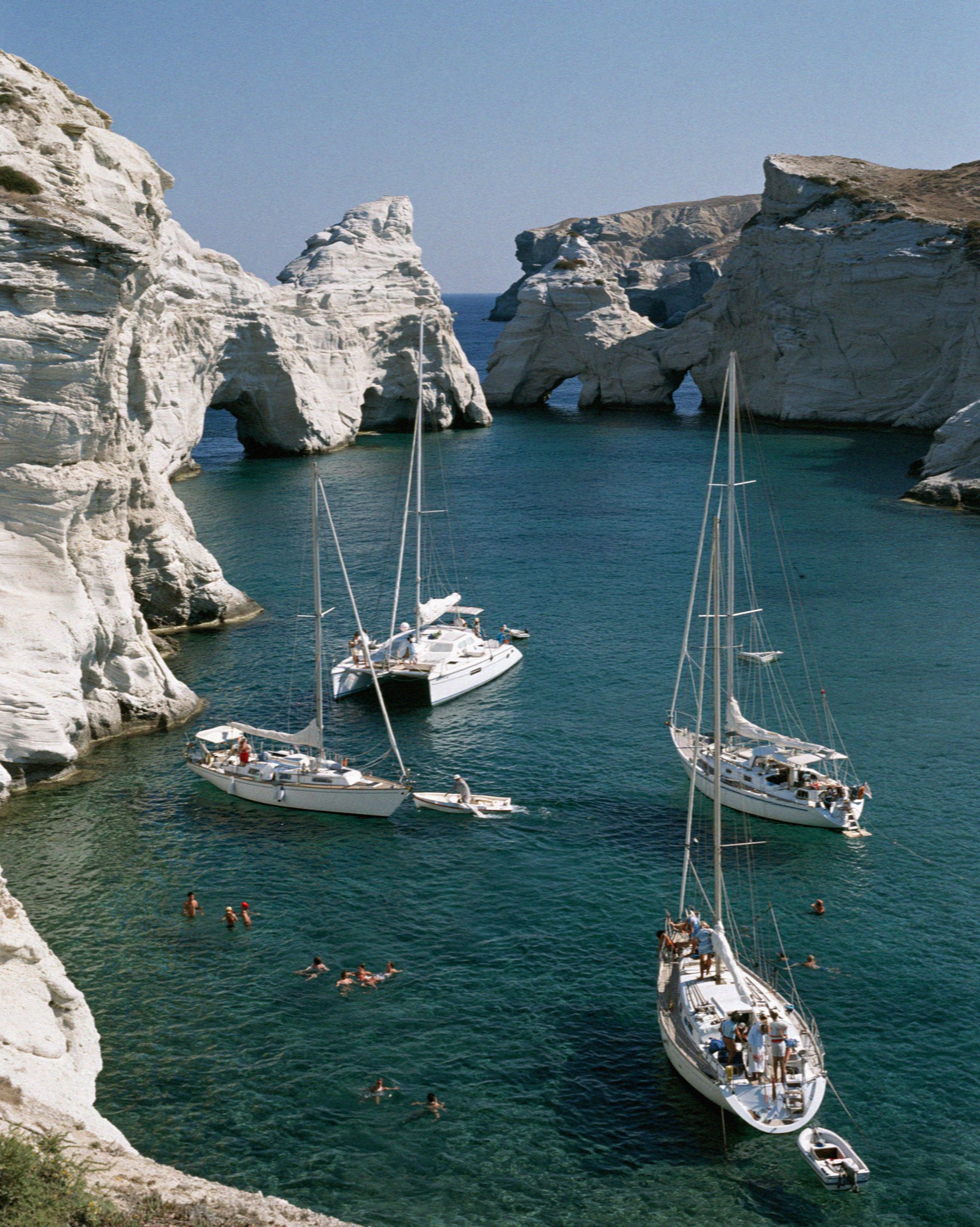
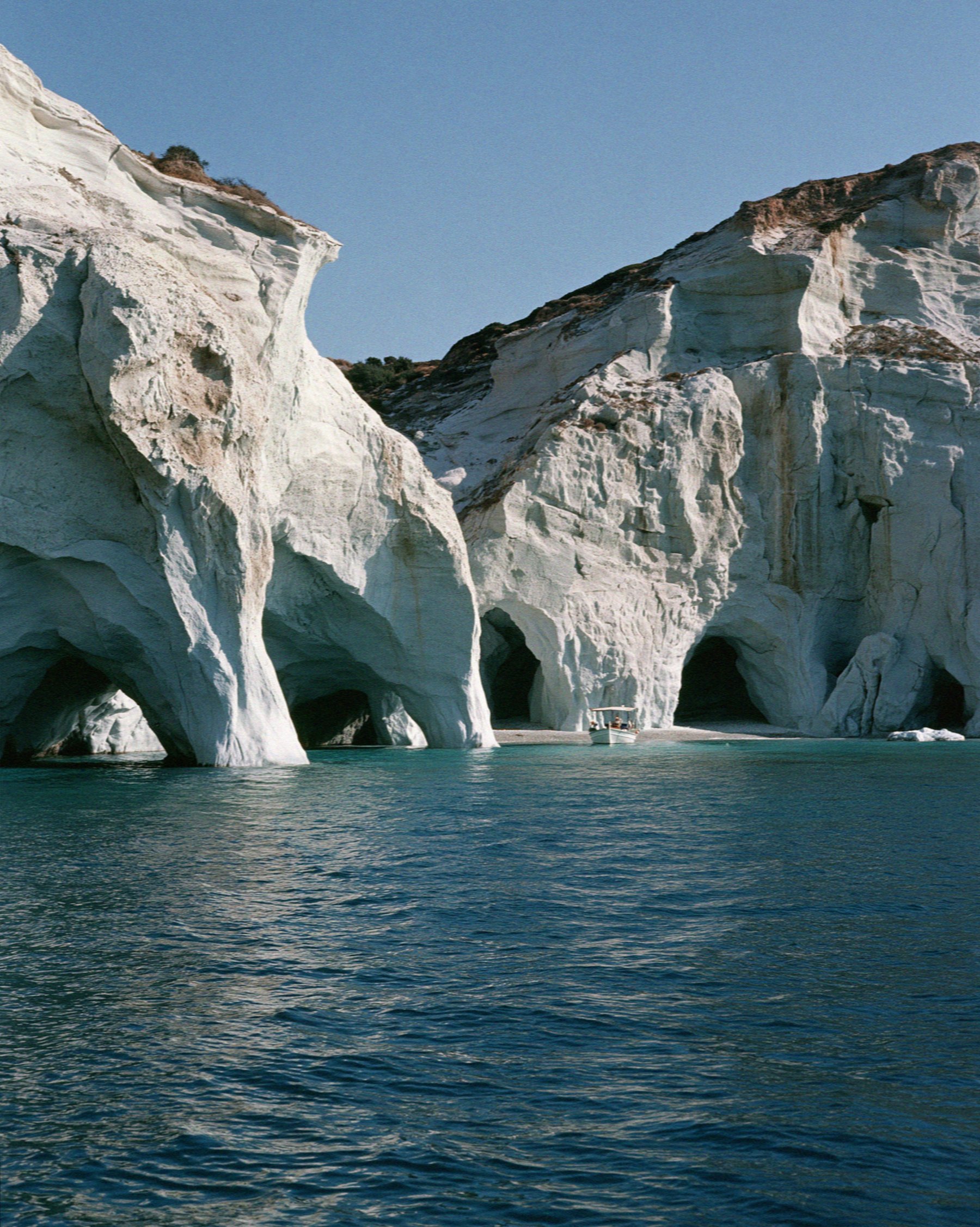
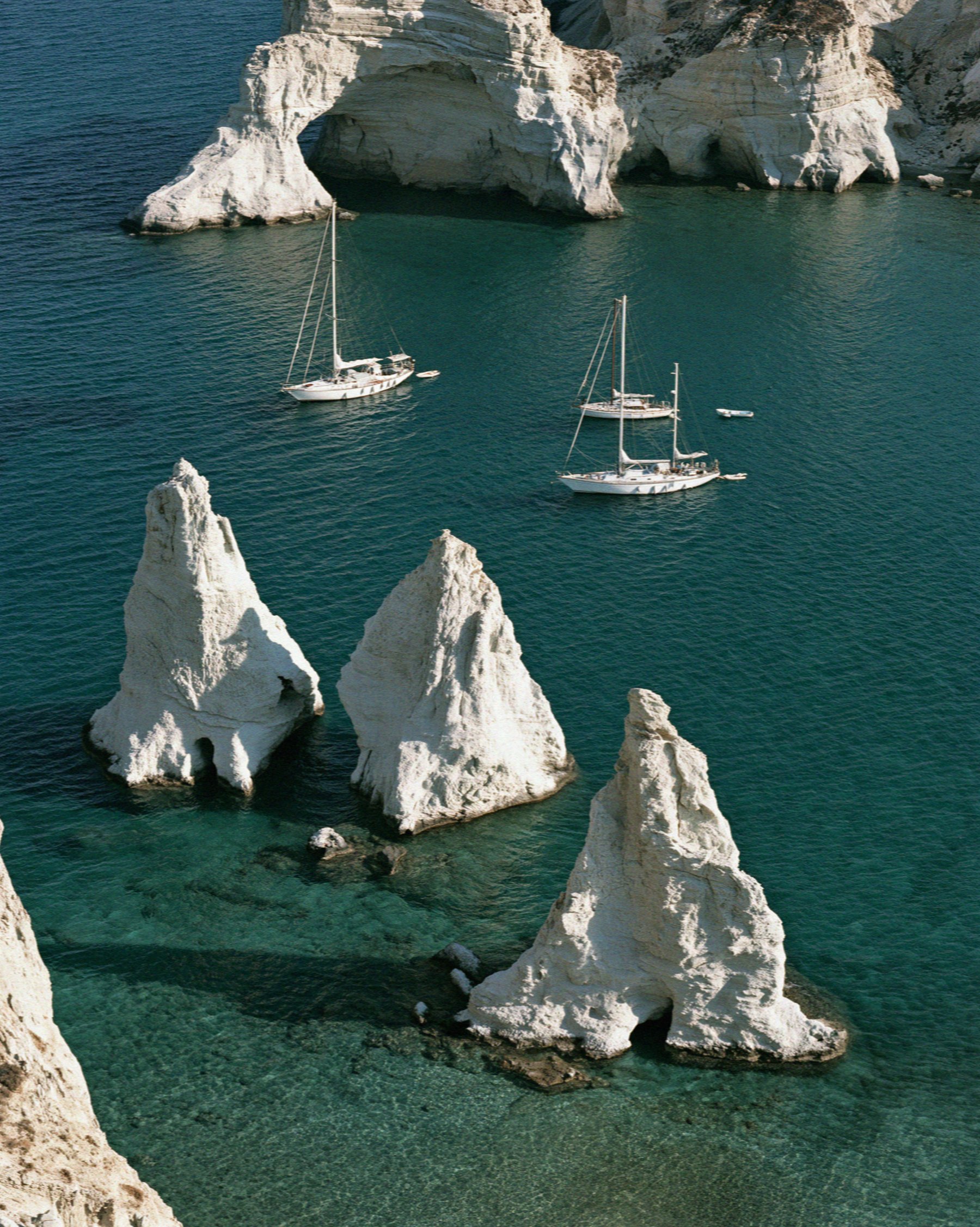
The south-west corner of Milos has no road to its best coast. Kleftiko is a group of white volcanic sea stacks, arches and caves rising out of very clear water, an old pirate anchorage whose name comes from the Greek word for thief. The only way to reach it is by sea, and a day on a boat is, for me, the one thing on Milos not to miss.
Most boats leave from Adamas in the morning and work their way round the west coast, past rock formations and old mine workings, to Sykia and then Kleftiko. Sykia is a sea cave whose roof fell in long ago, so it is open to the sky; the boats cannot enter, so you go in by dinghy or swim, if the sea allows. At Kleftiko the boats anchor in the lee of the rocks and you swim through the arches and into the caves before lunch on deck.
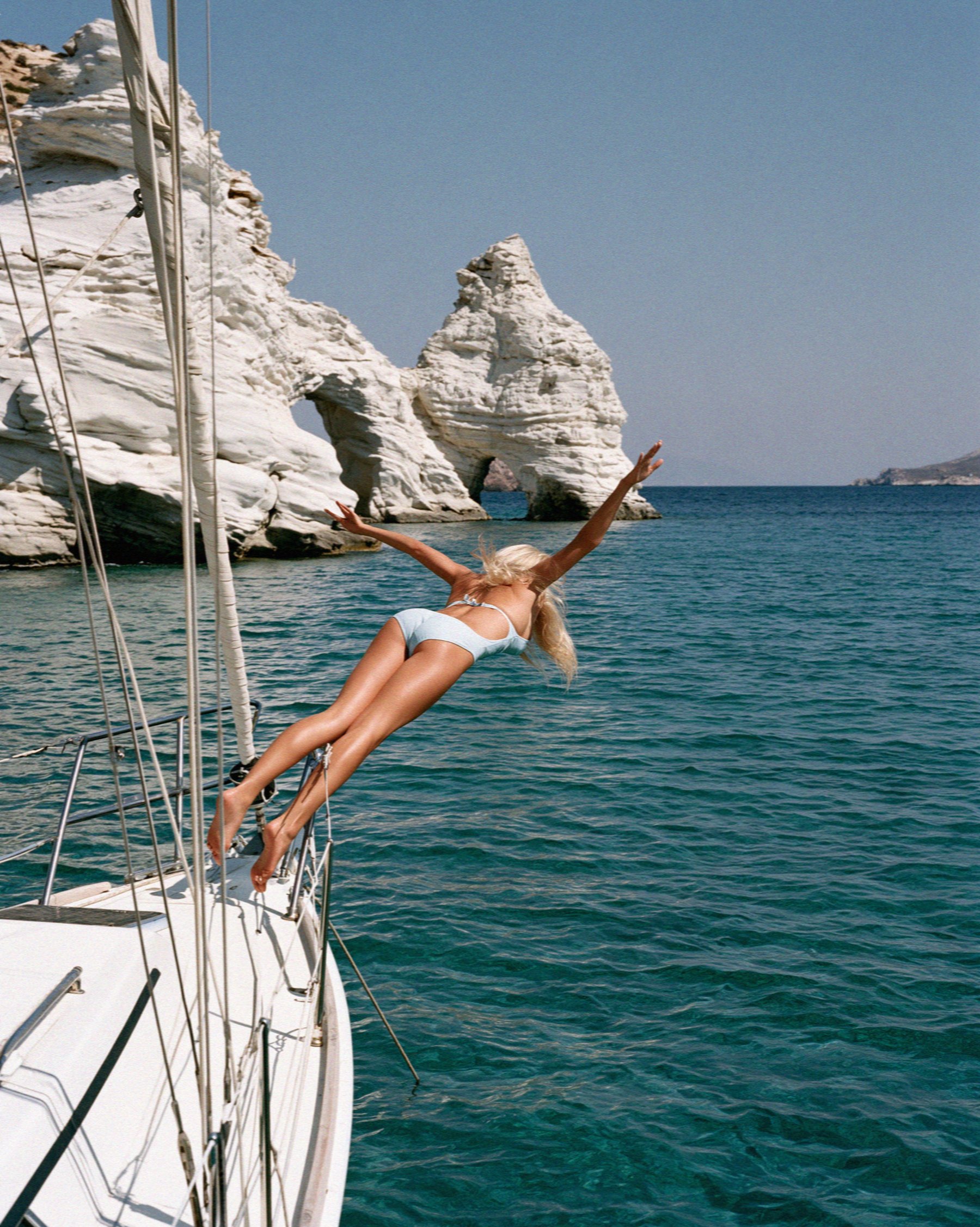
A full day on a sailing boat with lunch costs roughly €110 to €160 a person, half-day catamaran and RIB trips from about €100 to €140, and a private boat several hundred to well over a thousand euros a day. Most run from May to October. When the meltemi is strong the west coast route can be cancelled, or the boats leave from the south coast instead, so book it early in your stay and leave room to move it.
I took a sailing boat out of Adamas at nine and came back at the end of the afternoon with the sail up, and wrote the whole day down in The Thieves’ Cove. The kinds of boat, what each one costs, where they leave from and how to choose are all in my guide to Milos boat tours to Kleftiko, Sykia and Polyaigos.
The beaches
With around 70 beaches, the question on Milos is not whether you will find one but which coast to drive to, and that depends on the wind.
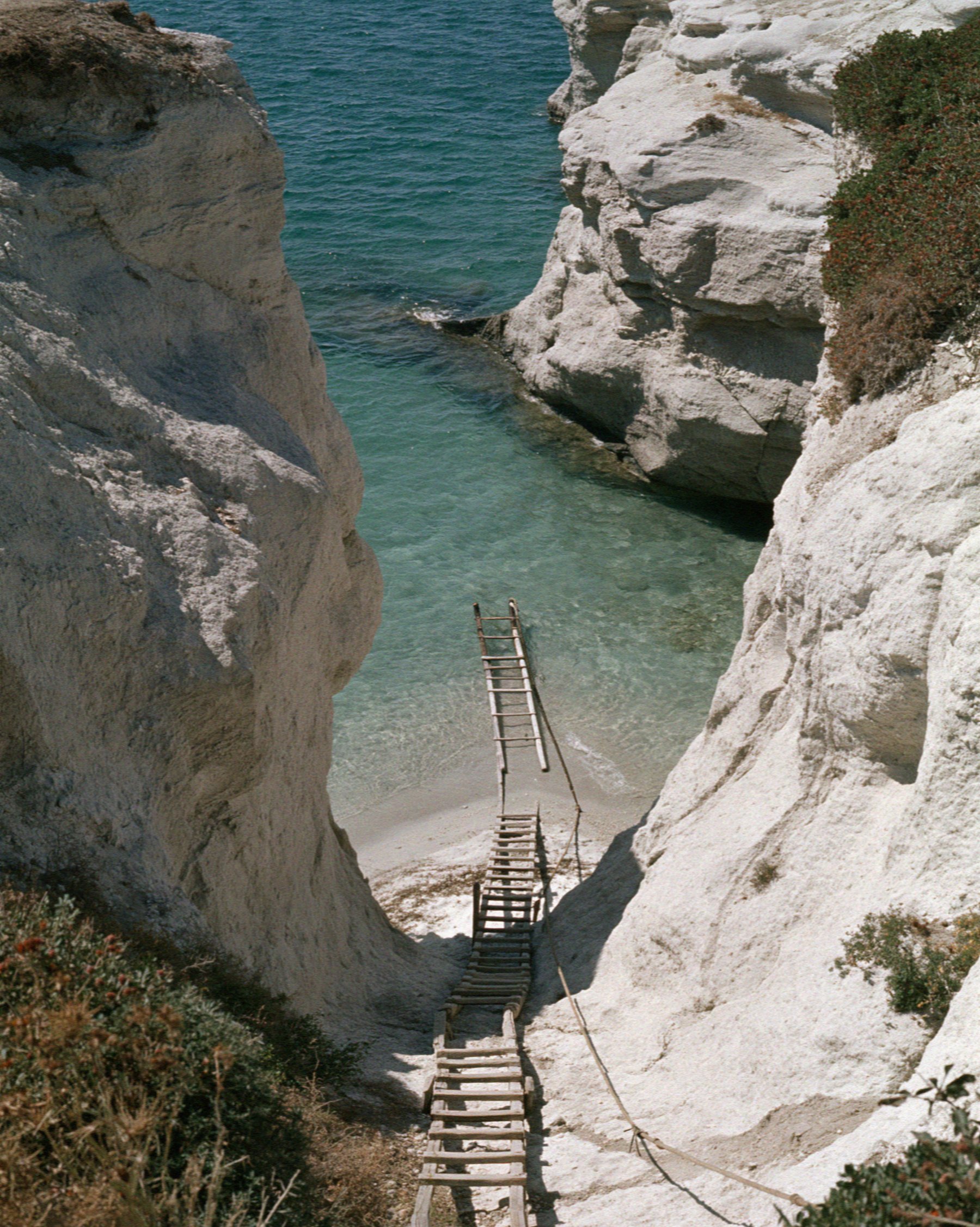
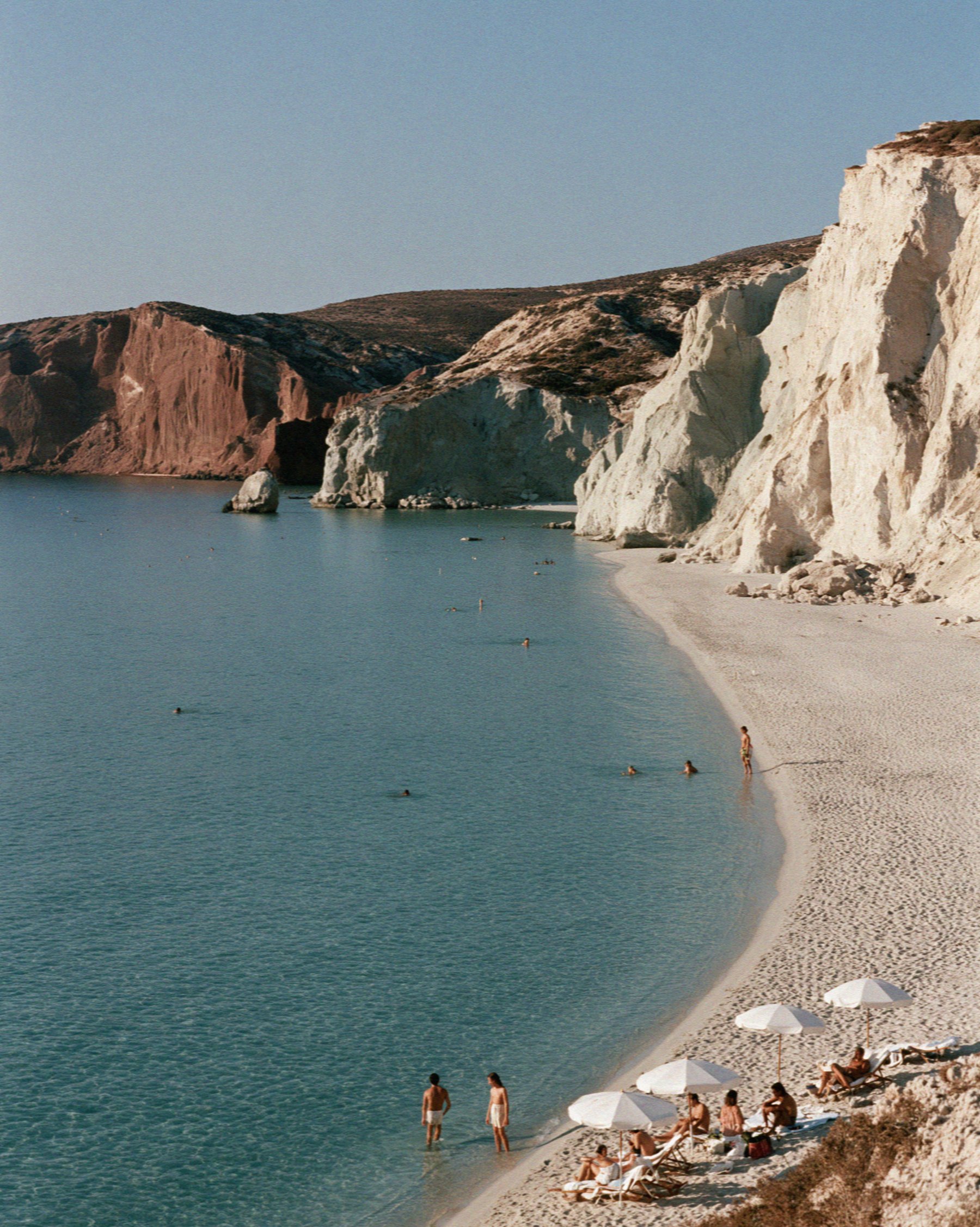
On a calm day the north coast is the place: Sarakiniko, Papafragas and the coves of the syrmata villages. When the meltemi blows, go south, where the cliffs give shelter. Firiplaka is a long sweep of sand that shelves very gently into the sea, under cliffs striped in colour, with a beach bar and umbrellas, and it is busy in high summer. Right next to it, Tsigrado is a tiny cove of fine sand reached by a rope and an old wooden ladder down a chute in the rock. It is wonderful and it is not for children or anyone unsteady on their feet, and you carry everything down and back up.
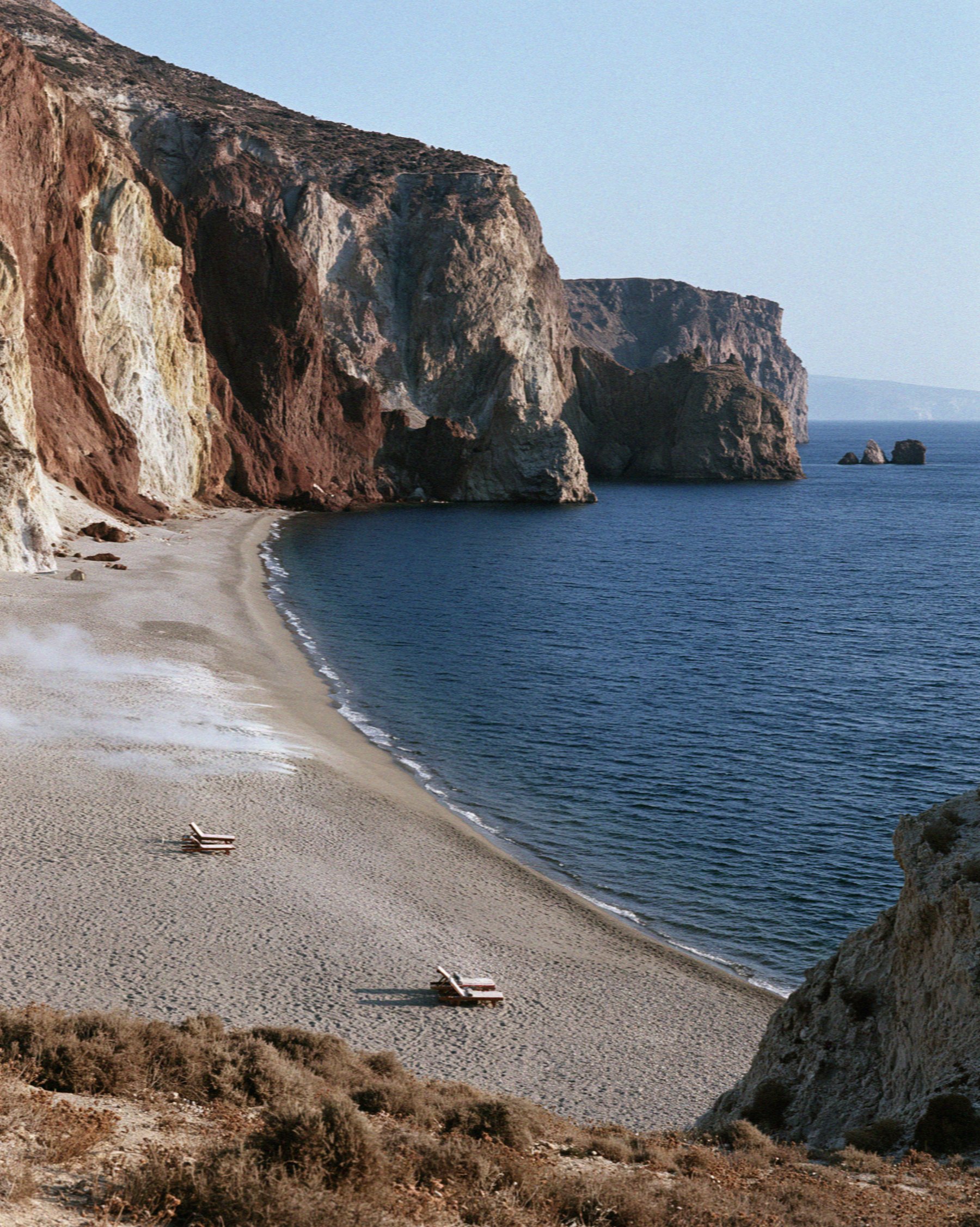
Further east, Paleochori has pebbles and sand under cliffs streaked red, yellow and white, and the ground there is warm: geothermal heat rises through the sand and the sea floor. Provatas is wide, soft and shallow, the best of them for small children, and Agia Kyriaki is long and sheltered. Plathiena, west of Plaka, is best reached by boat because the road is rough. Kleftiko, Gerakas and Sykia have no road at all.
In season the buses reach Sarakiniko, Paleochori, Provatas, Achivadolimni and Pollonia, and some lines also stop near Firiplaka and Papafragas. Everything else needs a car or an ATV, and some of the best of it needs a dirt road. I have put every beach worth the drive, with which wind suits it and how to get there, into my guide to the best beaches in Milos.
The best things to do
If I were choosing for a first visit, I would start with Sarakiniko early in the morning before the crowd, give a full day to the boat to Kleftiko, and save one evening for the sunset from the Kastro above Plaka and another for Klima at dusk.
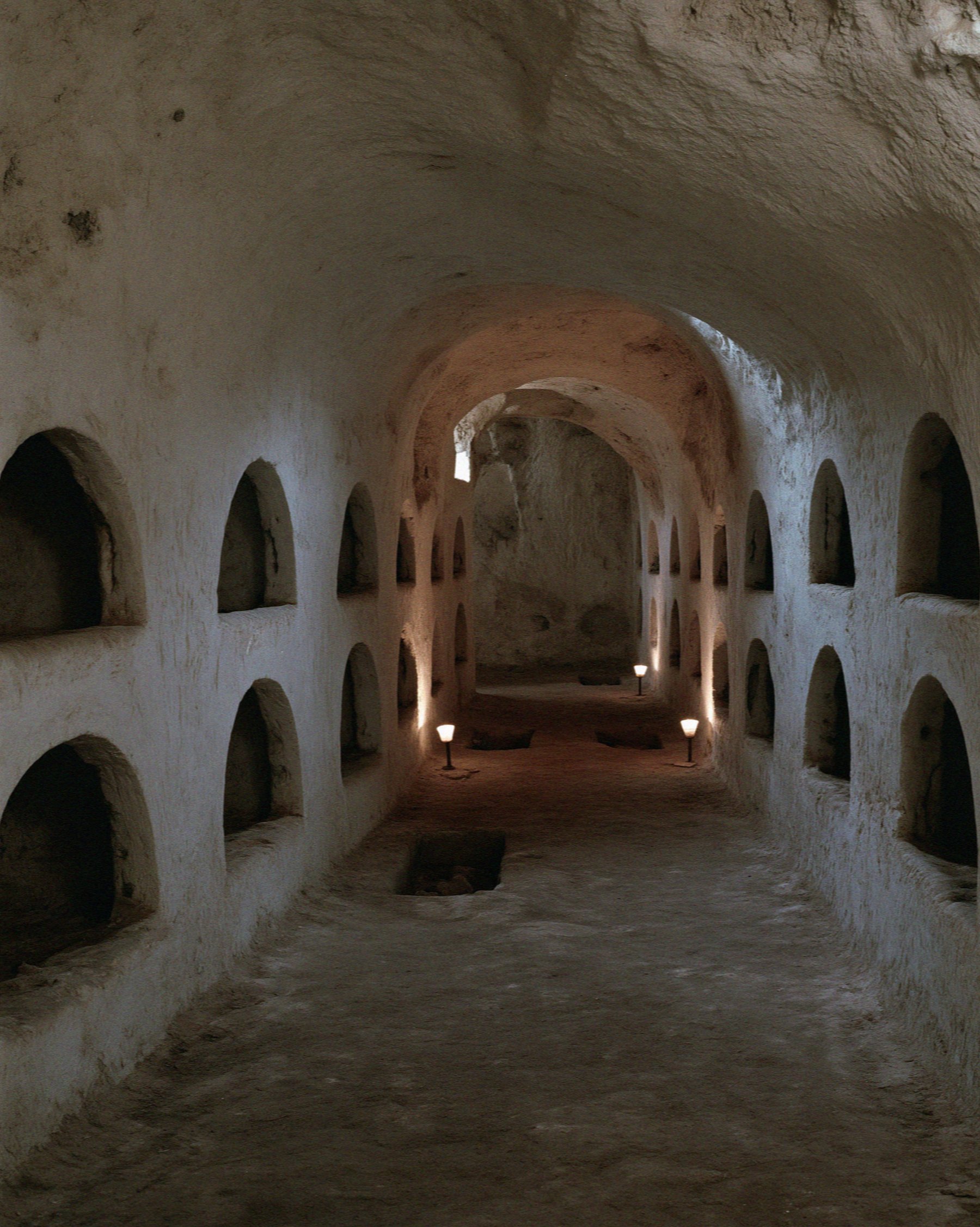
Then the history, most of which sits within a short walk around Trypiti. The catacombs are an early Christian burial site cut into the soft rock, in use into the 5th century AD, with corridors lined with niches for the dead; only part is open to visitors. In summer, from April to October, they open 08:30 to 15:30, closed on Tuesdays, for €10; in winter only on Thursdays and Sundays until 14:00. A few minutes away is the ancient theatre, Roman marble seating over an older Hellenistic one, looking straight out across the bay, and along the path, the plaque marking the field where a farmer named Yorgos Kentrotas found the Venus in 1820. I saw all three in one morning and would do the same again.
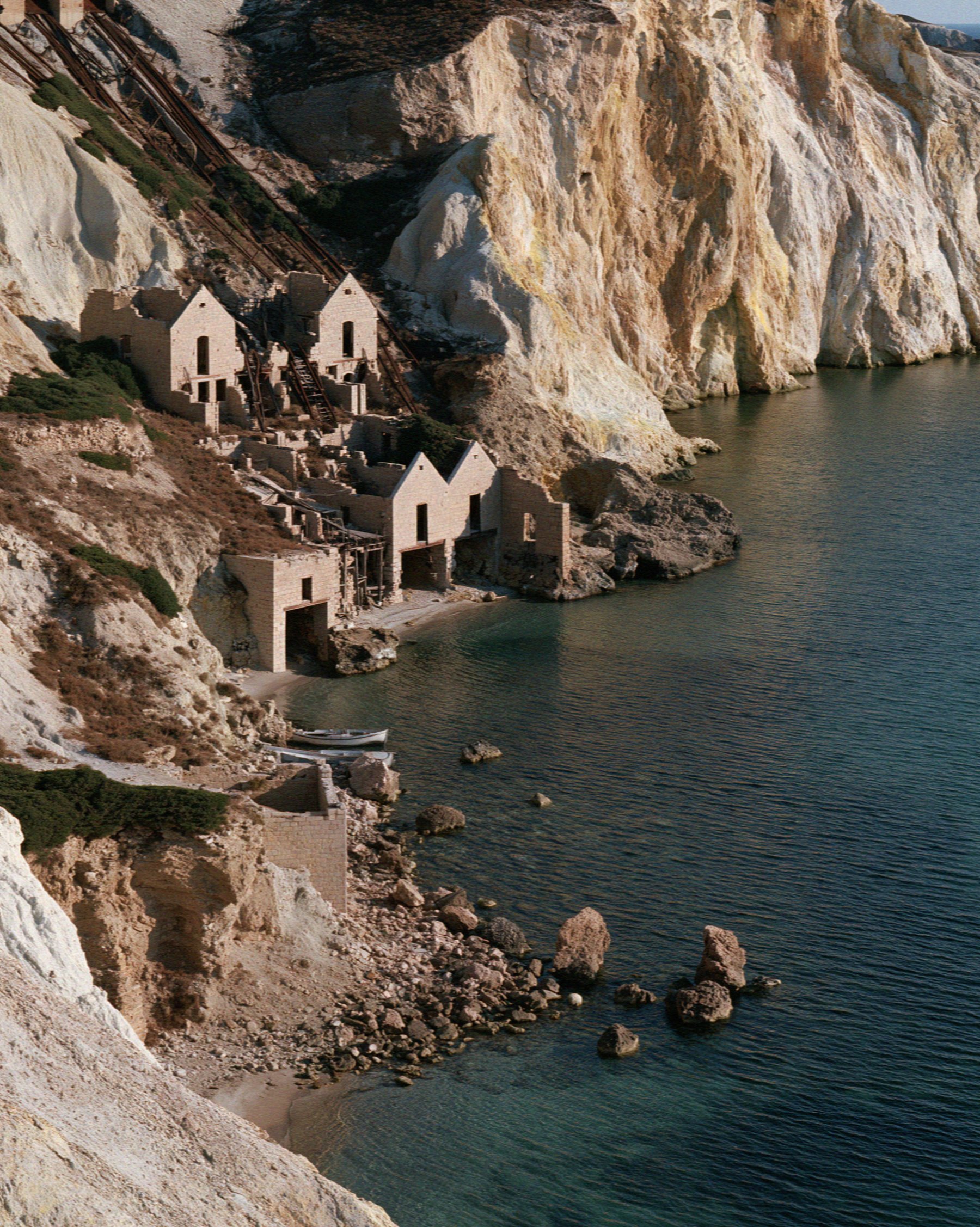
Further afield, the old sulphur mines at Thiorichia, above Paliorema bay on the east coast, are a haunting place: ruined buildings and rusted rails left when the mines closed around the middle of the last century, and a bay below to swim in. The road from Zefyria is rough, and the last 500 metres or so are on foot. Phylakopi, the Bronze Age settlement on the north coast, is listed as temporarily closed, so do not plan around it.
Everything is in order, with times, prices and how long each takes, in my guide to the best things to do in Milos.
Kimolos and Polyaigos
Milos has two small neighbours to the north-east, and both make a good day.
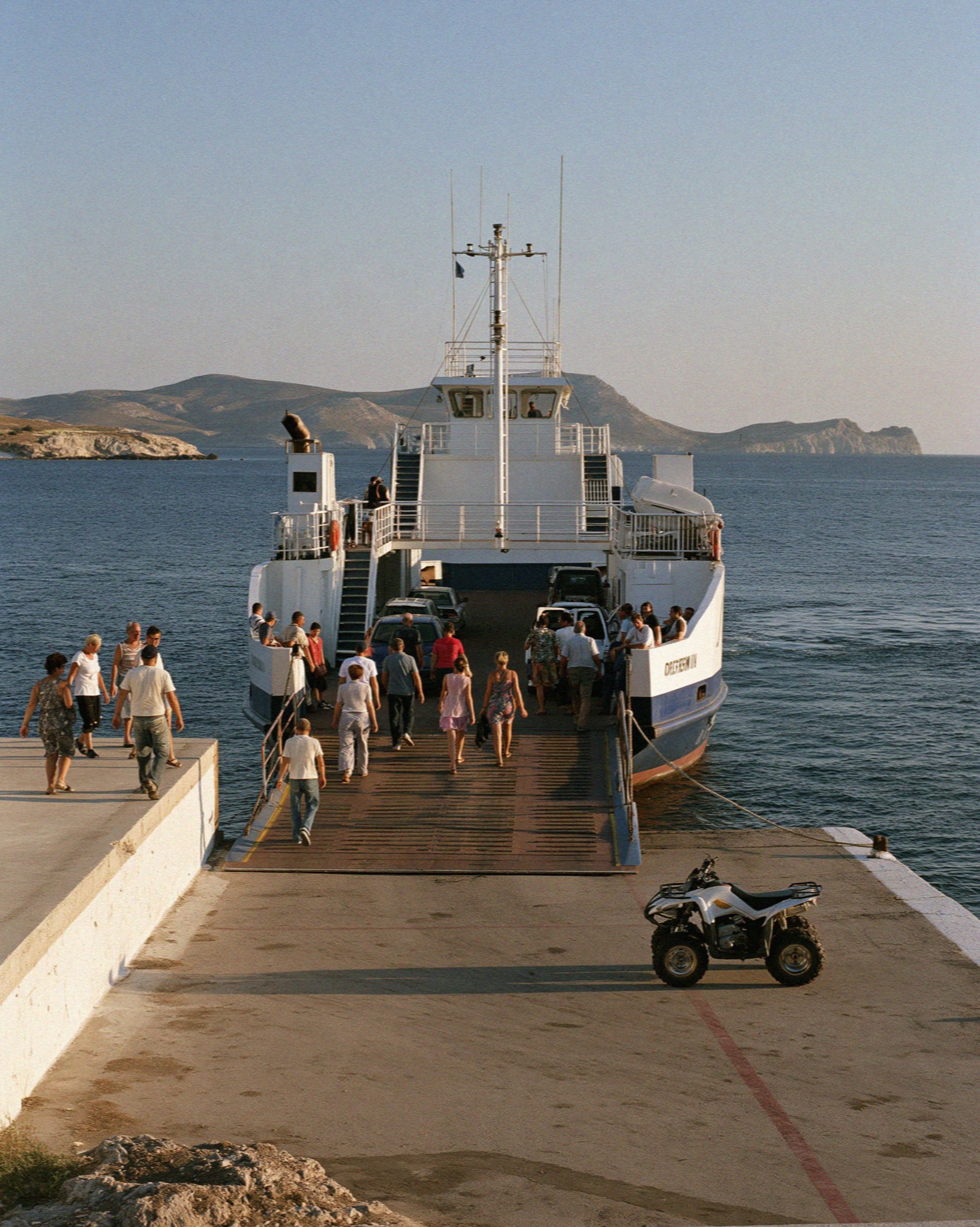
Kimolos is a quiet inhabited island a short crossing from Pollonia. The small local ferry takes about 25 to 30 minutes, carries cars and ATVs, and runs several times a day in season, with tickets bought at the quay; just check the time of the last boat back before you go. The larger ferries from Adamas take about an hour. On Kimolos the boat docks at Psathi, and from there you can walk or drive up to Chorio, the main village on the hill with its old fortified quarter, or head out to Prassa, a beach of white sand and brilliant water about twenty minutes by road. Goupa is a fishing hamlet with its own boat houses, if you want a second Klima without the crowd.
Polyaigos is uninhabited, home only to wild goats, and its coves and sea caves hold water so clear that the boats seem to float above the sand. There is no ferry; you go by boat, usually from Pollonia or Agia Kyriaki, often on a trip that stops at Kimolos too.
I did not make it to either, and both are where I would spend my next free day on Milos. The ferries, the boats and how to choose between them are in my guide to day trips from Milos to Kimolos and Polyaigos.
Where to stay
Where you sleep on Milos decides how much driving you do, and how your evenings feel.
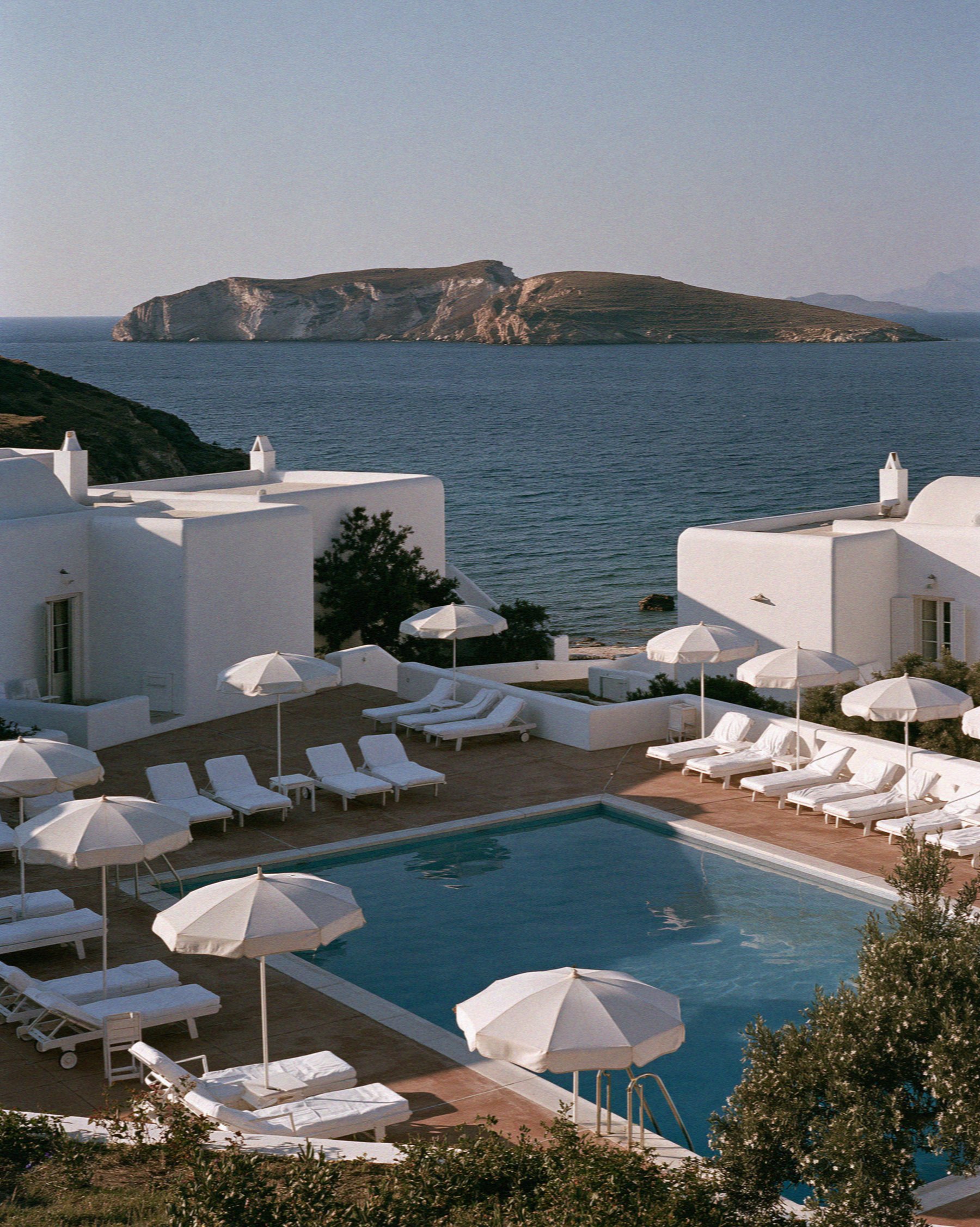
Adamas is the easiest base: the port, the buses, the boats and the car hire are all at hand. Santa Maria Village is a 4-star with a garden and pool near Papikinou beach, and Santa Maria Luxury Suites, Olea Bay and Aeolis Hotel are all close to the water.
Pollonia, the fishing village in the north-east, is quieter, with some of the best food and the best hotels on the island, and the ferry to Kimolos from its quay. Milos Breeze Boutique Hotel sits on the clifftop with a pool and a long view, the Melian Boutique Hotel and Spa faces the sunset, and White Pebble Suites and Captain Zeppos are good choices on or near the water.
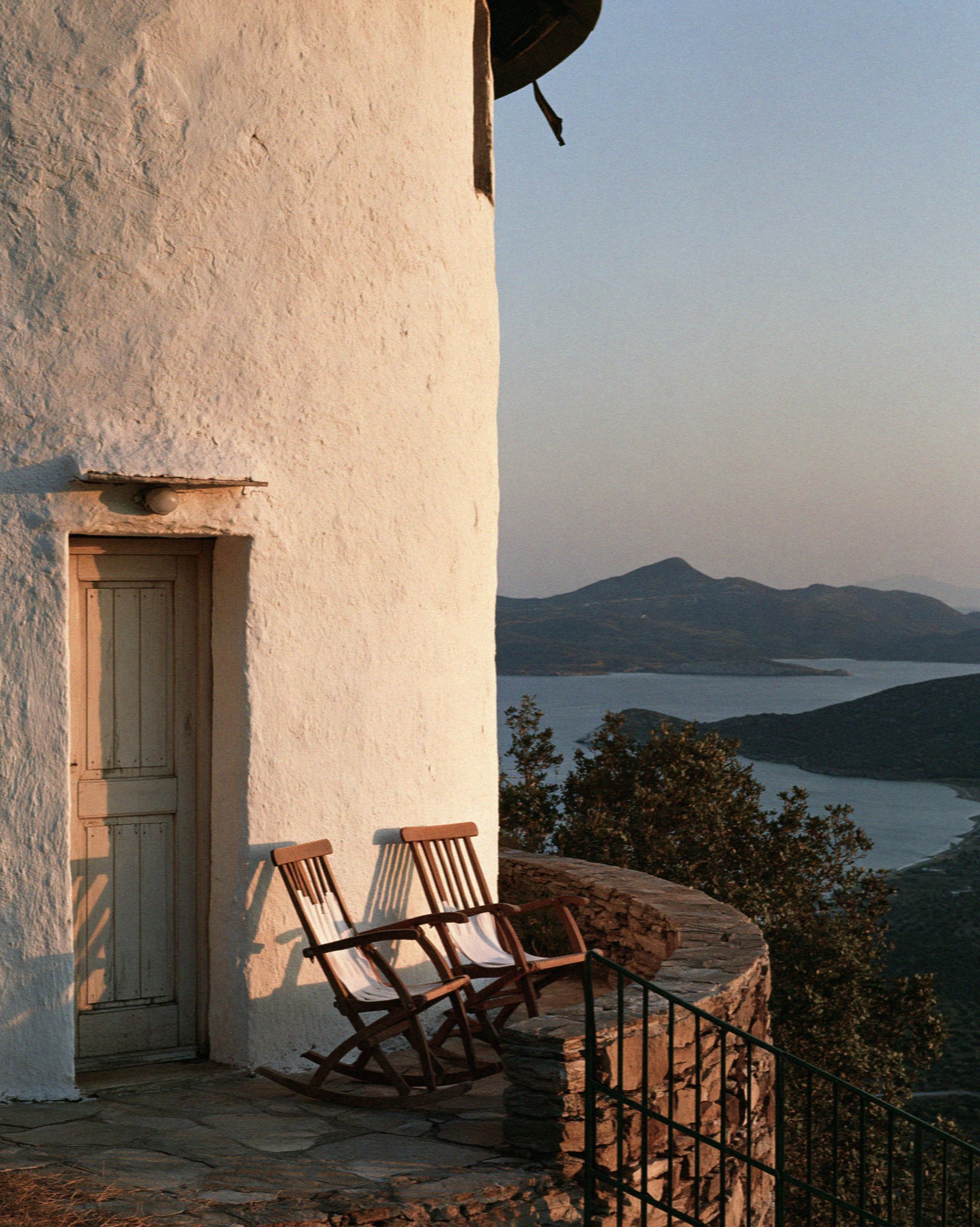
Plaka and Trypiti give you village life, a pedestrian centre and the sunsets on your doorstep, at the price of hills and narrow lanes. The Vaos Windmill has just two rooms, and Eiriana Luxury is in Trypiti. Klima and the syrmata villages are the romantic choice, in restored boat houses with the sea under the window; Vasealis and Seafis are names to look for, and you need to book months ahead.
For somewhere further away, Skinopi Lodge is a clifftop retreat in the north-west, The Cove is a beach house at Fourkovouni, and Milos Cove sits above the sea at Agali in the south-east. Paleochori suits a quiet beach stay on the sheltered side, and Artemis Seaside Resort sits right on its beach.
In high season, simple rooms run from about €80 to €150 a night, good mid-range hotels €150 to €300, and the luxury places €300 to €700 and up. Prices drop sharply in May, early June and October. I have gone through every area and named places at every price in my guide to where to stay in Milos.
What to eat
The cooking on Milos is island food, simple and good, built on cheese, capers, lamb and whatever came out of the sea that morning.
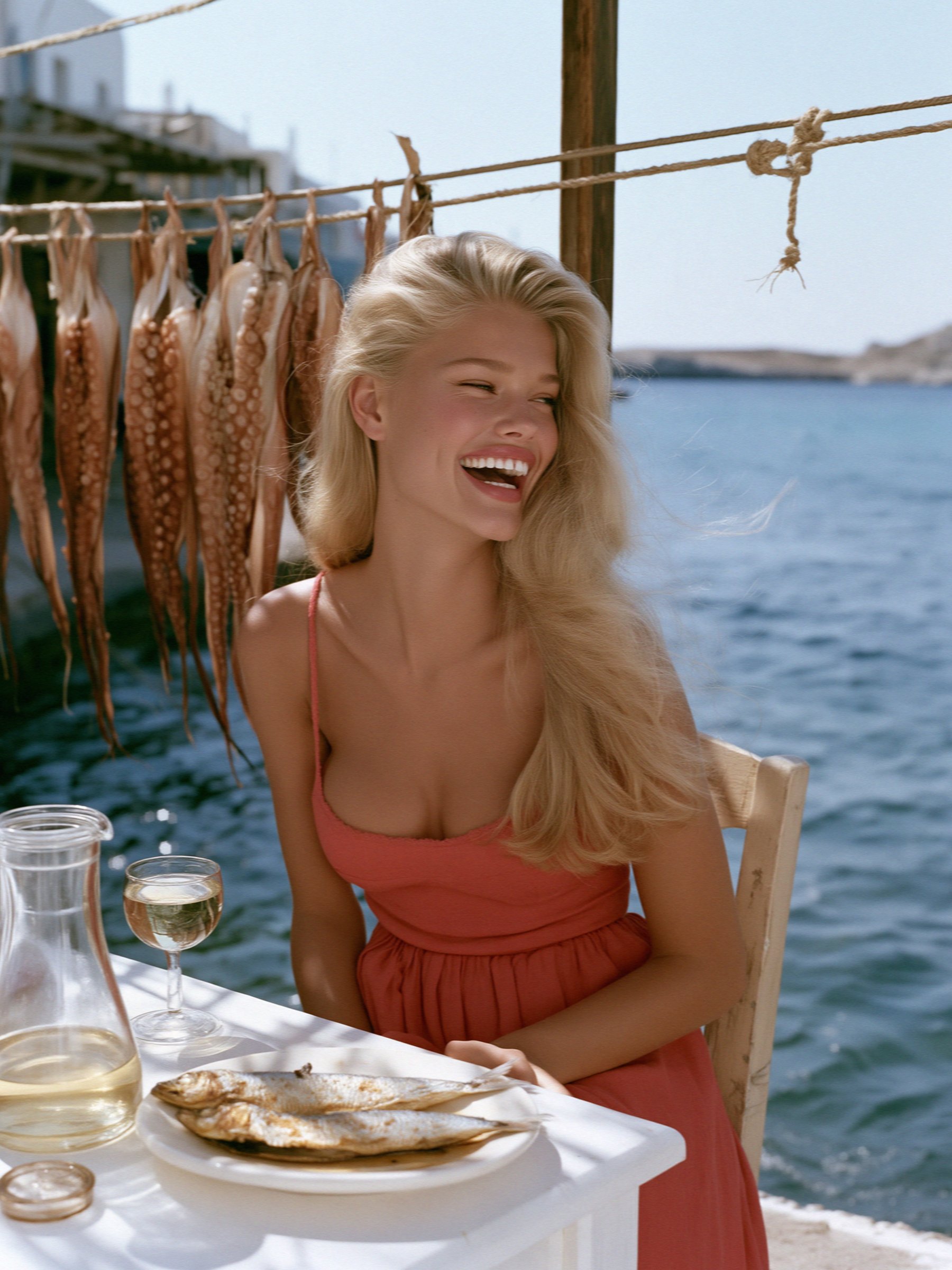
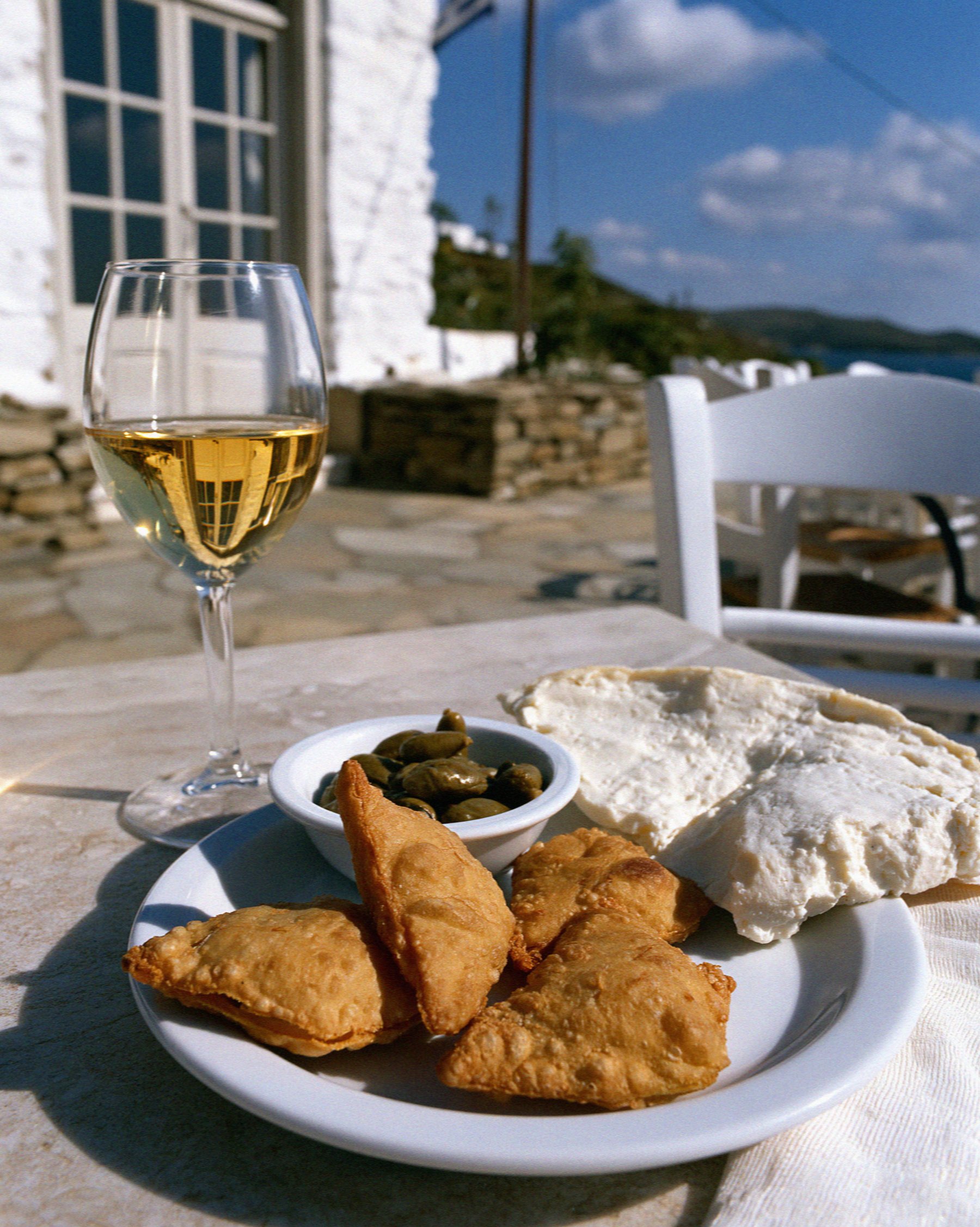
Look for pitarakia, small fried pies filled with local cheese, and the cheeses themselves, manouri and the sharp, fresh xinomizithra. Capers grow wild in the rocks and turn up in salads and with fish. Karpouzopita, a watermelon pie, is a sweet worth trying once. Kleftiko is lamb baked slowly in a parcel with its own juices; I ordered it on the evening of the boat day and was very glad I did.
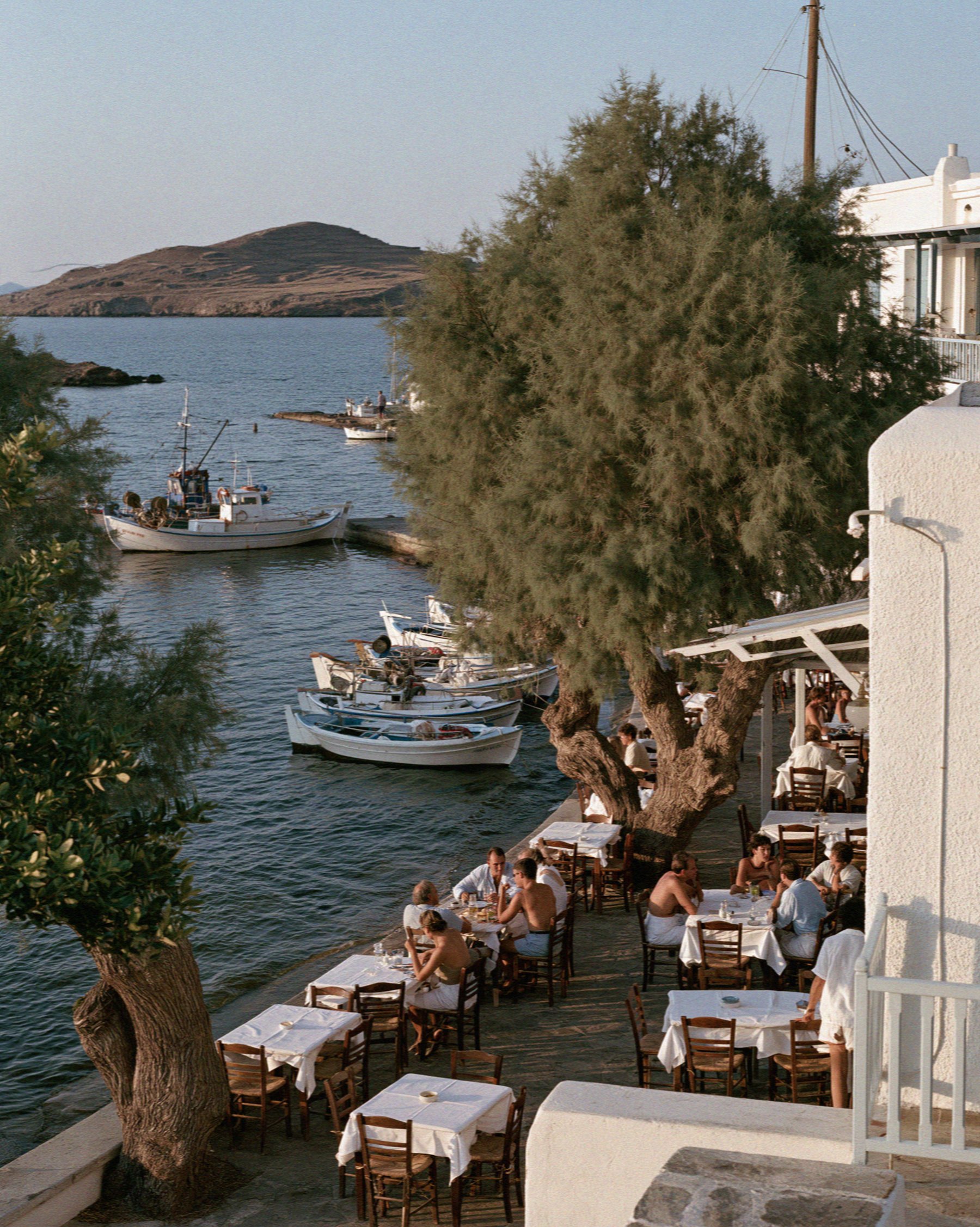
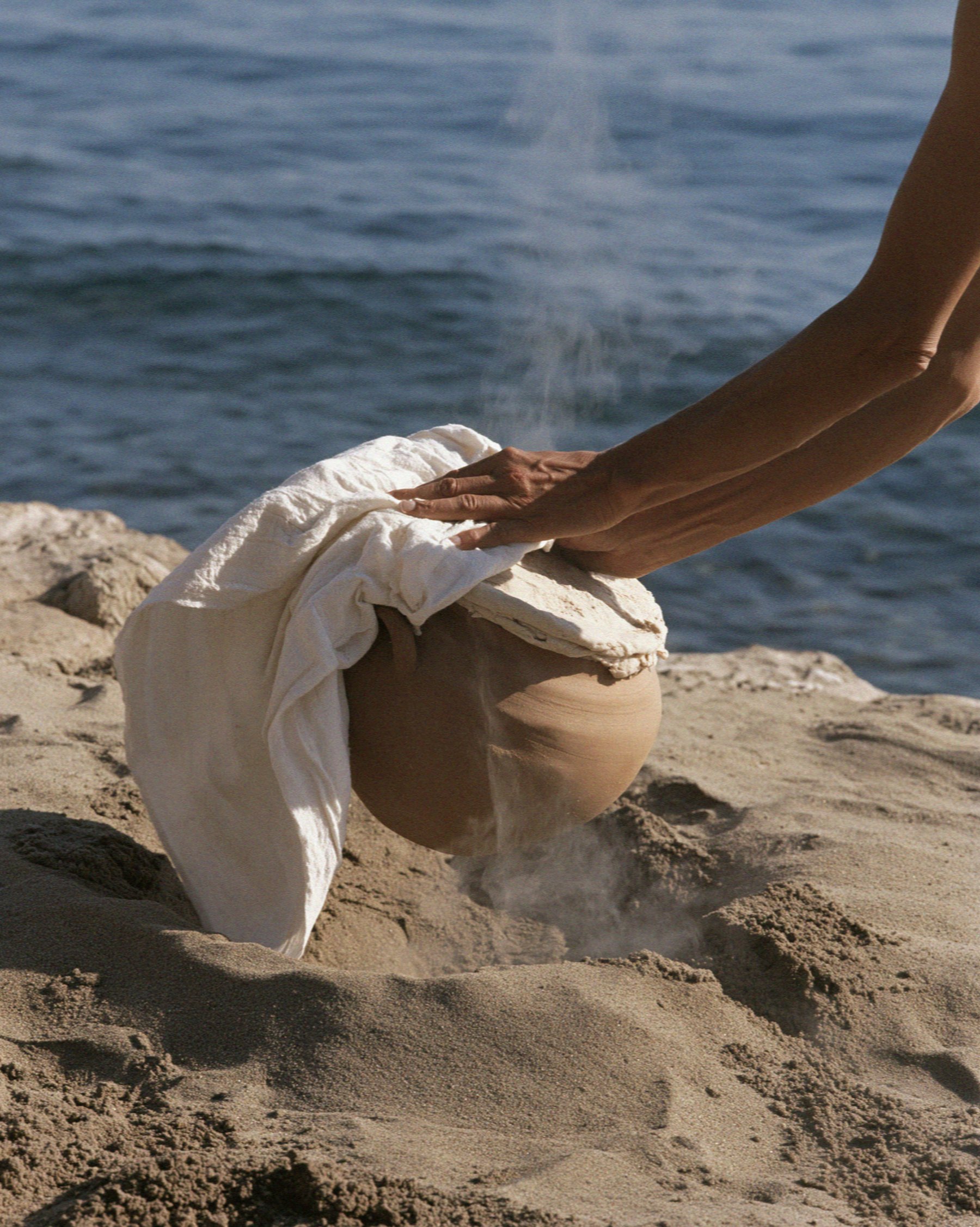
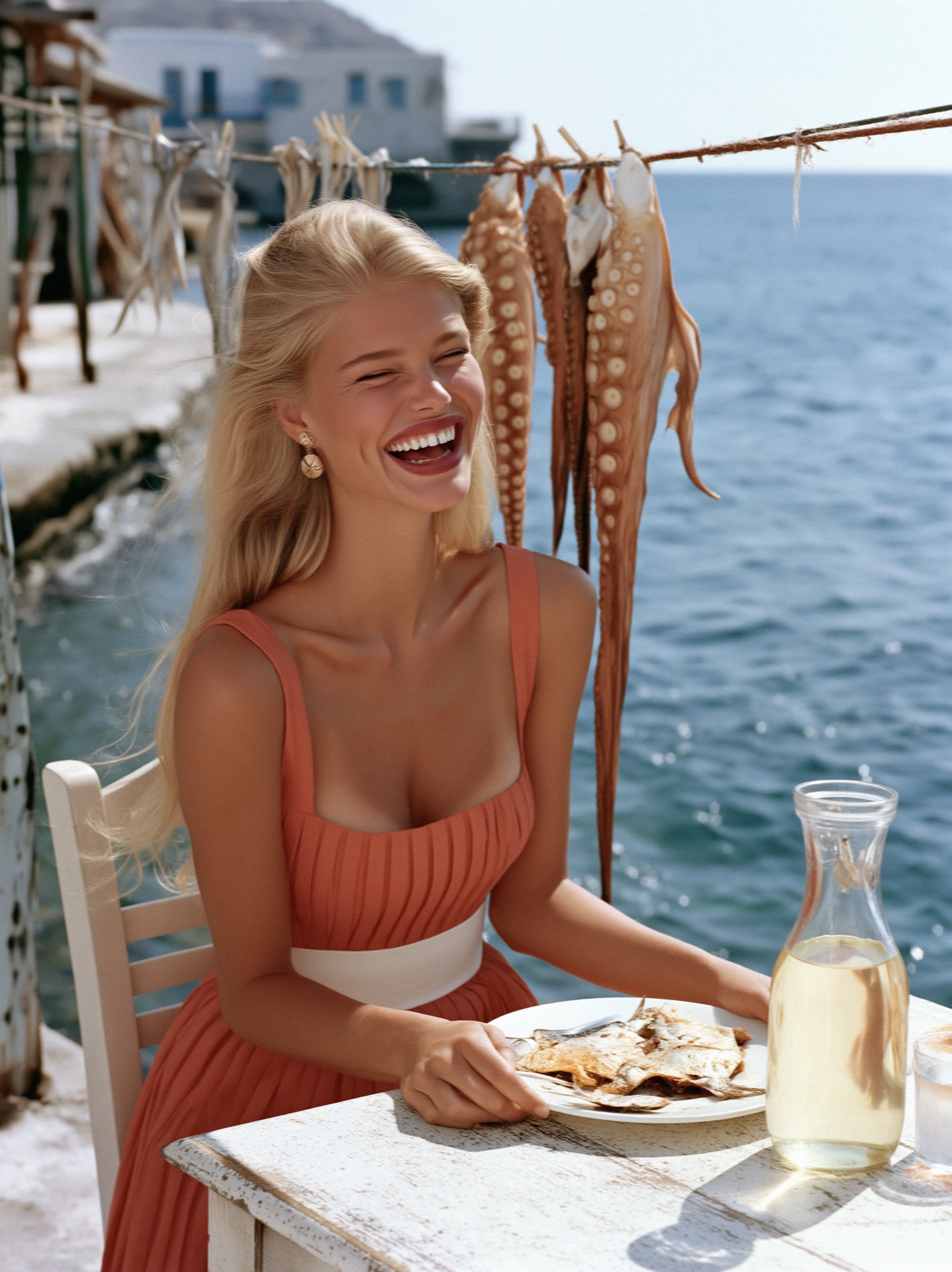
The most famous table on the island is O! Hamos!, a farm taverna on Papikinou beach a short walk from Adamas, with handwritten menus and its own produce. It takes no reservations and the queue in summer is long, so go early. In Pollonia, Enalion and O Gialos are known for fish and seafood, and Enalion grows vegetables on its own farm. At Mandrakia, Medusa serves fish and octopus on a terrace above the water. At Paleochori, Sirocco cooks dishes in pots buried in the hot volcanic sand of the beach. Astakas is the taverna at Klima, and lobster pasta is the dish there.
Up the hill, Methismeni Politia in Trypiti and Mavros Xoiros in Plaka are both worth an evening, and Bakaliko tou Galani in Triovasalos and Mikros Apoplous in Adamas are good to know.
What to order, where to go at every budget and when you need to book are in my guide to where to eat in Milos and what to order.
Getting there and getting around
You reach Milos by ferry or by a short flight.
From Piraeus, the Seajets fast boats take about 2 hours 40 to 3 hours 30, at roughly €75 to €90. The conventional ferries are slower and cheaper, from about €35 to €60: Minoan Lines in around four hours, Aegeon Pelagos in about five and a half, Zante Ferries in about seven. There are boats all year, though in winter there are fewer of them, conventional ferries only, with no fast boats. Flights from Athens take 40 to 50 minutes with Sky Express and Olympic Air, landing at the small airport at Zefyria, less than five kilometres from Adamas. The planes are small, so book early for summer.
In season Milos connects with its neighbours too. I came from Paros in a little under two hours, which makes it an easy next stop after my guide to Paros or my guide to Naxos. There are also boats from Mykonos, about two and three quarter hours away and covered in my guide to Mykonos, from Santorini, which has its own complete guide, and from Sifnos, Serifos and Folegandros.
On the island, every KTEL bus starts from Adamas, at a stop about 150 metres from the port. The most frequent run up to Plaka and Trypiti; others go to Pollonia, about half an hour away, and in season to Sarakiniko, Paleochori, Provatas and Achivadolimni. There are few buses after dark. For anything beyond that, and for most of the beaches, you want a car or an ATV, hired in Adamas, Pollonia or Plaka. Much of the island is dirt road, especially in the west, so check what your rental insurance covers off the tarmac. For an ATV the minimum age is usually 21 and helmets are compulsory. Taxis are few, so book them ahead, especially at night.
Ferries, flights, buses and hire are all in my guide to getting to Milos and getting around.
A few days on Milos
Three days is enough to see the essentials. Five lets you do it properly and leaves a spare day for the wind.
On the first, settle into Adamas with the Mining Museum, then go up to Plaka and Trypiti for the catacombs, the theatre and the sunset from the Kastro. On the second, take the boat to Kleftiko and Sykia. On the third, drive the north coast: Sarakiniko early, then Papafragas, a swim at Firopotamos, lunch in Pollonia, and Klima for dusk. With a fourth, go south for Firiplaka, Tsigrado and Paleochori. With a fifth, take the little ferry from Pollonia to Kimolos.
My own days ran close to the first three of those, in a slightly different order. The full route, with costs, timings and what to swap when the wind changes, is in my Milos itinerary of 3 to 5 days.
Practical things to know
The wind. Check the forecast every evening. A strong north wind means a south coast day; a calm one is your chance for Sarakiniko or the boat.
Opening days. The catacombs and the archaeological museum close on Tuesdays, and the state sites close at 15:30 in summer, with last entry twenty minutes earlier. In winter the catacombs open only two days a week.
Roads. The main roads are paved and quiet; many beach roads are not. Drive the dirt slowly, and do not take an ordinary hire car down a track your insurance does not cover.
Money. Cards are widely taken in Adamas, Plaka and Pollonia. Carry cash for buses, small tavernas and beach canteens.
The season. Most boats, beach bars and many hotels run from May to October. Outside those months, plan for less choice, fewer ferries and no airport bus.
The climate fee. Greek hotels add a small nightly per-room fee to the bill, higher at the grander places. It is a government charge, not the hotel’s.
Dress. Cover shoulders and knees in churches, including those on the climb to the Kastro.
What to pack
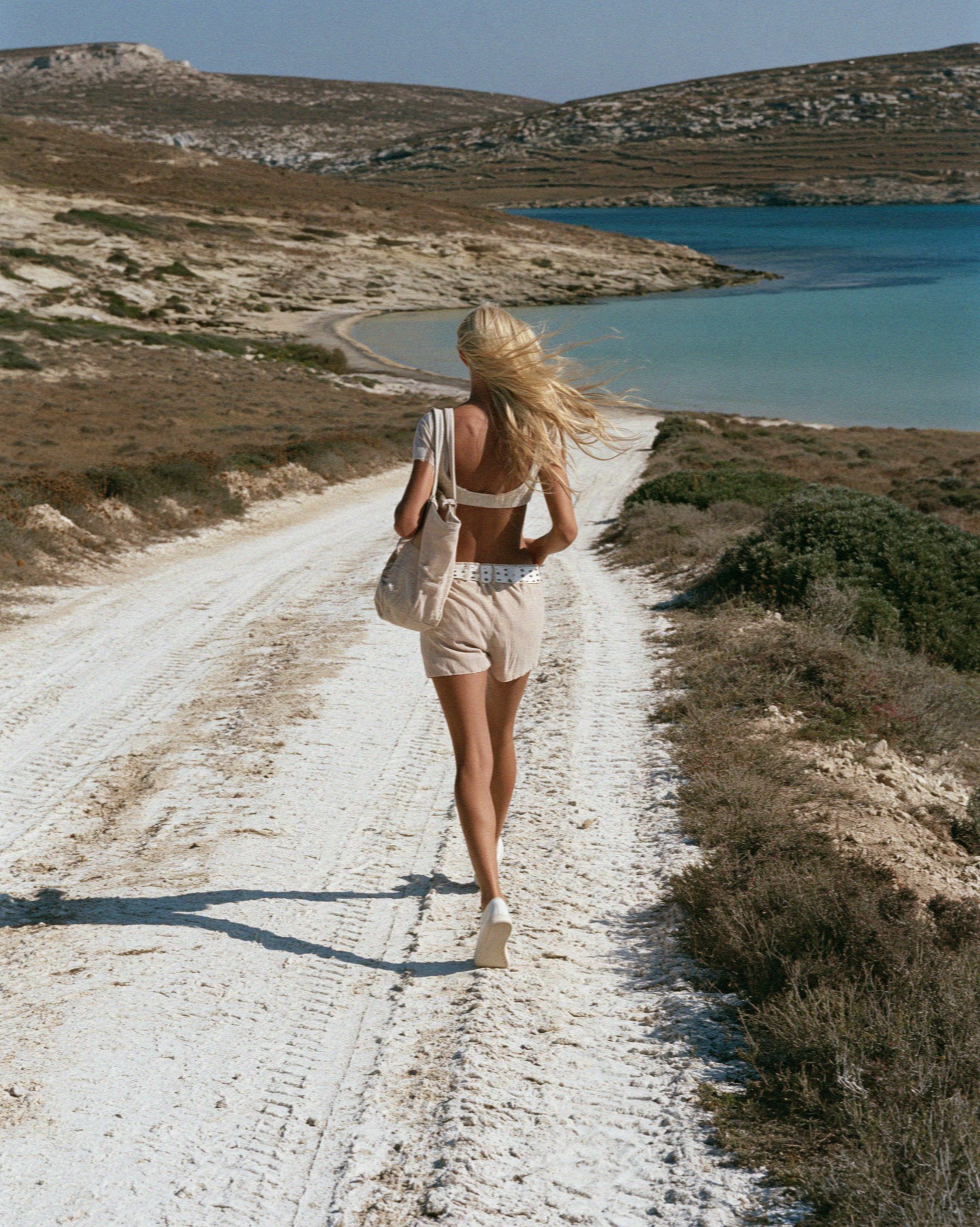
Shoes with a proper grip, for the dirt tracks, the Kastro steps and the soft, dusty rock at Sarakiniko, which gets into everything. White tennis shoes, in my case, which never fully recovered. Sandals or water shoes for the pebbles at Paleochori.
A hat, high-factor sun cream and a refillable bottle, because there is little shade on the beaches and almost none on the rock. A dry bag for the boat day, for your phone and a towel. A light jacket for the evenings, which are breezy on the Kastro and on the water in spring and autumn. Two swimsuits, because one is always drying. And a hair tie for the afternoon the meltemi arrives.
More images from Milos







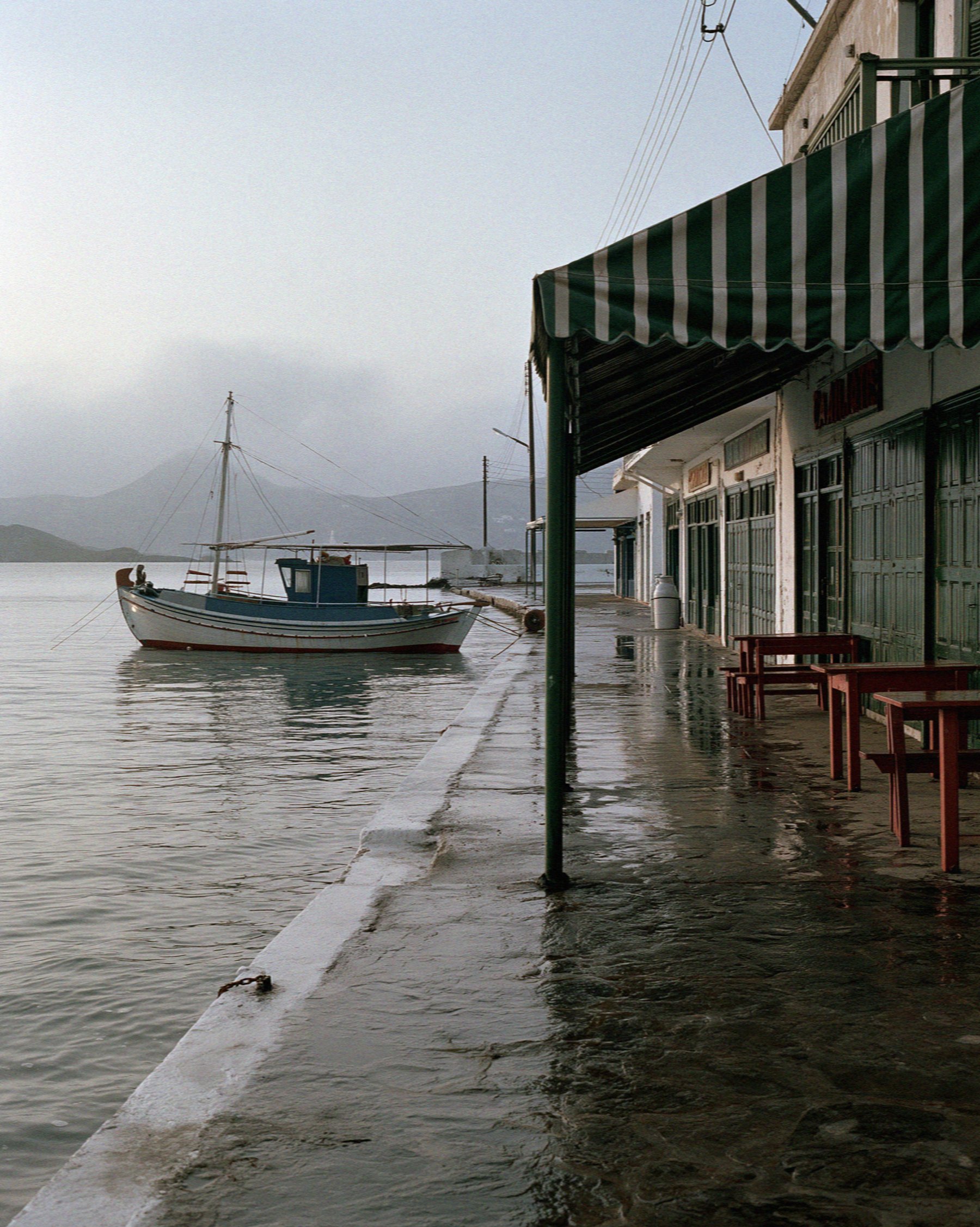
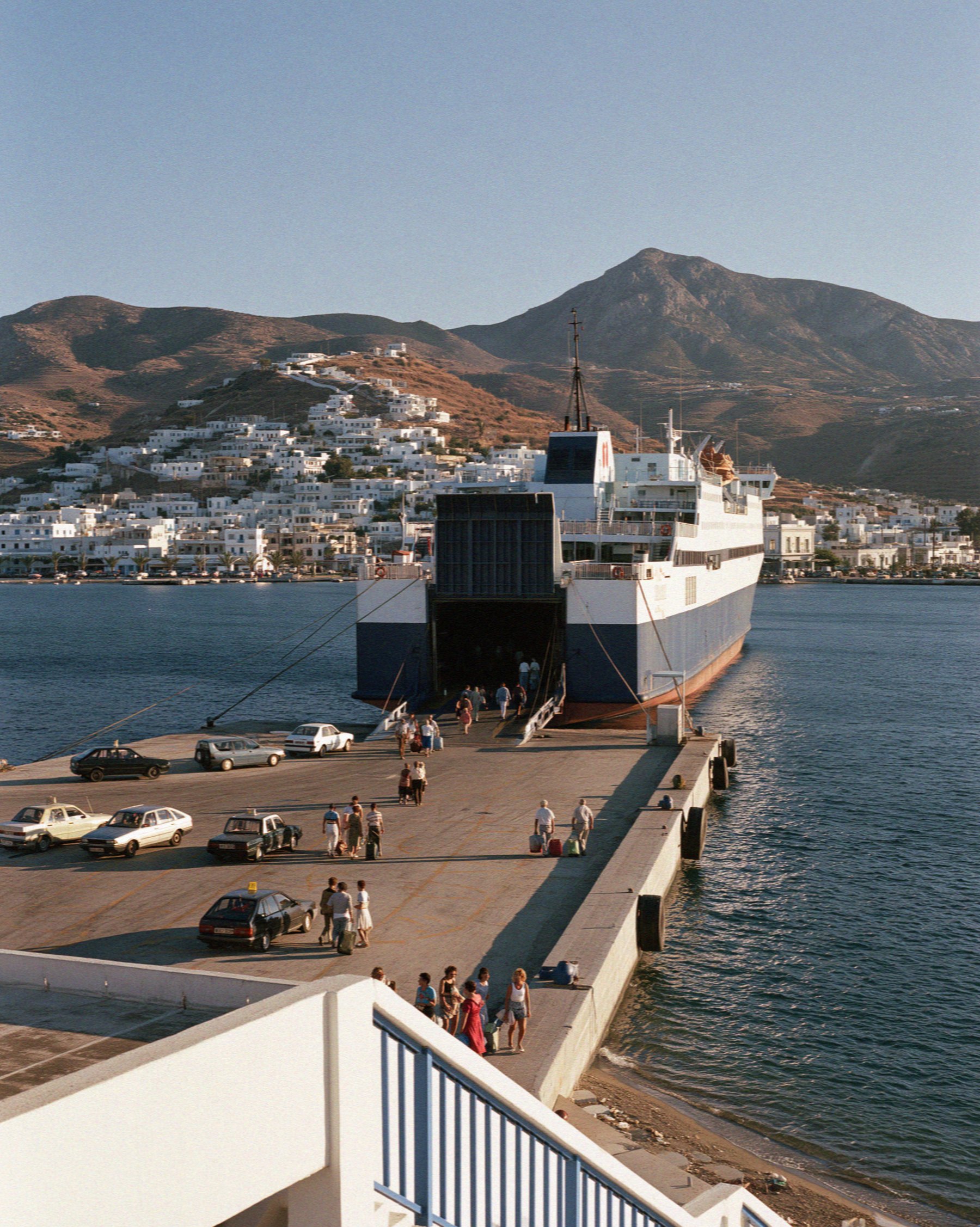
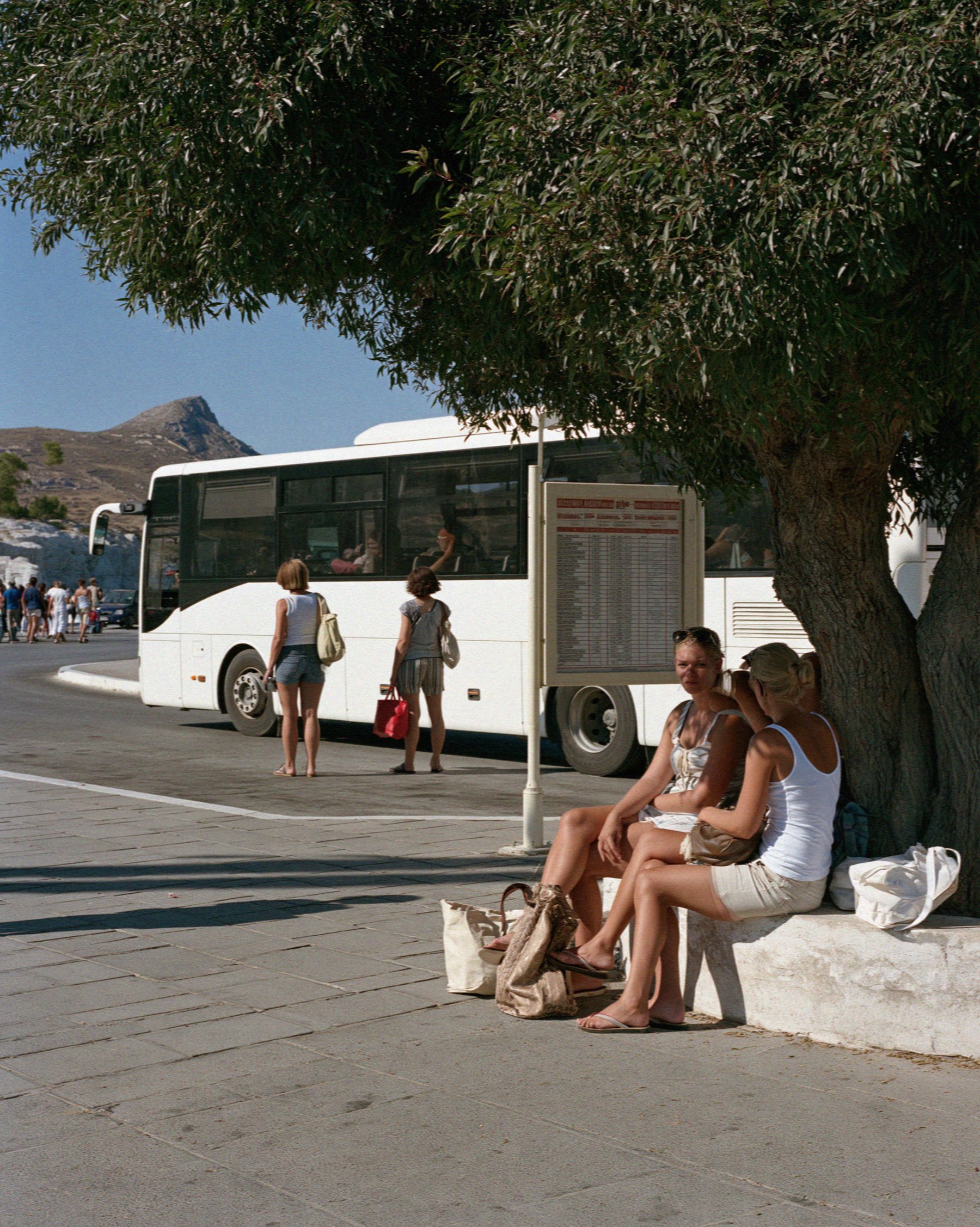

Your Milos Guides
Everything here in detail, guide by guide.
- The Best Beaches in Milos
- Milos Boat Tours: Kleftiko, Sykia and Polyaigos
- The Best Things to Do in Milos
- Plaka, Klima and the Villages of Milos
- Where to Stay in Milos: Adamas, Pollonia, Plaka or Klima
- Where to Eat in Milos and What to Order
- Day Trips from Milos: Kimolos and Polyaigos
- A Milos Itinerary: 3 to 5 Days
- The Best Time to Visit Milos
- Getting to Milos and Getting Around
Milos Travel Diaries
Frequently Asked Questions
How many days do you need on Milos?
Three days covers Plaka and the Kastro, a boat to Kleftiko and the north coast with Sarakiniko and Klima. Five gives you the southern beaches, a day on Kimolos and a spare day in case the meltemi cancels a boat.
How long is the ferry from Athens to Milos?
From Piraeus the fast boats take about 2 hours 40 to 3 hours 30, at roughly €75 to €90. Conventional ferries take from about four to seven hours, depending on the line, and cost from about €35 to €60.
Do you need a car on Milos?
For most visitors, yes. The buses from Adamas reach Plaka, Trypiti, Pollonia and a handful of beaches in season, but most of the coast, including Klima, Plathiena and the syrmata villages, is only practical by car or ATV.
Can you get to Kleftiko by land?
No. There is no road to Kleftiko, so you go by boat, usually on a full or half-day tour from Adamas. Expect roughly €110 to €160 for a full day on a sailing boat with lunch.
Is it safe to swim at Sarakiniko?
On a calm day, yes, and from summer 2026 there have been lifeguards on duty from 10:00 to 18:00. It faces north, though, so when the meltemi is blowing the swell runs into the channel. Stay off the edges and out of the water when the sea is rough.
Where was the Venus de Milo found?
In a field near the ancient theatre below Plaka, where a farmer found her in 1820. She is now in the Louvre, but a small plaque marks the spot and the museum in Plaka has a cast.
Where is the best place to stay on Milos?
Adamas is the most practical, with the port, buses and boat tours. Pollonia is quieter, with the best hotels and food, while Plaka suits people who want village evenings and Klima those who want to sleep in a boat house over the water.
When is the best time to visit Milos?
June and September, when the sea is warm and the island is open without the August crowds. Early October is quieter and still warm enough to swim, and July and August bring the strongest wind.