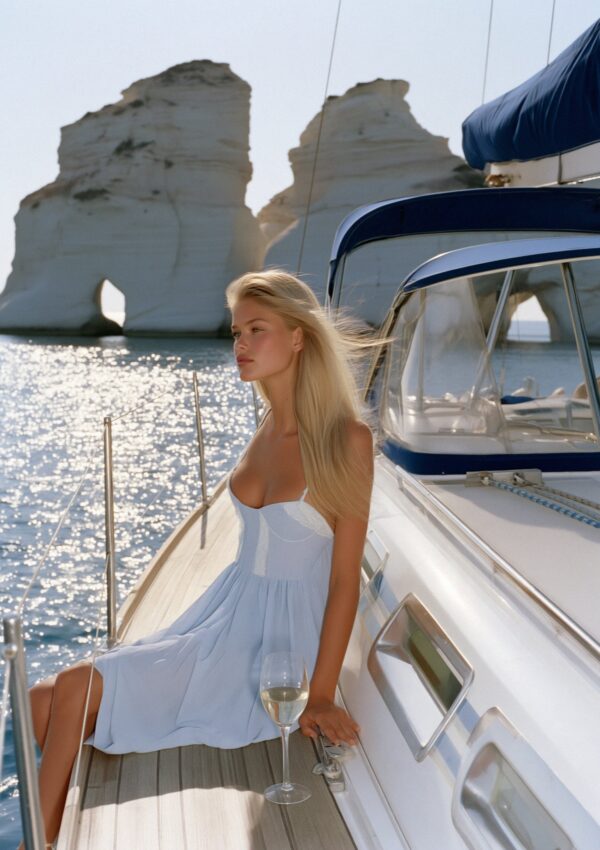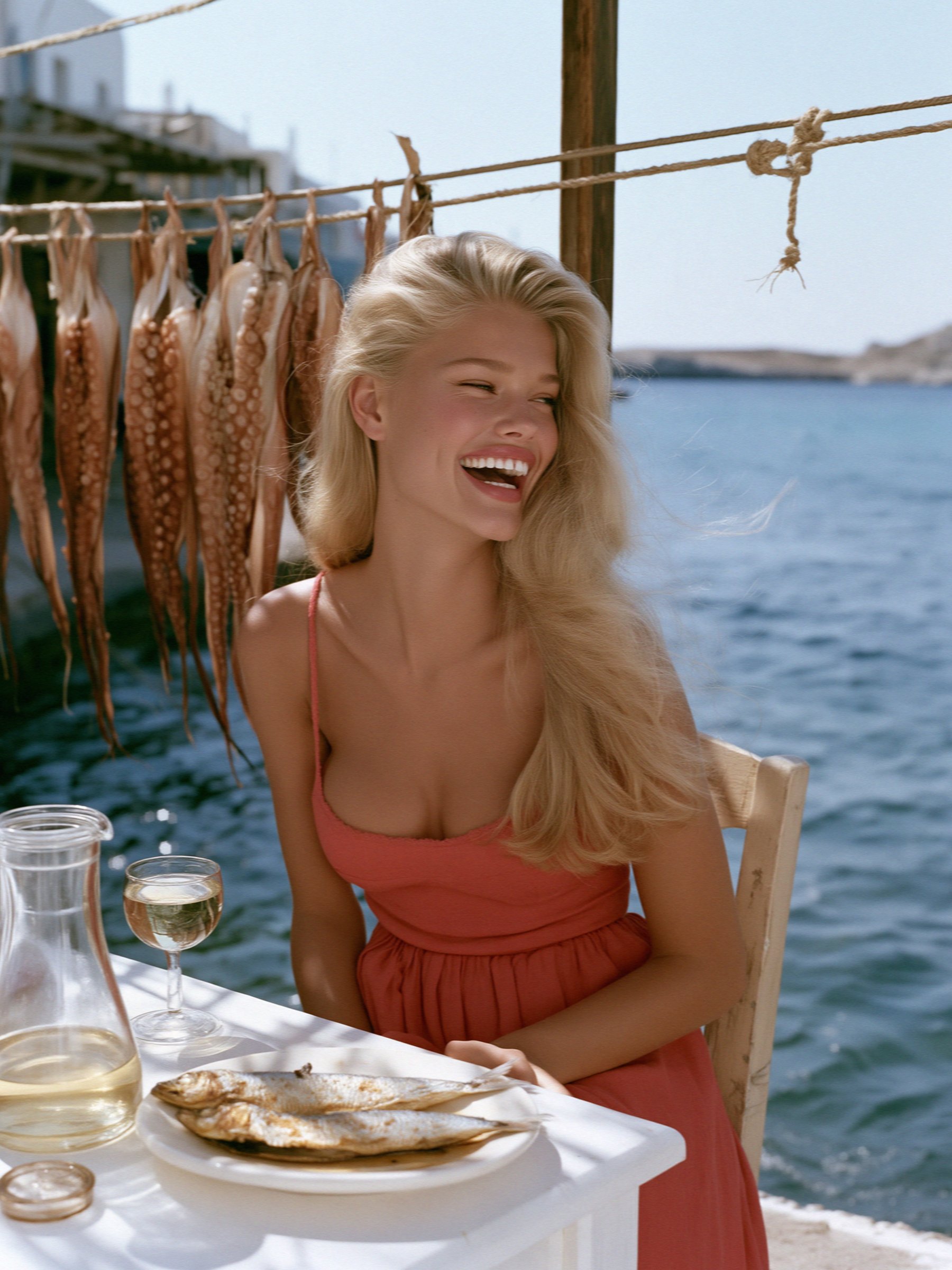
Most of what is worth eating on Milos is cooked within sight of the water, and very little of it needs a table booked weeks ahead. There are really only two places where timing matters: a farm taverna on a beach just outside Adamas, where the queue is part of the meal, and the handful of tables at Klima when the sun goes down.
I ate simply here, mostly fish and small cheese pies. This guide covers what Milos actually cooks, where to find it in each village, and how to get a table in high summer. Everything else, from the beaches to the ferries, is in my complete guide to Milos.
What Milos cooks
Milos is a dry volcanic island of small farms, and its cooking follows from that. Its strength is that so much of what lands on the table was grown, caught or made a few kilometres away.
The backbone is what you find across the Cyclades: grilled fish and octopus, goat and lamb, tomatoes that taste of something, and cheese from sheep and goats. The island also has a strong claim on kleftiko, lamb cooked slowly in a sealed parcel so that nothing escapes, served when the paper is cut open at the table. I ordered it in Adamas after a long day on the water and would order it again.
Leave room for karpouzopita, a watermelon pie baked with honey and sesame. It is a summer sweet, so look for it from June onwards rather than in spring.
Fresh fish is usually priced by the kilo. Ask to see it, and ask the price before it goes on the grill. Nobody minds.
Pitarakia, cheese and capers
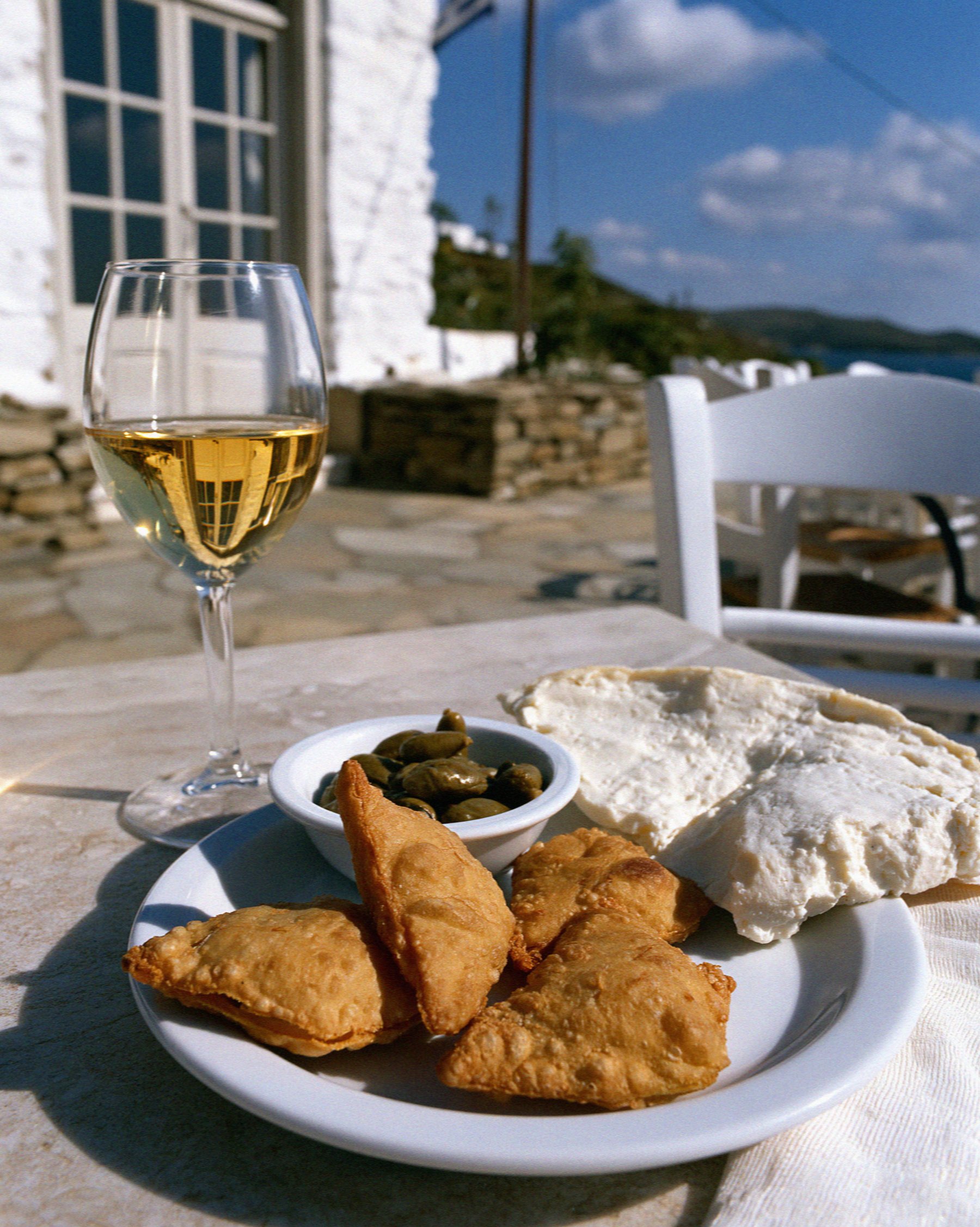
If you order one thing that tastes of the island, make it pitarakia: small fried pies filled with the local soft cheese, crisp outside and almost molten inside. They arrive as a plate to share, on menus from the port to the hill villages.
The two cheeses to know are manouri, mild, soft and slightly sweet, and xinomizithra, tangy and spreadable, the kind that makes plain bread interesting. A plate of both with a glass of wine is a perfectly good lunch on a hot day.
Then the capers. The bushes cling to walls and rocky slopes all over Milos, and the buds are picked and pickled, sometimes the leaves too. They turn up over salads and fish, and in small jars that weigh almost nothing in a suitcase.
Eating around Adamas
Adamas has the most choice on the island and the most ordinary tourist food. Walk a little and it improves.
The one place every islander will name is O! Hamos!, a farm taverna on Papikinou beach, a short walk along the shore from the port. The menus are handwritten, the cooking is hearty and rural, and the setting is a terrace a few steps from the sand. It does not take reservations, and in summer the queue forms early. Arrive close to opening for lunch, or early in the evening before the Greek dinner hour, and you will usually sit down without much of a wait.
In the town itself, Mikros Apoplous is a good choice for fish and meze close to the harbour, useful on an evening when you want to eat without driving anywhere.
Mandrakia
Mandrakia is a tiny harbour on the north coast, a cluster of fishermen’s boat houses around a slip of water, and an easy pairing with a morning at Sarakiniko nearby.
Medusa sits on the rocks above the water and does fish and octopus, simply. It does not take bookings, so it rewards an early lunch, and the view from the tables is half the reason to come. Mandrakia gets its own section, among the other boat-house hamlets, in Plaka, Klima and the villages of Milos.
Plaka and Trypiti
The capital on the hill is where the island eats in the evening, after the Kastro sunset.
Mavros Xoiros, in Plaka, means the black pig, which gives you a fair idea of the menu. Methismeni Politia, in Trypiti, has tables looking over the bay and is a good choice for a long evening of wine and small plates. Both are popular in high season, and both are worth a phone call ahead in July and August.
Between Adamas and Plaka, in the village of Triovasalos, Bakaliko tou Galani is the kind of place locals send you to. The name means something like Galanis’s grocery, and it has the feel of one: unfussy, cheerful, good for meze and a carafe.
Pollonia
Pollonia, the fishing village at the north-east tip of the island, has the best concentration of good restaurants on Milos, which is one reason people who stay there rarely leave in the evening.
Enalion is a seafood restaurant that grows much of its produce on its own farm, so the vegetables are as much of a reason to go as the fish. O Gialos, on the waterfront, is another reliable choice for fish and seafood.

Cooked in the sand at Paleochori
On the south-east coast, the beach at Paleochori sits on ground that is still warm from below. Dig your feet into the sand and you can feel it, and the sea floor offshore is warm too.
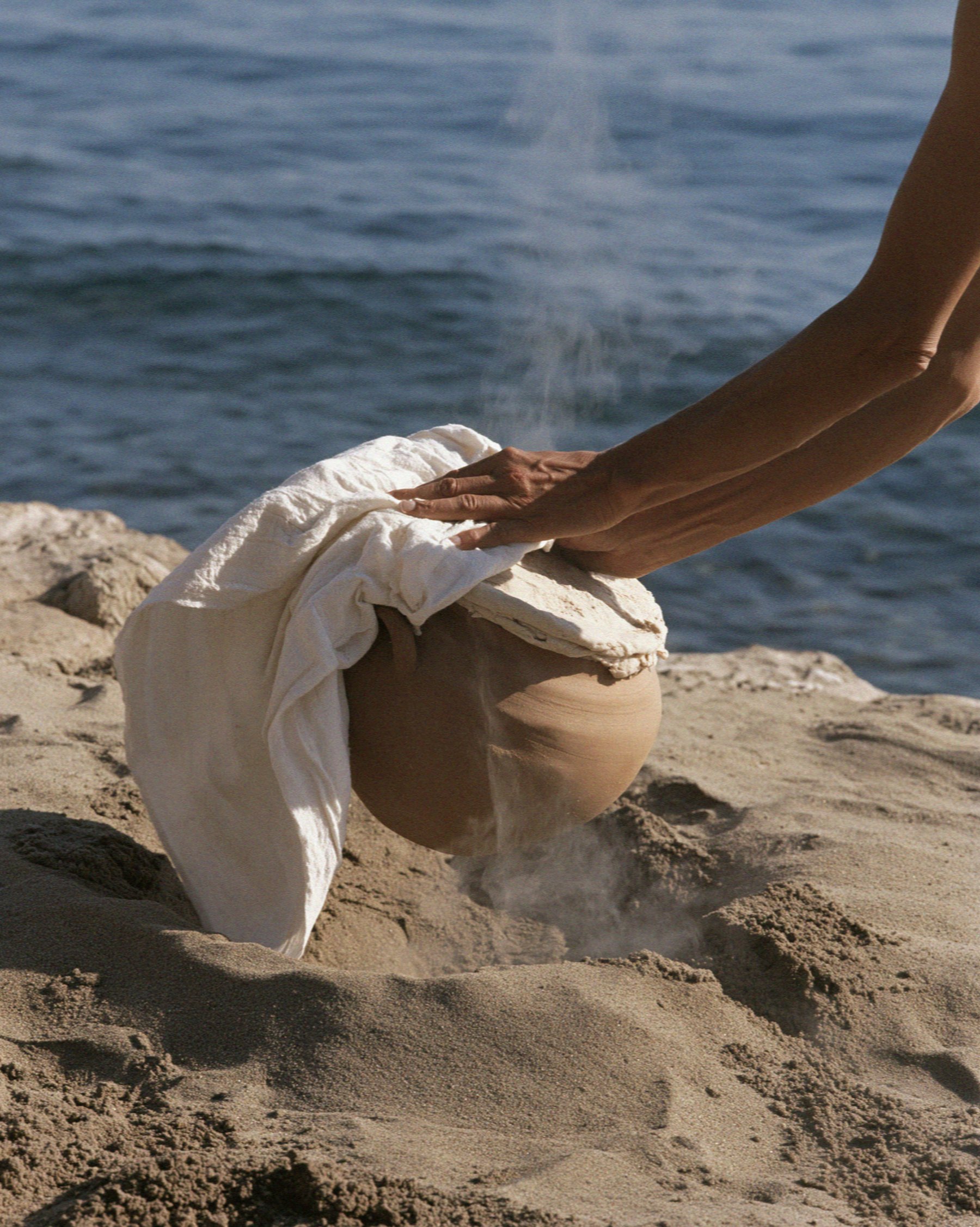
Sirocco, on the beach, puts that heat to work. Dishes are cooked in pots buried in the hot volcanic sand, slowly, over hours, and dug up when they are ready. Ask what is coming out of the sand that day, because it depends on what went in that morning. It is the most unusual meal on the island. For a swim before or after, the south coast sands are compared one by one in the best beaches in Milos.
Klima at sunset
Klima is the row of painted boat houses below Plaka, and dinner here at dusk is the meal most people remember from Milos. The best-known taverna at Klima is Astakas, looking straight out at the sunset, and the dish to order is lobster pasta.
I swam off the rocks at the end of the village first and ate afterwards, at a long table at the end of the row, which is the right order. The evening is in my diary The Colour of the Boats.
Two warnings. There is no bus and almost no parking, so either arrive early enough to find a space or walk down from Plaka or Trypiti. And lobster is usually priced by weight, so ask before you order. In summer, book.
Cheap and good
A gyros or souvlaki wrapped in pitta, from a grill in Adamas, costs a few euros and is a proper lunch. Bakeries sell cheese pies and spinach pies for the beach in the morning, and the supermarkets in Adamas have everything for a picnic, worth packing for the remote beaches, where there may be nothing to buy.
At a simple taverna, a shared meal of salads, pitarakia, a main each and house wine usually comes to roughly €20 to €35 a head. Fresh fish, lobster and the smarter places in Pollonia and Plaka cost more.
How to book
O! Hamos! and Medusa: no bookings. Arrive early.
Klima, Pollonia, Plaka and Trypiti in July and August: phone a day or two ahead, or ask your hotel to do it.
Sirocco: it takes bookings, which are worth making in July and August; either way, ask what is coming out of the sand that day.
Everywhere else, and in May, June, September and October: walk in.
Greeks eat late, often from 21:00, so a table at 19:30 is usually easy even in summer. Out of season the picture changes: many tavernas close from late October, so check before you set out. My guide to where to stay in Milos explains which base puts the best tables within walking distance.
Frequently Asked Questions
What food is Milos known for?
Pitarakia, the small fried cheese pies, are the island’s signature. Look also for the soft local cheeses manouri and xinomizithra, capers, kleftiko lamb cooked in a sealed parcel, and karpouzopita, a watermelon pie, in summer.
Do you need a reservation at O! Hamos! in Milos?
You cannot make one. It works on a first come, first served basis and the queue builds in summer, so arrive near opening for lunch or early in the evening.
Where can you eat at Klima in Milos?
Astakas is the best-known taverna at Klima, among the boat houses and facing the sunset, known for lobster pasta. Book in summer, arrive early for parking, or walk down from Plaka.
What is the food cooked in the sand at Paleochori?
At Sirocco on Paleochori beach, dishes are slow-cooked in pots buried in the volcanic sand, which stays hot from geothermal heat below. Ask what is ready that day.
Is eating out in Milos expensive?
Not by Cycladic standards. A simple taverna meal runs roughly €20 to €35 a head with house wine. Fish priced by the kilo, lobster and the smarter restaurants cost more.
Read also: Plaka, Klima and the Villages of Milos | Where to Stay in Milos: Adamas, Pollonia, Plaka or Klima | Victoria’s Complete Guide to Milos