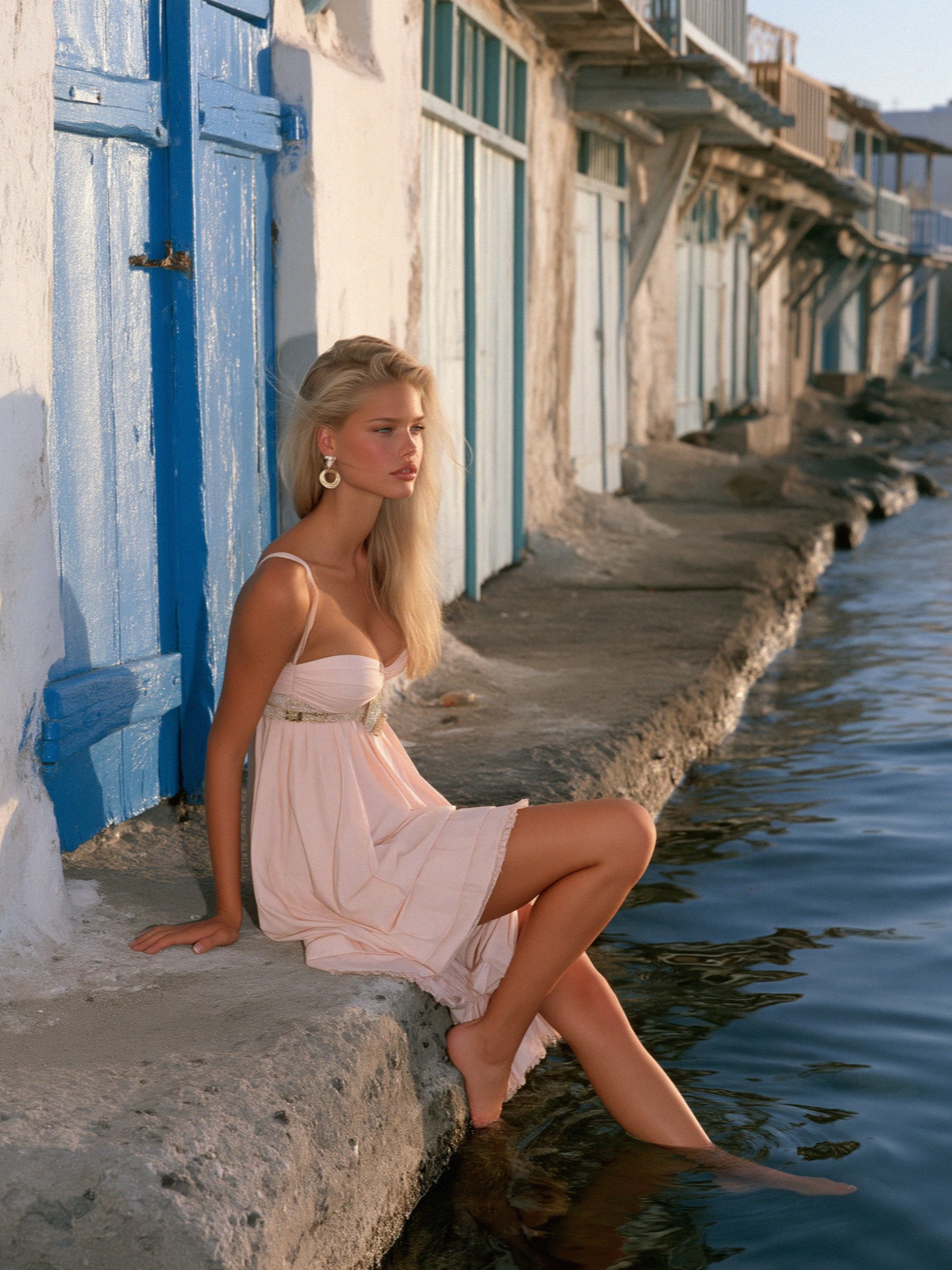
On Milos the villages keep to two heights. Most of the island’s life is gathered on a ridge above the great bay, where Plaka, Trypiti and their neighbours run into one another along the high ground, well above the reach of the pirates who once used this coast as a hiding place. The rest lives right at the waterline, in rows of fishermen’s boat houses so low that a winter sea washes against the doors.
Between them sits Adamas, the port, which is where you arrive and where almost every bus and boat begins. This guide takes the villages one by one and ends with a loop you can drive in a day. For beaches, boats and the rest of the island, see my complete guide to Milos.
How the villages fit together
The great bay in the middle of the island is ringed by the port, the airport and the mining areas; the high ground to the north-west holds most of the old villages.
Up on the ridge, Plaka is the capital, with Trypiti just south of it, and the inland villages of Triovasalos and Pera Triovasalos a little to the east, on the road down to Adamas. Below the ridge, on the coast, are the syrmata settlements: Klima facing into the bay, and Mandrakia, Firopotamos, Fourkovouni, Areti and Skinopi tucked into inlets around the north and west. Out on the north-east tip, a separate world, is Pollonia.
Distances are short, but the roads down to the syrmata are narrow and steep, and parking at the bottom is very limited. That shapes how you visit more than the map does.
Adamas
Adamas is the port, built at the back of the bay, and the place that makes the island work. Ferries tie up here, the KTEL buses all start from a stop about 150 m from the quay, and nearly all the boat trips to Kleftiko leave from the harbour.
Adamas makes no claim to be picturesque. It is lively in the evening and the most convenient place to sleep without a car. It also has the Mining Museum, close to the ferry quay, which explains why people have been coming here for its stone since prehistory. I walked up to it from the harbour on my first day.
Plaka
Plaka is the capital, strung along the top of the ridge about 4 to 5 km above Adamas. Its centre is pedestrian: whitewashed lanes, little squares, blue shutters and glimpses of the bay between the houses.
There are two museums. The archaeological museum holds a cast of the Venus de Milo and finds from the Bronze Age town of Phylakopi, and the Folklore Museum is given over to everyday island life. But the best of Plaka is simply walking it, from late afternoon, as the cafes fill and people start drifting uphill towards the Kastro. Mavros Xoiros is one of the tavernas worth knowing about here; my guide to where to eat in Milos has more.
The bus from Adamas runs to Plaka more often than anywhere else on the island.
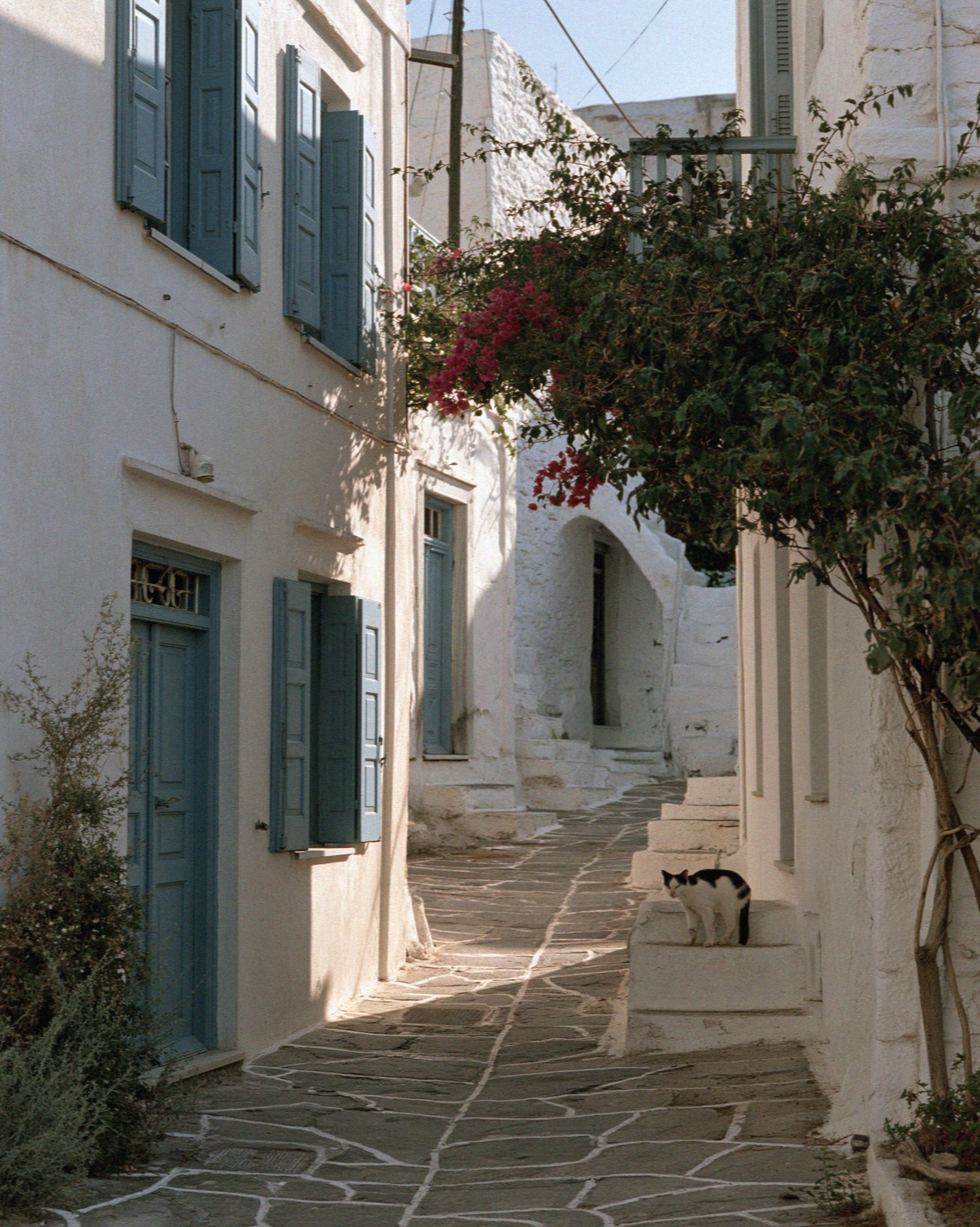
The Kastro
Above Plaka is the Kastro, the summit where the Venetians built a castle in the 13th century. The castle itself has largely gone, but the old quarter below the top was laid out for defence, with the outermost houses built shoulder to shoulder to form a wall. You climb up by a long stepped path through it.
Partway up is the church of Panagia Thalassitra, and at the top a small church and a flat space of rock with the whole bay, the west coast and the open sea below. It is the classic sunset point on Milos, so in summer you will share it with a good many people. Stay after the sun has gone, when the crowd drains away. I climbed it in October and described the way up in The Colour of the Boats.
Trypiti
Trypiti runs south from Plaka along the same ridge, so seamlessly that you barely notice the join. It is quieter and more residential, with a line of old windmills on the high ground, some of them now converted into places to stay, and a few good tavernas, Methismeni Politia among them.
Downhill from its houses lie three of the island’s best sights, close enough to walk between: early Christian burial galleries, a Roman marble theatre and the field that gave up the Venus de Milo. The opening hours and tickets are in my guide to the best things to do in Milos. A steep road also winds down from Trypiti to Klima.
Klima
Klima is the village most people have seen in photographs before they arrive: a long row of syrmata facing the bay at the foot of the slope below Trypiti. Each is a narrow two-storey house with a boat garage cut in at sea level, wide doors at the waterline for winching a caique in out of the winter storms, and a room upstairs for the family. The doors, shutters and balconies are painted in bright colours, traditionally in whatever paint was left over from the boats.
It is about 5.5 km from Adamas, buses do not come down here, and parking at sea level is minimal, so either arrive early and leave the car where you can, or park higher up and walk down the hill. Several of the boat houses are now rented to visitors, and there is a taverna or two along the row. Astakas is the name to know, for lobster pasta.
There is no beach, just a concrete quay and rocks, but the rocks past the last house make a fine place to get into the sea, which is what I did, and the view back at the coloured doors from the water is the best one there is.
Mandrakia
Mandrakia, on the north coast below Plaka, is the smallest and perhaps the most charming of the syrmata villages: a tiny harbour enclosed by rock, a handful of boat houses around it and fishing boats pulled up in the shelter.
There is almost nothing here besides Medusa, a fish taverna set above the water, which serves grilled fish and octopus and takes no bookings, so arrive early or expect to wait. The road down is narrow and parking tight, so avoid the busiest hours.
Firopotamos
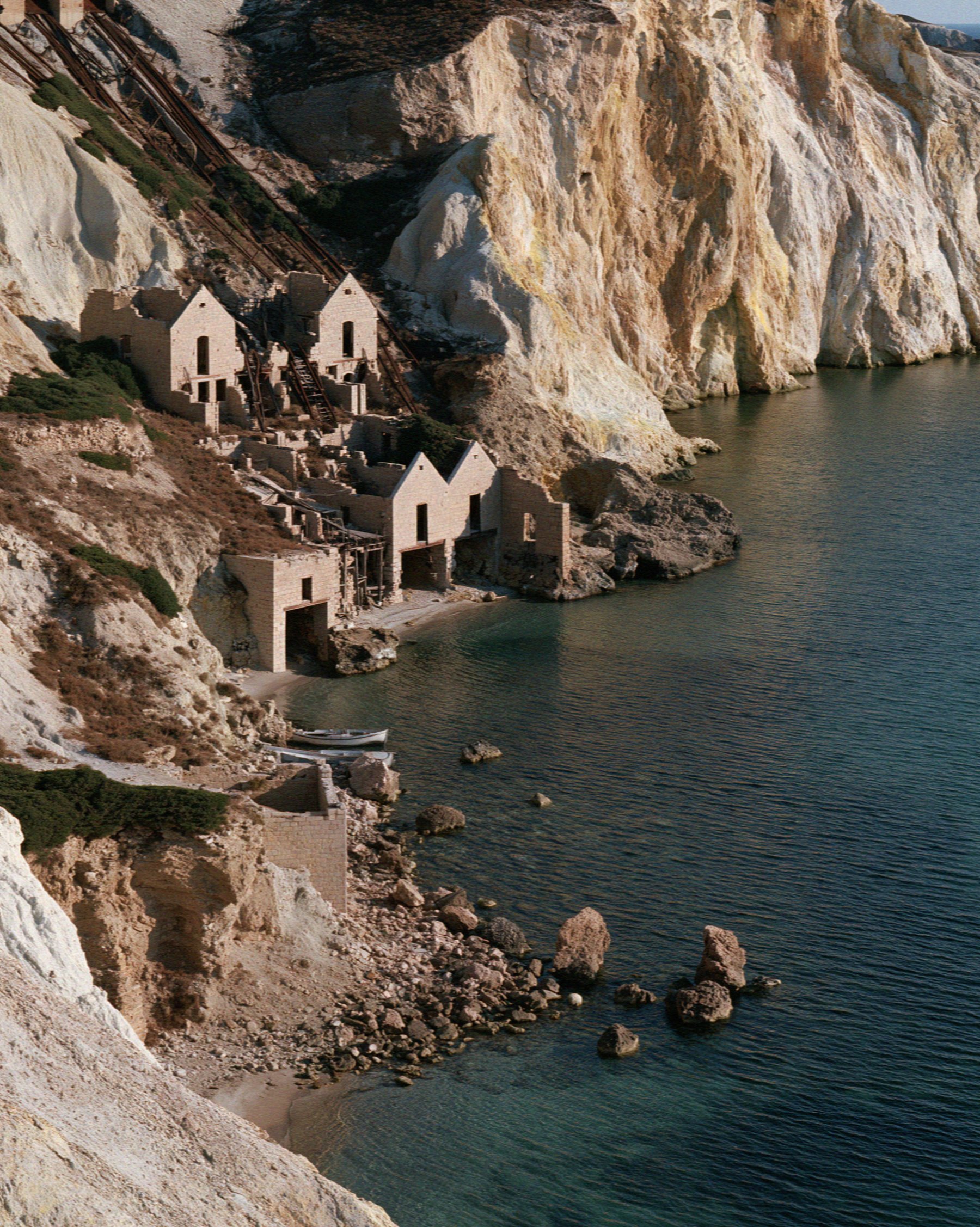
A little further west along the same coast, Firopotamos is a pebble beach in a deep inlet, with a white chapel on the rock at one side and syrmata at the water’s edge. Tucked well into the cliffs, it is calm when much of the coast is not, and the clarity makes it a favourite with snorkellers.
It is small, popular and short of parking, so come in the morning. It is also in my guide to the best beaches in Milos too.
Pollonia
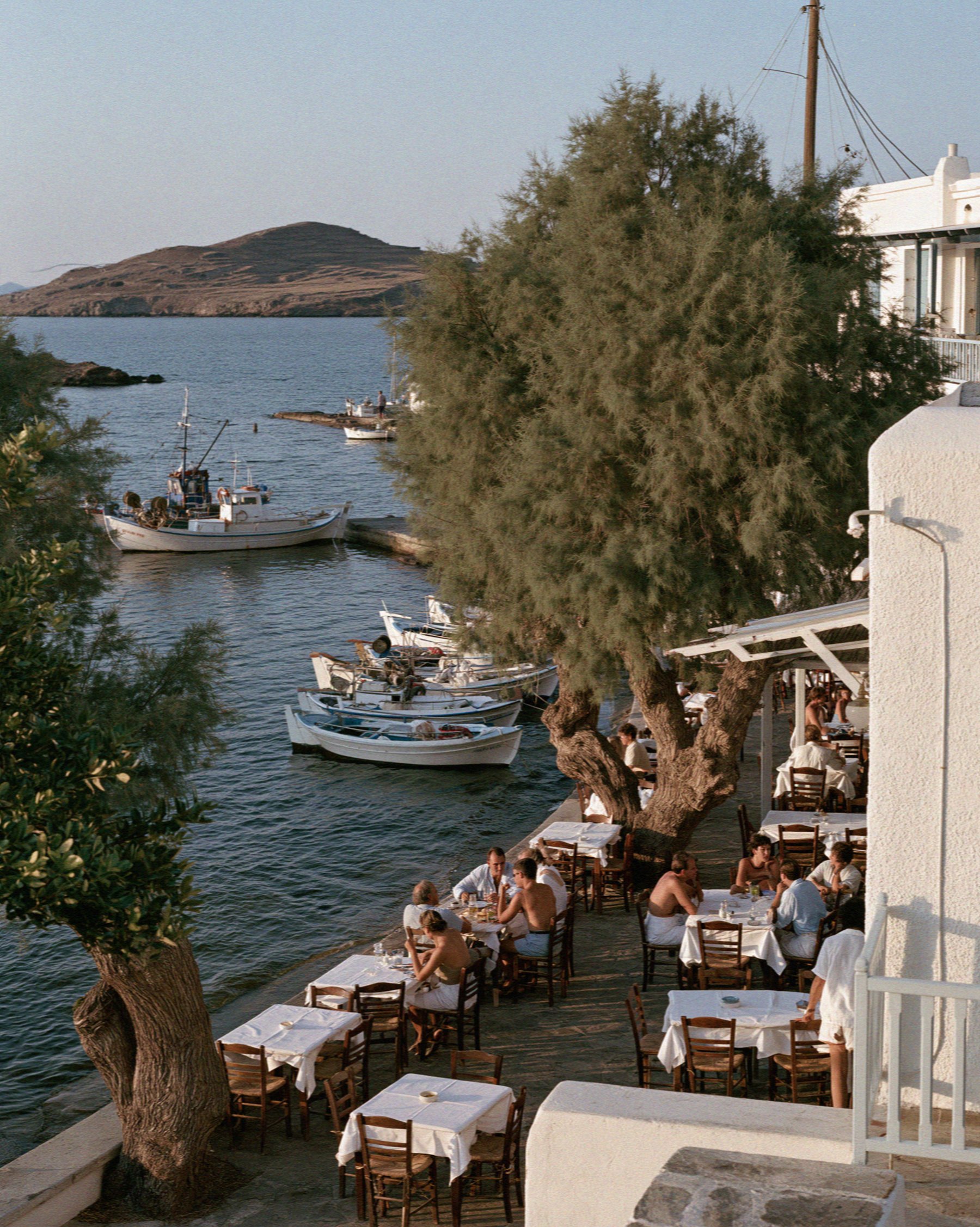
Pollonia, on the north-east tip, feels like a different island from the villages on the ridge. It is a fishing harbour turned small resort, with a curve of sandy beach shaded by tamarisks, a waterfront lined with fish tavernas, and a slower, quieter evening than Adamas.
Enalion and O Gialos serve fish and seafood on the front. It is also where the little ferry leaves for Kimolos, about 25 to 30 minutes across the strait, and where boats depart for Polyaigos. Papafragas is a few minutes’ drive west along the coast. The bus from Adamas takes about thirty minutes.
A village loop by car
With a car, you can see most of this in one long day.
Start in Adamas at the Mining Museum when it opens. Drive up to Trypiti for the catacombs, the theatre and the Venus plaque, and have lunch on the ridge. In the early afternoon, drive along the north coast to Mandrakia and Firopotamos for a swim, then out to Pollonia for a coffee on the waterfront. Come back across the island to Klima in the late afternoon, leaving the car above the village and walking down. Finish by climbing the Kastro above Plaka for the last of the sunset, then eat in Plaka.
On a meltemi day, swap the north-coast swims for somewhere sheltered. My Milos itinerary shows how to spread the villages across several days alongside the beaches and the boat.
Frequently Asked Questions
What is the main village in Milos?
Plaka, the capital, on the ridge above the bay, with the Kastro and its sunset above it. Adamas, below, is the port.
What are the syrmata in Milos?
Traditional fishermen’s houses built at the water’s edge, with a boat garage at sea level and a room above. The best-known are at Klima, with others at Mandrakia, Firopotamos, Fourkovouni, Areti and Skinopi.
How do you get to Klima in Milos?
By car, taxi or on foot. Klima is about 5.5 km from Adamas, below Plaka and Trypiti. No bus goes there and parking by the water is scarce, so come early or leave the car up the hill.
Is Pollonia or Plaka better for an evening?
Pollonia for a long fish dinner by the water and a quieter night. Plaka for the sunset from the Kastro, then a stroll through the lanes and dinner on the ridge.
Do you need a car to visit the villages of Milos?
It helps a great deal. Buses from Adamas reach Plaka, Trypiti and Pollonia, but not Klima, Mandrakia or Firopotamos. A car or ATV lets you see them all in a day.
Read also: The Best Things to Do in Milos | Where to Stay in Milos: Adamas, Pollonia, Plaka or Klima | Victoria’s Complete Guide to Milos