Nothing on Milos is far from anything else on the map. Adamas to Pollonia is about twenty minutes by car. What actually shapes a day here is the wind and the dirt roads, and the best plan is the one built around those rather than around the distances.
This is the five-day version I would give a friend, with a three-day cut and a plan for when the north wind arrives. My own days ran in a different order, with the boat on the second and the catacombs and Klima on the third, but they covered much of the same ground. The island in full, with everything this route leaves out, is in my complete guide to Milos.
How to split the days
Think of Milos in four pieces. The centre, around Adamas, Plaka and Trypiti, holds the history and the evening views. The west coast, where Kleftiko is, can only be seen properly from a boat. The north coast has Sarakiniko, Papafragas and the fishing villages. The south coast has the long sand beaches and the coloured cliffs. Then, off the north-east corner, Kimolos.
Give each one a day and you have five. Three rules make it work:
Put the boat early. If the wind cancels it, you need spare days to move it to.
Check the opening days. The catacombs and the archaeological museum in Plaka both close on Tuesdays, so do not schedule day one for a Tuesday.
Hire a car or ATV for at least days three and four. The buses reach several of these beaches in season, but not the villages and coves in between, and never on your own timetable.
Day one: Adamas, Plaka and the Kastro
Start in Adamas with the Mining Museum on the seafront road near the port. It is small, and the case of obsidian upstairs explains why people were sailing to Milos thousands of years ago. Its opening times shrink outside summer, so confirm them the day before. I walked in on my first day while I waited for my room, and it was the right introduction; it is in my diary The Stone That Keeps an Edge.
Then up the hill to Trypiti. The catacombs open at 08:30 and close at 15:30 in summer, with the last entry 20 minutes before closing, and entry is €10. A short walk below is the ancient theatre, its marble seats looking over the bay, and the plaque in the field where the Venus de Milo was found in 1820.
Walk on into Plaka for lunch and the archaeological museum (€5), where a cast of the Venus stands among the finds. Then, about an hour before sunset, climb to the Kastro above the village and watch the light go from the top. Eat in Plaka afterwards.

Day two: the boat to Kleftiko
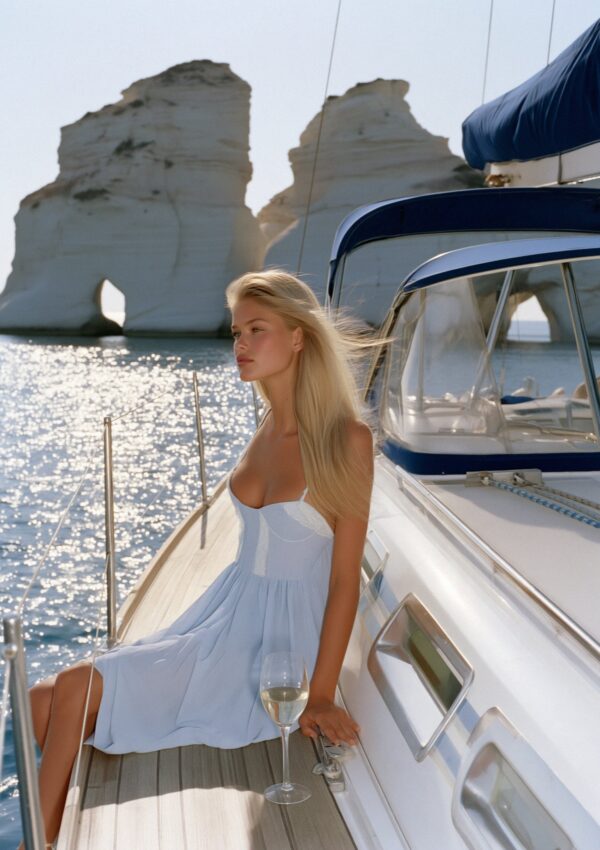
The full-day boats leave Adamas in the morning, usually around 09:00, and come back in the late afternoon. Most sail down the west coast past the old mine workings to Sykia, the sea cave with its roof open to the sky, where you go in by dinghy or swim if the sea allows, and then on to Kleftiko, the white sea stacks and arches where the boats anchor for swimming and lunch.
A sailing boat with lunch runs about €110 to €160 a person. I went on a sailing boat and would choose one again, because the trip back under sail is half the pleasure. The day is in my diary The Thieves’ Cove, and the boats, routes and prices are compared in my guide to Milos boat tours.
Back in Adamas, order the kleftiko for dinner.
Day three: the north coast
Be at Sarakiniko early, by 08:30 if you can. The white rock is at its best before the crowds and the glare, and in 2026 lifeguards were on duty from 10:00 through the summer. If waves are breaking over the rock, admire it from the top and swim somewhere else.
From there, follow the north coast east. Stop at Mandrakia for its tiny harbour and an early lunch above the water, then go on to Papafragas, the narrow inlet with steps cut down to a scrap of beach at the end. Spend the afternoon in Pollonia, the fishing village at the tip.
Late in the day, drive back west to Firopotamos for a last swim in its little sheltered bay, and then down to Klima for dusk. Park early or walk down from Plaka, and stay for dinner at the end of the row.
Day four: the south coast beaches
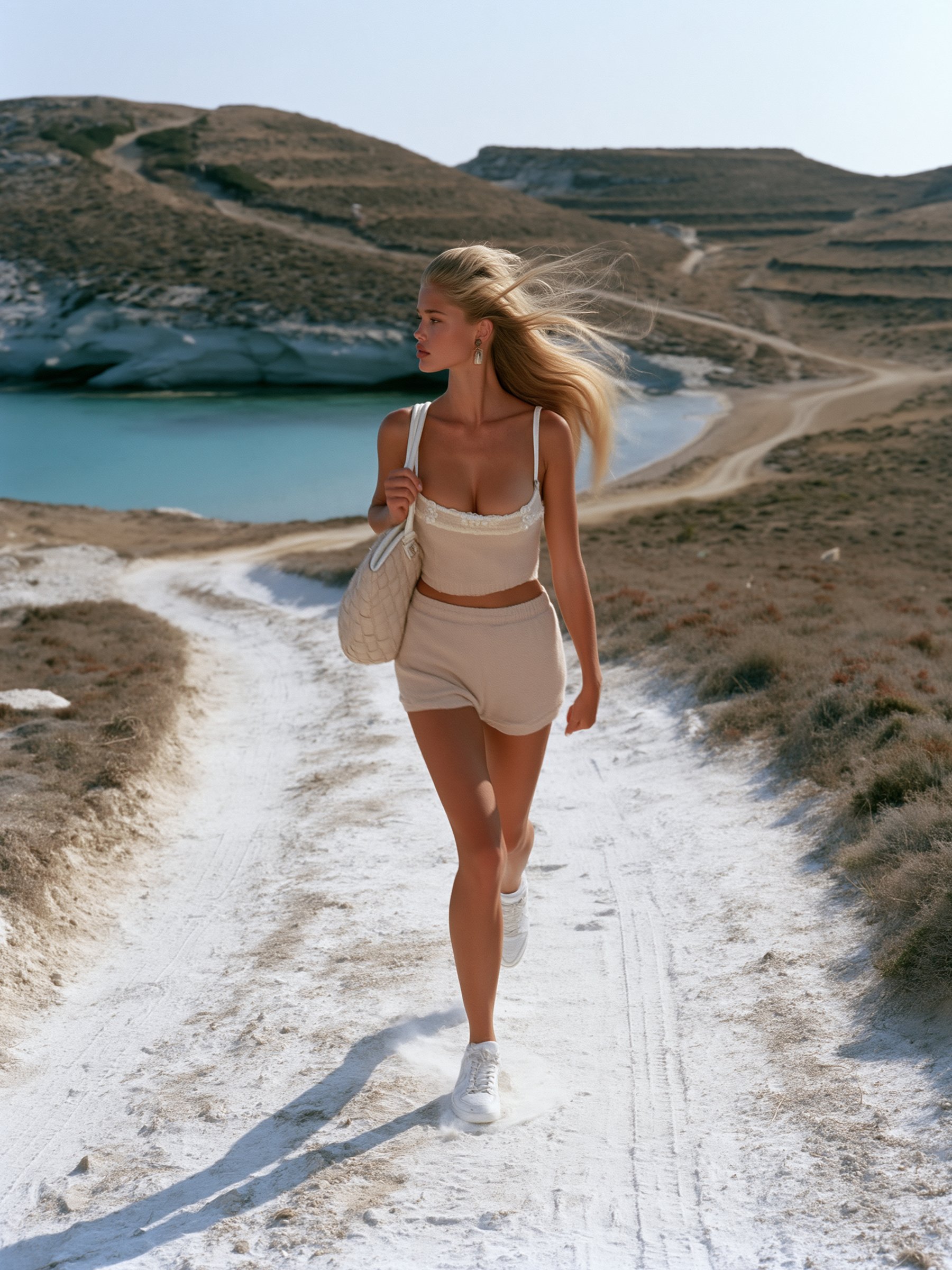
The south faces away from the north wind, which makes it the calmer side in summer. Start at Firiplaka, a long sweep of sand under cliffs banded in colour, and if you are steady on your feet, go next door to Tsigrado, a tiny cove reached by a rope and an old wooden ladder.
Lunch at Paleochori, where Sirocco cooks its dishes in pots sunk into the hot sand. End the day at Provatas, wide, soft and shallow, an easy last swim before the sun drops.
If you have a 4×4 or an ATV and would rather see something stranger, swap the afternoon for the old sulphur mines at Thiorichia on the east coast, with a swim in the bay below. Every beach on this route, and the ones it skips, is in my guide to the best beaches in Milos.
Day five: Kimolos
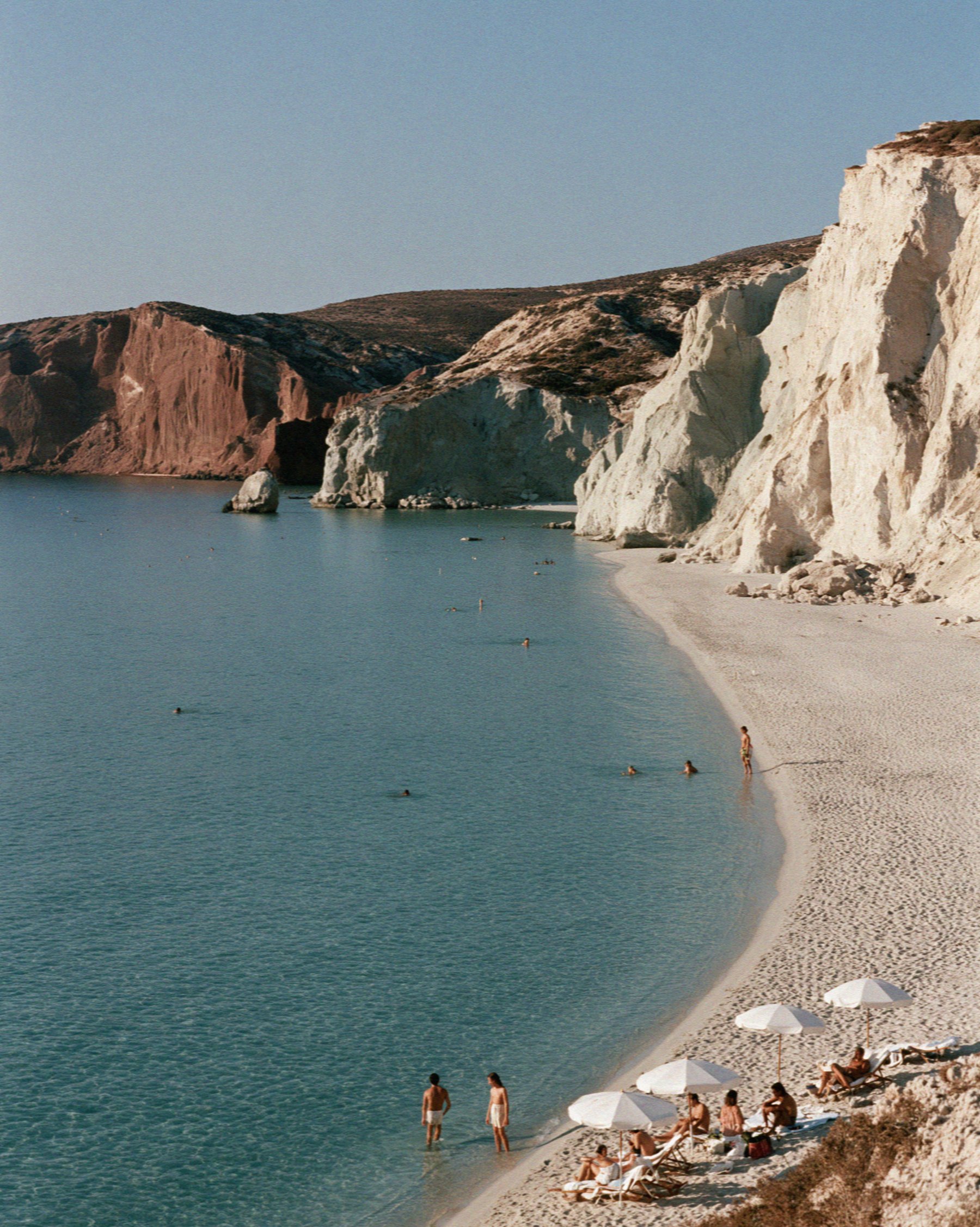
Drive or take the bus to Pollonia and catch the small ferry to Kimolos, 20 to 30 minutes across. Walk up to Chorio and its fortified old quarter in the morning, then cross the island to Prassa for white sand and a long swim. Come back on an afternoon boat and eat in Pollonia.
If the sea is calm and you would rather stay on the water, a boat trip around Polyaigos, which usually calls at Kimolos too, makes a good alternative.
If you only have three days
Day one: Sarakiniko early, then the catacombs, the theatre and the Venus field, lunch in Plaka, and the Kastro at sunset.
Day two: the boat to Kleftiko.
Day three: the south coast in the morning, Firiplaka and Paleochori, then back across the island for Klima at dusk.
If the wind is up
The meltemi comes from the north, so the rule is easy to remember: when it blows, go south.
Sarakiniko and the north coast become dangerous rather than merely choppy, so give that day to Firiplaka, Paleochori or Agia Kyriaki instead, or to the catacombs and Plaka, which do not care about the weather. Some Kleftiko boats switch to departures from the south coast on windy days, and others cancel. If yours cancels, move it to your spare day rather than giving up on it.
What the days cost
The fixed costs are modest. The catacombs are €10 and the archaeological museum €5. The boat day is the big one, about €110 to €160 each. Car and ATV hire varies a great deal by season, much higher in August than in May or October, so book ahead in summer and check what the insurance covers on dirt roads. Add a room at roughly €80 to €150 a night for something simple in high season, €150 to €300 for a good mid-range hotel, and €300 and up for the best.
Where to sleep for this route
Adamas works best. The boat leaves from the harbour, the buses start there, and everything else on this route is within half an hour.
Pollonia suits you better if days three and five matter most, and its restaurants are the best on the island.
Plaka and Trypiti are lovely for the evenings but put you on the hill each morning. My guide to where to stay in Milos names hotels in each.
Frequently Asked Questions
How many days do you need in Milos?
Three days covers the essentials: the boat to Kleftiko, Sarakiniko, Plaka and Klima. Five lets you add the south coast beaches properly and a day on Kimolos, with room to move a day when the wind is up.
Is it better to stay in Adamas or Pollonia for a Milos itinerary?
Adamas for most routes, because the boat trips, buses and ferries all start there. Pollonia is better if you want quieter evenings, the best restaurants and the ferry to Kimolos on your doorstep.
Which day should I book the Kleftiko boat trip?
Early in your stay, ideally the second day. If the north wind cancels it, you still have time to rebook before you leave the island.
Do you need a car to follow a Milos itinerary?
For the north and south coast days, yes, or an ATV. Buses run in season from Adamas to Plaka, Pollonia and several beaches, but not to Mandrakia, Firopotamos or Klima, and they run to their own timetable rather than yours.
Read also: Milos Boat Tours: Kleftiko, Sykia and Polyaigos | The Best Beaches in Milos | Victoria’s Complete Guide to Milos