There are two ways to reach Balos, and they give you almost opposite days. The boat from Kissamos is easy, sociable and long, adds a ruined Venetian castle on an island, and lands you at the lagoon at the same moment as several hundred other people. The road is dusty, hard on a hire car and ends in a steep walk, but if you are early it can give you the lagoon nearly to yourself. Choosing well is most of the work.
Balos was one of the places I did not reach in October, and it needs a whole day to itself, not an afternoon squeezed between other plans. What follows is the practical picture, gathered from the boat operators, the park rules and people who go back every summer. Balos is one corner of a very large island, and my complete guide to Crete shows where it sits among the rest.
What Balos is
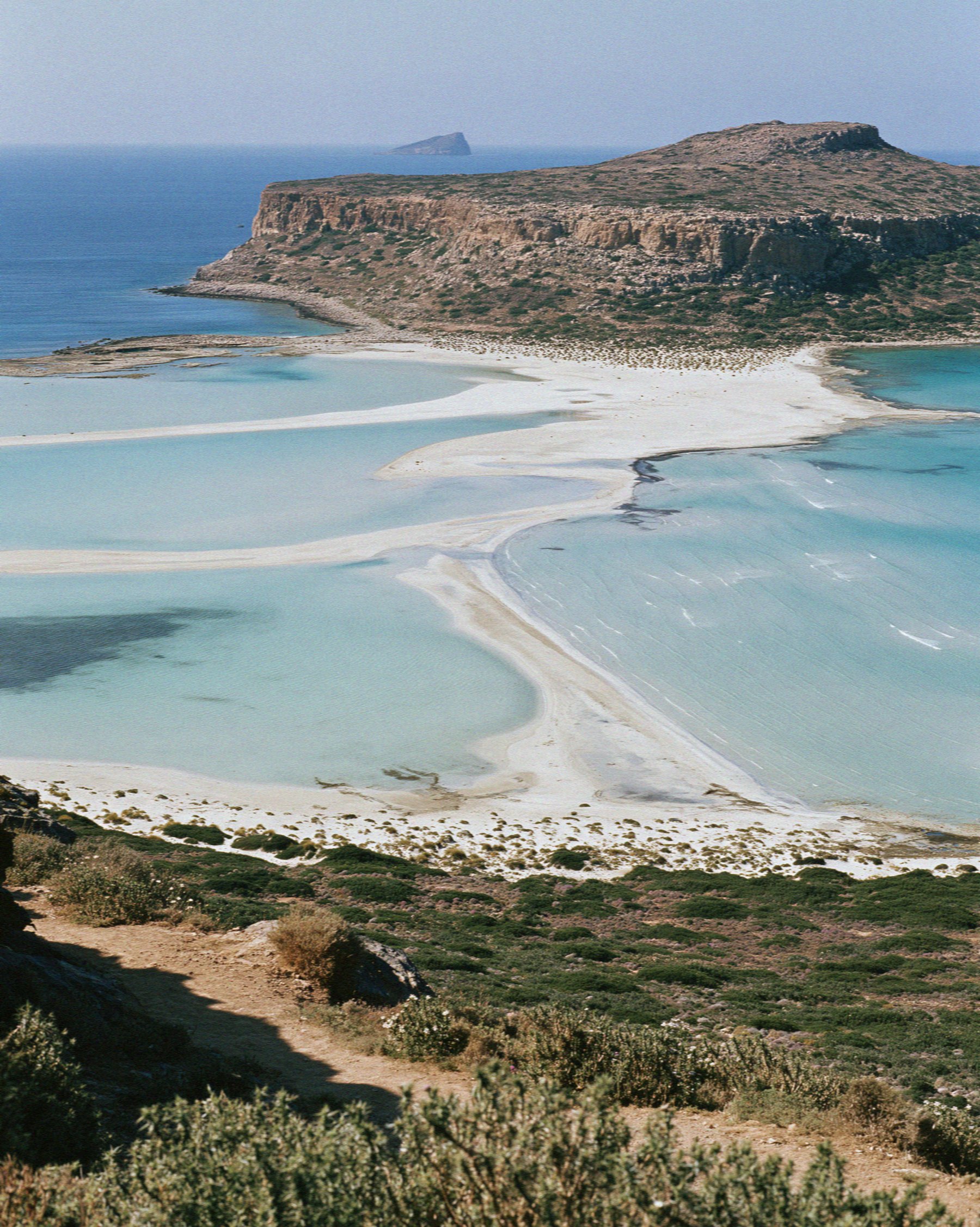
Balos sits at the north-west tip of Crete, on the Gramvousa peninsula. It is a shallow lagoon of white sand and very clear water, held between the rocky arm of Cape Tigani and the mainland, with the islet of Imeri Gramvousa a little offshore. The water over the sand is so shallow that it takes the colour of whatever is beneath it, pale over sand, deeper blue in the channels, and the whole bay shifts through those bands as the light moves.
The famous view is from the cliff path above, where you see the lagoon, the sand bar and the cape laid out at once. Down at the water it is calmer and quieter in feeling, a place for wading and floating rather than for swimming laps.
It is a protected Natura 2000 site. Take nothing (sand, shells, stones), stay inside the marked areas, and expect very little in the way of facilities: a seasonal snack bar and a few umbrellas.
By boat from Kissamos
Excursion boats leave from Kissamos port, at Kavonisi, roughly from May to October. The big boats sail in the morning, at around 10:00 to 10:30, and the day runs in two halves: about two hours on Imeri Gramvousa first, then about two hours at Balos, returning to Kissamos in the late afternoon, around 17:30 to 18:00. Allow seven to eight hours in all.
These are large vessels with a bar and a sun deck, and they are full in summer. Coach transfers from Chania and Rethymno can usually be added to the ticket, which saves you the drive to Kissamos (about 45 minutes from Chania). The boat is the right choice if you do not want to drive a dirt track, if you have children or anyone who would struggle with the walk, or if you want the castle as well as the beach.
The catch is timing. The boats reach Balos around the middle of the day, all at once, so you arrive with the crowd and in the hottest hours.

Gramvousa and the castle
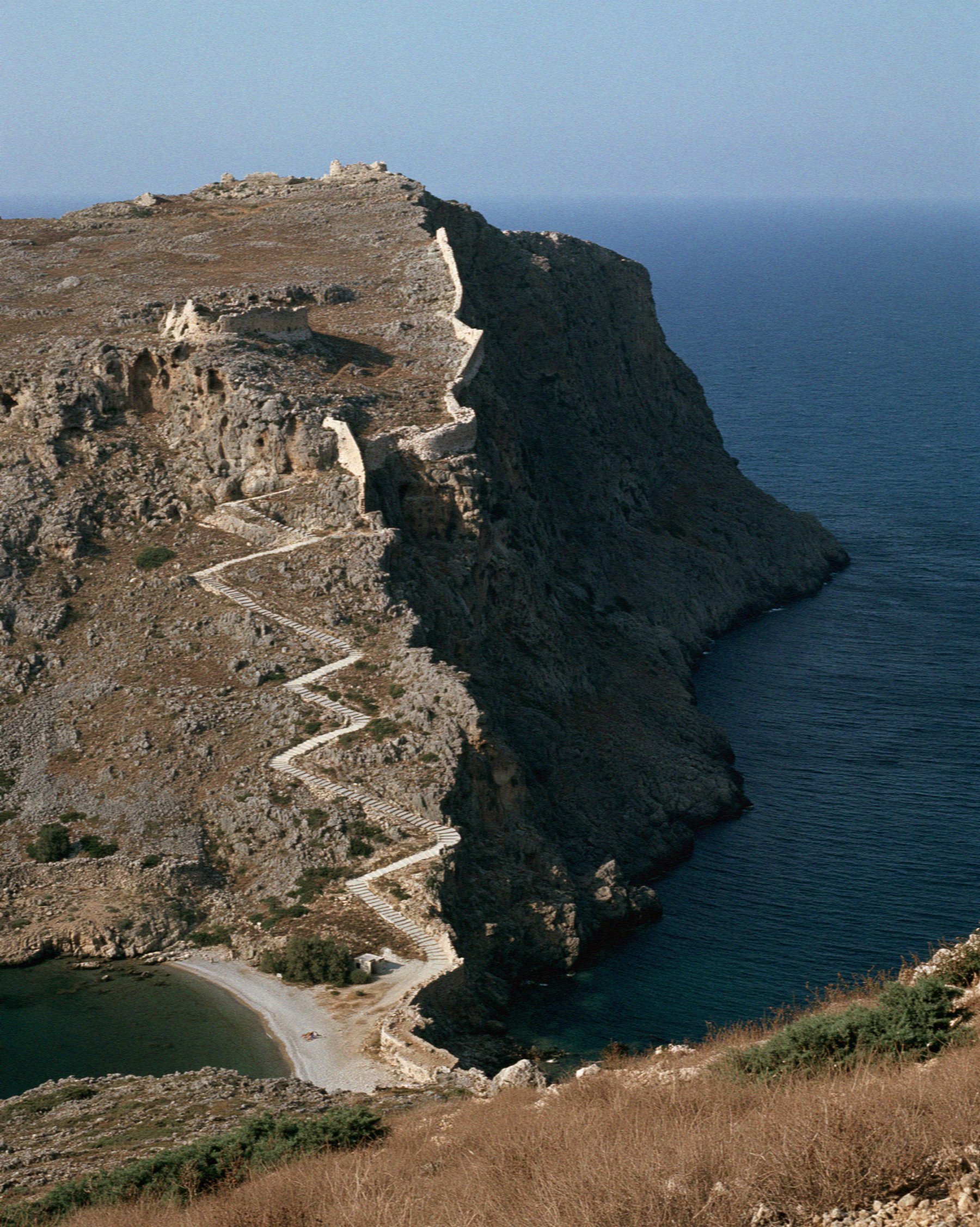
Imeri Gramvousa is the steep island at the mouth of the bay, and its summit carries the ruins of a Venetian fortress built in the late 16th century. It held out after the rest of Crete fell to the Ottomans, and in the 1820s it became a base for Cretan rebels and pirates, who raided shipping from it until the Great Powers sent warships to end it.
The climb from the jetty to the walls takes 20 to 30 minutes on a steep, rocky path with no shade. Do it as soon as you land, before the heat builds, and wear proper shoes. From the top you look straight down onto Balos and along the cape. There is also a small beach near the jetty, with a rusting shipwreck offshore, if you would rather swim than climb.
By road down the peninsula
The road route starts at Kaliviani, just west of Kissamos. From there an unpaved track of about 8 km runs along the peninsula: rough, dusty and potholed, with sheer drops in places and goats on the way. Take it slowly; most cars do it in 30 to 40 minutes.
Before you set off, read your hire contract. Many rental agreements exclude damage on unpaved roads, which means the tyres and the underside of the car are your problem if something goes wrong. My guide to getting to Crete and getting around covers what to check when you hire.
Partway along you pay a small entry fee (about €1 a person), and at the end there is a car park with a parking charge (about €3; check the current price). Then you walk.
The walk down and back
From the car park a rocky path leads down to the lagoon in about 20 to 25 minutes. It is uneven and has no shade at all. The viewpoint, the one in every photograph, is near the top, so stop there on the way down while you still have the energy to enjoy it.
The walk back up is the part to plan for. It takes 30 minutes or more, it is uphill in full sun, and in July and August, by the middle of the afternoon, it is genuinely hard work. Carry plenty of water, wear shoes with grip rather than sandals, and leave yourself enough time before dark. If anyone in your group has trouble with heat or steep ground, take the boat.
Swimming in the lagoon
The lagoon is shallow for a long way, warm, and very calm on a still day, which makes it ideal for children and for anyone who prefers to float rather than swim. Further out, beyond the sand bar on the seaward side, the water is deeper and cooler and catches more of the swell.
There is very little shade, so bring an umbrella or rely on one of the few rented ones. Bring water and food too, since the snack bar is seasonal and limited. And leave the sand where it is: the pale grains are part of what makes Balos what it is, and taking them is forbidden.
What it costs
By boat: adult fares in 2026 ran from roughly €25 to €45, depending on the boat, the season and whether a transfer is included, plus a municipal fee of €1 a person collected on the trip. Coach transfers from Chania or Rethymno cost extra. Check what is included when you book.
By road: about €1 a person to enter the area and roughly €3 to park, plus your hire car and fuel, plus whatever your insurance does not cover on the track. It is cheaper, but only if the car comes back unscathed.
When to go and when the wind blows
The boats run roughly from May to October, and the lagoon is at its best in June and September, when the water is warm and the crowds are thinner. July and August are the busiest months, with the boats full and the road dusty with traffic.
If you come by road, go early. Arrive by 09:00 and you have a couple of hours before the boats pull in around midday. Late afternoon, after they leave, is the other quiet window.
Watch the wind. Balos faces north, and in July and August the meltemi can blow hard for days at a time. Strong wind makes the bay rough, and it can cancel the boats entirely. Check the forecast the evening before, and if it looks bad, head south instead: my guide to the best beaches in Crete lists the sheltered ones.
Frequently Asked Questions
Is it better to go to Balos by boat or by car?
By boat if you want an easy day with the castle on Gramvousa included, or if you would rather not drive a dirt track. By car if you want the lagoon before the crowds, since the boats arrive around midday.
How long is the walk down to Balos?
About 20 to 25 minutes from the car park on a rocky path with no shade, and 30 minutes or more back up in the heat.
How much is the boat to Balos?
In 2026 adult fares ran from about €30 to €45 depending on the boat and the season, plus a €1 municipal fee. The trip lasts seven to eight hours.
Can you drive to Balos in a rental car?
Yes, along an 8 km unpaved track from Kaliviani, but many rental contracts exclude damage on unpaved roads, so check yours first.
When do the Balos boats run?
Roughly from May to October, leaving Kissamos around 10:00 to 10:30 and returning around 17:30 to 18:00. Strong north wind can cancel sailings.
Read also: The Best Beaches in Crete: Elafonisi, Balos, Falasarna and the South Coast | Getting to Crete and Getting Around | Victoria’s Complete Guide to Crete