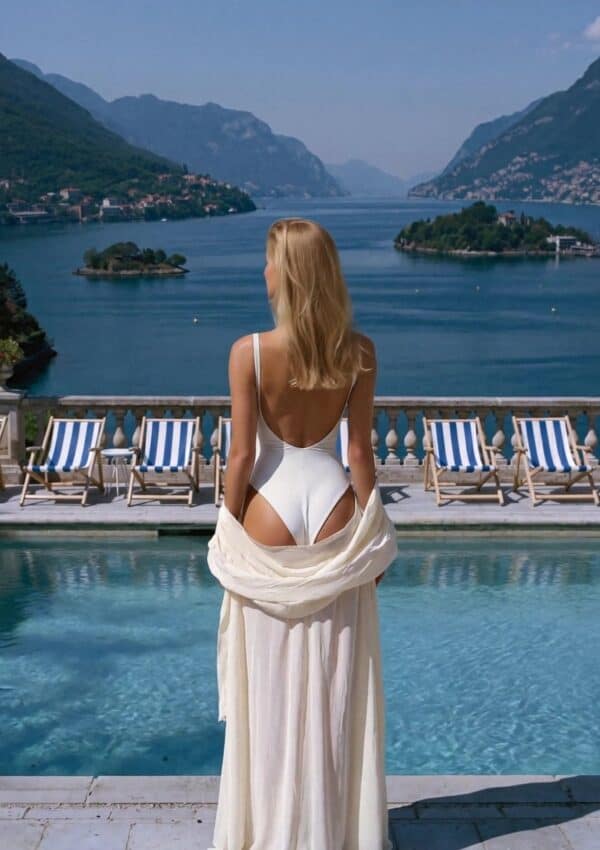
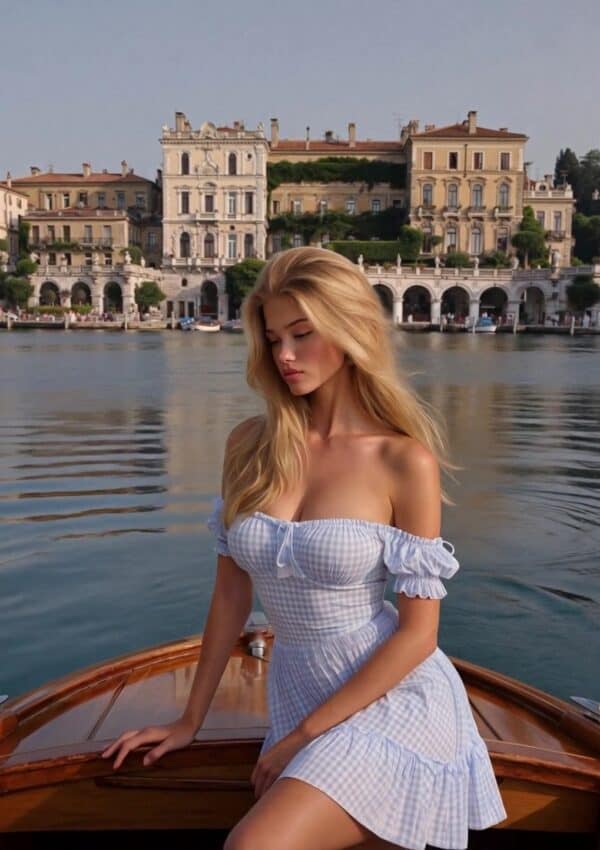
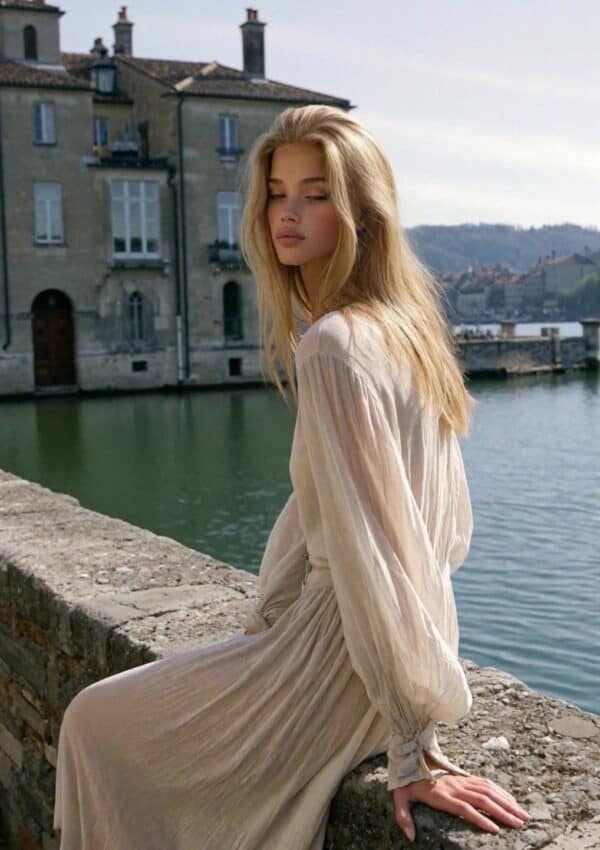
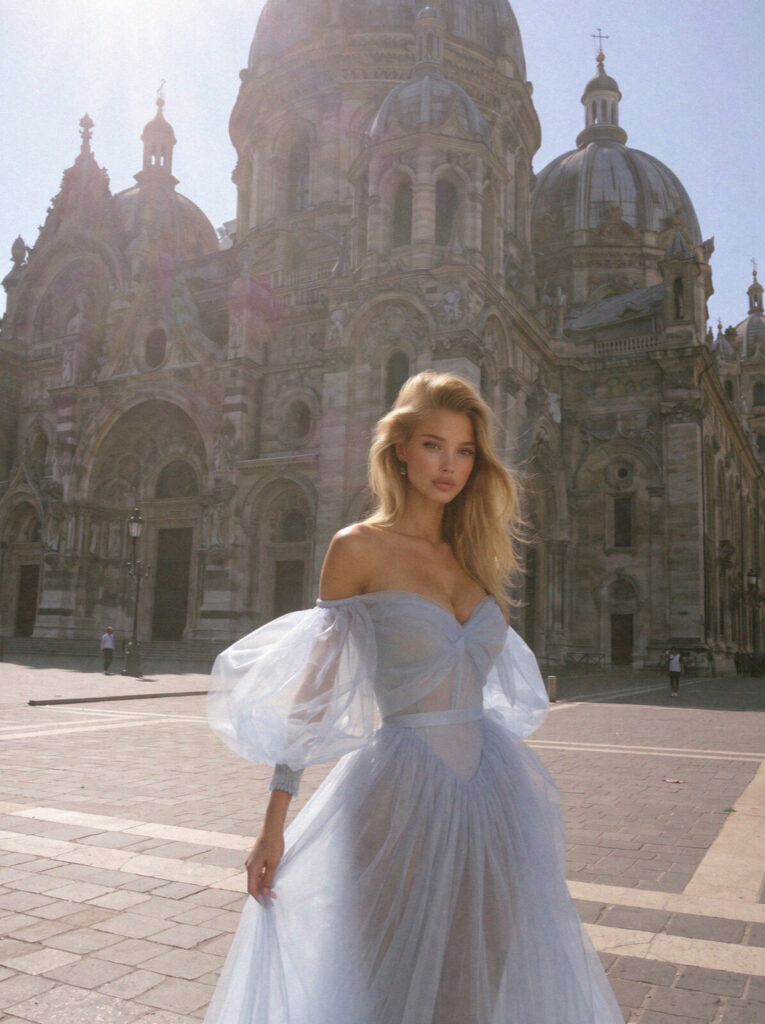
I left Como in the morning the way you leave a room you have been happy in, quietly, without turning on the lights, and I went north.
It is not far. That is the strange thing about this part of the world; you can hold two entirely different lakes in a single day and never feel you have travelled at all. But the water changes as you go, and by the time I saw Maggiore for the first time from the road above Stresa I understood that I had come somewhere else. Como is a lake that folds you in, all cliffs and shadow and villages stacked on top of one another. Maggiore opens. It lies wide and pale and grand beneath a bigger sky, the far shore soft and blue and, at the top of the lake where I could not quite see it, already half in Switzerland. The pre-Alps stand back from the water here, keeping their distance, and there was still a little snow on the highest of them even now, in the full heat of summer, which somehow felt like good manners.
I had meant to arrive slowly. I had meant to check in, to unpack, to sit on a terrace with a cold drink and let the day remain small. But you cannot see the Borromean Islands from the Stresa waterfront and decide to wait until tomorrow. They sit just off the shore, close enough to seem reachable by wading, three of them in a loose line, and one of them, Isola Bella, is hardly an island at all but a garden someone decided, three and a half centuries ago, to build on the water and then simply never stopped building. So I did the unreasonable thing. I dropped my bags in a room I barely looked at and took the little boat straight out, still in my travelling clothes, because some places do not wait, and this, I could already tell, was one of them.
The crossing takes only minutes. You go from the noise of the waterfront to the middle of the lake in the time it takes to stop worrying about your luggage, and the island grows in front of you as you come, larger and stranger than it looked from the shore, until it is no longer a view but a place you are about to step into. The boatman said something to me in a dialect I did not catch and did not need to, and I paid him and stepped onto stone that people have been stepping onto for four hundred years.
The garden rises out of the lake in terraces, tier upon tier of clipped box and pale stone, statues at every turn holding their poses with the patience of the very old, urns spilling white flowers, and everywhere the smell of warm stone and cut green and, beneath it all, water. I walked through it slowly and let the grandeur do what grandeur does, which is to make you feel both smaller and, oddly, more at ease, because none of it is asking anything of you. It was built to be seen. You need only oblige.
And then, at the top, where the terrace runs out to a stone balustrade above the whole shining width of the lake, I met the peacock.
It was white. Entirely white, the way a thing is white in a dream, and it did not startle or strut or perform. It simply came and stood beside me at the railing as though we had arranged to meet there and it had, characteristically, arrived first. We looked at the lake together for a while, the bird and I. Its tail trailed behind it across the warm stone like the train of a gown no one had remembered to lift. I have been in a great many beautiful places and been left cold by them, and I have been undone completely by something small and unrepeatable, and this was the second kind. A white peacock, the lake turning silver beneath the afternoon light, the mountains keeping their distance, and no one to see any of it but the two of us. I did not reach for my phone for a long moment. I only wanted to be inside it before I tried to keep it.
Later I walked down the central avenue of the garden, the long straight spine of it that runs from the palace toward the water between the hedges and the statues, and the peacock came part of the way with me before wandering off toward something more interesting. The palace stood at the end of the avenue behind me, ornate beyond all reason, and ahead the garden fell away in green steps to the lake and the pale hills beyond, and I remember thinking that whoever made this seemed to understand something about longing. You build the most beautiful thing you can, and then you point it towards the water, towards the distance, towards the part you cannot own. My father would have liked it here. He had a weakness for anything built with more ambition than sense, anything that reached. He would have stood at the top of those steps with his hands behind his back and said nothing for a long time, which was how he said the most.
There is a small chapel on the island, cool and dim after the white glare of the terraces, and I went in for a moment, the way I always do, not because the day needed rescuing but because some habits are older than reasons. I lit a candle and said a quiet thank you, directed and specific, for the water and the quiet and the strange white bird, and then I stepped back out into the light and the heat and the enormous ordinary afternoon.
By evening I was back on the Stresa side, on a terrace at last, with the cold drink I had promised myself hours too late. The lake had gone from silver to pewter to a soft dark blue, and one by one the lights came on along the shore and out on the islands, and the palace I had walked through that afternoon became a single warm shape in the distance, floating as though it too were only moored there for the season. The waiters moved without hurry. Somewhere a boat crossed the dark water. I heard it before I saw it, and then I did not see it at all.
I have four days here, perhaps a few more if the lake will have me, and I have not yet done any of the sensible things. I have not learned the ferry times or found the market or discovered which of these grand old hotels serves the better breakfast. I arrived and went straight to the most extravagant thing in sight and stood at a railing with a peacock and let the whole careful plan of the day dissolve.
I think that is the right way to arrive somewhere. To be caught by it first, completely, before you learn enough to be sensible, so that later, when you do know the ferry times and the market and the breakfasts, some part of you still remembers standing at the top of a garden built on water with a white bird for company and nowhere in the world you had to be.
The islands will still be there in the morning. So, I hope, will I.
V.
Part of my complete guide to Lake Maggiore.