I had not meant to cry at the opera, and I am fairly sure I was not the only one caught out.
We came into Piazza Bra in the last of the evening, when the sky had gone the colour of a ripe apricot and the Arena sat at the end of the square like something the city had been keeping warm all day. And it had, in a way. You feel it the moment you pass under the arches and climb up onto the old stone steps, that the day’s heat has soaked into them and is giving itself back now, gently, into the cool of the coming night. Two thousand years of evenings have ended on these steps. I sat down on mine with a cushion I had hired at the entrance for a couple of euros, the way everyone does, and I put my hand flat on the stone beside me and felt it, still warm, and thought about all the people who had done exactly this and are gone.
I am not, if I am honest, a person who knows a great deal about opera. I know the famous ones the way most of us do, by a single soaring melody that turns up in a film or a memory and undoes you before you can decide whether you have earned the feeling. My father used to hum one of them while he did something dull with his hands, a knot, a repair, and I have never been able to hear it since without seeing the back of his head bent over the task. I did not expect to hear it tonight. That is the thing about music you did not choose; it arrives when it likes.
The crowd filled in slowly, and it is a wonderful thing to watch, twenty thousand people settling into an ancient bowl of stone without hurry, the murmur rising and the light dropping by degrees. Below us the grand tiers, the poltronissime, filled with people in linen and silk; up on the steps where we sat it was students and families and a pair of nuns and an old man who had clearly been coming for fifty years and had brought his own small pillow, worn soft. Nobody minds where anybody sits. The stone is democratic. You are all simply here, waiting for the same thing.
And then the light went almost entirely, and the candles came out.
I did not know they would do this, and I am glad no one warned me. As the last of the daylight failed, little flames began to appear all across the great oval, thousands of them, passed from hand to hand along the rows, a small tremble of gold spreading through the dark until the whole amphitheatre was lit not by any stage but by the audience itself, holding its own small fire against the enormous night. There is no cleverness to it. It is just people and candles and the oldest gesture there is. I lit mine from the flame of the stranger beside me and passed the light on to the girl on my other side, and for a moment we were all doing the one thing together, and my throat did something complicated.
Then the music began, and the candles went out one by one, and the stage took the light instead.
I will not try to describe the singing, because I would only embarrass us both, and because the truest part of it was not really the sound but what the sound did to twenty thousand people sitting very still in the open air. Swifts were still cutting across the top of the arena, high up where the sky was, black flecks against the last blue. The voices went up and met them. When the aria came, the one I half knew, the one I will not name because it belongs to my father and not to this page, I felt it arrive from a long way off and land somewhere I do not often let things land, and I let it, because what else is a warm night and an old stone city and a stranger’s borrowed candle for.
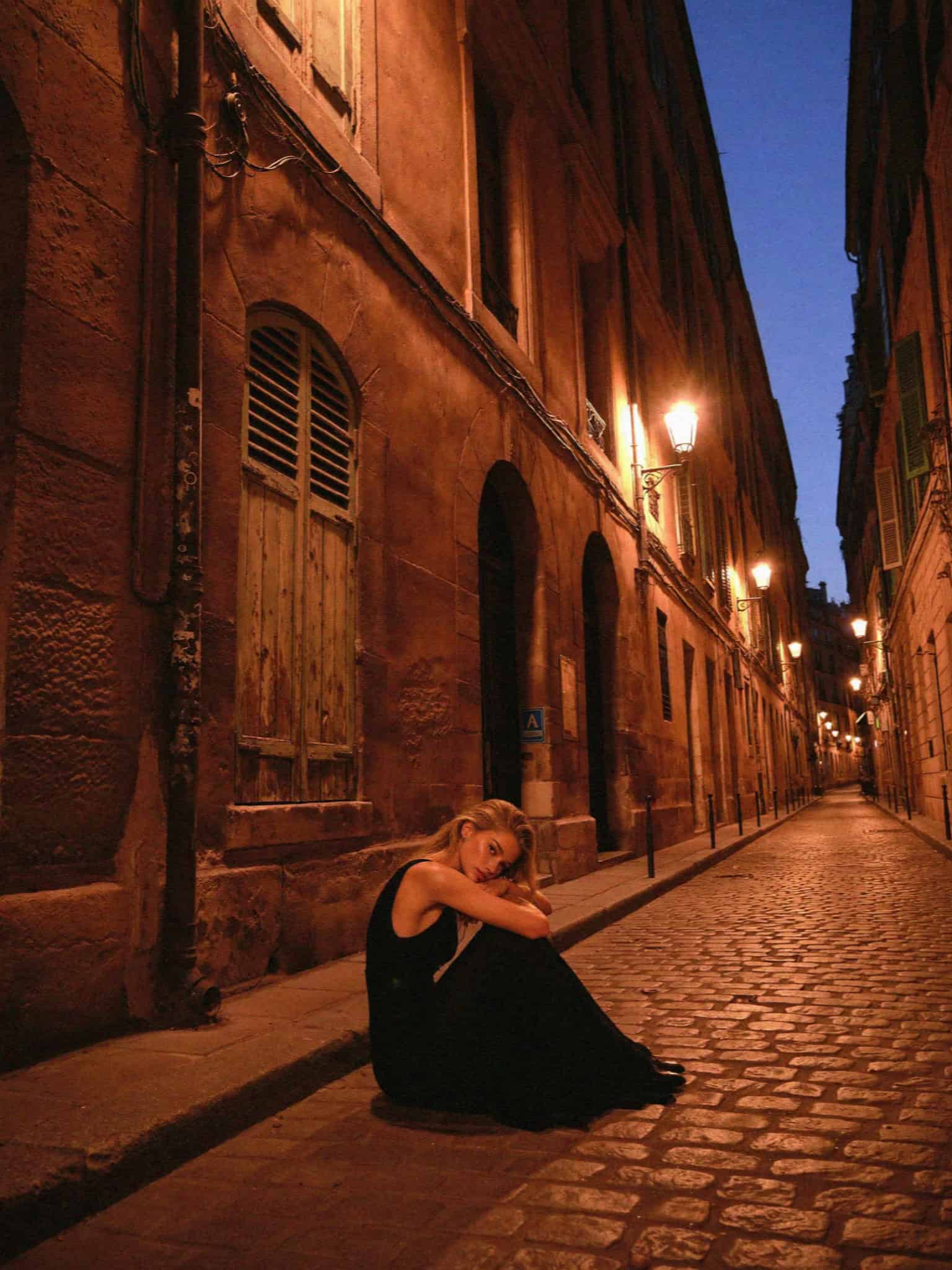
Afterwards nobody wanted to leave quickly. We came down off the steps into a Piazza Bra gone soft and golden with lamplight, the cafés still open, the whole square murmuring with people not ready for the evening to be over. I did not want a nightcap, and I did not want company; I wanted the walk. So I let the others drift to a table and I went the long way back, through Via Mazzini with its shutters down and its lamps lit, into Piazza delle Erbe where the market square was empty at last, and the fountain of Madonna Verona stood pale and patient in the middle of it, keeping her own centuries of nights.
I stopped, on the way, at a church that was still open, the way they sometimes surprisingly are. I do not always do this, but tonight I did. I lit a candle, the way I always have, and I said the small quiet thank you I say, for the warm stone and the borrowed flame and the aria I did not ask for, and for my father, wherever the humming goes. Then I stepped back out into the marble quiet and stood for a while looking up at the Torre dei Lamberti, dark against the stars, and thought that some cities perform for you and a very few simply let you in, and that Verona, tonight, had let me all the way in.
Tomorrow there is a train, and the lake, and the ordinary bright business of a day. But tonight there was a candle passed along a row of strangers, and a voice going up to meet the swifts, and a father humming over a knot in a light I had almost forgotten. I came for the spectacle. I am leaving with something quieter, and mine, and impossible to hand back.
V.