Santorini is the Greek island everyone has already seen. White houses poured down a cliff, a blue dome, a sunset with a crowd in front of it. I arrived knowing the picture by heart, on a ferry that turned into the bay below the cliffs in late September, and spent the first afternoon trying to see past it.
What is underneath the picture is stranger and better. A volcano that blew its own middle out. A Bronze Age town that waited under the ash for three and a half thousand years. Vines trained into baskets on the ground so the wind cannot reach them. Villages inland that face away from the view entirely and are better for it.
This guide is the whole island as I would plan it now: when to come, which village to sleep in, how to get around without losing half a day to buses, what to eat, where to swim, what is worth paying for on the water, and what to skip. Each part has its own detailed guide, linked as you go.
What Santorini actually is
Santorini is not really one island. It is the broken rim of one, a crescent of cliffs around a flooded crater, with the smaller island of Thirasia forming the far wall and two black lava islands sitting in the middle of the water.
Around 1600 BC, give or take a few decades that scientists still argue about, the volcano here produced one of the largest eruptions of the last ten thousand years. The centre of the island collapsed and the sea poured in. What you look down into from the villages is that hole: a caldera roughly eleven kilometres across, with water hundreds of metres deep, and cliffs that rise about three hundred metres straight out of it in bands of red, black and cream rock.
The volcano is not finished. The dark islands in the middle, Nea Kameni and Palea Kameni, were built by later eruptions, the most recent in 1950. You can walk on one and swim in warm water beside the other.
The island lives on two sides. The west side is the caldera: the cliff-top villages of Oia, Imerovigli, Firostefani and Fira, the views, the cave hotels, the sunsets. The east and south sides slope gently down to the sea, with the black sand beaches, the airport, the vineyards and the quieter villages. Most people spend their whole trip on the first side. The island makes much more sense once you have seen both.

Two recent things are worth knowing before you go. In early 2025 a long swarm of undersea earthquakes hit the area, thousands of small tremors over several weeks, and a state of emergency was declared. Thousands of people left by ferry, very little was damaged, and the island has been running normally since. And the island now limits cruise passengers to 8,000 a day and charges them a levy in summer, which has taken the worst edge off the old crush in Fira and Oia. If you arrive by ferry or plane, none of that touches you.
When to go
September. If you can choose only one month, choose that one.
The sea has had all summer to warm up and sits at about 24 or 25 degrees, the heat has eased, the meltemi wind of July and August is usually weaker, and the crowds thin noticeably after the first week. I was here at the very end of September and the island had an exhaling quality to it, some shops already dark, others with a handwritten sign about closing soon.
May and June are the other good window: warm, green at the edges, the sea still cool for swimming until June. Orthodox Easter, which falls in April or early May, brings the villages out in force, with candlelit processions on the Friday night and lamb on the Sunday, and is a lovely, busy time to be here. October is lovely for walking and still swimmable early in the month, though the light shortens and hotels begin to close. July and August are hot, windy, expensive and full. Between November and March much of the caldera simply shuts: many hotels, the wineries and a good number of restaurants close, and the island belongs to the people who live on it.
I have broken this down month by month, with the cruise-day pattern and what closes when, in my guide to the best time to visit Santorini.
Plan Your Visit to Santorini
A few things worth sorting before you come. These help support the blog, at no cost to you.
- Hotels on the caldera and inlandFrom the cave rooms of Oia and Imerovigli to the quieter villages among the vines
- Boat days, wine tours and AkrotiriCaldera cruises, the volcano and hot springs, and tours across the island
- Hire a car for the south and the wineriesAkrotiri, the beaches and the inland villages are easier with your own wheels
- Stay connected with a travel eSIMData from the moment you land, no roaming charges
This section contains affiliate links. If you book through them I may earn a small commission, at no extra cost to you.
The caldera villages
Four villages run along the cliff top, north to south, and the walk between them is the single best thing on the island.
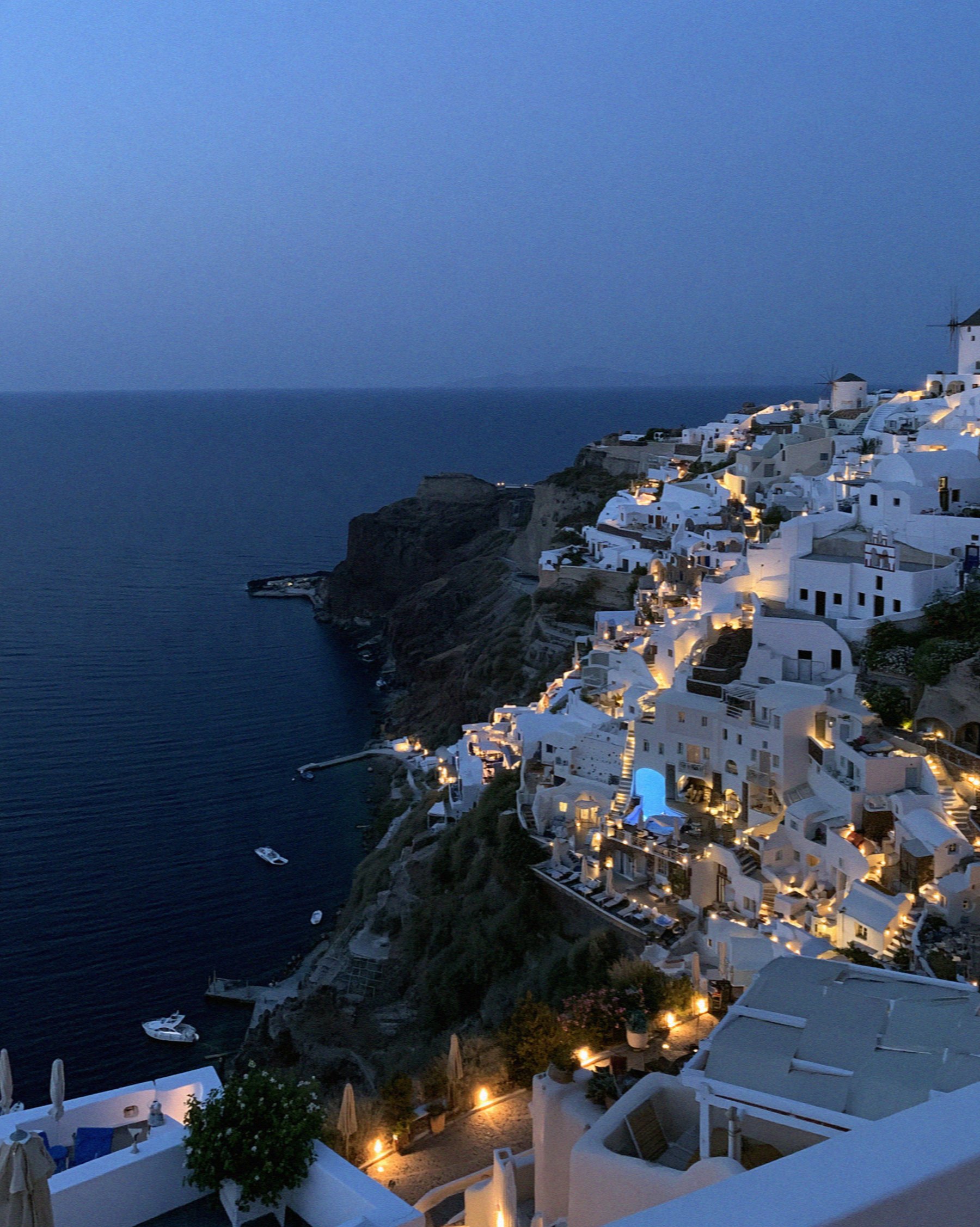
Oia sits on the northern tip, the most photographed village and the busiest, all cave houses and blue domes and windmills, with a tiny harbour called Ammoudi a few hundred steps below. It is lovely early in the morning and very hard work at sunset.
Imerovigli is the highest point of the rim and the quietest of the four, mostly hotels, with the great rock of Skaros pushing out into the caldera below it.
Firostefani is a short walk north of Fira and the best balance on the island: proper caldera views, fair prices by Santorini standards, and the restaurants of Fira ten minutes away along the path.
Fira is the capital and the bus hub, busy and practical, the place most visitors pass through even when they sleep elsewhere, with the museums, the bus station and the island’s late nights.

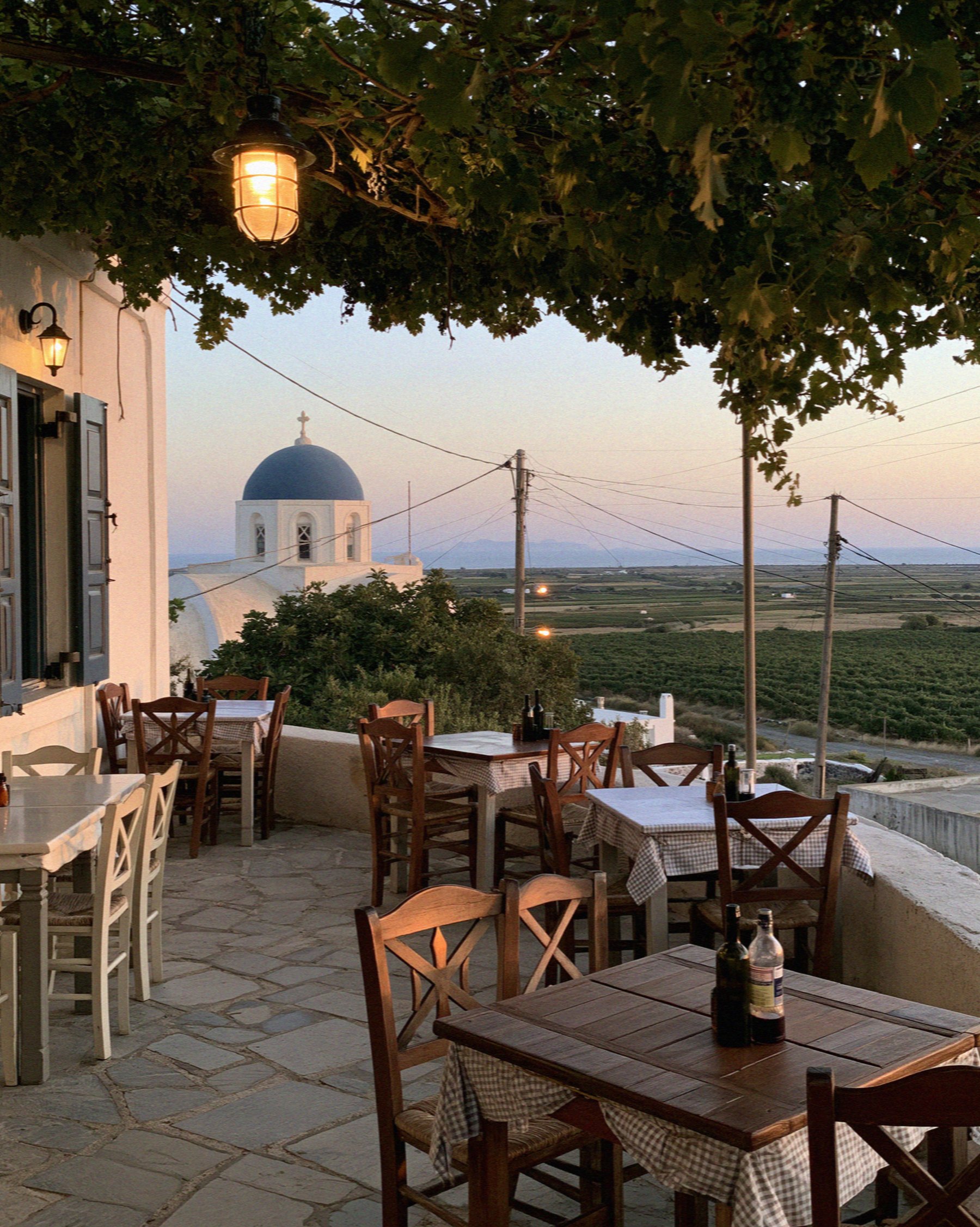
Then there are the villages inland, which most visitors never see. Pyrgos, on its central hill, was the capital before Fira and is built in rings around a medieval castle, with a view in every direction. Megalochori, further south among the vines, empties completely in the heat of the afternoon. Emporio, further south again, is the largest village on the island and barely visited at all. I spent a whole day in Pyrgos and two working in Megalochori, and they are what I remember most clearly now. Between Oia and Imerovigli, too, the small village of Finikia sits just back from the rim, with painted houses and almost nobody in its lanes, a ten-minute walk from all the noise of Oia.
I have written up every village, what each is like and who it suits, in my guide to the villages of Santorini.
The best things to do
The caldera walk from Fira to Oia comes first. It is about ten kilometres along the rim, three to five hours with stops, free and open all year. Paved and easy through Firostefani and Imerovigli, then rough and stony beyond, with the sea far below the whole way. Start early, take water, and finish in Oia before the sunset crowd arrives.
From Imerovigli you can drop down to Skaros Rock, the promontory where the island’s medieval capital once stood. Almost nothing is left of the fortress, but the view back along the caldera is the best on the island, and the small chapel tucked on the far side of the rock is easy to miss and worth finding.
Then Akrotiri, the Bronze Age town in the south, which has its own section below. The frescoes found there are partly in the museum in Fira, which is small and very good. A boat to the volcano and the hot springs. A winery terrace at sunset instead of Oia. The walk up from Pyrgos to the hilltop monastery that crowns the island. A swim off the red rocks at Ammoudi. Ancient Thera, the later Greek and Roman town on the mountain above Kamari. And a small boat across to Thirasia, which is what Santorini looked like before anyone came.
I have put all of these in order, with what each costs and how long it takes, in my guide to the best things to do in Santorini.
Where to watch the sunset
The sunset is the thing everyone comes for, and the one most people see badly.
The famous view is from the ruins of the old castle at the very tip of Oia, a fifteenth-century lookout built against pirates. In summer people stand there for an hour or more before the sun goes down, packed shoulder to shoulder, and the lanes leading to it fill so solidly that they become one-way. If you want that view, get there well over an hour early, or watch from a restaurant terrace you have booked.
There are better ways. From Skaros Rock below Imerovigli you see the sun drop beyond Thirasia with the whole curve of the rim beside you and a few dozen people at most. From the top of Pyrgos you see it set over the caldera on one side while the vineyards turn pink on the other. The winery terraces at Santo Wines and Venetsanos give you the same sky, a seat and a glass. The lighthouse near Akrotiri, at the south-western tip, is open to the sea and almost empty. And from a boat in the caldera you see the sun go down with nobody in front of you at all.
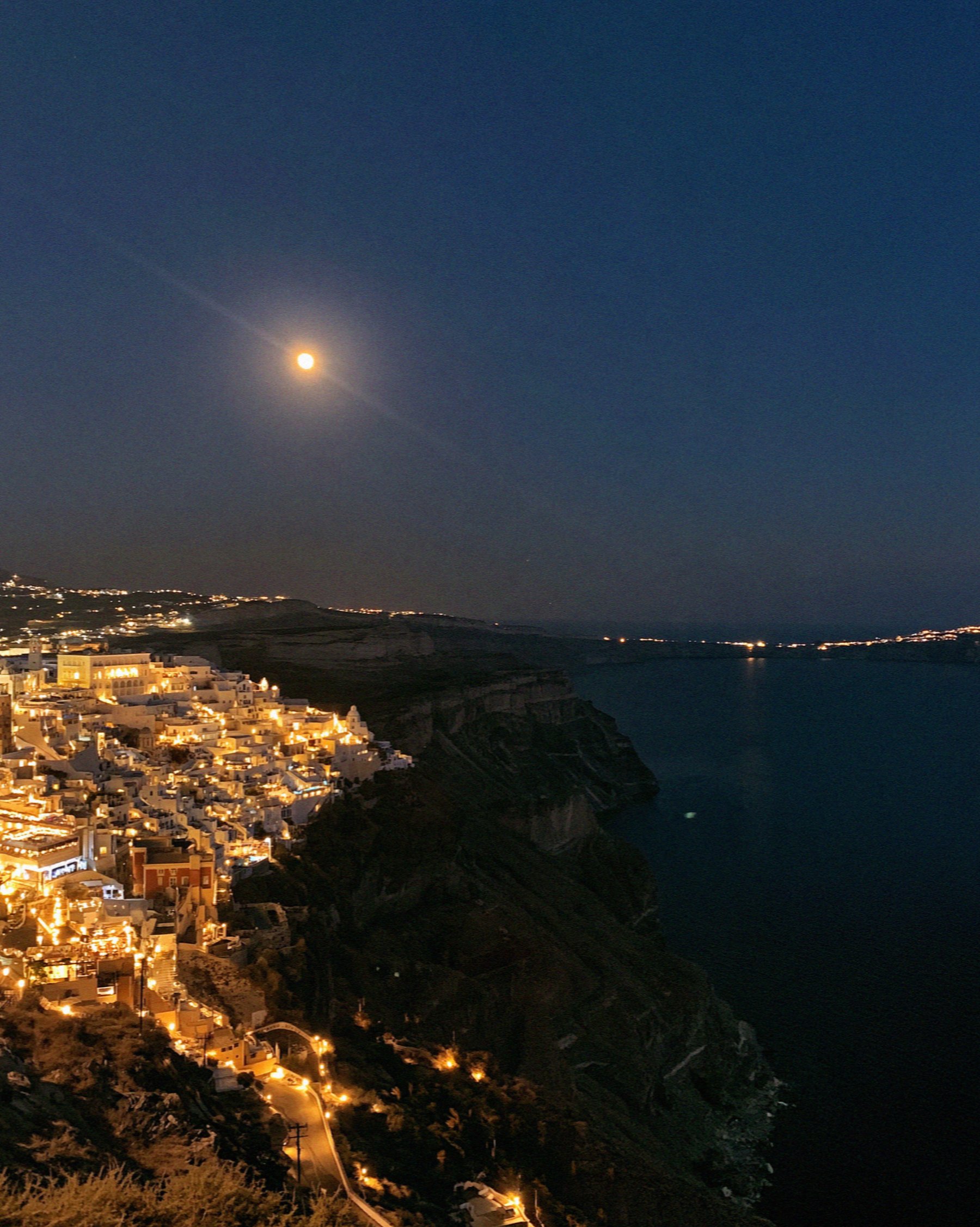
In September the sun sets a little after seven by the end of the month, earlier than you expect if you arrive from the north, so check the time on the day. And stay after it has gone: the cliffs keep glowing for twenty minutes, and the lights come on along the rim.
Akrotiri and the island’s deep past
If you only do one thing on Santorini that is not about the view, make it Akrotiri.
When the volcano erupted, around 1600 BC, it buried a prosperous Bronze Age harbour town on the south coast under metres of pumice and ash. The town had paved streets, drains, and houses two and three storeys high with painted walls. It was discovered in the nineteenth century and properly excavated from 1967, and what you walk through now, under a huge modern roof, is the town itself: doorways, staircases, storage jars still standing where they were left.
The excavation was begun by the Greek archaeologist Spyridon Marinatos, who had argued since the 1930s that this eruption helped bring down Minoan Crete. He died in an accident on the site in 1974 and, at his own wish, was buried there, among the streets he uncovered. In 2005 part of a new protective roof collapsed before it was finished, killing a visitor, and the site stayed closed until April 2012. The roof you walk under now is its replacement.
What makes it moving is what is not there. Almost no valuables have been found, and no bodies. The people seem to have had warning, from earthquakes before the eruption, and left. The town was simply abandoned, then buried, then forgotten.

Tickets are 20 euros, half that for reduced entry, and the site keeps long hours in summer, roughly eight in the morning to eight in the evening on most days, closing mid-afternoon on Mondays and Thursdays, so check the day before. In winter it closes mid-afternoon. Go early or late in the day, because the roof keeps the sun off but not the heat. Allow an hour or so, and an audio guide or a human one makes a real difference here, because without one it is a lot of walls.
Afterwards, go to the Museum of Prehistoric Thera in Fira, where some of the frescoes from the town are kept. Tickets are 10 euros; it keeps morning and early-afternoon hours and shuts on Tuesdays. The colours, three and a half thousand years on, are what stay with you.
The island had a second life long after the eruption. On the ridge of the mountain between Kamari and Perissa, some 360 metres above the sea, are the ruins of Ancient Thera, the later Greek town, lived in through Hellenistic and Roman times: temples, a theatre, houses and streets laid along the spine of the hill, with the sea falling away on both sides. You can drive the hairpins from Kamari or climb on foot from Perissa. Entry is 10 euros; in summer it closes mid-afternoon and all day on Wednesdays. Go in the morning. There is no shade at all.
The beaches
Here is the first thing to understand: there are no beaches under the caldera cliffs. The villages people picture are three hundred metres above the water, and you swim on the far side, along the low east and south coasts.
The sand there is volcanic, black or dark grey, and it gets very hot underfoot by midday. Perissa and Perivolos form one long stretch of it on the south-east coast, organised, with umbrellas and tavernas, and Perivolos has the beach clubs. Kamari, further north, is the easiest beach town on the island, with a long promenade, an open-air cinema in summer, buses to Fira every half hour or so, and the mountain of Ancient Thera at one end. Vlychada, on the south coast, is the strangest and my favourite to look at, a dark beach under pale cliffs that the wind has scooped and ridged like a sculptor’s model. Monolithos, near the airport, is shallow and calm, good with children.
For something wilder, swim off the rocks at Ammoudi below Oia, where the water is deep and clear. And there is Red Beach, near Akrotiri, which has been shut to visitors since rockfalls brought down part of the cliff. People still walk down past the signs. I would look at it from the viewpoint, or from a boat, and swim somewhere else.
All of them, with how to reach each by bus and what to bring, are in my guide to the best beaches in Santorini.
Out on the water
Seeing the caldera from inside it, at sea level, looking up at the cliffs, changes the island completely. You understand the size of the thing.
There are three kinds of boat day, and they are very different. The simple one is the volcano trip: a wooden boat from Fira’s harbour, half a day at most, to Nea Kameni, where you walk up over black lava to the crater, then on to Palea Kameni, where you jump in and swim to a small bay of warm, rust-coloured spring water. Expect to pay somewhere between 25 and 45 euros, and a few euros more in cash to walk on the volcano.
The second is the catamaran: about five hours from Vlychada or Ammoudi, a small group, swims off the red and white cliffs of the south coast and in the warm springs, lunch or dinner cooked on board, drinks included. Shared trips run from about 100 to 150 euros a head, more for the premium ones. Take the afternoon sailing and you watch the sunset from the water, with nobody standing in front of you.
The third is a private charter, which starts at several hundred euros for a half day and is worth it for a group or an occasion.
Whichever you choose, check the group size before you book, take a swimsuit you do not mind staining (the iron in the hot springs colours pale fabric), and keep a day spare. In July and August the meltemi wind can cancel boats at short notice, and a spare day is the difference between moving the trip and missing it. And if you want something simpler, the little local boat from Ammoudi to Thirasia costs next to nothing.
I have compared all of them, with prices checked in November 2026, in my guide to Santorini boat tours.
The wine
Santorini has been making wine for a very long time, and it makes it in a way that exists almost nowhere else.
The vines are trained low to the ground, woven round and round into baskets called kouloura, so that the grapes grow inside a nest out of the wind and the sun. The volcanic soil holds almost no water; the vines live on the moisture of the night air. And because the phylloxera louse that destroyed most of Europe’s vineyards never took hold in this soil, many of the roots here are very old, some of them centuries old, never grafted.
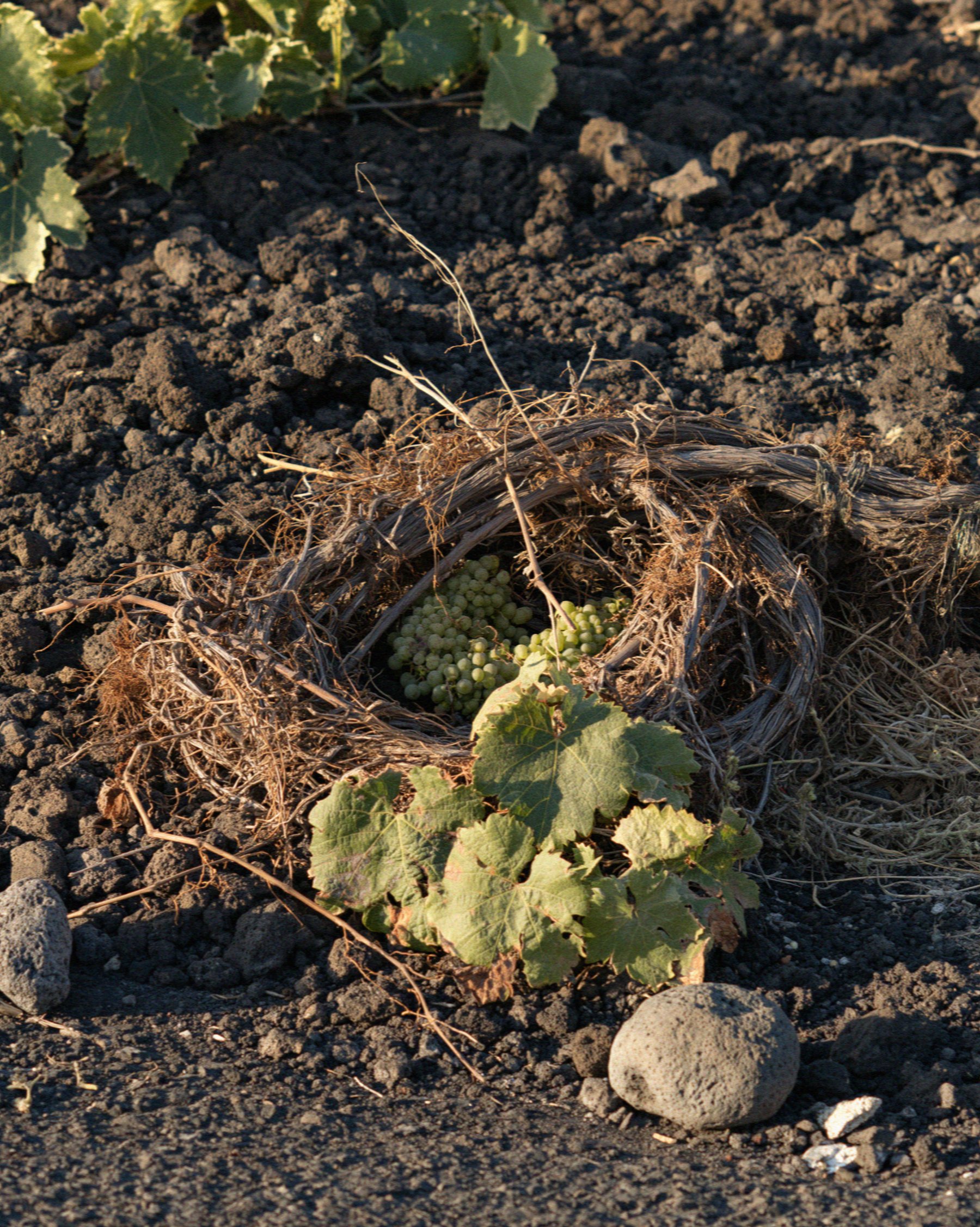
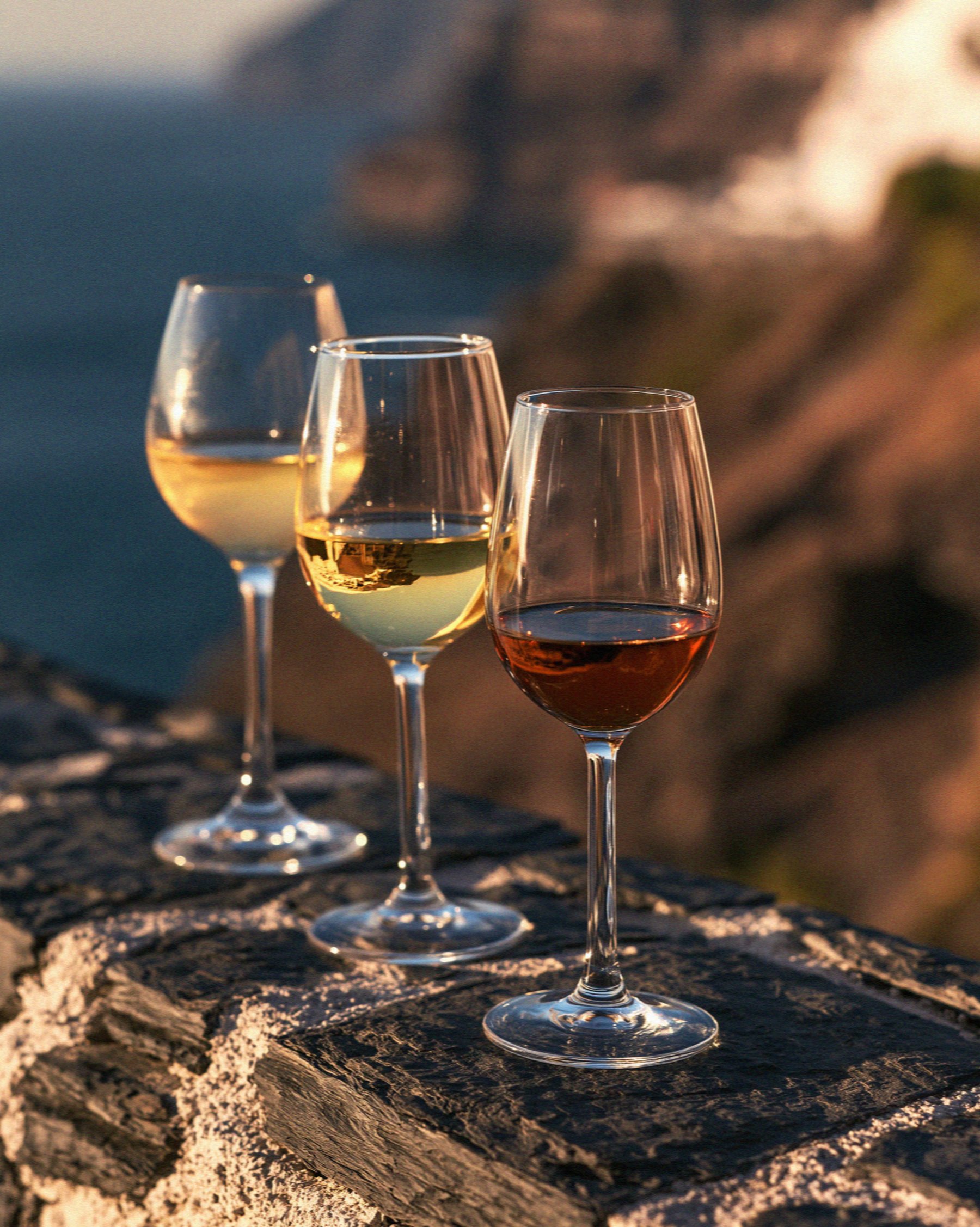
The grape to know is Assyrtiko, a white with a mineral, almost salty edge. Then Nykteri, a fuller white whose name comes from the old practice of picking and pressing at night, and Vinsanto, a sweet amber wine made from grapes dried in the sun and then aged for years in barrel. The harvest here comes early, usually in August, which makes it one of the first in Greece; by the time I arrived at the end of September the grapes were long since in.
The wineries are mostly inland, between Pyrgos, Megalochori and Episkopi. Santo Wines has the famous terrace on the caldera and is the place for a sunset glass. Estate Argyros has some of the oldest vines and the most serious tastings. Venetsanos, near Megalochori, is built down the cliff, and Domaine Sigalas sits among vineyards near Oia. Tastings run from about 18 to 65 euros depending on the winery and the flight, and most close for winter.
The wineries, the grapes and how to get round them without driving are in my guide to Santorini wineries.
Where to stay
This is the decision that shapes the whole trip, and the price range is enormous.
On the caldera, a room with a view starts at around 150 euros a night in Firostefani or Fira in the shoulder season and goes up past a thousand in Oia and Imerovigli. Those are the cave rooms, carved into the cliff, with a terrace and often a small plunge pool. I slept in one, and spent most of a day by its pool rather than going anywhere, which tells you something about them.
Oia is for romance, and for sharing it with everyone else. Imerovigli is the quietest and highest, for people who want to sit and look. Firostefani is the best value on the rim, and Fira is the most practical, with the buses and the restaurants. Inland, Pyrgos and Megalochori are cheaper, calmer and real, and you drive to the view rather than living in it. On the beach side, Kamari, Perissa and Perivolos are the cheapest of all and the easiest with children, but the caldera is a bus ride away.
A few names to start with. In Oia, Katikies and Canaves Oia are the two everyone knows. In Imerovigli, Grace and Astra Suites. In Firostefani, the Tsitouras Collection, in an old mansion full of art. In Fira, Athina Luxury Suites. Inland, Vedema in Megalochori is built into a winery several centuries old. On the beach, Istoria at Perivolos.
Whatever you book, Greece adds a climate resilience fee per room, per night, scaled by the hotel’s category and higher between April and October, from a couple of euros at a simple guesthouse to 15 at a five-star. It is usually paid at the hotel.
I have set out every area, with named hotels at each price, in my guide to where to stay in Santorini.
Booking a room in Santorini
By village, in the order of the areas above.
- OiaCave rooms facing the sunset, the most expensive view on the island
- ImerovigliThe highest point on the caldera, and the quietest of the view villages
- FiraThe bus hub and the busiest base, best for getting around without a car
- MegalochoriInland among the vines, old mansions and much lower prices
- Perissa and PerivolosThe black sand side, for a beach week rather than a view
- See every hotel in SantoriniCaldera suites, village rooms and beach hotels
- Add a hire carThe inland and beach bases are easier with your own wheels
What to eat
The food on Santorini is better than its reputation, as long as you eat away from the sunset terraces.
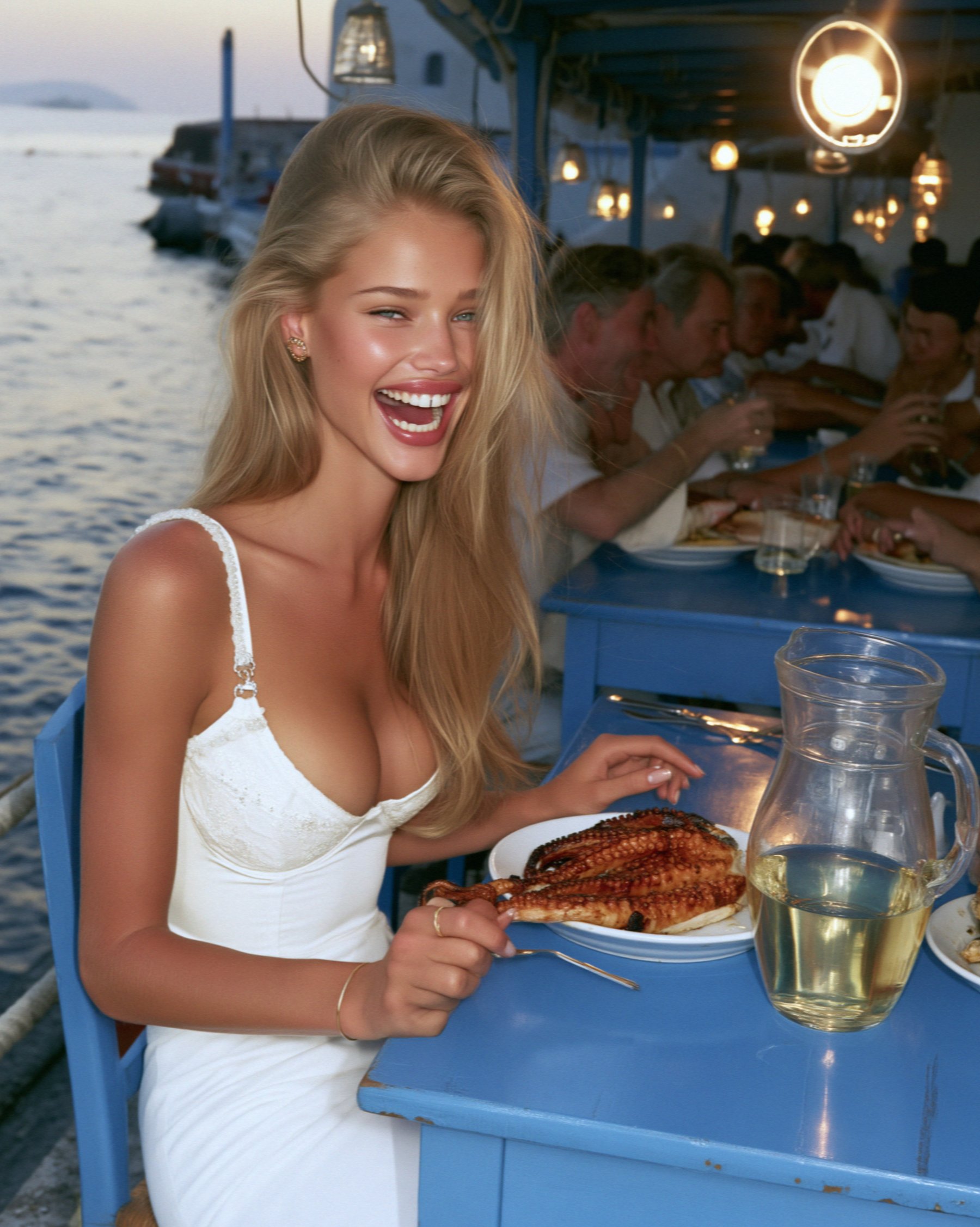
The island’s dishes come from what grows in thin volcanic soil with almost no water: small, sweet, intensely flavoured tomatoes, fried into fritters called tomatokeftedes; fava, a smooth yellow purée made from a local legume, served with capers and raw onion; white aubergines; capers and their pickled leaves; a soft fresh goat’s cheese called chlorotyri. And fish at the harbours, with octopus grilled after a day drying on the line.
The best meals are inland. Metaxi Mas in the village of Exo Gonia is where people who live here go, and it is worth the taxi. Selene, which did more than anyone to put Santorini’s own ingredients on menus, is now in Pyrgos. Aktaion, in Firostefani, has been run by the same family for over a century. In Pyrgos, Cava Alta is the easy, good lunch after walking up through the village. For fish, go down to Ammoudi below Oia, where Ammoudi Fish Tavern and Katina’s sit on the quay, or to To Psaraki on the marina at Vlychada. For a cheap, very good gyros in Fira, Lucky’s. And finish a meal, if you see it, with koufeto, a sweet of almonds and honey that used to be made for weddings.
Every place, every dish and when to book is in my guide to where to eat in Santorini.
Getting there and getting around
You arrive by plane or by ferry, and the ferry is better if you have the time.
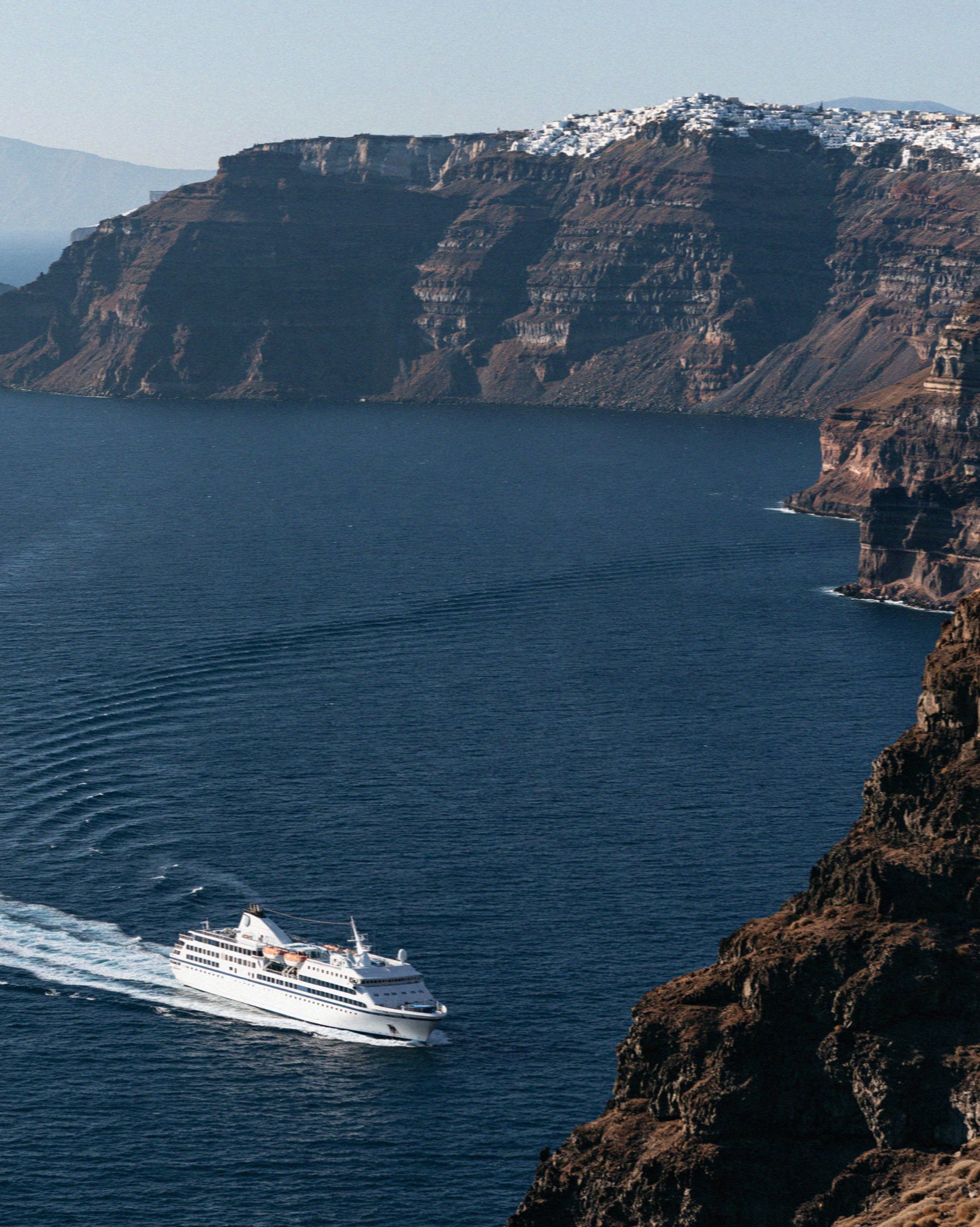
The airport is about six kilometres from Fira, with direct flights from Athens all year and from much of Europe in summer. The ferries from Piraeus take from just under five hours on a fast catamaran to around eight on a slower conventional ship, and dock at Athinios, a small port at the bottom of the cliff about eight kilometres from Fira. Take the slow one if you can: you are out on deck as it enters the caldera, watching the cliffs rise around you. I came in that way and it was the first time the place looked real.
On the island, everything runs through Fira. The public KTEL buses leave from the bus station there for Oia, the airport, the port, the beaches and the villages, at 2.20 to 2.70 euros a ride, by card at the Fira and Oia stations and otherwise in cash, and almost any journey between two villages means changing in Fira. In summer the Oia bus runs roughly every half hour and takes about twenty-five minutes; Perissa and Kamari are similar. You can pay by card at the machines in the Fira and Oia stations. Taxis are few, a few dozen on the whole island, so book transfers ahead in summer. A hired car is the easiest way to see the inland villages and the wineries, though parking in Oia and Fira is miserable. I would not hire a quad: the roads are narrow, busy and full of people who also do not know them.
Below Fira, a cable car runs down to the old port, where the volcano boats leave, in about three minutes.
Flights, ferries, buses, cars and the cable car are all in my guide to getting to Santorini and around.
A few days on Santorini
Three days is the minimum to see both sides of the island; five is better.
Spend the first day on the caldera, walking from Fira along the rim and out to Skaros. The second in the south, at Akrotiri in the morning, then the lighthouse and a beach. The third on the water. The fourth inland, in Pyrgos and Megalochori and the wineries, with a sunset on a winery terrace. And on the last day, go to Oia early, before anyone is awake, then take the small boat across to Thirasia and come back for lunch at Ammoudi.
The whole route, with timings and where to sleep for it, is in my Santorini itinerary.
Who Santorini suits
It suits couples, obviously, and anyone who wants a very beautiful place to sit still for a few days. It suits people interested in wine, and in very old history. It suits walkers more than you would think.
It suits families less than the pictures suggest. The caldera villages are steep, with endless steps and few railings, and the beaches are on the far side of the island. If you are coming with small children, sleep near the sand at Kamari or Perissa and visit the cliffs.
It suits walkers more than you would expect, and anyone who likes old things: the island has three thousand five hundred years of history under its vines, and you can see a good part of it in a week.
It is hard on anyone who cannot manage steps. The caldera villages are built down a cliff, and many hotels are reached only by long flights of stairs. If that matters, ask before you book, or stay inland or by the beach, where the ground is flat.
It does not suit anyone looking for a quiet, cheap Greek island in August. Come in September, or go somewhere else in August and come here another year.
Practical things to know
Water. Santorini has almost no fresh water of its own, and most of the tap water comes from desalination plants. It is fine for washing and brushing your teeth, but hotels and restaurants serve bottled water, and that is what I drank.
Money. Cards are accepted almost everywhere on the caldera, but carry cash for the volcano fee, small tavernas, beach sunbeds and buses outside the main stations.
The climate fee. Hotels charge Greece’s per-room nightly fee on top of the room rate. It is not a scam; it is the law.
Cruise days. On days with several ships in the caldera, Fira and Oia are crowded from mid-morning to late afternoon. Be on the rim early and late, and spend the middle of the day inland or by the sea.
The heat. There is almost no shade on the rim, and the light off white walls is fierce. Walk early, rest at midday, go out again at five.
The donkeys. You will be offered a donkey ride up the steps from the old port. I would take the cable car or walk.
The season. Much of the island closes from November to March, including many caldera hotels, restaurants and the wineries. Fira and the beach villages keep some life all year.
What to pack
Shoes you can walk in for hours, on steps and loose stone. White tennis shoes, in my case, not sandals: the caldera path and the rock at Skaros are rough, and the lanes in Oia are polished smooth and slippery.
A hat and real sun protection, because there is almost no shade on the rim. Something with sleeves for the evenings, which turn cool and windy on the cliff top even in September. Water shoes if your feet mind hot black sand and pebbles. A swimsuit you can wear on a boat all day. And cash, for the buses, the volcano fee and the smaller tavernas.
More images from Santorini















Your Santorini Guides
Everything here in detail, guide by guide.
- The Best Things to Do in Santorini
- The Villages of Santorini: Oia, Fira, Pyrgos and Beyond
- Where to Stay in Santorini: Choosing Your Village
- The Best Beaches in Santorini
- Santorini Boat Tours: The Volcano, Catamarans and Thirasia
- Where to Eat in Santorini and What to Order
- Santorini Wineries: Where to Taste Assyrtiko
- A Santorini Itinerary: 3 to 5 Days
- The Best Time to Visit Santorini
- Getting to Santorini and Around
Santorini Travel Diaries
- The View You Have Already Seen
- The Day I Did Not Leave
- The Island Behind the View
- Blue Hour in Megalochori
- The Village at Noon in Megalochori
Frequently Asked Questions
How many days do you need in Santorini?
Three days is enough to see the caldera, Akrotiri and one boat trip. With five, there is time for the vineyards, the inland villages and Thirasia too.
Is Santorini safe after the 2025 earthquakes?
Yes. The swarm of undersea tremors in early 2025 caused very little damage, and the island has been running normally since. Red Beach remains officially closed because of rockfalls, so look at it from the viewpoint or a boat.
Which is better to stay in, Oia or Fira?
Oia is quieter at night and more romantic, but very crowded at sunset. Fira is more practical, with the buses and restaurants. Firostefani, between them, often suits people best.
Can you swim in the caldera?
Not from the cliff villages, which are high above the water. You can swim off the rocks at Ammoudi below Oia, and from boats in the caldera, including at the warm springs by Palea Kameni.
Do you need a car in Santorini?
No, the buses cover the villages, beaches and ports from Fira. A car makes the inland villages and the wineries much easier for a day or two.
Is Santorini expensive?
On the caldera, yes. Rooms with a view, sunset dinners and boat days add up quickly. Eat inland, stay in Firostefani or a village, use the buses, and it comes down a great deal.
Can you drink the tap water in Santorini?
It is desalinated and fine for washing, but most hotels and restaurants serve bottled water for drinking, and it is the usual advice to do the same.
Where is the best place to watch the sunset away from Oia?
Skaros Rock, a winery terrace near Pyrgos, Pyrgos itself, or a boat in the caldera. All have the same sky without the crush.