Every big ferry to Paros docks at Parikia, and a good half of its passengers walk straight past the town to a taxi for Naoussa or the beaches. That is a mistake I am glad I did not make. Behind the busy quay is a proper old town, white and narrow and lived in, with a Byzantine church that would be the pride of a much larger town and a castle wall made out of a Greek temple.
Parikia is the capital and the transport hub of the island, which makes it the practical place to sleep if you have no car. It is also worth a full day even if you are staying elsewhere. This is the town street by street. For the whole island, see my complete guide to Paros.
How Parikia is laid out
The town wraps around a wide bay on the west coast. The ferry quay and the windmill sit in the middle of it. North of the quay, the waterfront runs past cafes and hotels towards the town beach at Livadia. South of it, the seafront curves round towards the Kastro and the sunset bars.
The old town sits directly behind the waterfront on the southern side: a tangle of lanes, with the long market street running through it roughly parallel to the sea and the Kastro on its low hill at the western end. Panagia Ekatontapyliani is a few minutes inland from the quay, set slightly apart from the old town on its own square.
Everything here is walkable. From the quay to the Kastro is a stroll of ten minutes or so, and nothing in the old town is more than that from anything else. The lanes are mostly closed to cars.
The harbour and the windmill
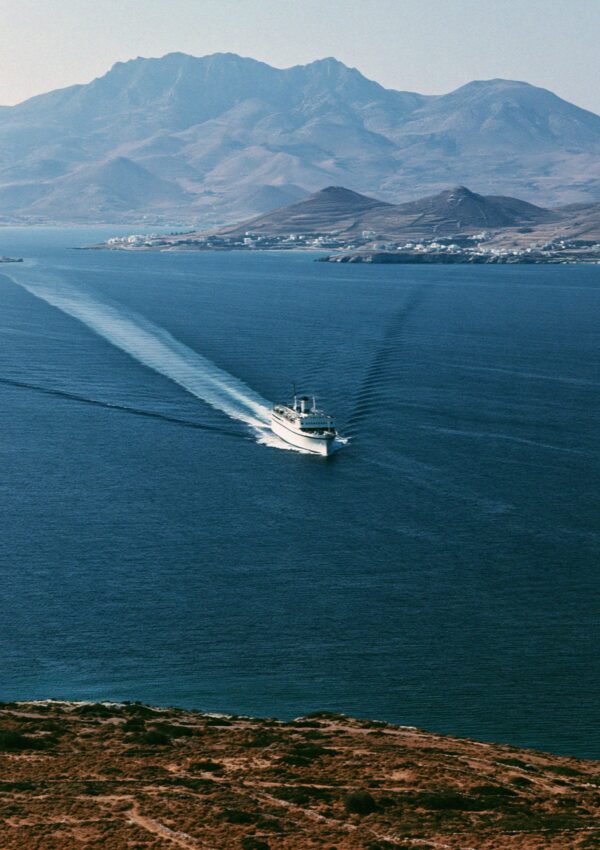
The first thing you see as you step off the boat is the windmill on the quay, white with a conical roof, standing where the port traffic swirls around it. Behind it are rows of cafes with their chairs facing the sea, which is the right way round in a port town: here, the ferries are the entertainment.
When I arrived in October, the waterfront was full of people with suitcases trying to work out where to go next. It calms down quickly once each boat has gone. The main bus station is by the port, as are the taxi rank and the ticket agencies, so this is also where you will come back to for everything else on the island.
Do not judge the town by the quay. The noise and the traffic stop a street back.
Panagia Ekatontapyliani
The great church of Paros stands behind a wall and a shady courtyard, a few minutes’ walk from the windmill. Its name means Our Lady of a Hundred Doors.
Tradition says that St Helen, mother of the emperor Constantine, stopped here on her way to the Holy Land in the 4th century and vowed to build a church if her journey went well. In the 6th century, under Justinian, the church was rebuilt, and much of what stands today goes back to that rebuilding. The result is a complex rather than a single room: the main church, side chapels, a baptistery and a small Byzantine museum of icons and church objects, all in grey stone and dim light.
The legend gives the place its name. People say there are ninety-nine doors you can find, and that the hundredth is hidden and will appear only when Hagia Sophia in Istanbul becomes an Orthodox church again. Trying to count them is much harder than it sounds, because there are blocked doors, arches and doorways inside doorways, and I wrote about trying in Ninety-Nine Doors.
It is open every day, roughly from morning into the evening, with a pause around services. Shoulders and knees should be covered, and walking in is free. Go early or late in the day, when the tour groups have gone and the candles are the main light.
The archaeological museum
Behind the church, in a modest building, is the Archaeological Museum of Paros. It is small and not at all overwhelming, which is part of its charm.
The pieces to look for are the sculpture carved from Parian marble, which lets you see close up what the island’s stone does in the hand of a sculptor, and a fragment of the Parian Chronicle, an inscribed marble slab that set out a timeline of Greek history. The larger part of that chronicle ended up in Oxford.
It opens from 08:30 to 15:30, closed on Tuesdays, with last entry twenty minutes before closing. Tickets are 5 euros, 3 reduced. Combine it with the church: one hour each, in the morning.
The old market street
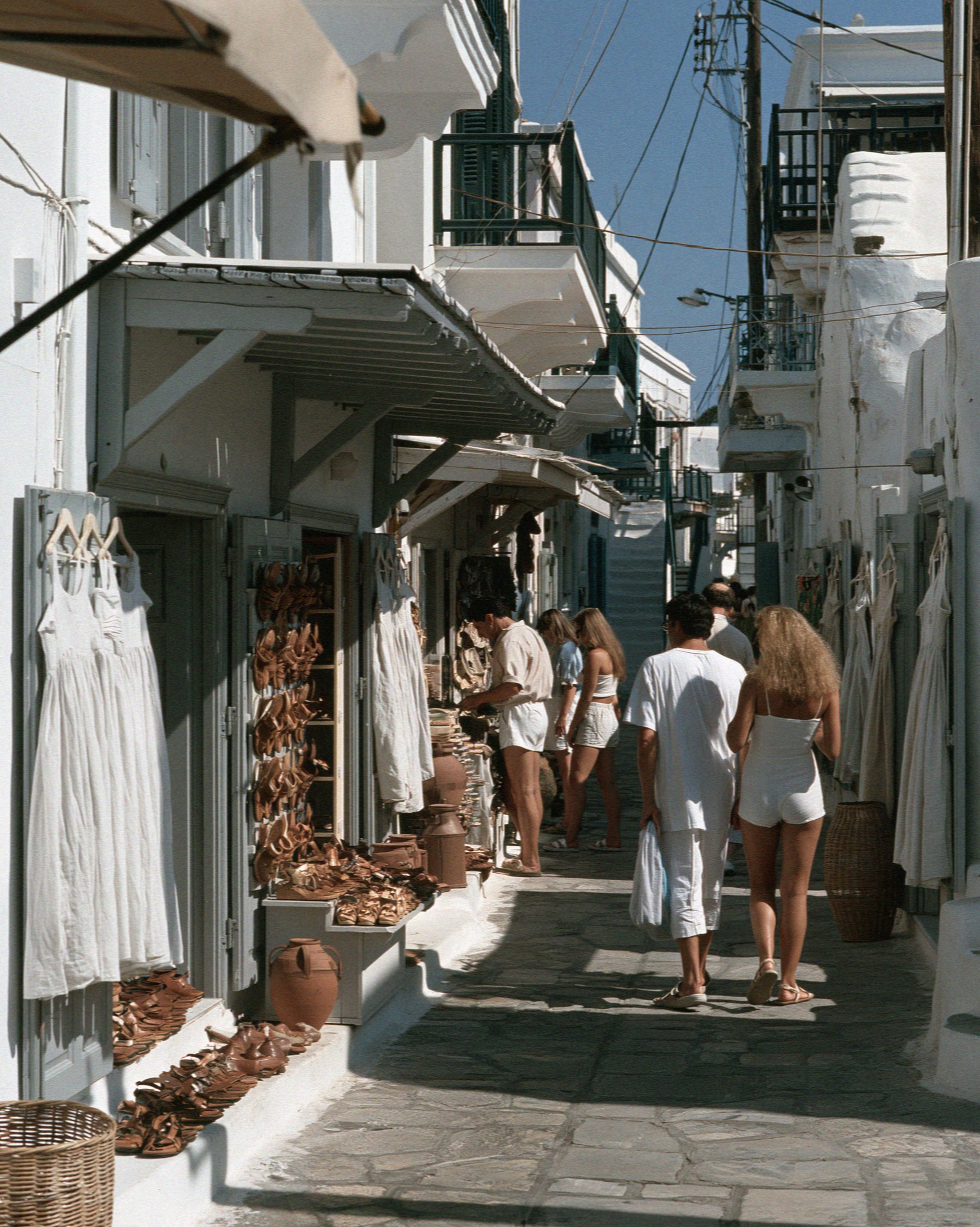
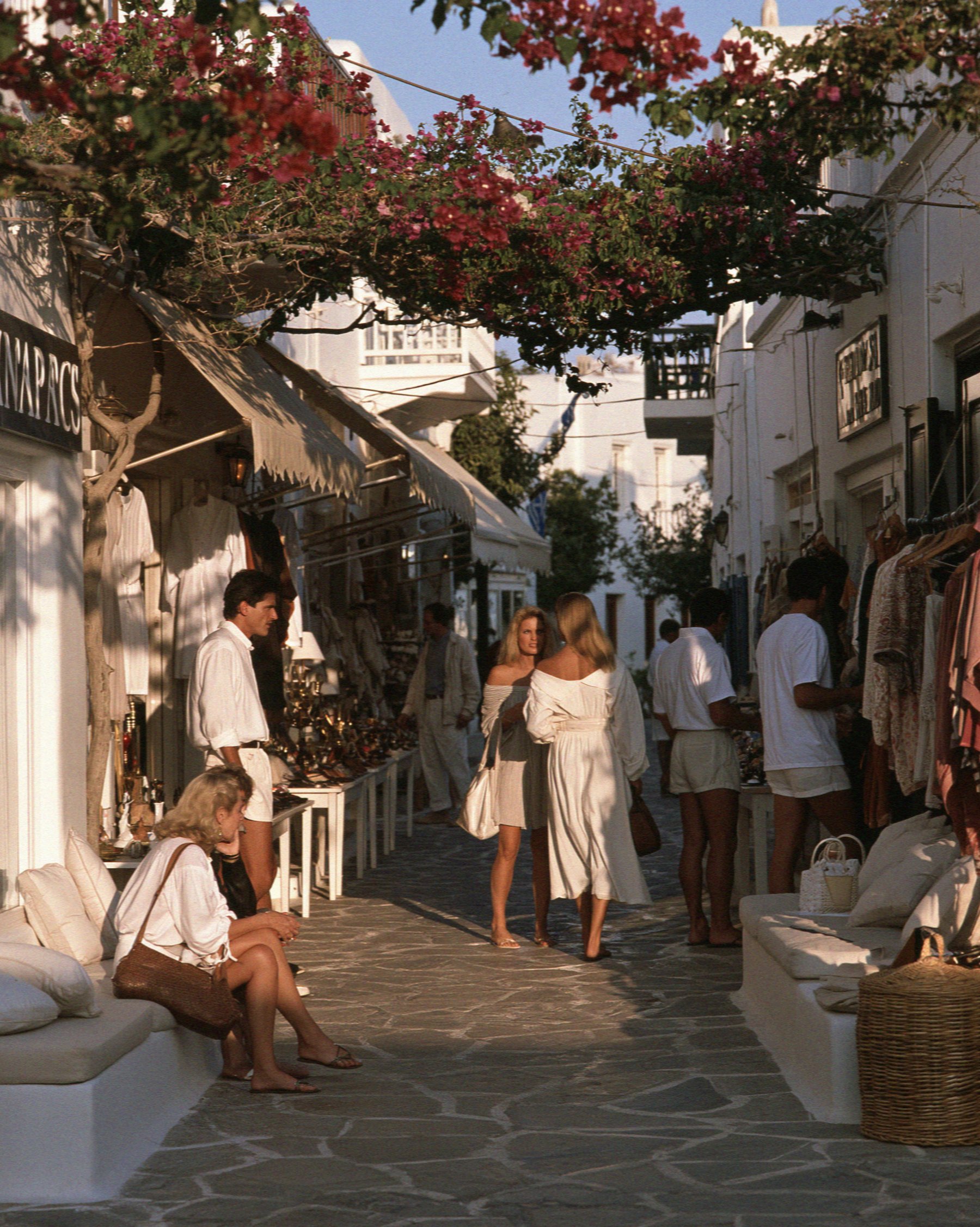
From the church, cut into the old town and find the market street, the long main lane that runs west through Parikia towards the Kastro. It is narrow, paved and whitewashed, with blue shutters and bougainvillea over the doorways, and it is lined with small shops selling jewellery, ceramics, linen and clothes, along with cafes, bakeries and a few tiny chapels.
It is the spine of the old town, and in summer the busiest street on the island after dark. In the morning it is quiet, and much easier to look at properly. Wander off it, too: the side lanes climb, turn and dead-end in small squares, and they are where people actually live.
For dinner, Levantis and Magaya are two of the town’s better-known restaurants, and there is more on where to eat across the island in my guide to where to eat in Paros.
The Kastro
At the western end of the old town, the market street climbs to the Kastro, the Venetian castle built in the 13th century by the dukes of Naxos.
What makes it extraordinary is the building material. The builders took apart the ancient temple of Athena that stood on this hill, along with other ancient buildings, and used the marble to raise their walls. Whole column drums are laid sideways in the masonry, their round ends facing out like a stack of coins. Capitals and carved blocks sit among the rougher stone. The foundations of the temple are still on the hill.
Over the centuries, houses were built into and on top of the wall, so the castle is now partly people’s front rooms. You walk around it on public lanes, not inside it. At the top is the church of Agios Konstantinos, small and white, with a view straight out over the bay.
Sunset on the west side
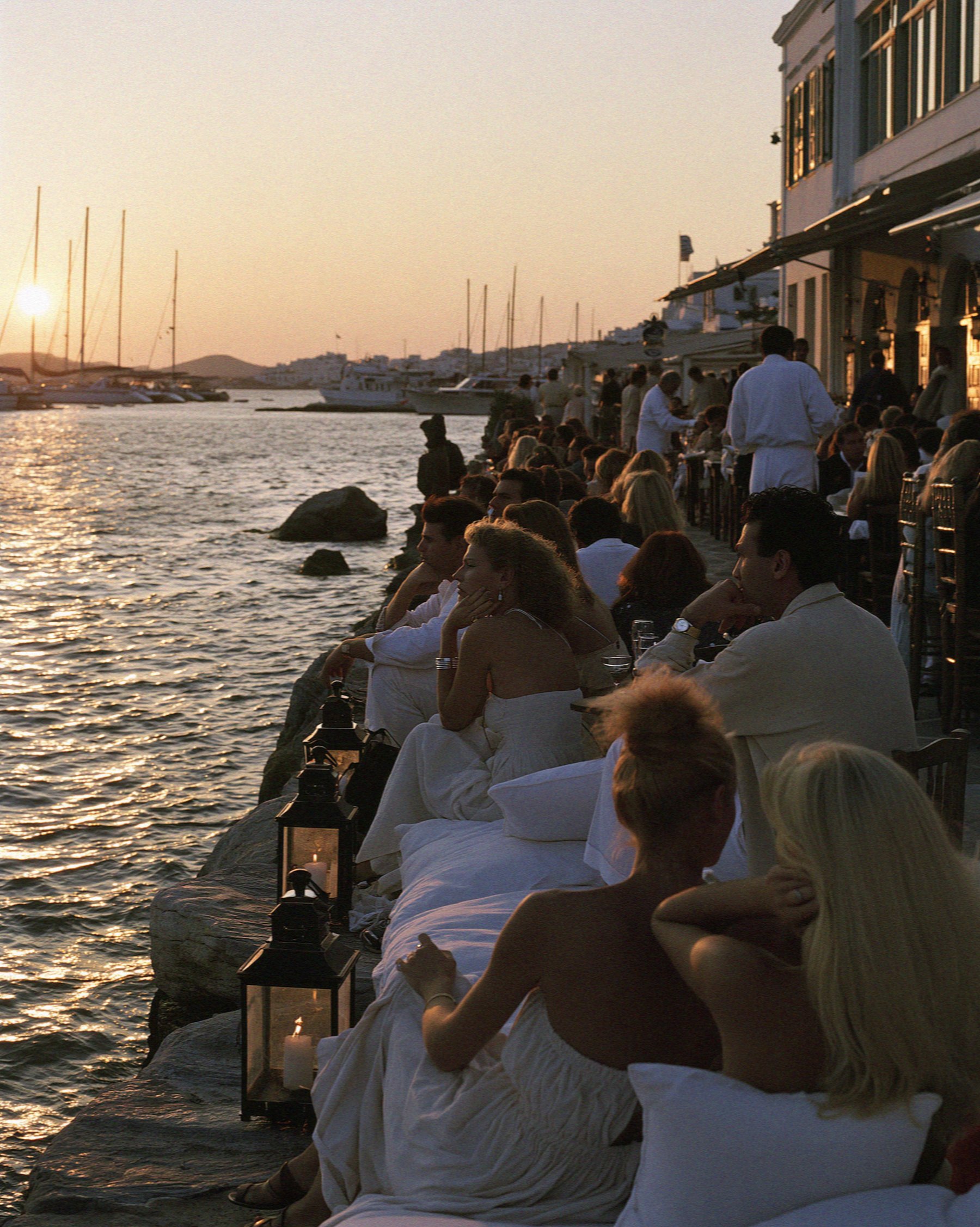
Parikia faces west, which gives it the best sunsets on Paros. The seafront south and west of the Kastro is lined with bars and cafes set up for exactly this, with low chairs and cushions facing the water.
Get there half an hour early in summer to find a seat, order something cold and watch the sun go down over the bay and the open sea beyond it. Prices are higher than at the cafes on the quay, and you are paying for the view. If you would rather not, the little church of Agios Konstantinos on the Kastro makes a free viewpoint, a few minutes away.
Beaches near Parikia
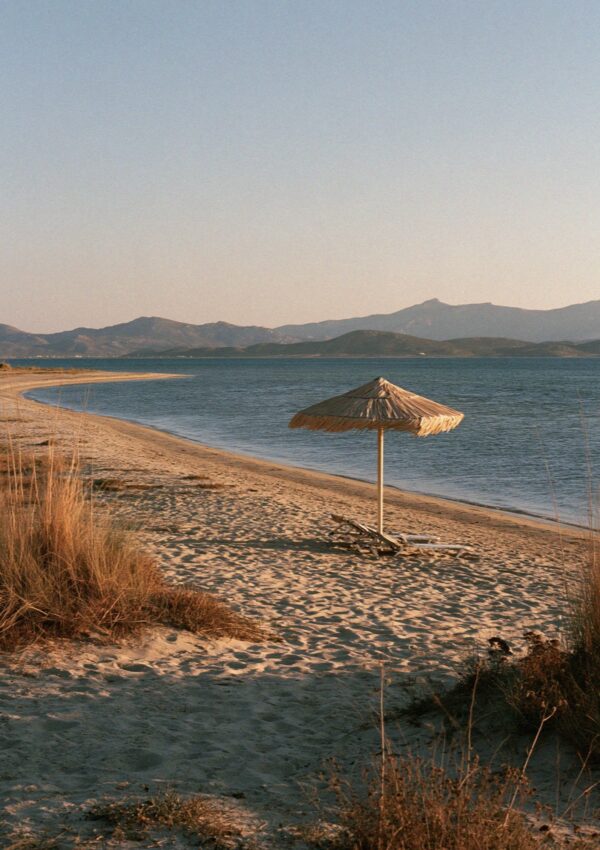
Parikia is not a beach town, but there are good options close by. Livadia is the town beach, a short walk north of the quay, sandy and shallow, with tavernas and sunbeds. It is fine for a quick swim, with the port right there.
Across the bay, Krios and Marcello are nicer: sandy, calmer and quieter. In season a small boat runs over from the harbour, which is far quicker than going round by road. Further afield, the best beaches on the island are on the north and east coasts, an easy bus ride away, and they are all in my guide to the best beaches in Paros.
A walk for your first morning
Start early at the windmill, with a coffee on the quay while the first boats come in. Walk the few minutes inland to Panagia Ekatontapyliani before it gets busy and spend an hour inside. Go round to the archaeological museum behind it as it opens.
Then cut into the old town and walk the market street west, slowly, stepping off it into the side lanes whenever one looks interesting. Climb to the Kastro, walk around the wall looking for the column drums, and finish at Agios Konstantinos for the view over the bay.
Lunch in the old town, a swim at Livadia or across the bay at Krios in the afternoon, and back to the west side for sunset. That is Parikia in one day. For the rest of the island, take the bus up to Lefkes and the Byzantine road the next morning.
Frequently Asked Questions
Is Parikia worth visiting?
Yes. It has the island’s great Byzantine church, a small archaeological museum, a castle built from ancient temple marble, a lovely old town and the best sunsets on Paros.
Is it better to stay in Parikia or Naoussa?
Parikia is easier without a car, because the ferries and the main buses leave from here. Naoussa is prettier and livelier in the evening. Many people do a few nights in each.
Why is it called the church of a hundred doors?
Panagia Ekatontapyliani means Our Lady of a Hundred Doors. Legend says ninety-nine can be found and the hundredth will appear when Hagia Sophia becomes an Orthodox church again.
Is there a beach in Parikia?
Yes, Livadia, a short walk north of the port. Krios and Marcello, across the bay, are quieter and reached by a small boat from the harbour in season.
What are the opening hours of the Paros archaeological museum?
From 08:30 to 15:30, closed on Tuesdays. Tickets are 5 euros, or 3 reduced, and the last entry is twenty minutes before closing.
Read also: The Best Things to Do in Paros | Naoussa, Paros: the Harbour, the Venetian Fort and the Evenings | Victoria’s Complete Guide to Paros