
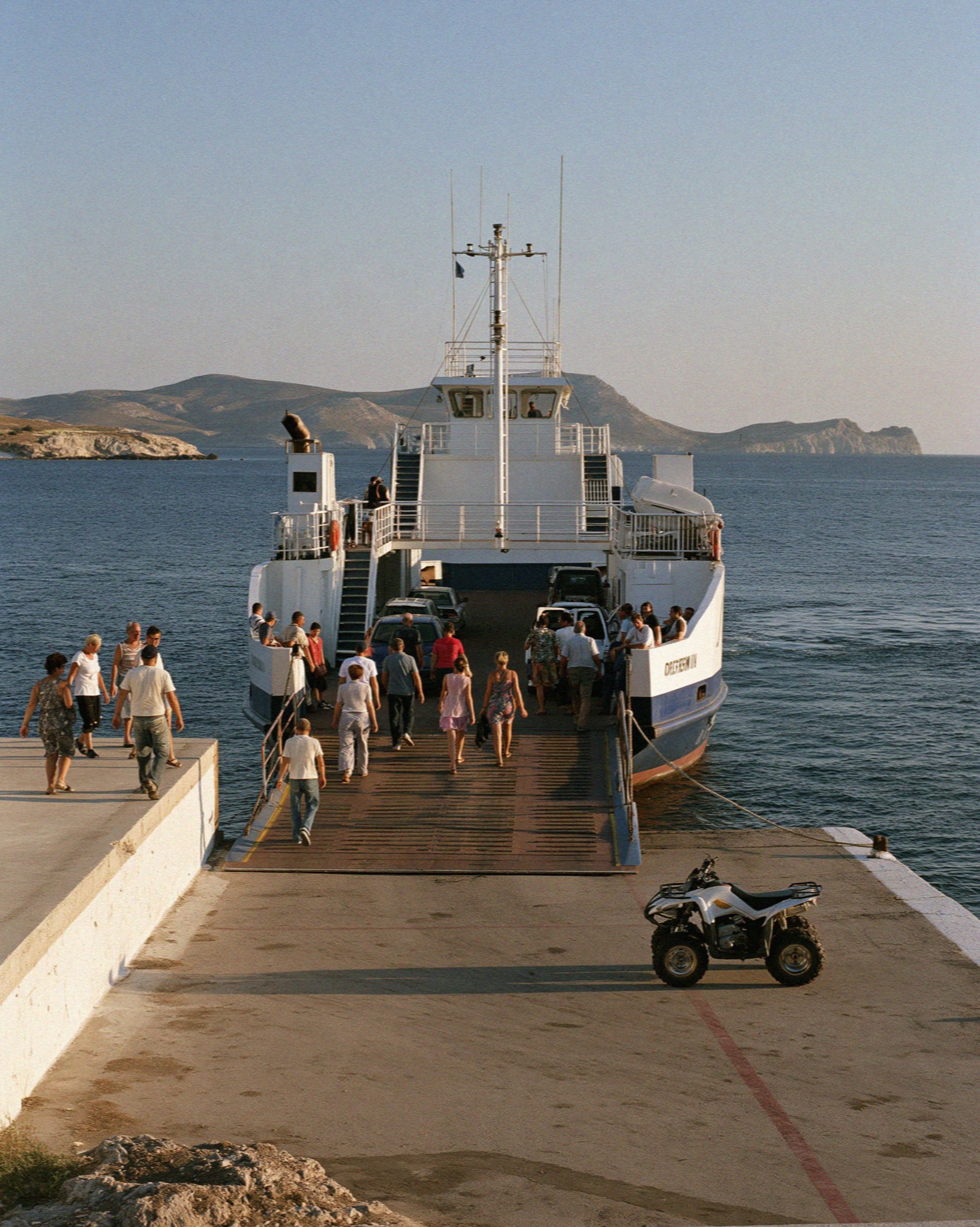
From the little harbour at Pollonia, Kimolos looks close enough to swim to. It is not, quite, but the small ferry across takes under half an hour, and that narrow strip of water is the reason so many people who come to Milos for a week end up spending a day on an island they had barely heard of before they arrived.
Two islands sit off the north-east corner of Milos. Kimolos is inhabited, with a port, a white village on the hill, a small museum and beaches of pale sand. Polyaigos, beside it, has no one living on it at all and can only be reached by boat. My own days on Milos went to the boat round to Kleftiko, the white rocks at Sarakiniko and the villages, so neither of these made it into my week. What follows is the plan I would make for either one. The island they sit beside is all in my complete guide to Milos.
How to plan a day off Milos
There are two ways to do this, and they suit different people.
The first is to take the ferry to Kimolos yourself, with or without a car, and spend the day there at your own pace: the village in the morning, a beach in the afternoon, the last boat back. It is cheap and flexible.
The second is to join a boat trip that sails around Polyaigos, stops in its coves for swimming, and usually calls at Kimolos too. It costs more, but it is the only way to reach Polyaigos at all.
Whichever you choose, the sea decides. Look at the wind forecast the evening before, and if you can, keep the day flexible rather than fixing it to a date weeks ahead. If you are staying in Pollonia, both options start at your door.
Kimolos
Kimolos is the quiet neighbour. It is small, dry and hilly, with a single main village, a little port and a handful of beaches, and it has none of the bustle of Milos in August.
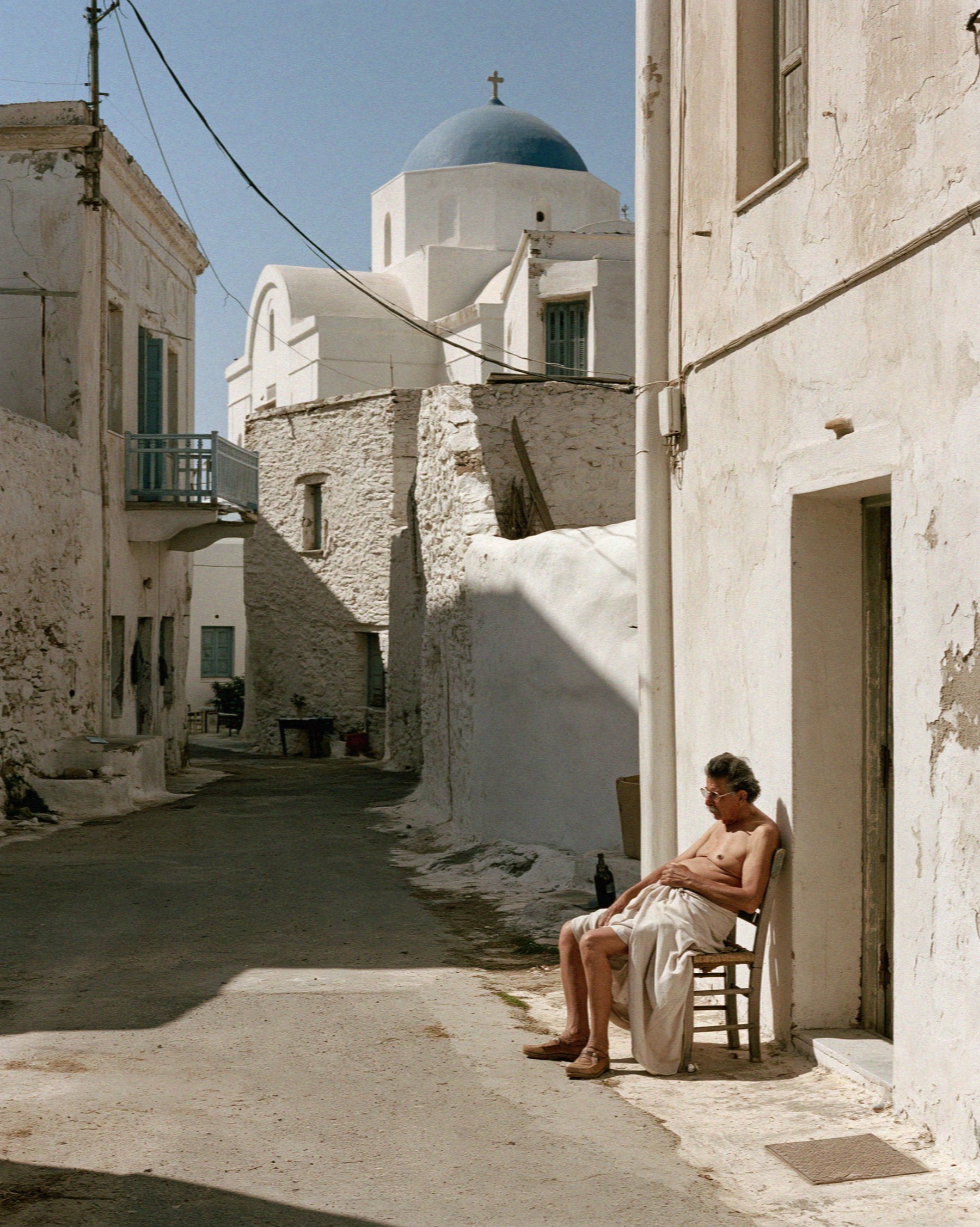
The ferry arrives at Psathi, the port. On the hill above sits Chorio, the main village, with an old fortified quarter at its heart. On the coast are the beaches, of which Prassa is the famous one, and the fishing hamlet of Goupa, where boat houses are cut into the rock at the water’s edge in the same way as the syrmata on Milos.
There is also the Archaeological Museum of Kimolos, open 08:30 to 15:30 and closed on Tuesdays, with entry at €5. If the museum is part of your plan, avoid a Tuesday crossing.
Getting to Kimolos
The quickest crossing is the small local ferry from Pollonia to Psathi, which takes about 20 to 30 minutes. In season it makes several trips a day. You buy the ticket at the quay rather than online, and the boat carries cars and ATVs as well as foot passengers, which matters if you want to reach the beaches on the far side of the island.
Larger ferries also call at Kimolos from Adamas, taking anything from about 25 minutes on a fast boat to an hour, but they run less often and the timings suit an overnight stay better than a day trip.
The one thing that catches people out is the return. Check the time of the last boat back to Pollonia before you leave in the morning, and keep an eye on it during the afternoon.
Without a vehicle, Chorio is a steep walk up from the port. With one, the whole island opens up. If you have hired a car or ATV on Milos, it is worth bringing it across, but check first that your rental agreement allows it; some Milos firms prefer their vehicles to stay on the island. I have set out the island’s buses, car hire and the small ferry timetable alongside each other in my guide to getting to Milos and getting around.
Prassa and the Kimolos beaches
Prassa is the beach people cross the water for. The sand is white, the water is a brilliant, glassy turquoise over it, and it lies about 20 minutes by road from the port, which is the main reason to bring a car or ATV across. Bring water and shade.
Goupa is not a beach so much as a place to look and swim. The little fishing hamlet has boat houses built into the soft rock at sea level, the closest thing on Kimolos to Klima on Milos, but quieter and smaller.
There are smaller beaches along the coast within easy reach of Psathi too, useful if you come over without wheels and want to swim before the ferry home. Ask at the port which side is sheltered on the day.
Chorio
Chorio is the reason to come over even if you never swim. The village sits on the hill above the port, and its centre is an old fortified quarter, where the outer houses were built shoulder to shoulder to form the defensive wall, with narrow lanes inside. It is the same idea as the Kastro above Plaka on Milos, on a smaller and much quieter scale.
Walk it slowly in the morning, before the heat. Then find lunch, either in the village or back down at the harbour in Psathi, where the tavernas look straight at the incoming boats.
Polyaigos
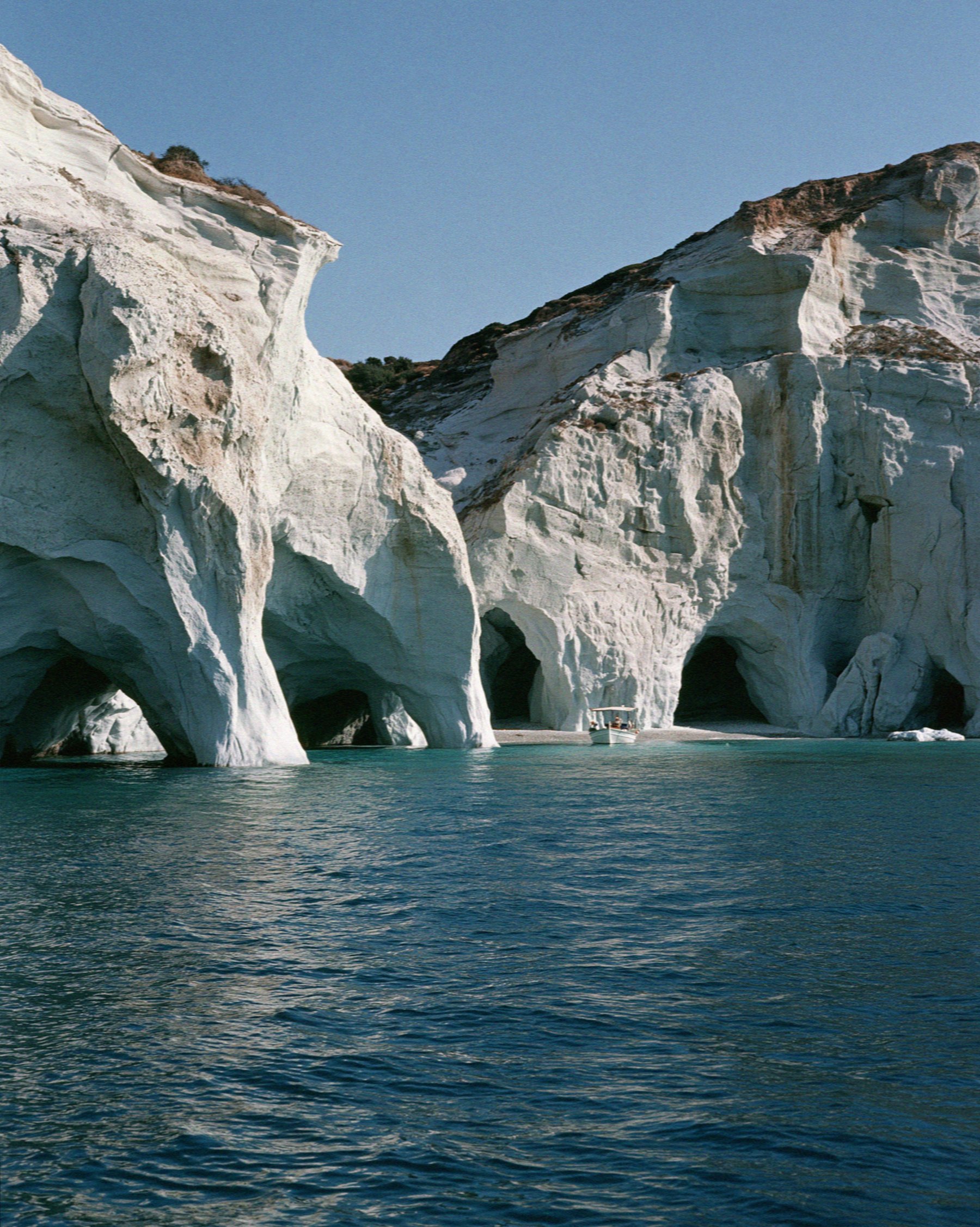
Polyaigos lies just east of Milos, close beside Kimolos, and no one lives there. The name means something like many goats, and wild goats are still the only residents. There is no village, no road, no taverna and no shade beyond what the rock gives you.
What it does have is water. The coves are a clear, startling turquoise over pale sand and rock, and the coast is cut with sea caves that the boats nose into on calm days. Because it can only be reached from the sea, it rarely gets the crowds of Kleftiko.
Boats leave mainly from Pollonia, and some from Agia Kyriaki on the south coast of Milos. Bring sun cream, a hat and more water than you think you will need. On most organised trips, lunch is served on board.
Boat trips that combine both
The usual shape is a morning around the coves and caves of Polyaigos with two or three swimming stops, lunch on deck, and then Kimolos in the afternoon, with a swim off one of its beaches or a short time ashore, before the run back.
As a guide, expect a full-day sailing boat with lunch to cost roughly €110 to €160 a person, and a half-day catamaran or RIB trip from about €100 to €140. A private boat for your own group runs from several hundred euros to well over a thousand for the day, depending on the size of the boat and the season. Most trips run from May to October.
If you only have room for one boat day on Milos, I would make it the west coast and Kleftiko, which is the one place on the island you cannot see any other way. Polyaigos is the better choice for pure swimming and for a quieter day. I have compared the routes, the boats and what each kind of trip includes in my guide to Milos boat tours.
When the wind cancels
In July and August the meltemi, the strong north wind of the Aegean summer, can blow for days at a time. When it does, the sea between Milos and its neighbours gets rough, and both the small ferry and the boat trips may be cancelled or rerouted at short notice.
Check the forecast the evening before, and ask your boat operator about their cancellation policy when you book. The good ones refund or move you without argument.
The practical answer is to build in slack. If you have five days, put this trip on the fourth or fifth, so that a windy morning just moves it rather than losing it. My Milos itinerary is built around exactly that.
Frequently Asked Questions
How do you get from Milos to Kimolos?
Take the small local ferry from Pollonia to Psathi, about 20 to 30 minutes, with tickets bought at the quay. It runs several times a day in season and carries cars and ATVs. Larger ferries from Adamas take about an hour.
Is Kimolos worth a day trip from Milos?
Yes, if you like quiet. Chorio, the hill village with its old fortified quarter, Prassa beach and the boat houses at Goupa fill a relaxed day easily, and the crossing is short and cheap.
Can you visit Polyaigos on your own?
Not easily. Polyaigos is uninhabited with no port or road, so almost everyone goes on a boat trip, mainly from Pollonia or Agia Kyriaki. A private boat is the only way to choose your own coves.
How much is a boat trip to Polyaigos and Kimolos?
Roughly €110 to €160 a person for a full-day sailing boat with lunch, or from about €100 to €140 for a half-day catamaran or RIB. Private boats cost several hundred euros or more.
Do you need a car on Kimolos?
Not for Chorio or the port, which you can manage on foot. To reach Prassa, about 20 minutes by road, a car or ATV helps, and the Pollonia ferry carries both.
Read also: Milos Boat Tours: Kleftiko, Sykia and Polyaigos | A Milos Itinerary: 3 to 5 Days | Victoria’s Complete Guide to Milos