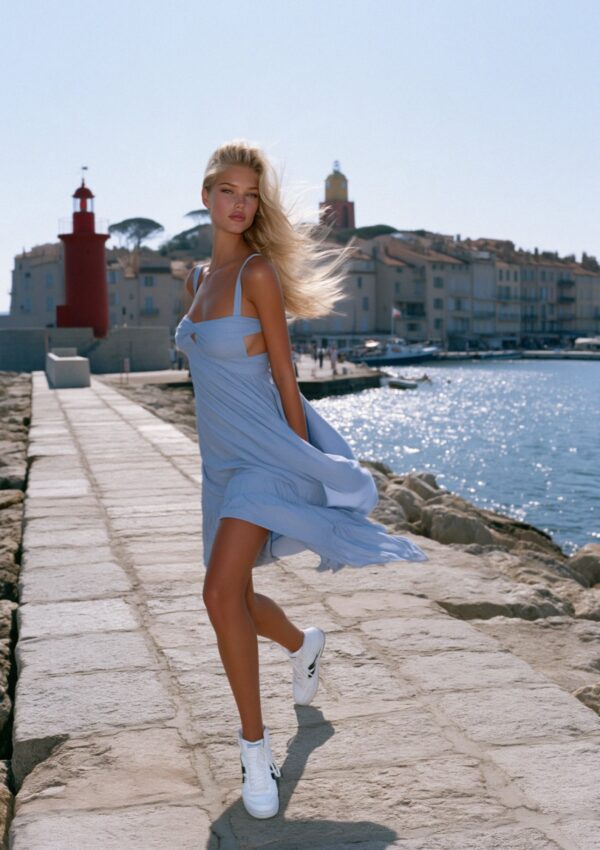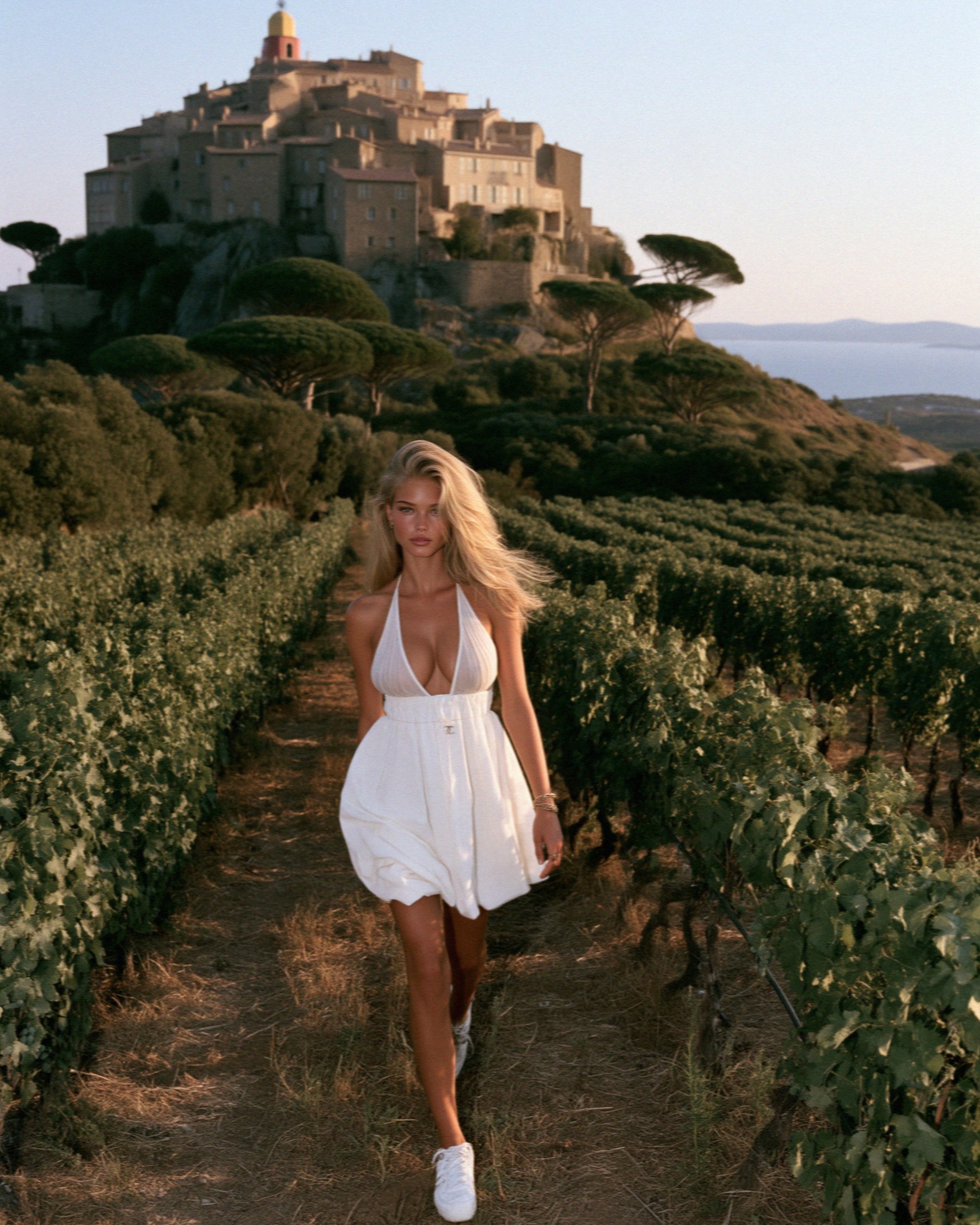
Behind the port, the peninsula rises into a green back country that most visitors never see: cork oaks and umbrella pines, vineyards running in rows towards the sea, and two old villages perched on ridges with the whole gulf below them. A little further off there is a medieval hill town, a village built on canals in the 1960s, and the islands off Hyères.
None of it is far. What makes a day out work here is timing rather than distance, because the roads behave very differently in May and in August. These are the trips I would actually take, how long each needs, and how to do them without spending the day in traffic. For the town itself, start with my complete guide to Saint-Tropez.
How to plan a day out
The rule on this peninsula is to leave early and come back late. There is one way off the peninsula by road, through the La Foux roundabout where the gulf ends, and in July and August the queue there can cost an hour or more in the middle of the day. Out of season the same drive is nothing.
So in summer I set off before 09:30, do the hill villages in the cool of the morning, have a long lunch inland, and drive back once the beach traffic has cleared. Better still, use the water: the boats across the gulf skip La Foux entirely.
The second rule is about wine. If a rosé estate is on the plan, whoever drives does not taste. Most of these places pair naturally: Ramatuelle and Gassin fill a morning, Grimaud and Port Grimaud a day, and an estate fits on the way back from either.
Ramatuelle
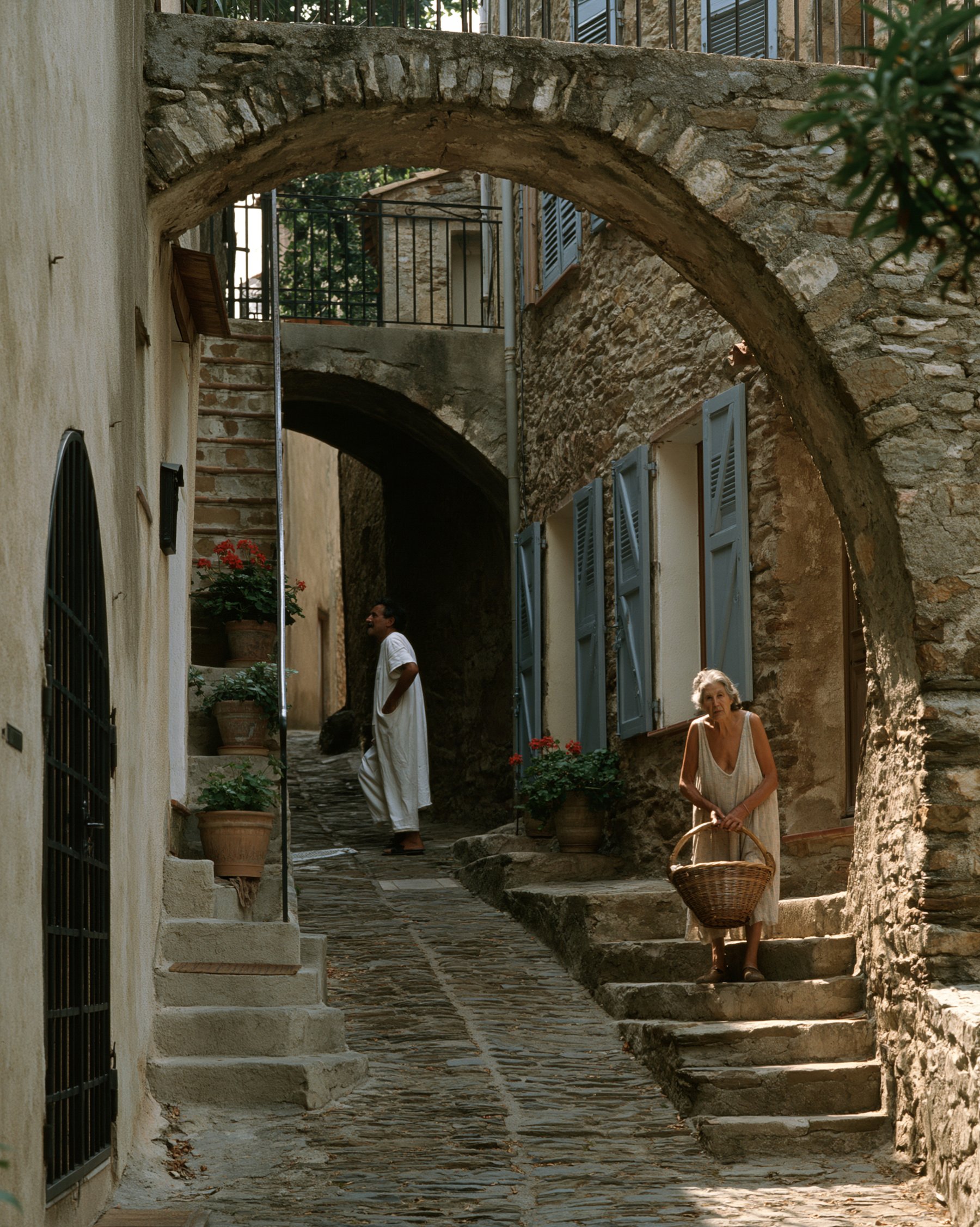
Ramatuelle is the village above Pampelonne, about 20 minutes by car from the port out of season. It curls in a spiral around the top of its hill, with stone lanes running under arches and vaulted passages, bougainvillea over the doors and little squares where the cafés put out a few tables. In the evening, when the day visitors go back down to the beach, it becomes a much better place.
The actor Gérard Philipe is buried in the village cemetery, under a simple stone. Above the village, on the ridge road, stand the Moulins de Paillas (one of the windmills was restored in 2002), with the widest view on the peninsula: Pampelonne laid out below, the vines, and on a clear day the Îles d’Or out to sea.
In summer a shuttle runs from the car parks below the village up to the centre, roughly from mid-June to mid-September (check the dates before you go), because there is nowhere to park at the top. The village also holds jazz and theatre festivals in summer, and on those nights the lanes stay full until late.
Gassin
Gassin is the smaller of the two hill villages and, to me, the lovelier. It sits on a narrow ridge between Saint-Tropez and the gulf, and it is one of the Plus Beaux Villages de France.
There is not much to do in Gassin, and that is the point. You walk the two or three lanes, look into the church, and then sit on the terrace at the edge of the village, where an orientation table names everything in sight: the gulf, Sainte-Maxime across the water, the Massif des Maures behind, and the vineyards falling away below. Lunch in the shade up there is one of the simple pleasures of this coast.
A ridge road past the windmills links Gassin and Ramatuelle, so doing both in one morning is easy.
Grimaud
Grimaud is a medieval village on the hill at the western end of the gulf, and it feels a world away from the beaches. The lanes are steep and cobbled, the houses are stone, and at the top stand the ruins of the castle, open to wander, with views right down the gulf to Saint-Tropez.
Just below, on the hillside, sits the restored Saint-Roch windmill, an easy walk from the village. Give Grimaud a morning. It is cooler up here than on the coast, and in high summer that alone makes the trip worthwhile.
Port Grimaud
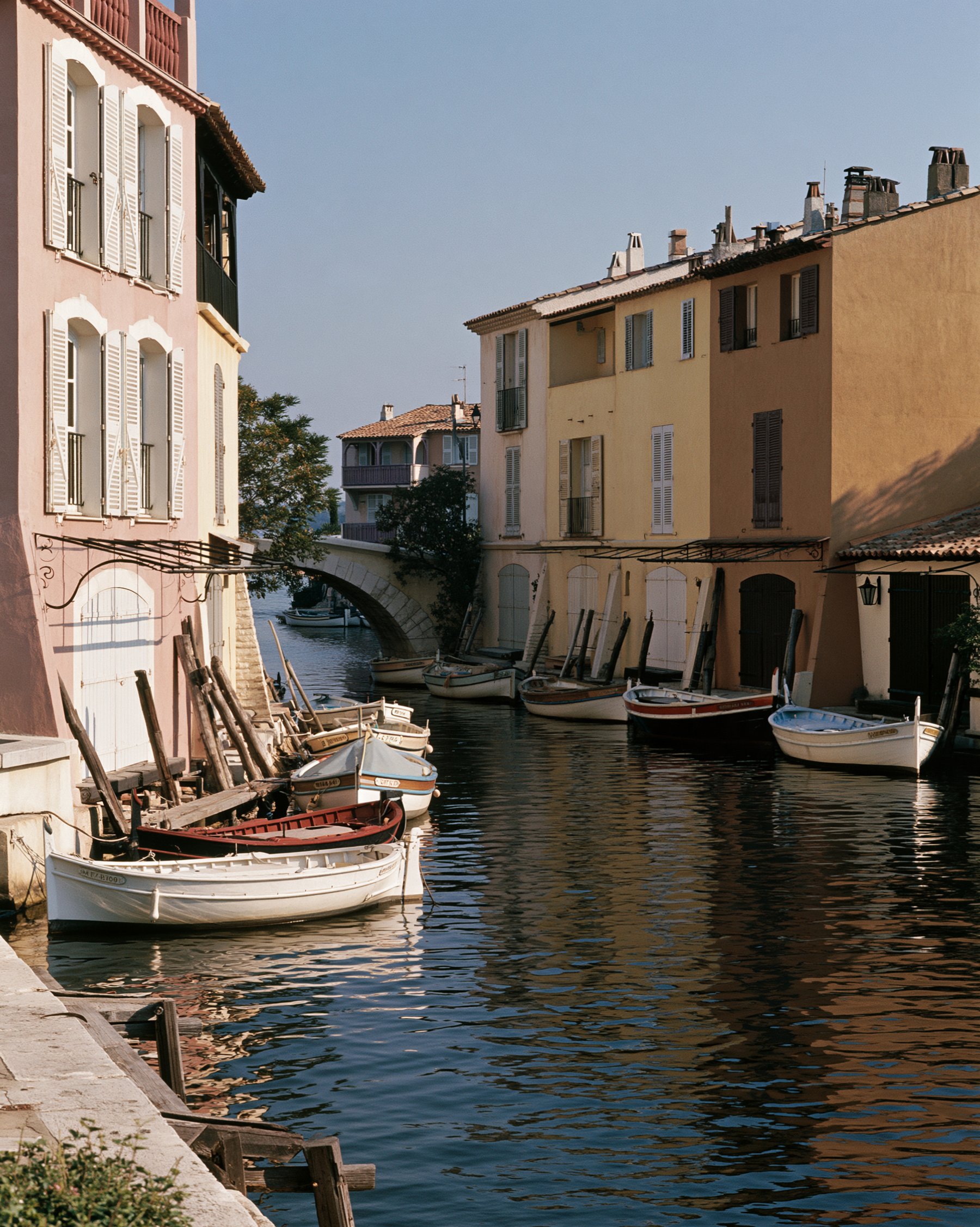
Port Grimaud, down on the water below the old village, looks centuries old and is not. The architect François Spoerry began building it in 1966 on the marshes at the mouth of the Giscle, as a lakeside town of canals where every house has a mooring at its door. The houses are painted in soft pastels, bridges arch over the water, and boats nose along past front doors.
The church of Saint-François-d’Assise has stained glass by Victor Vasarely, and Spoerry himself is buried inside. The nicest way to see the town is from the water, in one of the small electric boats hired by the hour, no licence needed. There is a market on Thursday and Sunday mornings from April to October.
Les Bateaux Verts cross from Saint-Tropez to Port Grimaud in about 25 to 30 minutes, which makes it an easy, car-free half day.
The rosé estates
The vineyards around Saint-Tropez make pale, dry Côtes de Provence rosé, and several estates welcome visitors for tastings. An afternoon among the vines is the most relaxing day out on the peninsula.
Château Minuty, in Gassin, is the family estate of the Matton-Farnet family and has been a cru classé since 1955. Its tasting room has opened on weekdays, with a break at lunch, and stayed closed at weekends, so check before you go. Château de Pampelonne, in Ramatuelle, has vines running almost to the beach. Château Barbeyrolles in Gassin is smaller and quieter. Château Saint-Maur, another cru classé, sits in Cogolin, next door to Grimaud. Château des Marres, in Ramatuelle, has a wine bar out in the vines, the easiest way to taste without a formal visit.
Ask about Tibouren while you are there. It is an old Provençal grape with deep roots on the peninsula, a little rustic, and it gives the local rosé a savoury, herbal edge.
Book a driver or a small wine tour for this one; the roads are narrow and twisting. My guide to where to eat in Saint-Tropez has more on what the region drinks with lunch.

Sainte-Maxime by boat
Sainte-Maxime is the resort directly across the gulf, and the best part of going is the crossing. The crossing on Les Bateaux Verts is about 20 minutes, and the boats now run through the winter too. In 2026 a one-way ticket was about 9 to 10 euros and a return about 15 to 17.
The town is calmer and more family-sized than Saint-Tropez, with a long sandy beach, a promenade and cheaper lunches. What I love most is the view back from the deck: the bell tower and the citadel rising above the port, the picture of Saint-Tropez the painters came for.
Porquerolles
Porquerolles, the largest of the Îles d’Or off Hyères, has pine woods, white sand bays, no cars, and bicycles for hire by the harbour. From Saint-Tropez it is a long day at sea.
Les Bateaux Verts run Port-Cros and Porquerolles days on set days from mid-April to late September, leaving from Sainte-Maxime and Les Issambres (take the early shuttle across): it is a long day, close to two or three hours on the water each way, which leaves a little over an hour on Port-Cros and a good half day on Porquerolles. Their direct Porquerolles-only day was suspended in 2026, and they point people to Le Lavandou instead, where Vedettes Îles d’Or run the short crossing. Driving to Le Lavandou gives you more time on the island, if you can face the road. Every crossing is set out in my guide to Saint-Tropez boat trips.
Cannes and the Esterel coast
Cannes is the big trip west, about 1h30 by car out of season and a great deal longer in summer. From mid-May to about 20 October, Trans Côte d’Azur run day boats between the two, which is how I would go in July: on deck instead of in a queue. If it is festival time, my guide to the Cannes Film Festival covers the fortnight.
Driving, the reward is the Esterel. Between Saint-Raphaël and Cannes the corniche runs along a coast of dark red rock dropping into very blue water, with a cove below almost every bend. Go slowly and stop for a swim.
Getting around without a car
Much of this works without driving. The Bateaux Verts reach Sainte-Maxime and Port Grimaud, and Trans Côte d’Azur reach Cannes in season. Regional ZOU! buses run along the coast, but they are too slow and infrequent for hopping between villages.
For Ramatuelle, Gassin and the estates, the realistic choices are an e-bike (the hills are serious), a taxi booked ahead, a private driver, or a small guided tour, which is the best answer for the wine. Taxis are scarce in summer, so book the return as well. How to reach the peninsula in the first place, and what parking costs, is in my guide to getting to Saint-Tropez and getting around.
Frequently Asked Questions
What are the best day trips from Saint-Tropez?
The hill villages of Ramatuelle and Gassin, the medieval village of Grimaud, the canal town of Port Grimaud, and an afternoon at a rosé estate such as Château Minuty. Sainte-Maxime is a short boat ride across the gulf, and Porquerolles makes a long day at sea.
Can you visit Port Grimaud from Saint-Tropez without a car?
Yes. Les Bateaux Verts cross the gulf to Port Grimaud in about 25 to 30 minutes, so it is an easy half day. Once there, hire an electric boat for the canals.
How do you get from Saint-Tropez to Ramatuelle?
About 20 minutes by car out of season. In summer, leave the car below the village and ride the shuttle up, which runs roughly from mid-June to mid-September. Otherwise take a taxi or an e-bike.
Can you do a wine tasting near Saint-Tropez?
Yes. Château Minuty and Château Barbeyrolles in Gassin, Château de Pampelonne and Château des Marres in Ramatuelle, and Château Saint-Maur in Cogolin all make Côtes de Provence rosé. Check tasting hours first, and book a driver rather than driving yourself.
Is Porquerolles a day trip from Saint-Tropez?
A long one. The combined Port-Cros and Porquerolles boat days mean 1h45 to 2h45 at sea each way. With the direct Porquerolles day suspended in 2026, the alternative is to drive to Le Lavandou and cross from there.
Read also: Saint-Tropez Boat Trips: the Celebrity Villas, the Capes and Porquerolles | Getting to Saint-Tropez and Getting Around | Victoria’s Complete Guide to Saint-Tropez