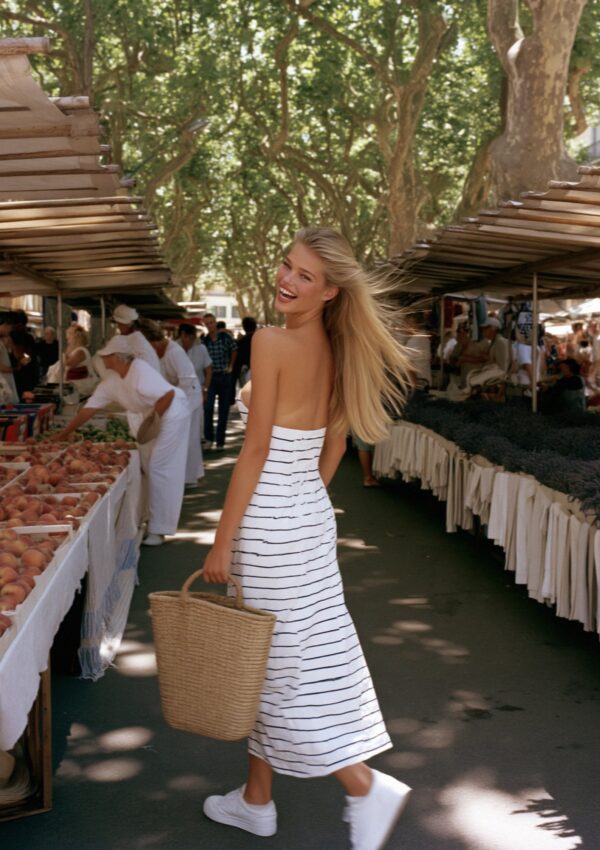
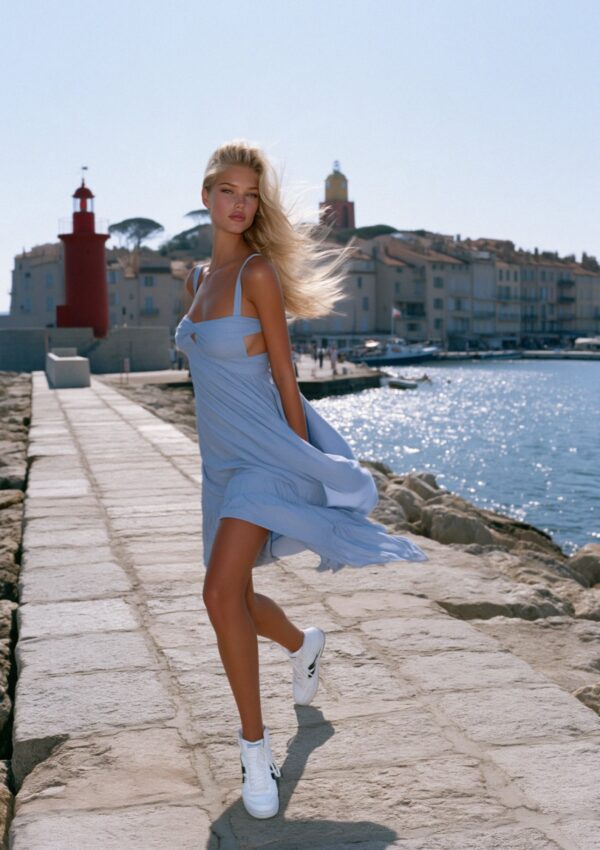
Eating in Saint-Tropez is really two meals, and they happen in two different places. Lunch belongs to the beach: a long table under a straw roof on Pampelonne, grilled fish, a bottle of pale rosé in an ice bucket and nowhere to be until the light starts to go. Dinner belongs to the village: a terrace in a lane behind the port, the bell tower lit above the roofs, and everyone out late in the warm.
Between the two there is more good, simple cooking than the town’s reputation suggests. This is where to eat, what to order, what it costs and how to get a table in July. The rest of the town is in my complete guide to Saint-Tropez.
What Saint-Tropez cooks
The cooking here is Provençal and it starts with the sea. Every morning the fish market under its roof at Place aux Herbes, just inside the old Porte de la Poissonnerie, sets out the catch, and what is on the marble slabs there is what you want to see on a menu at night: whole sea bream and sea bass for grilling, rockfish for soup, red mullet, sometimes langoustines.
Order the fish. Bouillabaisse, the great Provençal fish stew, is served in a few places and often needs ordering a day ahead; soupe de poissons, the smooth rust-coloured soup, comes with croutons, grated cheese and rouille, the garlic and saffron mayonnaise you spread on the bread. Tapenade arrives with almost every aperitif. In summer look for petits farcis, small vegetables stuffed with herbs and meat and baked, and for salads of tomatoes that actually taste of something.
One thing to know: socca, the chickpea pancake, belongs to Nice, not here. And at lunch on the beach, the classic order is simply the catch of the day, grilled, with olive oil and lemon.
The tarte tropézienne
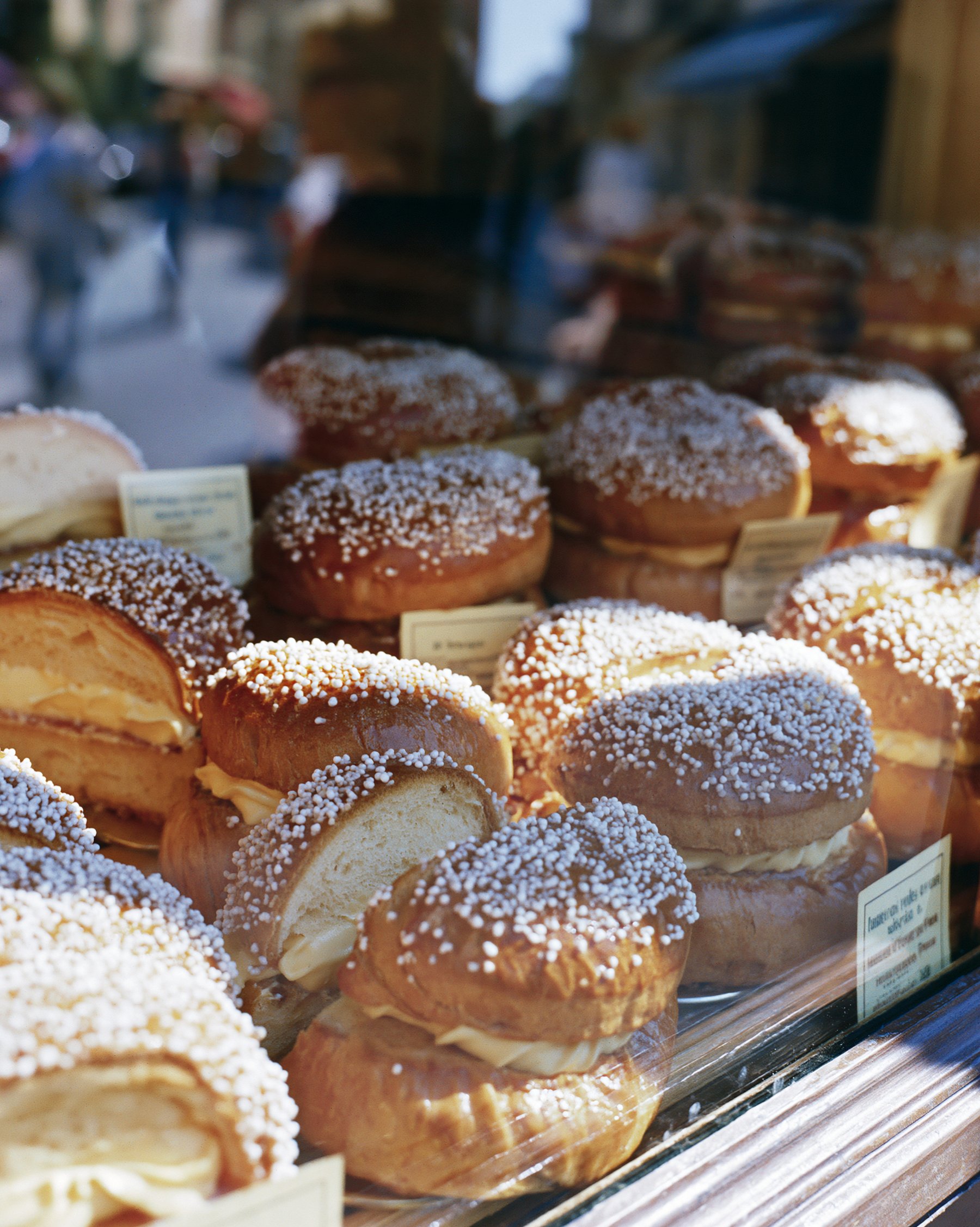
The town’s own cake is a round of soft brioche, sugared on top, split and filled with a cream that sits somewhere between pastry cream and buttercream. It was the work of Alexandre Micka, a pastry cook born in Poland who settled here after the war; in the 1950s, during the filming of Et Dieu… créa la femme, Brigitte Bardot is said to have given it its name. The name was registered as a trademark in the early 1970s.
La Tarte Tropézienne, on Place des Lices, is the flagship shop today, with a café attached. Buy a slice for the morning or a small one to eat on a bench under the plane trees. It is rich, so one is plenty. There is more on the cake’s story, and on Bardot’s town, in my guide to Brigitte Bardot’s Saint-Tropez.
Coffee on the port
Sénéquier, on Quai Jean Jaurès, is the café of the Vieux Port: red awnings, red chairs in rows facing the water, and the yachts moored stern-to a few metres away. Its chairs face outwards for a reason. People come to look at the harbour, and at one another.
It is not cheap for a coffee, given the view. The thing to take away is the nougat, which Sénéquier is known for, soft and studded with almonds; a bar of it is the classic present to bring home.
My habit is the same every visit: coffee on the port before the town wakes, the morning boats leaving, and then up into the lanes. Go before 10:00 in summer and you will find a front-row chair easily.
Lunch on the beach
Club 55 on Pampelonne is the original, born in the mid-1950s from a beach hut that fed a film crew. Lunch is long and unhurried, with crudités in great baskets, grilled fish and a live band that drifts between the tables; it has its own boutique too. Book well ahead in summer.
La Plage des Salins, on the quieter east-facing beach of Les Salins, is simpler and loved by people who live here. La Bouillabaisse Plage, at the entrance to town, is easy to reach from the village and has the evening light across the gulf. And in town, La Petite Plage sits on the water beside the port, which saves the drive entirely.
Expect a beach lunch at a famous club to run easily past 100 euros a head with wine, and more for a big fish shared at the table. The full roll of beach clubs, and the free stretches of sand between them, is in my guide to Pampelonne and the best beaches.
The great tables
La Vague d’Or, at Cheval Blanc on La Bouillabaisse beach, is Arnaud Donckele’s restaurant and holds three Michelin stars in 2026. In 2026 it opens from about 7 May to 10 October and is closed on Wednesday and Thursday; tasting menus begin at around 450 to 500 euros a head. Book as far ahead as you can.
La Voile, at La Réserve Ramatuelle, holds two Michelin stars and has the view to match, out over the sea towards Cap Taillat.
Monsieur Dior, the restaurant in the garden of the Dior house on rue François Sibilli, just off Place des Lices, is not starred but is a beautiful place to eat, with a menu by Mauro Colagreco since 2026. It opens from June to October, with the Café Dior beside it open all year. It is pricey, and a lovely way to spend a long lunch out of the heat.
Bistros in the village
The evening is spent in the lanes. Il Giardino, the Italian restaurant of the Hôtel Byblos on avenue Paul Signac, serves dinner in a garden setting from late April to mid-October, a good change after several nights of fish. Le Café, on Place des Lices, is the classic brasserie on the square, with Provençal dishes on the menu; sit outside and watch the boules.
Away from the squares, the lanes behind the port hide small family places with a short menu and locals at the bar; check hours before you set out, because small places change them often.
Across the village, a plate of fish, a salad and a carafe of rosé at a terrace table costs far less than a beach lunch, perhaps 50 to 80 euros a head. In July and August, dinner rarely starts before 21:00.

Eating in Ramatuelle and Gassin
The two perched villages behind Pampelonne are where to go for dinner when the port is too much: small squares and terraces in the cool air, views over the vineyards and, from Gassin, the whole gulf, and prices generally kinder than in town.
Out among the vines, Château des Marres in Ramatuelle has a wine bar where you can eat simply with a glass of the estate’s rosé. Remember that the roads are narrow and dark, so book a driver or a taxi if you are drinking. The estates themselves, and the villages, are in my guide to day trips from Saint-Tropez.
Rosé and what to drink
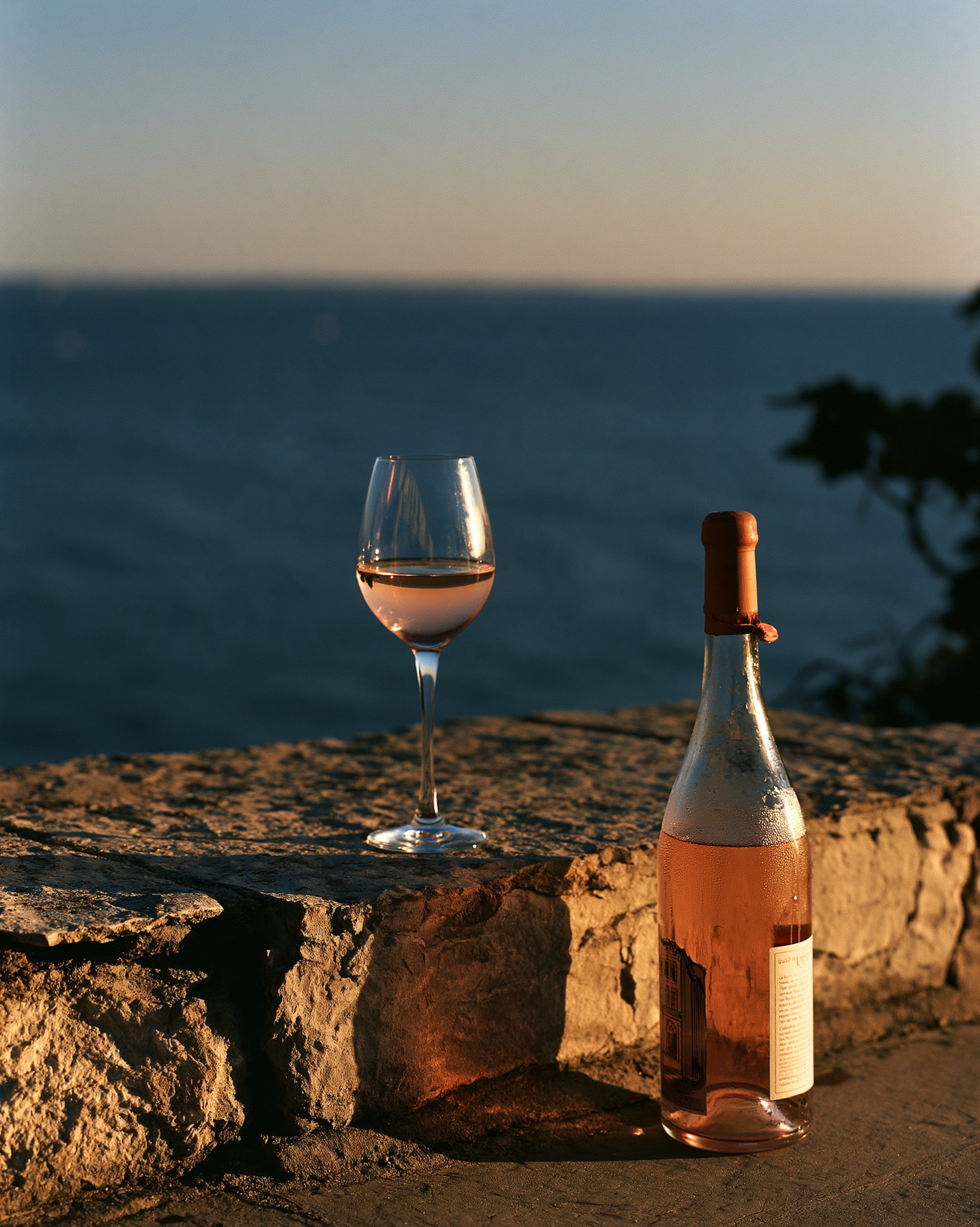
Côtes de Provence rosé is the drink of the peninsula, pale as onion skin, dry and very cold. Order it at lunch, at aperitif and with fish at dinner, and nobody will think twice.
Look for the local estates on the list: Château Minuty in Gassin, a cru classé since 1955; Château de Pampelonne and Château des Marres in Ramatuelle; Château Barbeyrolles in Gassin; and Château Saint-Maur, in Cogolin, next door to Grimaud. Tibouren, an old Provençal grape with deep roots on the peninsula, makes a rosé that has a slightly herbal, savoury edge that suits the food here perfectly.
A pastis on the port at 18:00 is the other ritual, and nobody will mind if you take it with a lot of water.
Cheap and good
Saint-Tropez is not a cheap town, but you can eat well for little. The Tuesday and Saturday market on Place des Lices, from 08:00 to 13:00, is the best picnic shop there is: olives, cheese, charcuterie, tomatoes, bread, fruit and roast chicken. Take it down to one of the little beaches at La Ponche or out on the coastal path.
The bakeries do good sandwiches, and a plate of the day at a café on Place des Lices at lunchtime is usually the best value sit-down meal in town.
How to book
In July and August, book beach lunches and dinners at any well-known place days ahead, and a week or more for Club 55 or La Vague d’Or. In May, June and September a day or two is usually fine.
Many restaurants close from mid-October to April, so in winter check before you go; a few in the village stay open for the people who live here. Dress is smart casual at dinner, and in town you cover up when you leave the beach. Shops and restaurants stay open late in summer. Carry a little cash for the market, though cards are taken almost everywhere else.
If you are choosing where to stay with dinner in mind, my guide to where to stay in Saint-Tropez shows which bases put you within walking distance of the village terraces.
Frequently Asked Questions
What food is Saint-Tropez known for?
Fish from the morning market, soupe de poissons with rouille, bouillabaisse, tapenade and petits farcis, plus two sweet things of its own: the cream-filled tarte tropézienne and Sénéquier’s nougat. Côtes de Provence rosé is the drink.
How much does lunch at Club 55 cost?
Expect well over 100 euros a head with wine at the famous Pampelonne beach restaurants, and book well ahead in July and August.
Where is the original tarte tropézienne shop?
The shop on Place des Lices is the flagship today, though it is not where Alexandre Micka first baked the cake in the 1950s.
Do you need to book restaurants in Saint-Tropez?
In July and August, yes: book beach lunches and dinners days ahead, and a week or more for the most famous tables. In May, June and September a day or two is usually enough.
Is there a Michelin-starred restaurant in Saint-Tropez?
Yes. La Vague d’Or at Cheval Blanc holds three Michelin stars in 2026, and La Voile at La Réserve Ramatuelle, just outside town, holds two.
Read also: Saint-Tropez Old Town: La Ponche, the Port, the Citadel and Place des Lices | Day Trips from Saint-Tropez: Ramatuelle, Gassin, Port Grimaud and the Rosé Estates | Victoria’s Complete Guide to Saint-Tropez