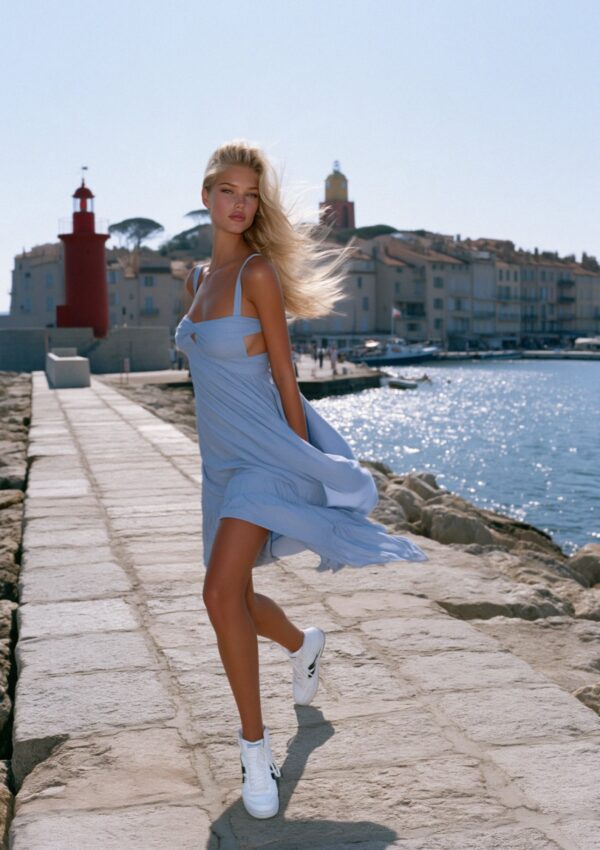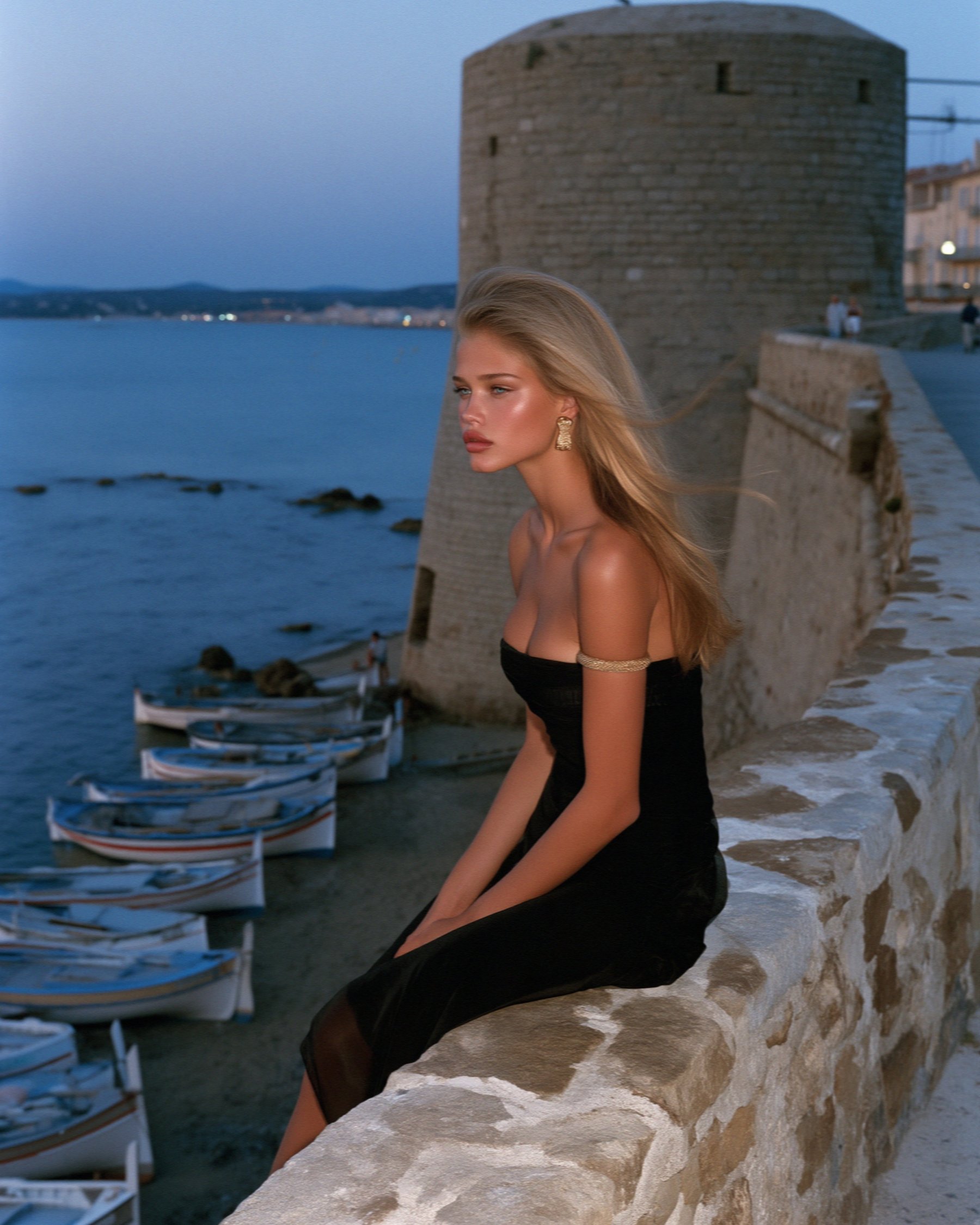
From the sea wall at La Ponche, early, before the boats start running, you can see most of what the old town is made of: the fishing boats drawn up on a scrap of sand, the round tower at the harbour mouth, the church tower above the roofs, and the green hill of the Citadel behind. Turn round and the lanes start at your back.
Most visitors see one strip of it, the quay, and leave thinking Saint-Tropez is yachts and boutiques. The village behind is older, quieter and far more interesting. This is how its parts connect, what each one is for, and a walk that strings them together in a morning. For everything beyond the old streets, from the beaches to the hotels, start with my complete guide to Saint-Tropez.
How the old town fits together
Think of the old town as a wedge of streets pointing out into the gulf. Its long side is the Vieux Port, facing north across the water to Sainte-Maxime. Its tip is La Ponche, the old fishermen’s quarter, where the houses meet the sea. Its spine is the church, whose bell tower you can see from almost anywhere. Above it to the east rises the Citadel on its hill, and behind it, a few minutes inland, is the big square of Place des Lices.
Nothing is more than ten minutes from anything else, and there is no need for a car once you have parked it. Wear flat shoes: the lanes are cobbled, some are stepped, and in summer the cobbles stay hot well into the evening.
The Vieux Port
The port is the face Saint-Tropez shows the world. Pastel houses in pink, ochre and pale yellow line Quai Jean Jaurès and Quai Suffren, with cafés at their feet and yachts moored stern-to in front, gangways down, crews polishing brass. Along the edge, painters sell canvases from their easels, a nod to the artists who came here in the 1890s.
Walk out along the mole, the Môle Jean Réveille, to the red lighthouse at the end. It is the best place to look back at the whole waterfront, and because the gulf faces north, the evening light falls across the water toward the hills of the Maures rather than straight into your eyes. On the port itself, in a 16th-century chapel, is the Musée de l’Annonciade, with its paintings of this very harbour, closed for renovation until a planned reopening in 2029; I say more about its collection in my guide to the best things to do in Saint-Tropez.
Sénéquier and the quay
Halfway along Quai Jean Jaurès, under red awnings, Sénéquier’s red chairs are set out in rows facing the boats. Coffee is expensive, and nobody minds, because the table is the point.
The shop inside sells Sénéquier’s nougat, and a slab of it travels well. Nearby, the statue of the Bailli de Suffren, the 18th-century admiral, faces out to sea. In high summer the quay gets very crowded from late morning, so come for breakfast or after dinner, when it is at its most relaxed.
La Ponche
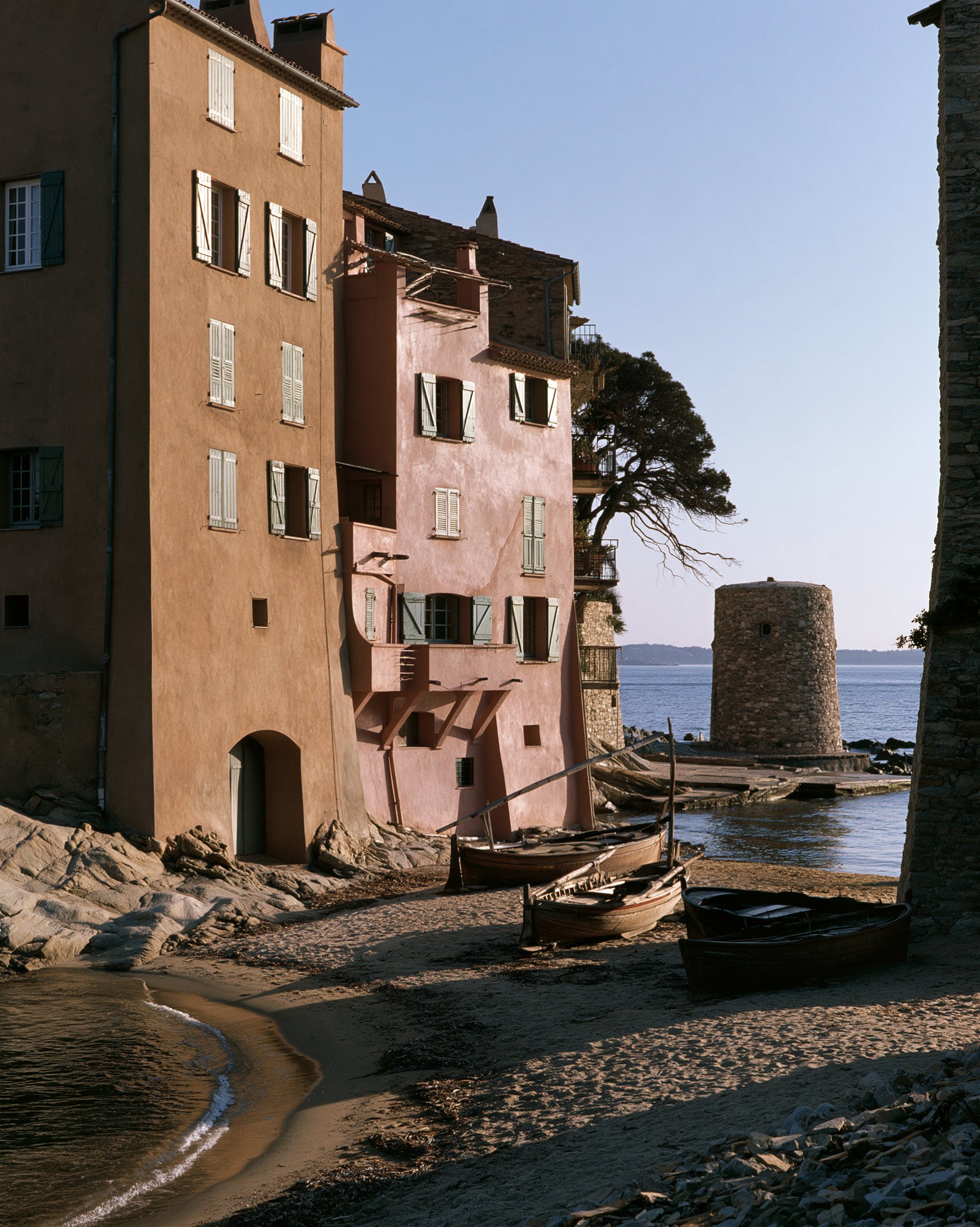
Through the arch at the end of the port, the noise drops away. La Ponche is where the fishermen lived, a cluster of low houses around a little harbour and a beach where the wooden boats called pointus are still pulled up on the sand. The Tour du Portalet guards the water’s edge and the Tour Vieille stands nearby, both left from the town’s old defences.
There are three tiny beaches here, La Glaye, La Ponche and La Fontanette, small enough to feel like part of the street, and in summer people swim off them before breakfast. Roger Vadim filmed scenes of And God Created Woman here in the 1950s, and the quarter still looks much as it does in the film. It is the part of the old town I always come back to, and it is never quieter than at seven in the morning.
The church and the bell tower
The Église Notre-Dame-de-l’Assomption is an 18th-century church in the Italian Baroque manner, and its ochre and red bell tower is the shape everyone remembers from photographs of the skyline. Inside it is warm and gilded, and it keeps the bust of Saint Torpes, the town’s patron, which is carried through the streets during the Bravades every May.
Entry is free. Opening hours vary, and mornings are the safest time to find it open. A few lanes away on rue Gambetta, the little Chapelle de la Miséricorde has a bell tower covered in glazed tiles, worth the detour for its colour alone.
Place aux Herbes and the fish market
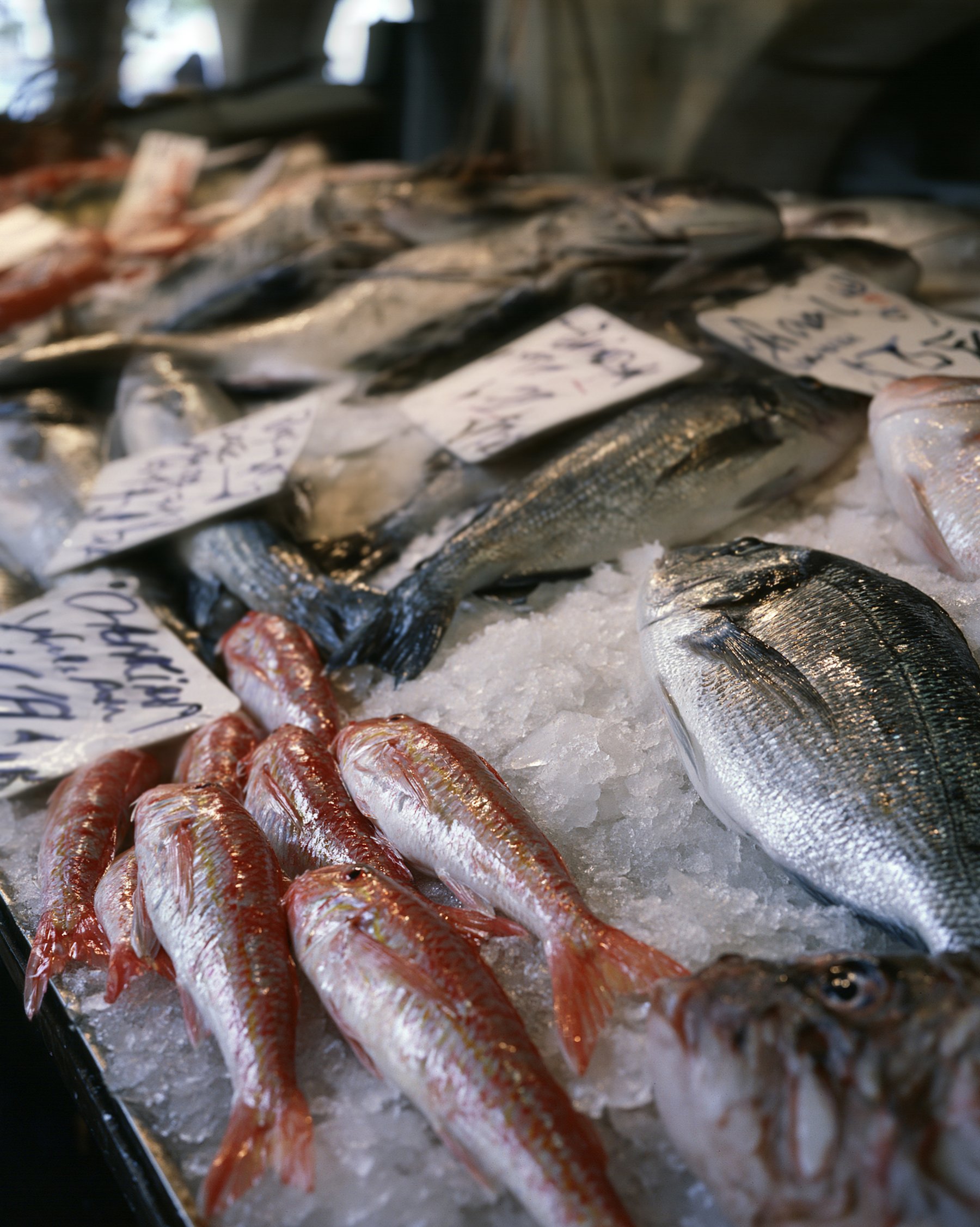
Just behind the port, the Porte de la Poissonnerie, an arched gateway, leads into Place aux Herbes and the covered fish market. In the mornings the stone counters carry the catch of the day: rascasse and red mullet for the soup, sea bream, squid, and whatever else the boats have brought in.
It is a working market rather than a sight, open in the mornings only, and it is the best place to understand what the town’s restaurants are cooking. Buy here if you have a kitchen, and if not, come anyway and follow it with lunch; where to eat that fish is all in my guide to where to eat in Saint-Tropez.
Place des Lices
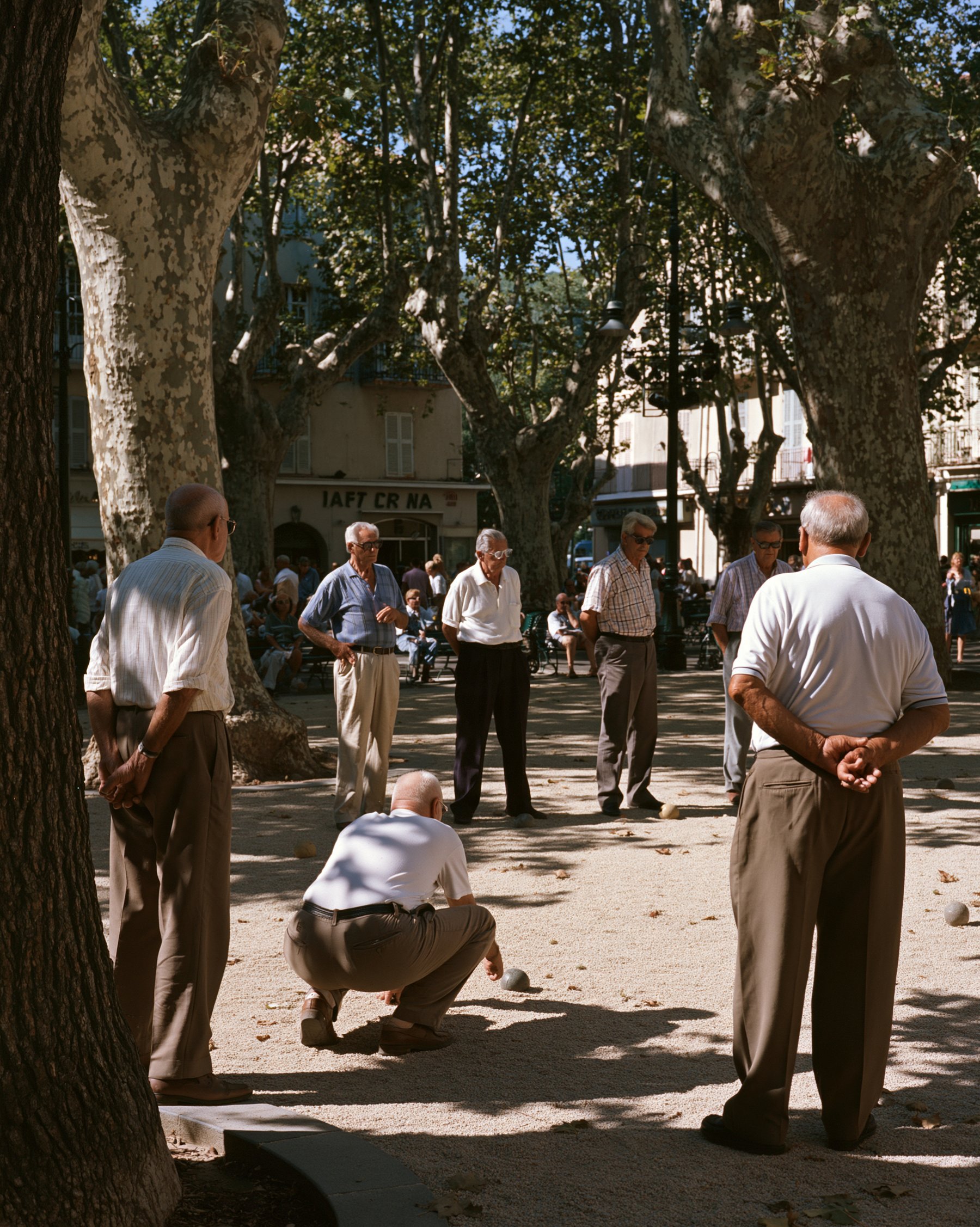
A few minutes inland, Place des Lices is a great gravel rectangle shaded by old plane trees, and it is the opposite of the port: wide, unhurried and local. On most days it belongs to the pétanque players, and in the evening their games run on under the lamps while the cafés around the edge fill up.
On Tuesday and Saturday mornings it changes completely, filling with the market from 08:00 to 13:00. Around the square sit Le Café, La Tarte Tropézienne, where the cream-filled brioche is sold, and Dior des Lices, the fashion house’s café-restaurant. At the end of the day, take a pastis and watch a game you will never quite follow.
The Citadel
The Citadel was built in the early 17th century on the hill above town, and it is the reason to climb at least once. From the ramparts the whole gulf opens out: the old town’s roofs below, the masts in the port, and the far shore of the gulf. Peacocks walk the park around the walls.
The hexagonal keep holds the Musée d’histoire maritime, opened in 2013, which tells the story of the Tropézien sailors; in the 18th century the town was among the busiest Mediterranean ports in France. It shut for works from 2 November to 18 December 2026, so check before you go in winter. Entry is 5 euros, 3 reduced, free under 12. From 1 April to 30 September it opens 10:00 to 18:30, and from 1 October to 31 March 10:00 to 17:30, with last entry half an hour before closing. It is shut on 1 January, 1 May, 17 May, 11 November and 25 December. The walk up from La Ponche takes about ten minutes.
The cimetière marin and Les Graniers
Below the Citadel, on the slope down to the sea, is the cimetière marin, the town’s maritime cemetery, its white tombs facing the water. The film director Roger Vadim is buried here. It is a quiet, beautiful place, and visitors should treat it as one.
The road past the cemetery leads on to Les Graniers, a curve of sand below the Citadel with a beach restaurant and sunbeds. It is the nearest proper beach to the old town, and the start of the coastal path heading south. The town beaches, and the long stretch at Pampelonne, are in my guide to the best beaches in Saint-Tropez.
A walk that joins it all
Start with coffee at Sénéquier, then walk out along the mole to the red lighthouse and back. Go through the arch into La Ponche and down to the little beach. Double back through the Porte de la Poissonnerie for the fish market while it is still busy, then climb the lanes to the church. From there, follow the signs up to the Citadel for the view and the museum, come down past the cimetière marin to Les Graniers for a swim, and finish at Place des Lices, under the plane trees, for lunch.
At an easy pace, with the museum and a swim, that is three to four hours. In July and August start by 09:00, before the heat and the day-trippers.
Frequently Asked Questions
Is the old town of Saint-Tropez walkable?
Yes. The port, La Ponche, the church, the fish market, the Citadel and Place des Lices are all within about ten minutes of each other on foot. The lanes are cobbled and some are stepped, so wear flat shoes.
What are the Citadel’s opening hours?
From 1 April to 30 September it opens 10:00 to 18:30, and from 1 October to 31 March 10:00 to 17:30, with last entry 30 minutes before closing. Entry is 5 euros, 3 reduced, and free for children under 12.
What is La Ponche in Saint-Tropez?
La Ponche is the former fishing quarter, where the old town runs out into the sea, with low houses, the Tour du Portalet, a little harbour and three tiny beaches. Scenes of And God Created Woman were filmed there.
When is the fish market open in Saint-Tropez?
The covered fish market on Place aux Herbes, through the Porte de la Poissonnerie, is open in the mornings only. Go early for the best of the catch.
How long do you need to see Saint-Tropez old town?
A morning covers it: three to four hours at an easy pace, including the Citadel museum and a swim at Les Graniers. Start early in summer.
Read also: The Best Things to Do in Saint-Tropez | Where to Eat in Saint-Tropez and What to Order | Victoria’s Complete Guide to Saint-Tropez