Crete has two coasts that behave almost like two different seas. The north faces the Aegean, with the towns, the airports and the long organised beaches lined with hotels. The south faces the Libyan Sea, and there the mountains drop almost straight into the water, the villages are smaller, and some beaches can only be reached on foot or by boat. The famous lagoons sit in the far west, at the two corners where those coasts meet.
My own swimming on Crete was modest: an evening at Nea Chora, the town beach in Chania, in mid-October with the water at about 23°C. The rest of this guide is the island’s beaches as the people who know them best describe them, beach by beach, with the drive times, the crowds and the catches. How the beaches fit around the towns, the gorges and the palaces is all in my complete guide to Crete.
Which beach, which mood
Before choosing, know two things. First, distances. Crete is about 260 km long, and the best beaches are spread to its far corners, so a day at Elafonisi from Chania is two hours each way. Pick beaches near your base and accept that you will not see them all.
Second, the wind. In July and August the meltemi blows from the north, and the north-facing beaches, Balos included, can be rough and churned. On those days the south coast is often calmer.
Roughly: for shallow lagoon water and sand, the far west (Elafonisi, Balos). For a long beach and a sunset, Falasarna. For drama and a scramble, Seitan Limania. For something wild with a river, Preveli. For an easy swim between sightseeing, the beaches just west of Chania.
Elafonisi
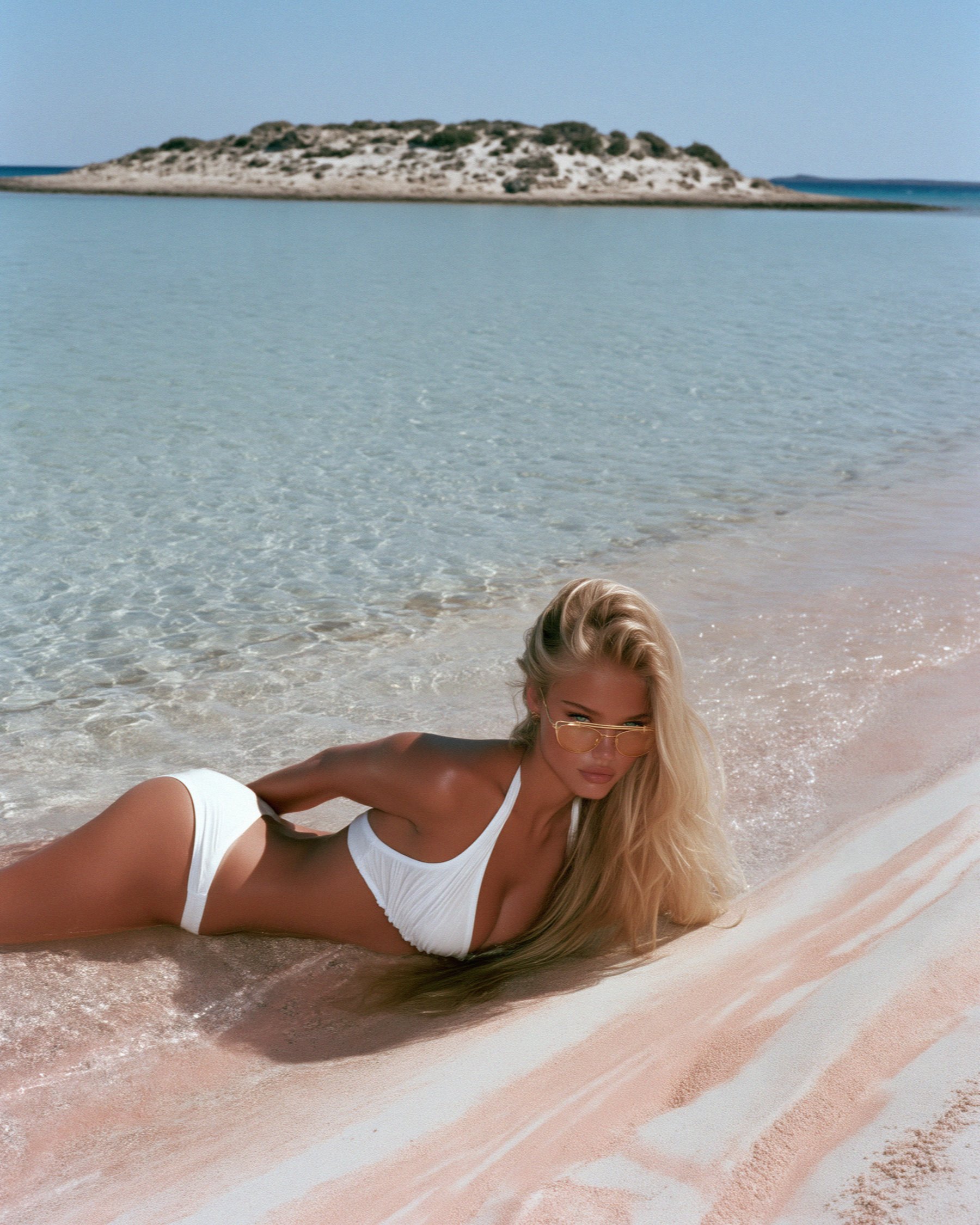
Elafonisi is in the south-west corner of the island, about 75 km and two hours by car from Chania, the last stretch over mountain roads. It is a shallow lagoon between the shore and a low islet, warm and mostly knee-deep, so you can wade across to the islet and explore its dunes and coves. The famous pink tint at the waterline comes from fragments of tiny shells, foraminifera, broken down and washed into the sand. It is strongest in streaks where the sand is wet.
It is a protected Natura 2000 site, which means real rules: take no sand and no shells, and use sunbeds only in the marked area. Parking in 2026 at Elafonisi Mega Parking cost about €5 a day, followed by a walk of around 500 to 800 metres to the sand. In summer a KTEL bus runs from Chania (about two hours; check the timetable).
The catch is crowds. Between 11:00 and 16:00 in July and August, Elafonisi is packed. Arrive early, by 09:00 at the latest, or come after 16:00 when the coaches leave. If it is too busy, Kedrodasos, a quieter beach of junipers and sand, lies a short way east along a rough track. On the way, the monastery of Chrysoskalitissa stands on a rock above the sea about 5 km before the beach.
Balos
Balos is the other great lagoon, on the Gramvousa peninsula at the north-west tip of the island: white sand and very shallow, clear water between Cape Tigani and the mainland, with the islet of Imeri Gramvousa offshore. You reach it either by an excursion boat from Kissamos, which also stops at the Venetian castle on Gramvousa, or by an unpaved track and a steep walk down from the viewpoint.
Both routes have real trade-offs, from the dust on the road to the midday crowds off the boats. I have put the full comparison, prices and timings in my guide to Balos and Gramvousa.
Falasarna
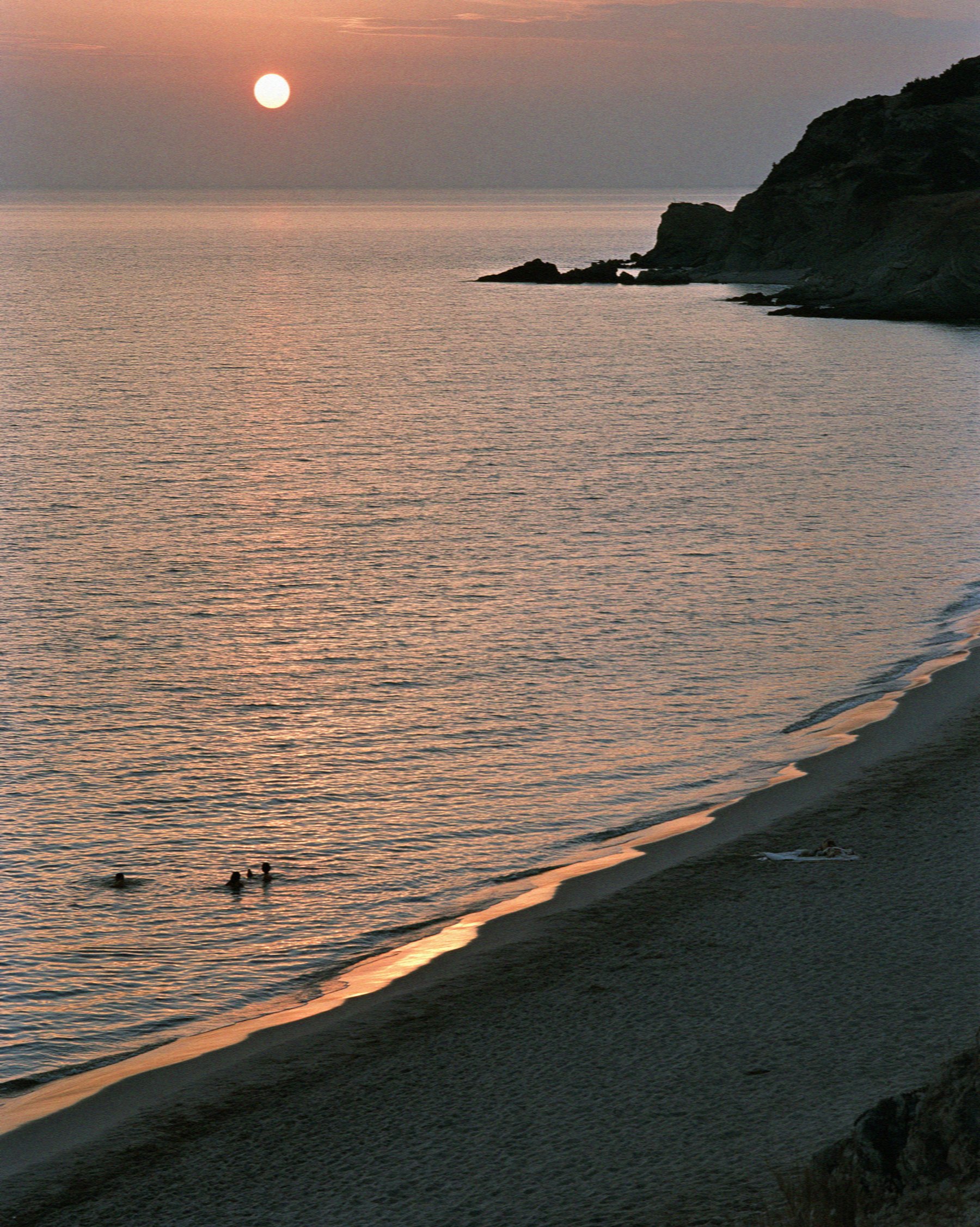
Falasarna, on the far west coast, is about 55 km and an hour or so from Chania. It is a long, wide, west-facing beach of pale sand, with tavernas behind parts of it and long wild stretches beyond them. In 2026 it was added to Greece’s list of protected beaches where sunbeds are strictly limited, so do not count on renting one. Because it faces west it is the sunset beach of the island, and people drive out in the evening just for that.
Near the northern end are the remains of an ancient harbour town, now stranded inland because the land here has risen over the centuries. Falasarna is exposed to the open sea, so the surf can be strong on a windy day. When it is calm, the water is clear and the beach rarely feels as crowded as the lagoons.
Seitan Limania and the Akrotiri
Seitan Limania, on the Akrotiri peninsula about 22 km from Chania, is a tiny beach at the bottom of a zigzag inlet between steep rock walls, with deep clear water. Getting down is a steep, loose scramble of 15 to 20 minutes, and you carry everything. There is free parking by the road, but not much of it.
It is not a place for small children or flip-flops, and by late morning the little patch of shingle is full. Come early or not at all.
The rest of the Akrotiri is gentler. Stavros, a sheltered bay under a mountain, is where the dance at the end of Zorba the Greek (1964) was filmed, and it has shallow water that suits families. Marathi, on the eastern side, has two small sandy coves and fish tavernas. Both are close to Chania airport, which makes them handy for a last swim before a flight.

Near Chania town
If you are staying in Chania, you do not need to drive for an hour to swim. Nea Chora is the town beach, a short walk west from the harbour along the front: sand, lifeguards in summer, fish tavernas behind it, and mostly locals. I wrote about my swim there in The Island That Keeps Going.
A few kilometres further west, Agioi Apostoloi and Kalathas are small sandy bays, sheltered and easy for a morning swim. Agia Marina, about 9 km west, is a long organised beach with sunbeds, water sports and hotels the whole way along. None of these will appear in a magazine, but they are where you will actually swim on a day in town.
Preveli and the south coast
Preveli, on the south coast below Rethymno, is unlike any other beach on the island. A river runs down through a gorge lined with wild palms and meets the sea across a curving bar of sand, so you can swim in fresh water and salt within a few metres. You get there from a car park above, by a path and steps of about 20 minutes down. It is hot, there is no shade on the way, and the climb back up is harder. Boats also run in season from Plakias and Agia Galini. The Preveli monastery stands on the hill nearby.
Further along the south coast, Plakias has a long beach and a laid-back village, and Triopetra and Agios Pavlos are wilder, with dunes and rock formations. East of Agia Roumeli, Sweetwater and Marmara, near Loutro, are pebble coves reached by boat or on foot, with water as clear as anything on the island.

Matala
Matala, south of Heraklion, is a sandy bay under a cliff of soft rock riddled with caves. The caves were cut as tombs in Roman times and became home to a colony of hippies in the 1960s and 70s, which the village has never quite let go of. The beach is good, but the cliffs are the reason to come.
Over the hill, reached on foot over the rocks in 20 to 30 minutes, is Red Beach, a smaller cove under red cliffs, which is quieter and wilder. Wear proper shoes for the walk.
The east: Vai and Xerokampos
In the far east near Sitia, Vai is a beach backed by a forest of wild palms, the Cretan date palm, an unexpected sight on a Greek island. It is busy in summer and quiet early in the morning.
Xerokampos, in the far south-east, is a scatter of quiet sandy coves at the end of a long drive, for those who want empty sand and nothing else. And from Ierapetra boats run in season to Chrissi, a small island of cedars and white sand. All of these are a long way from the west, so plan them only if you are staying in the east.
Rules, fees and what to bring
The protected beaches, Elafonisi and Balos especially, have rules you are expected to follow: take no sand, shells or stones, and stay inside the marked areas. Expect to pay a few euros for parking, and at Balos a small entry fee as well.
Bring water, a hat and shade, because the best beaches often have little or none. Water shoes help on rock and pebble. Bring cash, since kiosks and parking may not take cards. Many beach tavernas and bars close from late October to April, so in the off season carry food.
The sea is about 17 to 19°C in May, 24 to 26°C in August and September, and still about 22 to 23°C in October. For the best months, see my guide to the best time to visit Crete.
Frequently Asked Questions
Which is the best beach in Crete?
Elafonisi and Balos are the most famous, both shallow lagoons in the far west. Falasarna is the best long beach for sunsets, and Preveli the most unusual, with a palm-lined river running into the sea.
How do you get to Elafonisi from Chania?
By car it is about 75 km and two hours. In summer a KTEL bus runs from Chania in roughly the same time; check the timetable. Parking costs about €5 a day, then a walk of 500 to 800 metres.
Is Elafonisi beach pink?
In places. The pink comes from fragments of tiny shells mixed into the sand, and it shows in streaks along the waterline, strongest where the sand is wet. Taking any sand away is forbidden.
Which Crete beaches are best on a windy day?
When the meltemi blows from the north in July and August, choose the south coast: Preveli, Plakias, Matala or the coves near Loutro. North-facing beaches, Balos included, can be rough.
Which beaches in Crete are good for children?
Elafonisi, for its shallow warm lagoon, and Stavros on the Akrotiri. Avoid Seitan Limania, which involves a steep scramble down, and keep an eye on the surf at Falasarna.
Read also: Balos Lagoon and Gramvousa: By Boat or By Road | The Best Time to Visit Crete | Victoria’s Complete Guide to Crete