Cretan cooking begins with olive oil, poured with a generosity that would alarm a cook in most other countries, and with whatever grew nearby this week. Wild greens from the hillside, cheese from sheep that graze the high plateaux, snails after the rain, lamb, honey that tastes of thyme. It is the food of a large, self-sufficient island, and it is quite different from the Greek menu you may know from the Cyclades.
Chania is the best place on the island to eat it. This guide covers what to order, where to go from breakfast to a late dinner, the tavernas worth driving out for, and what it costs. Restaurants change, so treat the names here as a starting point and check that a place is open in your dates. For the rest of the island, see my complete guide to Crete.
What Crete cooks
Start with dakos, a hard barley rusk topped with grated tomato, soft white cheese and oil, which softens as it sits. Kalitsounia are small cheese pies, fried or baked, sometimes sweet with honey. Boureki is the Chania bake of courgette, potato and mizithra cheese, and worth ordering wherever you see it.
From the mountains come antikristo, lamb roasted slowly beside an open fire, apaki, smoked pork, and gamopilafo, the wedding rice cooked in rich meat stock. Staka is a thick cream from sheep’s milk, served with eggs or stirred into pilaf, and it is richer than anything that size has a right to be. Chochlioi boubouristi are snails fried face-down in salt, then finished with oil, vinegar and rosemary.
The cheeses are graviera, hard and nutty, mizithra and anthotyros, soft and fresh. The greens arrive as horta, boiled and dressed with lemon. To finish there are loukoumades, small fried dough balls in honey, and xerotigana, thin spirals of fried pastry. A cup of mountain tea, malotira, comes with almost any question about a sore throat.
Breakfast and bougatsa
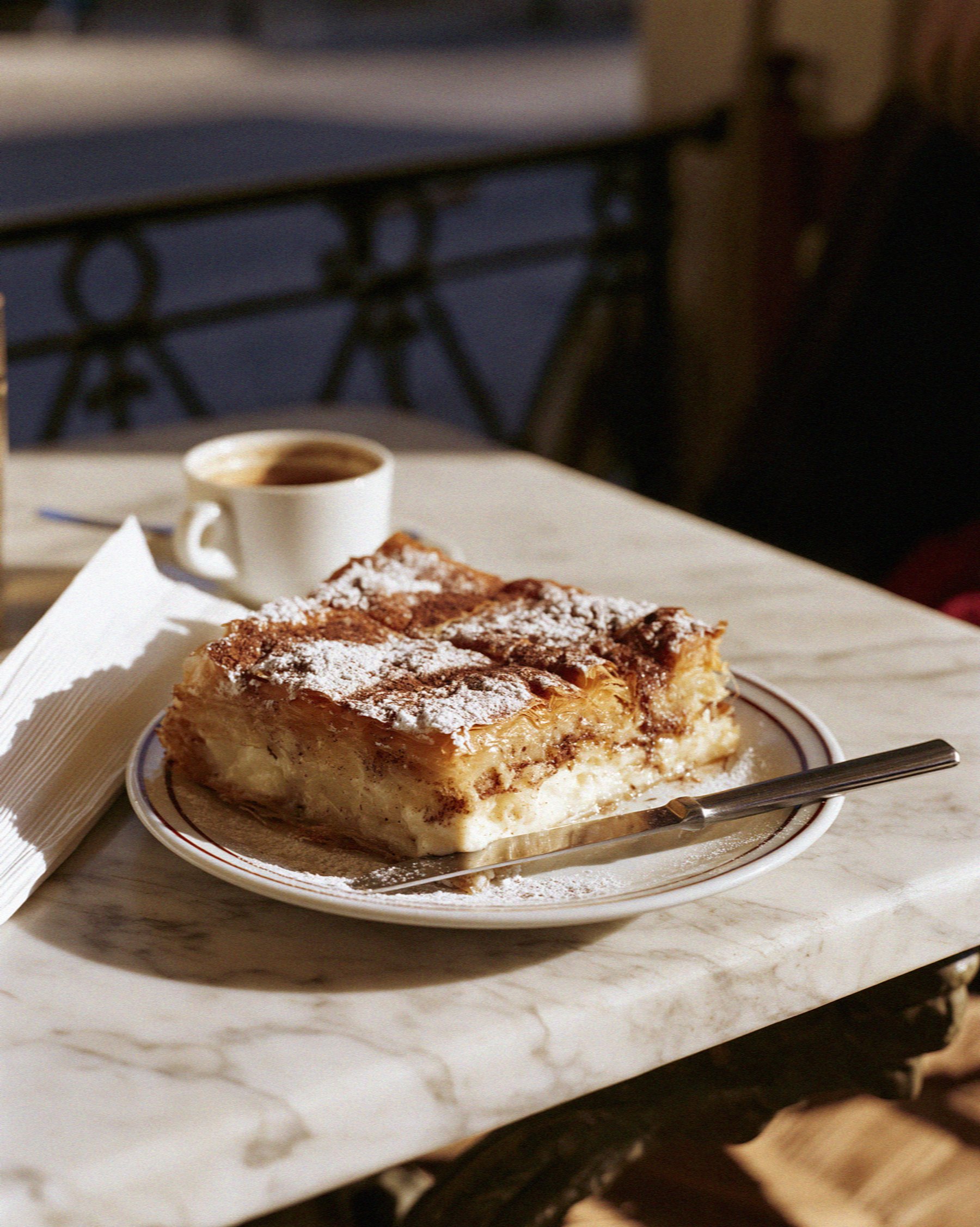
The Chania breakfast is bougatsa: thin layers of pastry around a filling of soft mizithra cheese, cut into squares and dusted with sugar, sometimes cinnamon. It is salty and sweet at the same time and goes perfectly with strong coffee.
The name to know is Bougatsa Iordanis, which has been making it in much the same way for about a century, and which sells little else. Go in the morning, when it comes out of the oven, while it is still warm.
My best breakfast on Crete was not in town at all. It was Greek coffee and a plate of graviera with thyme honey on the taverna terrace at Xyloskalo, at the head of the gorge, in the cold of an October morning, which I wrote about in my diary from the top of the Samaria Gorge.
Around the harbour
The Venetian harbour is the most beautiful place in Chania to eat and, along much of its curve, the least rewarding. Picture menus, waiters calling from the doorways and a view that is doing most of the work: there, the view is what you are paying for. Walk a few steps further.
Salis, on the harbour, is the exception people mention first: a modern kitchen built around seasonal Cretan produce, with a good wine list. On the eastern side of the harbour, Ta Chalkina has Cretan cooking and live Cretan music on some nights, and is a lively evening rather than a quiet one. Near the old shipyards, Chrisostomos cooks the food of Sfakia, the rugged south-west, with a wood oven; book ahead.
In the old town lanes
The lanes behind the harbour hold some of the most atmospheric rooms in town. Tamam, on Zambeliou street, is set in an old hammam, and its menu runs from Cretan dishes to the wider eastern Mediterranean. Tholos sits inside the shell of a Venetian building behind the cathedral.
The rule for the lanes is the opposite of the harbour. The further a place is from the water, the more likely the people eating there live in Chania. Walk through Splantzia and the streets towards the market and you will find simpler tavernas with handwritten specials and a television in the corner. The quarters themselves are mapped in my guide to Chania’s old town.
Seafood by the water
For fish, two places stand out. To Maridaki, a short way back from the harbour, serves seafood meze, small plates of grilled octopus, fried fish and the like, and it is busy at lunch with people who work nearby. Thalassino Ageri sits on the water at the Tabakaria in Halepa, among the old stone tanneries east of the centre, and is worth the walk for a table almost at the edge of the sea at sunset.
Fish in Greece is usually priced by the kilo. Ask to see it, ask what it weighs, and agree the price before it is cooked; that one habit removes every unpleasant surprise.
Tavernas out of town
Some of the best cooking in western Crete is a drive away. In the village of Drakona, in the hills south-east of Chania, Ntounias cooks on wood fires with produce from its own farm. Reservations are essential, and it is worth confirming it is open before you set out.
Elsewhere, follow the villages rather than the names. Theriso, at the top of a short gorge road south of town, has tavernas that people from Chania drive up to at weekends. The stone villages of Apokoronas to the east, Vamos, Gavalochori and Kefalas, have kafeneia on their squares and tavernas that cook what the village grows. If you are on the Omalos road, Lakki has a kafeneio with a view down the whole valley.
Further afield, in Rethymno, Avli serves Cretan cooking in a Venetian courtyard and Prima Plora fish by the sea; in Heraklion, Peskesi revives old Cretan recipes with produce from its own farm, and you should book. More on those towns in my guide to the best things to do in Crete.

Raki and Cretan wine
At the end of almost every meal, unasked and unbilled, a small carafe of raki arrives, sometimes with fruit or a little sweet. Also called tsikoudia, it is a clear spirit distilled from what is left after the grapes are pressed, and in October and November the village stills are working. Drink it slowly. It is a gesture of hospitality, and refusing it outright is a little rude; one small glass is plenty.
Cretan wine is worth taking seriously. Look for Vidiano and Vilana among the whites, Liatiko, Kotsifali and Mandilari among the reds, and Romeiko, the grape of the Chania area. The house wine, by the half kilo in a metal jug, is often perfectly good and costs very little.

Cheap and good
Eating well in Chania need not cost much. A square of bougatsa and a coffee make breakfast for a few euros. The bakeries sell kalitsounia and slices of savoury pie to eat as you walk. At lunch, a plate of dakos, a salad and a jug of house wine in a lane taverna is a meal in itself.
The meze places are good value for a group: order several small plates, share them, and add more if you are still hungry. And keep an eye out for places full of Greek families on a Sunday, which is the most reliable recommendation there is.
How to book and what it costs
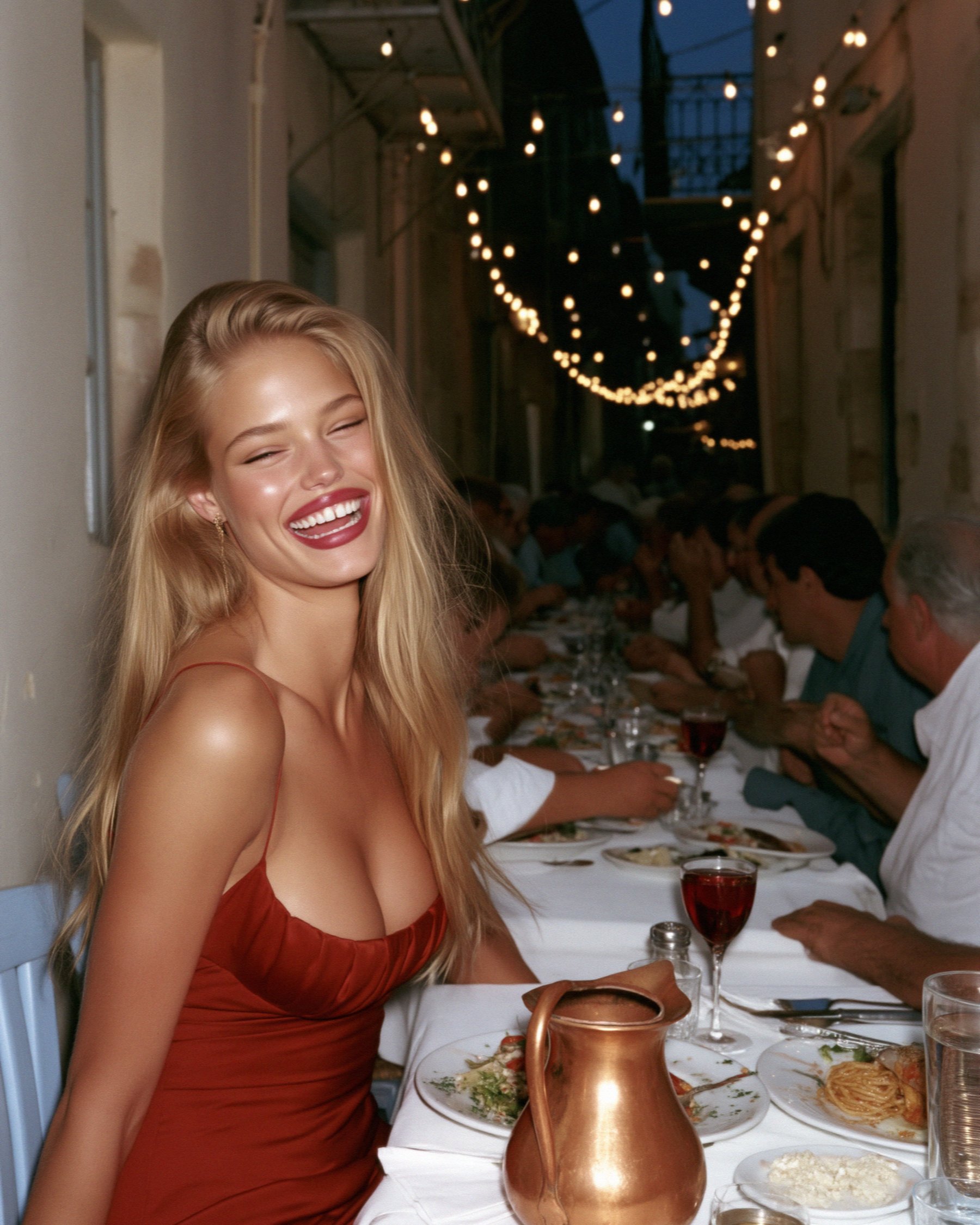
For the well-known places, Salis, Chrisostomos, Tamam and Ntounias among them, book a day or two ahead in summer, and longer for a weekend. Most lane tavernas take walk-ins. Greeks eat late, from about 21:00, so an early table is often easy to find.
As a guide in 2026, a taverna dinner with wine runs about €20 to €35 a head, and the smarter places about €40 to €70. Greece has no Michelin guide, so reputation travels by word of mouth. Carry some cash for the smaller tavernas, and round up the bill or leave around 5 to 10% for good service.
Frequently Asked Questions
What food is Chania famous for?
Bougatsa with mizithra cheese for breakfast, boureki, the local bake of courgette, potato and cheese, and the cooking of Sfakia: lamb, Sfakian pies with honey and the cheeses of the White Mountains. Dakos and snails are on almost every menu.
Are the restaurants on Chania harbour worth it?
Some are, most are not. The harbour front is beautiful, but many places rely on the view and on touts. Salis is the well-regarded exception; otherwise walk a few lanes back from the water for better cooking at better prices.
How much does a meal in Chania cost?
In 2026, a taverna dinner with wine is about €20 to €35 a head, and the more ambitious restaurants about €40 to €70. Breakfast of bougatsa and coffee costs a few euros.
Do you need to book restaurants in Chania?
For the best-known places in summer, yes, a day or two ahead, and Ntounias in Drakona always needs a reservation. Ordinary tavernas take walk-ins, especially if you eat before the Greeks do.
Is raki free in Crete?
Usually, yes. A small carafe of raki, often with fruit or a sweet, is brought at the end of most meals as a gesture of hospitality, and it does not appear on the bill.
Read also: Chania Old Town: the Venetian Harbour, the Lanes and the Walls | The Best Things to Do in Crete | Victoria’s Complete Guide to Crete