Naxos could feed itself if every ferry stopped tomorrow. It grows its own potatoes, makes its own cheeses, keeps cattle on its hillsides and distils a liqueur from the citron, a tree the island has made its own. It is the largest island in the Cyclades and the most fertile, and that single fact explains more about it than any beach does.
I came over from Mykonos in early October on a crossing of about forty minutes, meaning to stay two days. I moved my onward ferry before the first evening was out. What changed my mind was not one sight but the sense that the island had more rooms than I had been told about: a Venetian quarter on the hill, marble villages in the mountains, giants lying unfinished in the quarries, and a long run of sand on the west coast that was still warm enough to swim from.
This guide is how I would plan Naxos now, for a first visit or a better second one: when to come, where to sleep, how to get up into the interior, which beaches suit which wind, what to order, and how it fits with Paros across the channel. Each part has its own detailed guide, linked as you go.
What Naxos is like
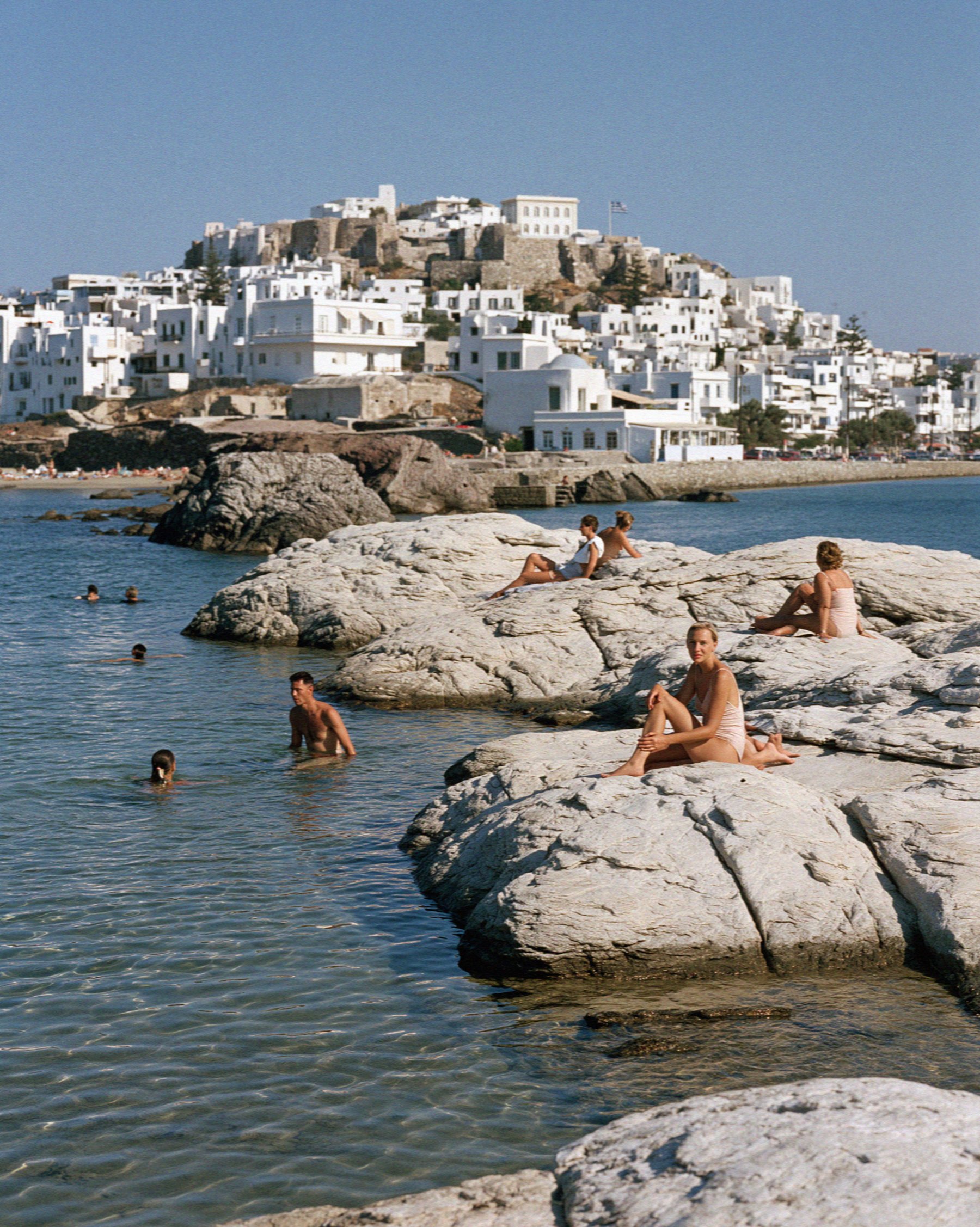
Picture two islands sharing one coastline. On the western side is Naxos Town, which most people call Chora, with its harbour, its Venetian Kastro and, to the south, a coast of long sandy beaches running for kilometres. On the other is a mountainous interior of terraced valleys, olive groves, stone villages and the highest summit in the Cyclades.
Most visitors see the first island and only glimpse the second. That is a pity, because the interior is what makes Naxos different from its neighbours. It was a farming island long before it was a holiday island, and it still is. People keep animals, press oil, grow vegetables in the plains behind the beaches and sell them in town.
The history runs in layers. In the 6th century BC Naxos was rich and powerful, with marble quarries that supplied sculptors across the Aegean. In 1207 a Venetian adventurer named Marco Sanudo took the island and made it the seat of his Duchy of the Archipelago, and Venetian and Catholic families held power here for more than three centuries. Both periods are still standing in the town, one on a rock in the harbour and the other on the hill above it.
The marble is the thread that joins them. It is in the doorsteps and windowsills, in the paving of the old lanes, in the quarries where statues were abandoned when they cracked.
When to go
June and September are the best months for most people. The sea is warm, everything is open, and the island has room to breathe. In September the water has had the whole summer to heat up, sitting at around 23°C, and the crowds thin noticeably after the first week.
July and August are the busiest, the most expensive and, on the west coast, the windiest. The meltemi, the strong north wind of the Aegean summer, usually blows hardest from mid-July to the end of August, and the narrow channel between Naxos and Paros funnels it straight onto the beaches south of town.
Early October, when I came, is a gift if you can manage it. The sea was still around 21°C, the beaches were half empty and the mountain air was cool enough to walk in. Spring, in April and May, is the season for wild flowers and hiking, though the sea is still cold. From November to March most beach hotels close, the ferries thin out and Naxos goes back to being a farming island with a port.
I have gone through the year month by month, wind and water temperatures and what is open included, in my guide to the best time to visit Naxos and Paros.
Plan Your Visit to Naxos
A few things worth sorting before you come. These help support the blog, at no cost to you.
- Hotels in town, on the beaches and in the villagesFrom Naxos Town and Agios Georgios to the long beaches of the west coast
- Mount Zas, boat days and the small islandsGuided hikes, cruises to Koufonisia and tours across the island
- Hire a car for the mountain villagesHalki, Filoti, Apeiranthos and the empty south are easier with your own wheels
- Stay connected with a travel eSIMData from the moment you land, no roaming charges
This section contains affiliate links. If you book through them I may earn a small commission, at no extra cost to you.
Naxos Town and the Portara
The first thing you see as the ferry comes in is not the town. It is a marble door frame, alone on a rock at the mouth of the harbour, with nothing behind it but water.
That is the Portara. It belonged to a temple begun around 530 BC under Lygdamis, the tyrant who ruled Naxos at the time, and never finished, probably abandoned after he fell from power a few years later. The temple is usually said to be Apollo’s, though some scholars argue for Dionysus.
It stands on the islet of Palatia, joined to the town by a short causeway. It is traditionally said to face Delos, where Apollo was said to have been born. It costs nothing, it never closes, and it is lit at night. You can walk right up to it, though a low fence stops you touching the marble. I walked out to it before I had even found my room, bag and all, and went back at dawn on my last morning, when the causeway was empty and the evening crowd was still asleep.
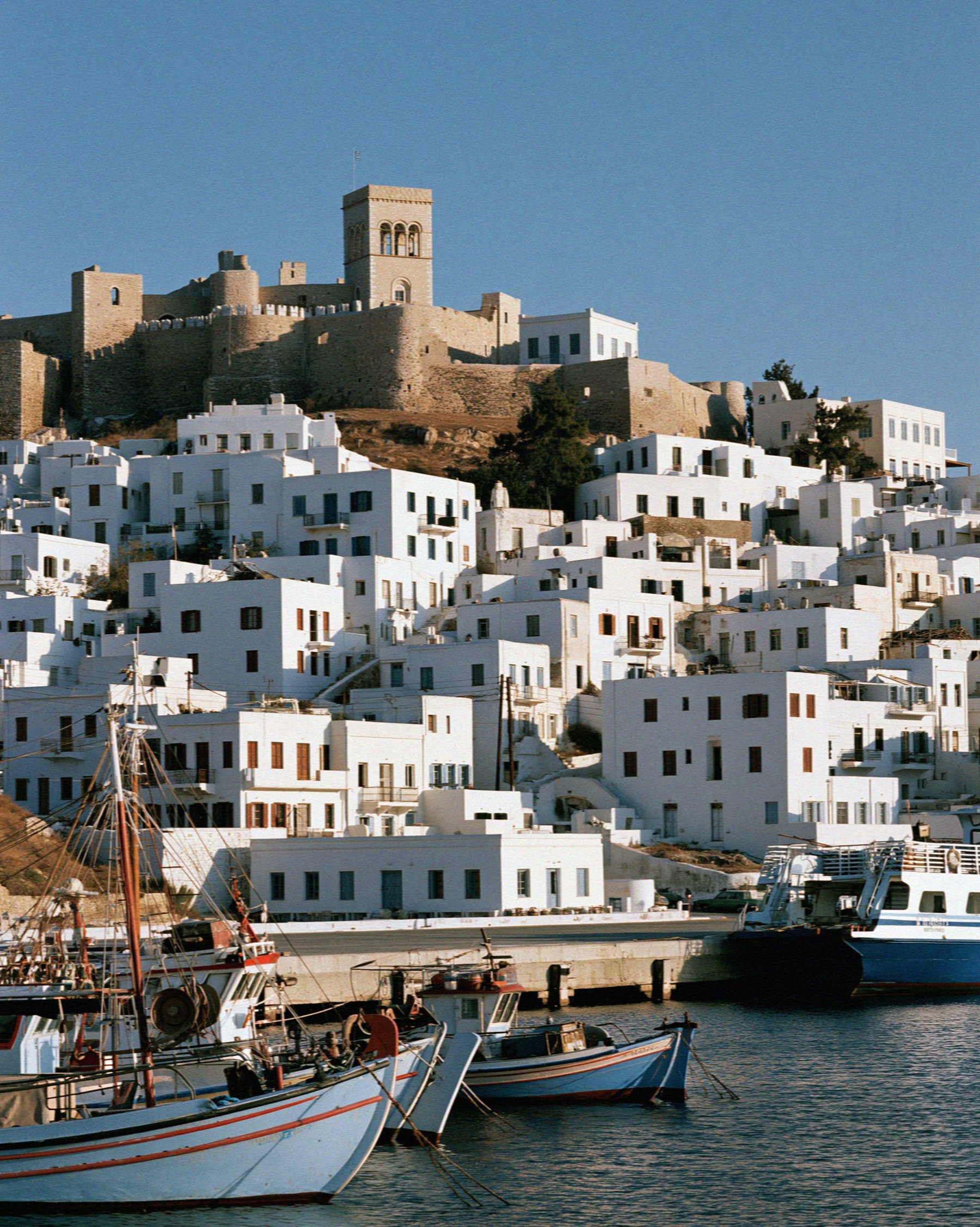
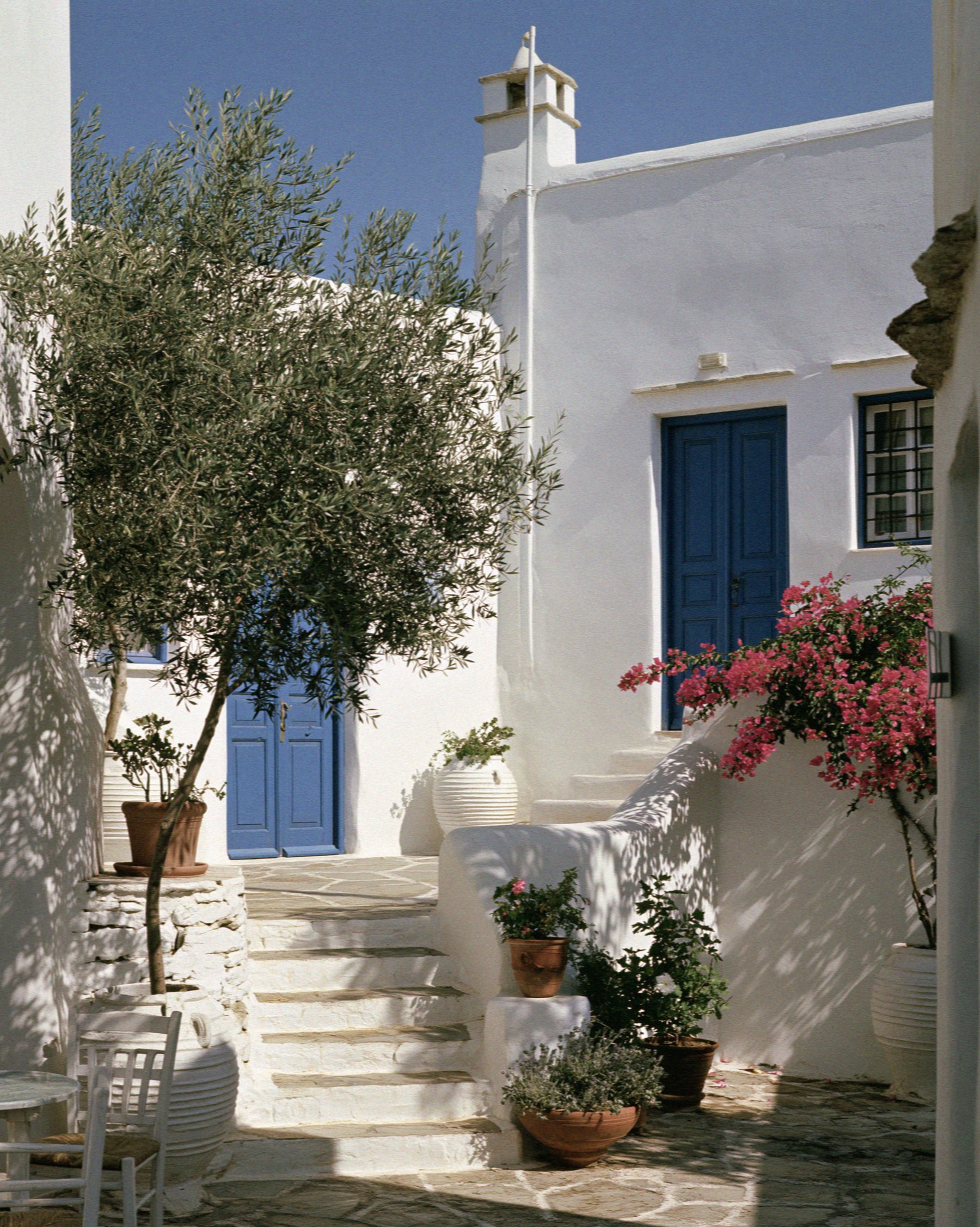
Back on the waterfront, the harbour front is a long row of cafes, tavernas and ticket offices facing the boats. Behind it, the Old Market quarter, called Bourgos, climbs towards the Kastro in a tangle of whitewashed lanes, arches and small shops. At the north end of town, past the causeway, the rocky shore at Grotta has a little beach of its own. To the south, Agios Georgios is the town beach, shallow and sandy and an easy walk from the centre.

The town works best on foot, in the morning and again in the evening, with the middle of the day given to the beach. I have written the whole of it up, quarter by quarter, with a walk for your first evening, in my guide to Naxos Town: the Portara, the Kastro and the Old Market.
The Kastro
On the hill above the harbour is the Kastro, the walled quarter the Venetians built after 1207. It is small enough to cross in ten minutes and complicated enough to get lost in for an hour, which I managed more than once.
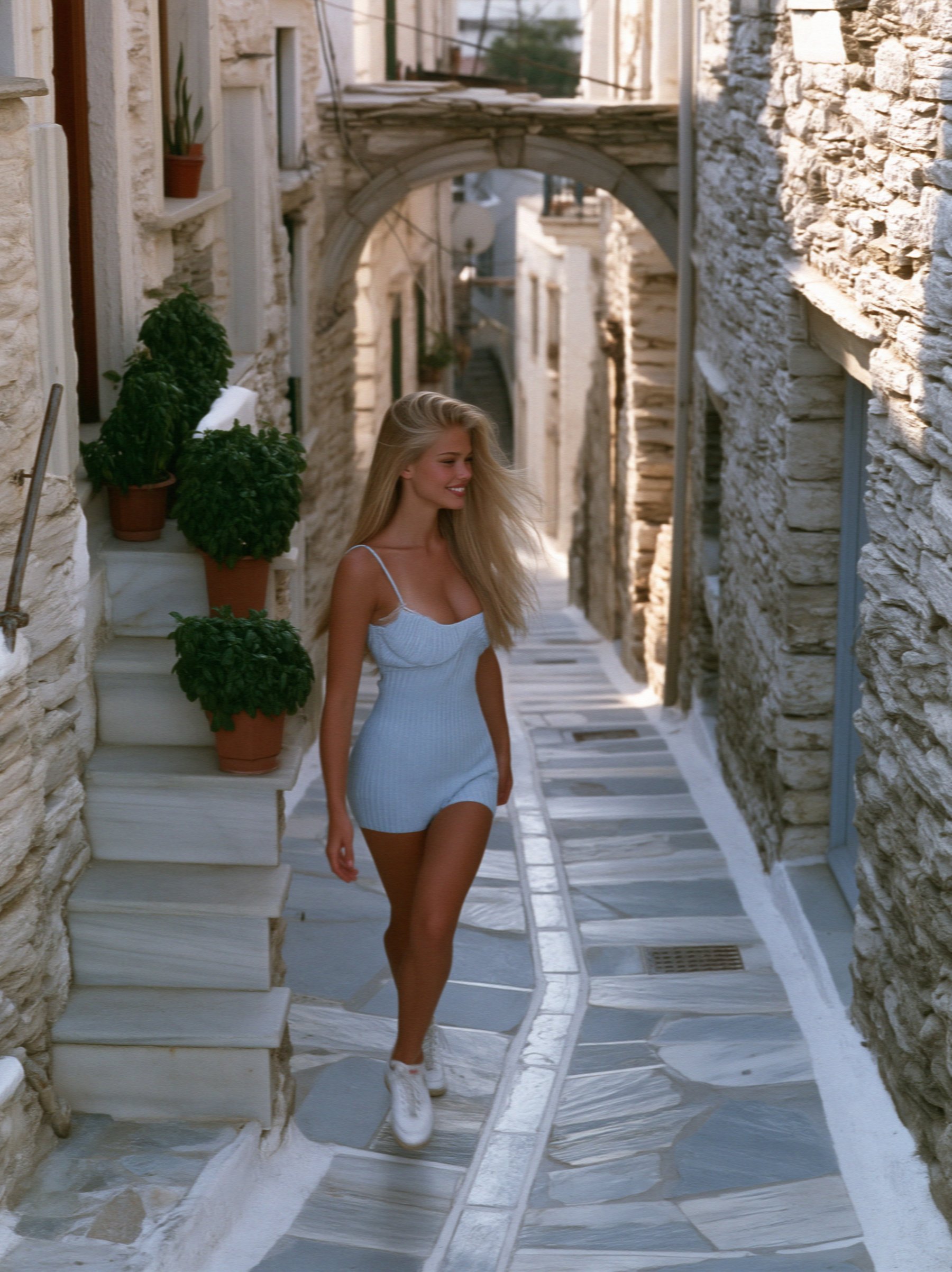
The lanes are narrow, paved and in places vaulted over, so you pass from glare into shade and back again. Over many of the doors are carved coats of arms, the crests of the Catholic families who lived here for generations. At the top stands the Catholic cathedral, and around it the old Ursuline convent and the Catholic school where the writer Nikos Kazantzakis spent a short time as a boy.
Two museums are worth knowing about, with one caveat each. The Archaeological Museum of Naxos, which holds the island’s collection of Cycladic figurines, has its main building in the Kastro closed for a long rebuild. For now a small temporary exhibition runs in the former Ursuline convent nearby, about one room of figurines and pottery. It opens 09:00 to 14:00, closed on Tuesdays, and is free. The Della Rocca-Barozzi Venetian Museum is a Venetian house that holds evening concerts in its garden in season; its hours vary from source to source, so check before you go.

The best hour in the Kastro is early evening, when the little shops switch their lights on and the vaulted lanes suddenly fill with people again. On my second evening I timed my return from the mountains for exactly that, and it was right.
The mountain villages
The interior is the part of Naxos I would not skip, and the reason I would hire a car for at least one day.
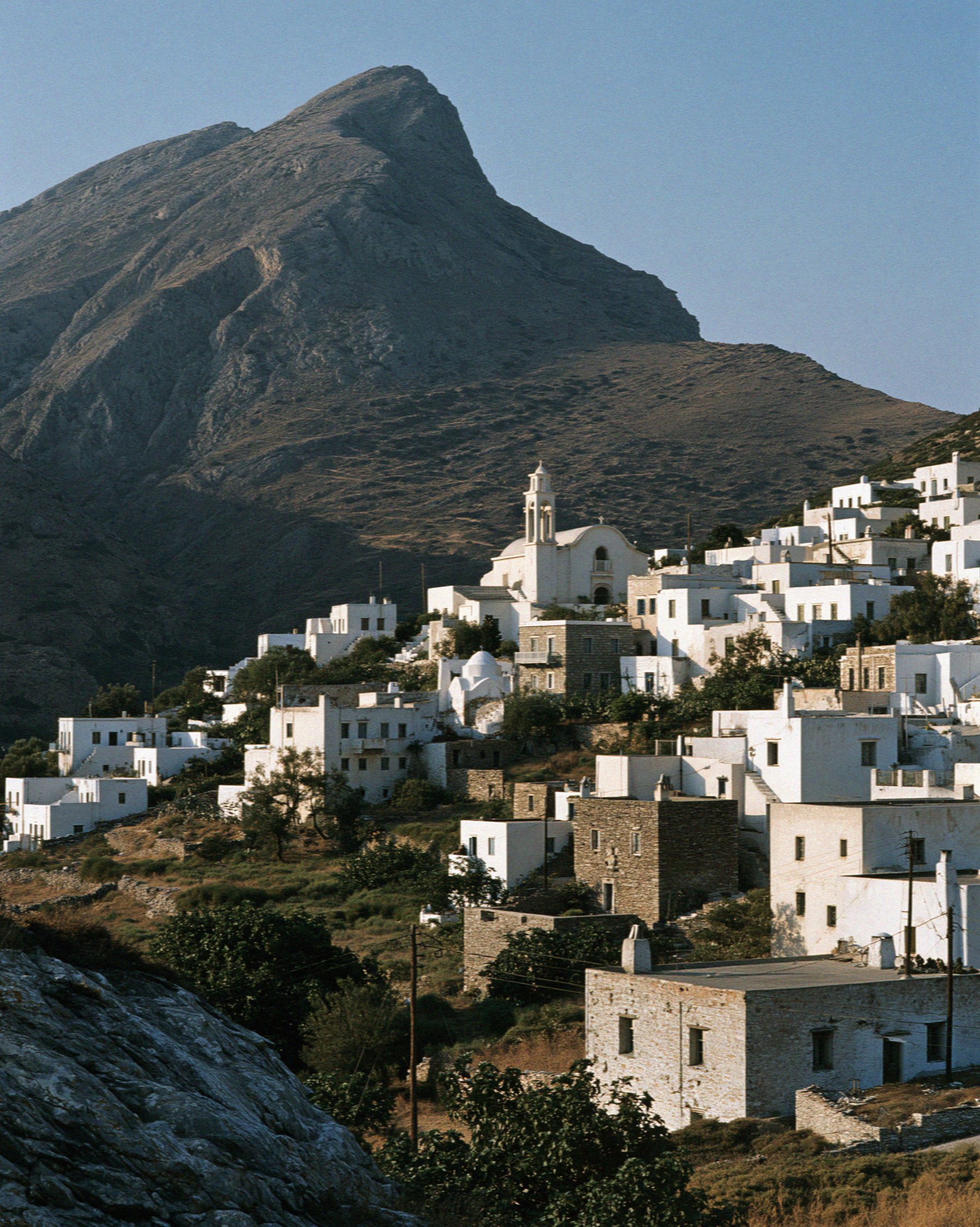
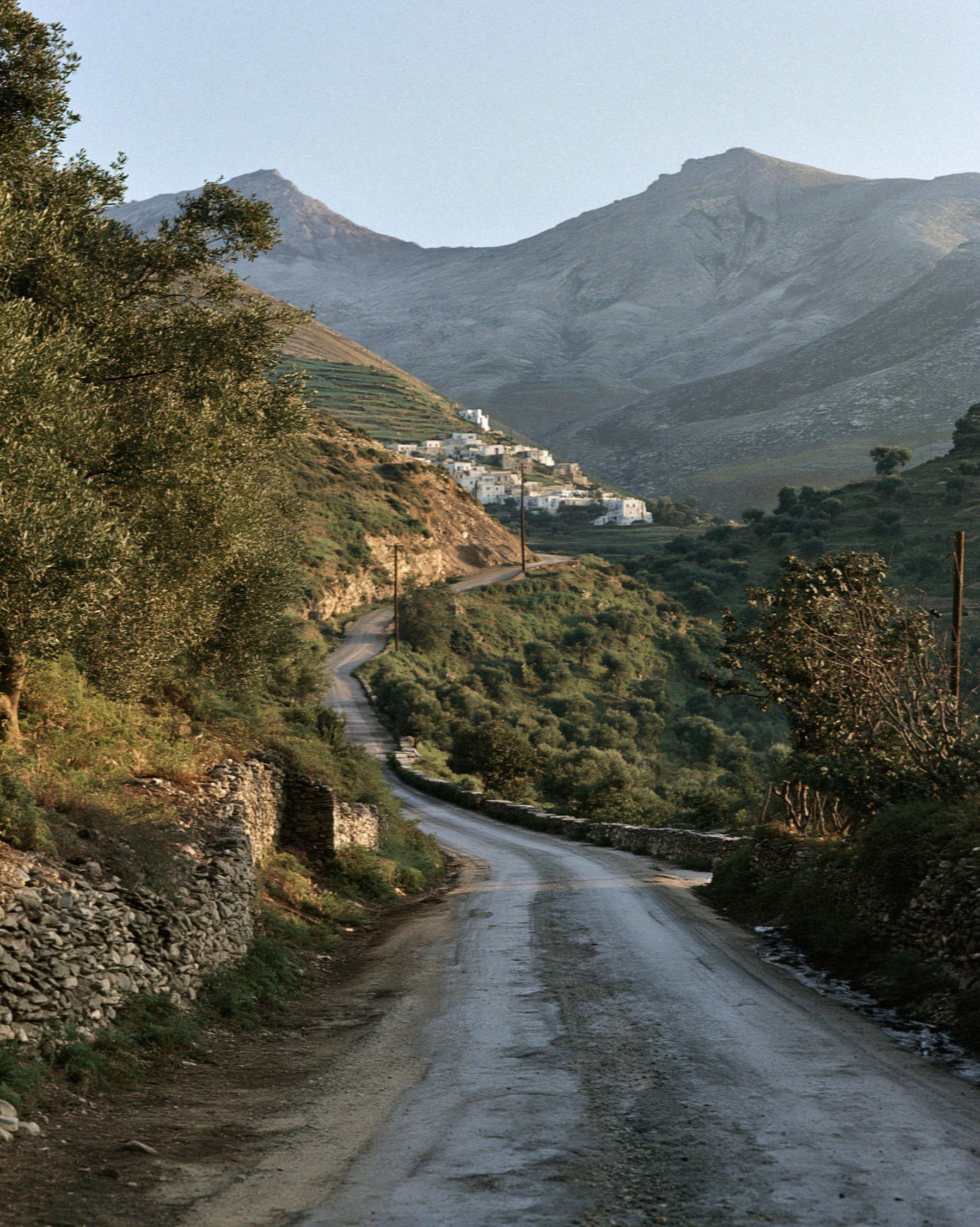
The road climbs east out of town through the plain and into the Tragaea valley, a broad green bowl of olive groves with villages around its rim. Halki is the first that most people stop at, and the best introduction. It was once the commercial centre of the interior and still has its neoclassical houses, its shuttered fronts, its square, and the Barozzi-Gratsia tower. It is also home to the Vallindras distillery, which has been making kitron since 1896, with its old copper stills in the back room and a free look round and tasting at the counter. About two and a half kilometres north of Halki, Panagia Drosiani is a small stone church among the olives with early Byzantine frescoes, and is among the oldest churches in the Aegean.

Further on, Filoti is the largest village on the island, spread across the lower slopes of Mount Zas, and the starting point for the climb. Beyond it, Apeiranthos sits at about 600 metres and is a village made of marble, underfoot and overhead: the lanes, the steps, the arches. It has the Zevgoli tower and an unusual number of small museums for a village, including archaeological, folklore, geological and natural history collections. The archaeological collection opens 08:30 to 15:30, closed Tuesdays, for 5 euros.
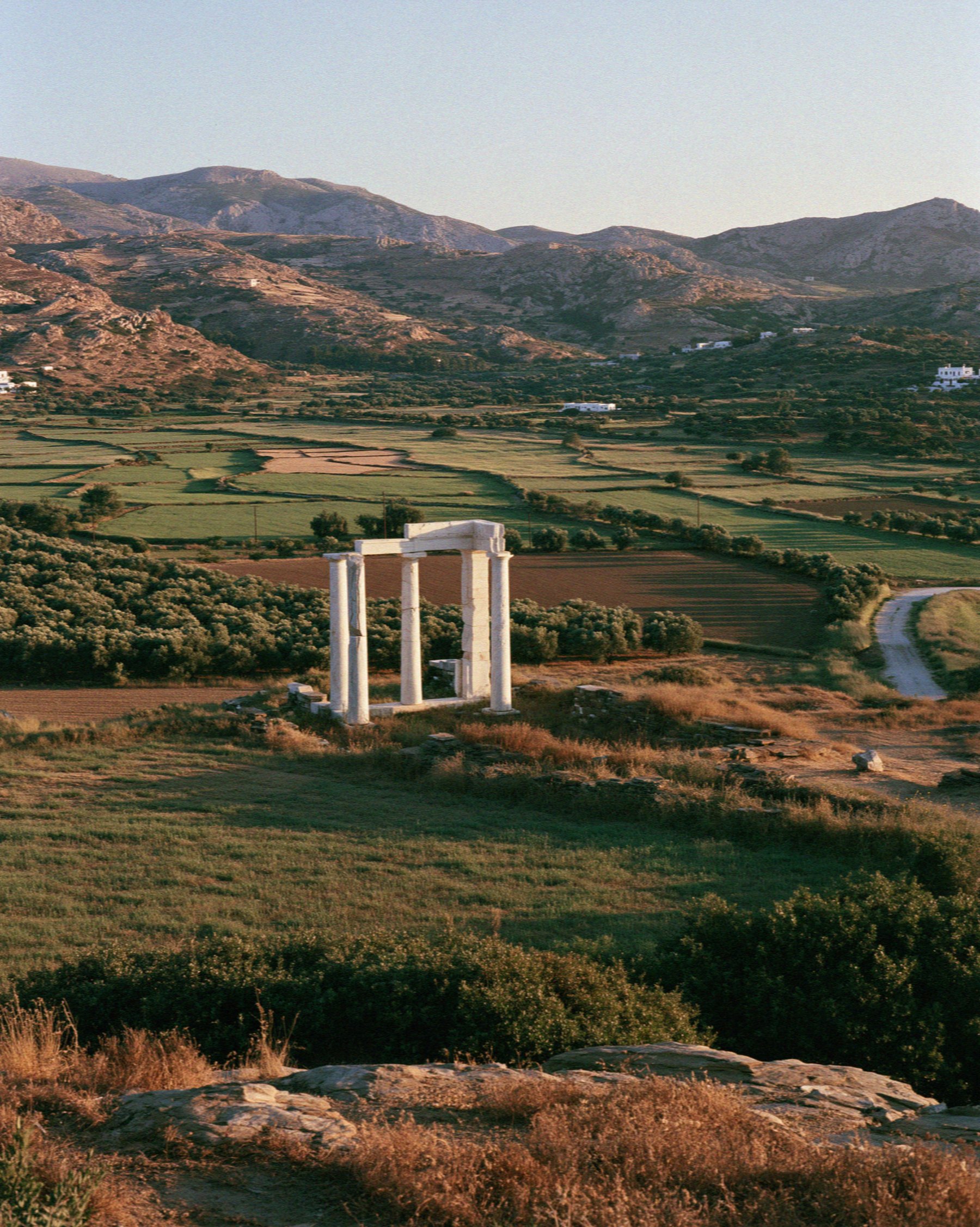
Down near Sangri, south of Halki, is the Temple of Demeter at Gyroulas, built around 530 to 520 BC entirely of marble, down to the roof tiles, and partly re-erected. A Christian basilica was later built on top of it, and the small museum beside it explains both. It is about 15 km from town, half an hour by car, and opens 08:30 to 15:30, closed Tuesdays, for 5 euros (3 reduced). In summer the Bazeos Tower near Sangri hosts the Naxos Festival.
You can do the villages by bus, but only a few at a time, and the last bus back needs watching. A car lets you string them into a loop. I have laid that loop out, village by village, with where to stop for lunch, in my guide to the mountain villages of Naxos: Halki, Filoti, Apeiranthos and the kouroi.
The kouroi and the marble
A kouros is a standing youth carved in marble, the great early statue type of archaic Greece. Naxos has three of them still lying where they were abandoned, and they are among the most moving things on the island.
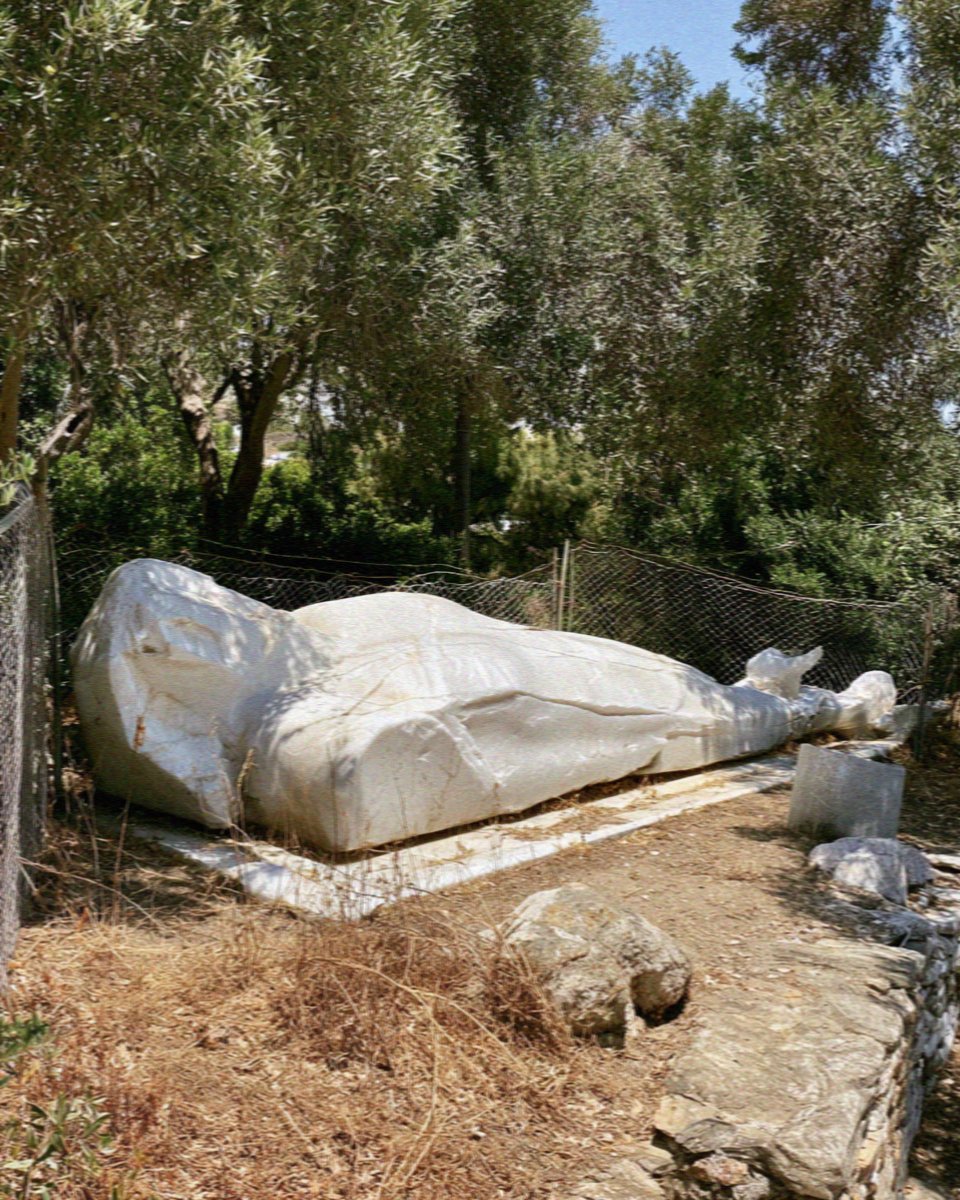
The easiest to reach is at Flerio, near the village of Melanes, about twenty minutes from town. He lies on his back in a garden among olive trees, close to five metres long, cut in the 6th century BC and left behind when his feet broke. There is a fence, a gate and a small sign, and nothing else. A second one lies up in the quarry itself, at the end of a short, rough path. Both are free and open at any reasonable hour.
The giant is at Apollonas, the fishing village on the north coast about 37 km from town. This one is about 10.7 metres long and weighs something like 80 tonnes, bearded and only roughed out, lying in the quarry just above the village.
What makes these figures matter is that they are unfinished. A completed statue in a museum shows you what a sculptor intended. One abandoned halfway shows you how the work was done: the heavy cuts first, the shape coming slowly out of the block, the arms still sealed inside the stone. I found the one at Flerio on my second afternoon and wrote about it in my diary, They Left Him Where He Fell.
Mount Zas
At 1,004 metres, Zas is the highest mountain in the Cyclades. It is a real walk, not a stroll, but a fit walker without any special experience can climb it.
There are two main routes. The classic one starts at Aria spring, a small car park on a narrow road above Filoti. The path climbs steeply through rock and scrub, passes the Cave of Zas after twenty minutes or so, and reaches the summit about 2.5 km from the spring. Allow roughly two and a half to three hours there and back. The cave is where Zeus, in the old story, was kept as an infant, out of his father’s reach. The gentler route starts from the chapel of Agia Marina: about 5 km return with roughly 500 metres of climbing, taking two and a half to four hours depending on how often you stop.
I took the early bus to Filoti and went up from the spring, past the cave. From the top I could pick out Paros, Ios and Amorgos, but not Santorini, which the haze had kept for itself. There is no shade on the mountain at all and Aria is the only water, so go early, carry more than you think you need, and wear proper shoes. Spring and autumn are the right seasons; a midsummer afternoon on Zas is a mistake.
Both routes, the cave, what to bring and how to reach the trailheads without a car are in my guide to hiking Mount Zas on Naxos.
The beaches
The west coast does most of the work. South of town, one long sandy beach follows another for kilometres, and almost all of them have clear, shallow water.
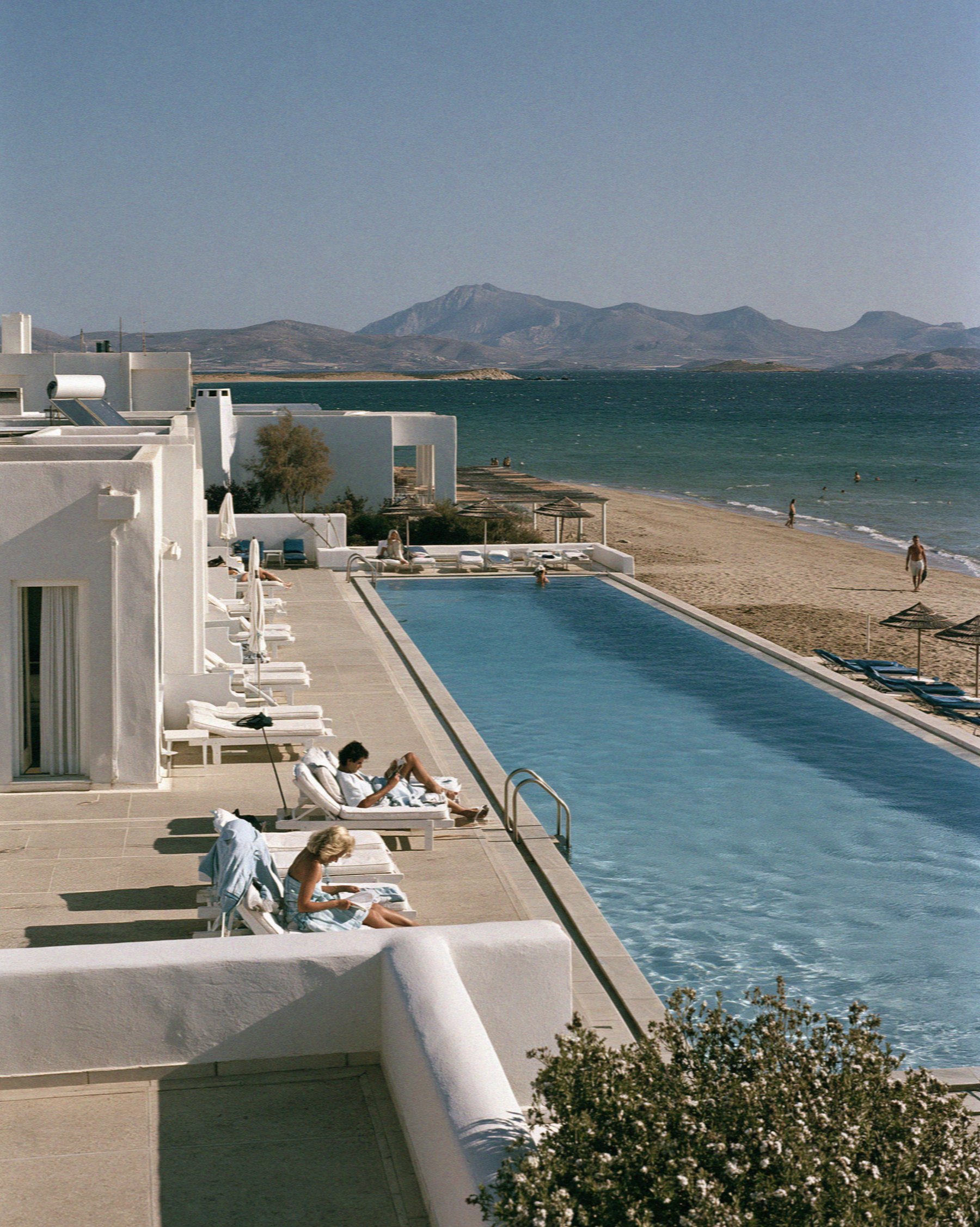
Agios Georgios is the town beach, shallow enough for small children and a good place to try windsurfing for the first time. Then comes Agios Prokopios, long and pale and gently shelving, where I walked out on my first afternoon, about five kilometres from town, and swam in the first week of October. Agia Anna follows, with tavernas almost on the water and a little port for the day boats. Plaka is about four kilometres of sand, livelier at its northern end and quieter the further south you walk. Beyond it come Orkos and Mikri Vigla, the island’s wind beach, with Parthena on the north side for kite and windsurf and Limanaki on the south side.

Further south, Kastraki and Glyfada are wide and empty, and Alyko is a protected area of cedar and juniper growing on the dunes, with Hawaii and Mikro Alyko in small coves close by and Pyrgaki at the end of the road. The east coast is wilder and further: Psili Ammos, Panermos and the little harbour at Moutsouna. On the north coast, Apollonas has a small beach below the village.
The one thing to plan around is the wind. In a strong meltemi the west coast can be all spray and flying sand, and the sheltered coves of the south and east become the better choice. Every beach worth the drive is in my guide to the best beaches in Naxos, with how to get there and what each one suits.
The best things to do
If I had to choose for a first visit, I would start with the Portara at dawn and again after dark, and walk the Kastro when its shops light up. I would give a whole day to the mountain villages, with the kouros at Flerio and a kitron tasting in Halki, and another to Mount Zas, starting early. I would spend one long, lazy day moving down the west coast from beach to beach.
Then the slower things: the Temple of Demeter, the giant at Apollonas with a fish lunch by the harbour, the small museums in Apeiranthos, a boat to the sea caves. What I would not do is plan a day around the archaeological museum in its current state, or try to fit the villages and the beaches into the same afternoon. The island is bigger than it looks on a map, and the mountain roads are slow.
I have put everything in order, with costs and how long each takes, in my guide to the best things to do in Naxos.
Day trips and boats
Naxos sits in the middle of the Cyclades, so the boats go everywhere, but not all of them make sense for a day.
Paros is the easiest: 45 to 70 minutes on the big conventional ferries, 25 to 30 on the fast boats, several times a day in season and cheap on the slow boat. A day there gives you Parikia and its great Byzantine church, or Naoussa if you take a bus across the island. For Delos and Mykonos, a day cruise leaves from the small port in town in season, about ten hours in all, costing roughly 80 to 100 euros with the Delos site ticket, 20 euros, on top.
The Small Cyclades, Koufonisia above all, are the boat trip I would most want to make. Fast boats take about 35 to 45 minutes; the Express Skopelitis, a small, slow and much-loved ferry, takes about two and a half hours by way of Iraklia and Schinoussa, and leaves from the marina beside the main port. The ferry timetables rarely allow a comfortable same-day return, so in season most people use the organised day boats from Agia Anna instead, or stay a night.
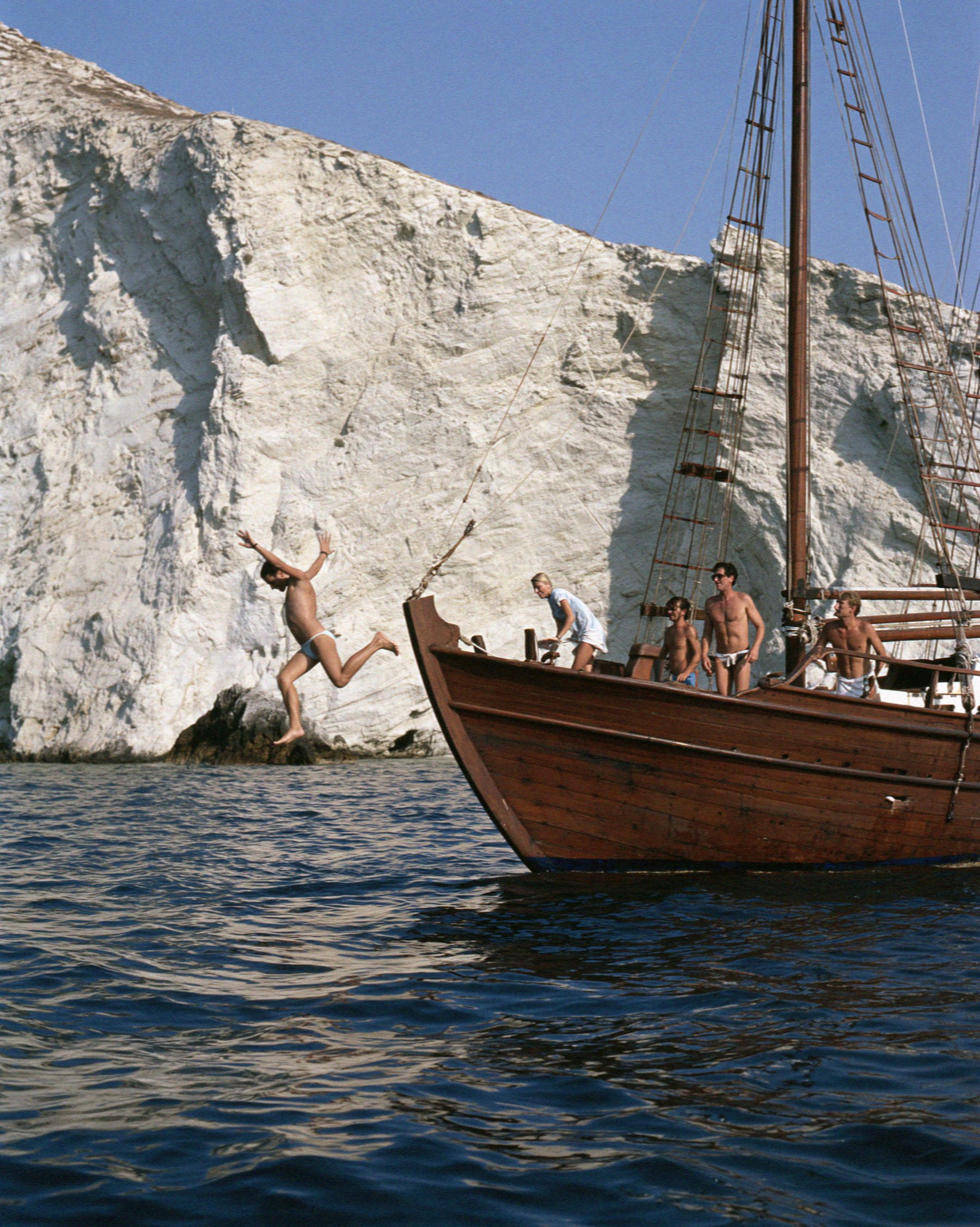
Closer to home, boats from Agia Anna and from town go along the south coast, swimming in the coves and visiting the Rina sea cave, and sailing day trips start at around 120 euros. When the meltemi is up, expect boat days to be cancelled or rerouted, so keep one flexible day.
The details, prices and timings are in my guide to the best day trips and boat trips from Naxos.
Where to stay
Where you sleep decides how much of the island you see without a car.
Naxos Town is the best base for a first visit and for anyone without a car: the port, the buses, the Kastro, the restaurants and the evenings are all on your doorstep. Hotel Grotta sits above the rocks at the north end of town, and Argo Boutique and Georgia Mare are good mid-range choices close to the centre. Agios Georgios, at the southern edge of town, gives you the beach and the town together, with the five-star Nissaki Beach Hotel right on the sand.
Stelida, the headland just south of town, is quieter and higher, with the adults-only Akre and the Kouros Art Hotel. Agios Prokopios is the beach base for most people, with places like 18 Grapes, Virtu Suites, Lagos Mare, Kavos and the villas of the Naxian Collection. Agia Anna has the Iria Beach Art Hotel and more of a village feel. Plaka suits anyone who wants a long beach and space, with Naxian on the Beach, Ammothines and the Medusa Beach Resort. And inland, Elaiolithos in the Tragaea valley and Ayiopetra near Sangri are for people who would rather wake up among olive trees than over the sea.
In season, simple rooms run from about 70 to 120 euros a night, good mid-range hotels about 120 to 250, and five-star places about 200 to 450 and up. Expect most of the beach hotels to be shut from about November until April.
I have gone through every area, with named hotels at every price, in my guide to where to stay in Naxos.
Booking a room in Naxos
By area, so you can compare.
- Naxos TownThe lanes, the Kastro and the harbour, with the ferry on the doorstep
- Agios GeorgiosThe town beach, a few minutes on foot from the lanes
- Agios ProkopiosThe long west coast beaches, with the bus into town
- Agia AnnaA small beach village with tavernas on the sand
- PlakaThe long beach of dunes and tamarisks south of Agia Anna
- See every hotel on NaxosTown rooms, beach hotels and village houses
- Add a hire carFor the mountain villages and the south
What to eat and drink
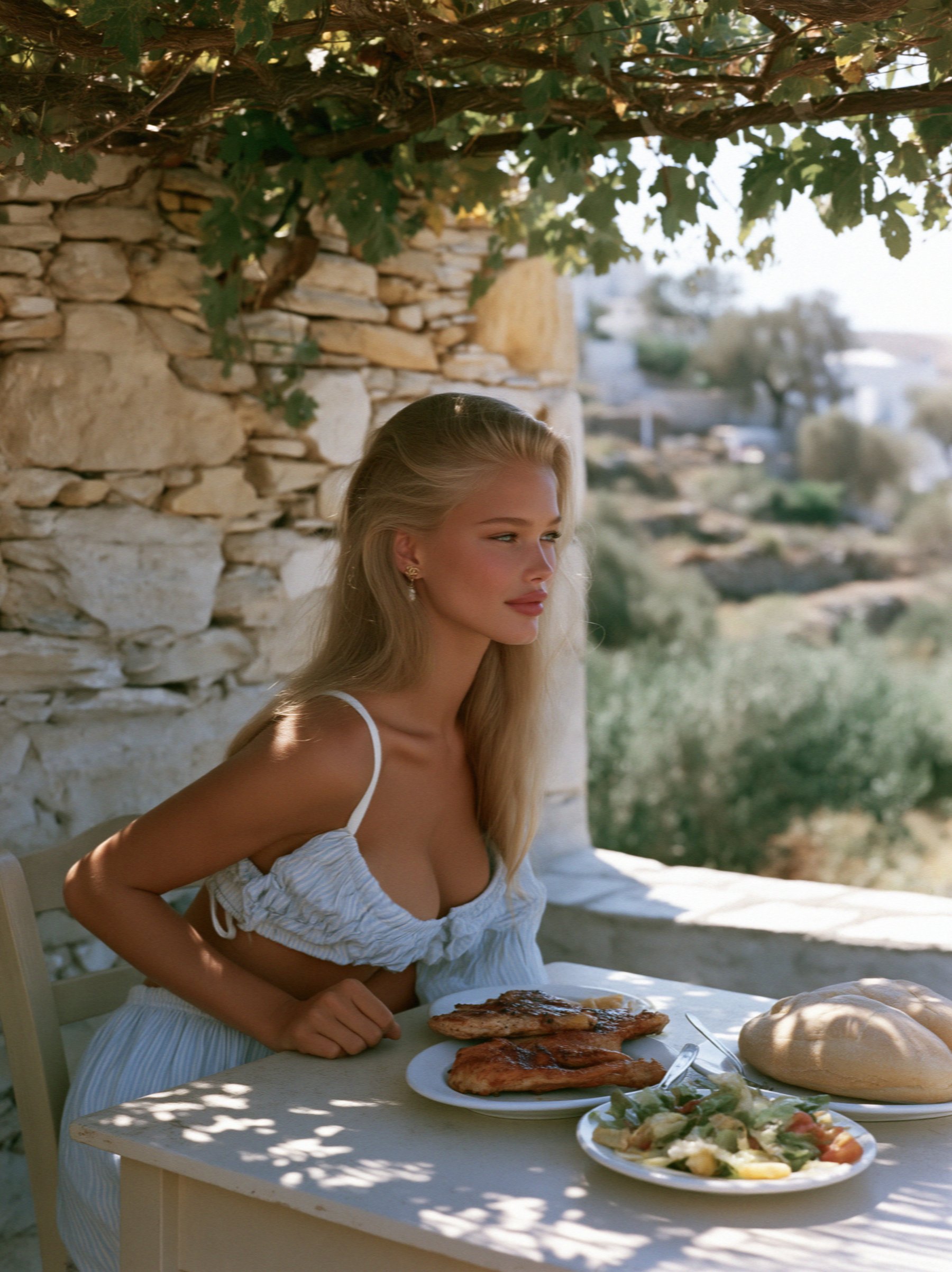
Because Naxos grows and makes so much of its own food, eating here is one of the real pleasures of the island, and the menus are more local than on most of the Cyclades.
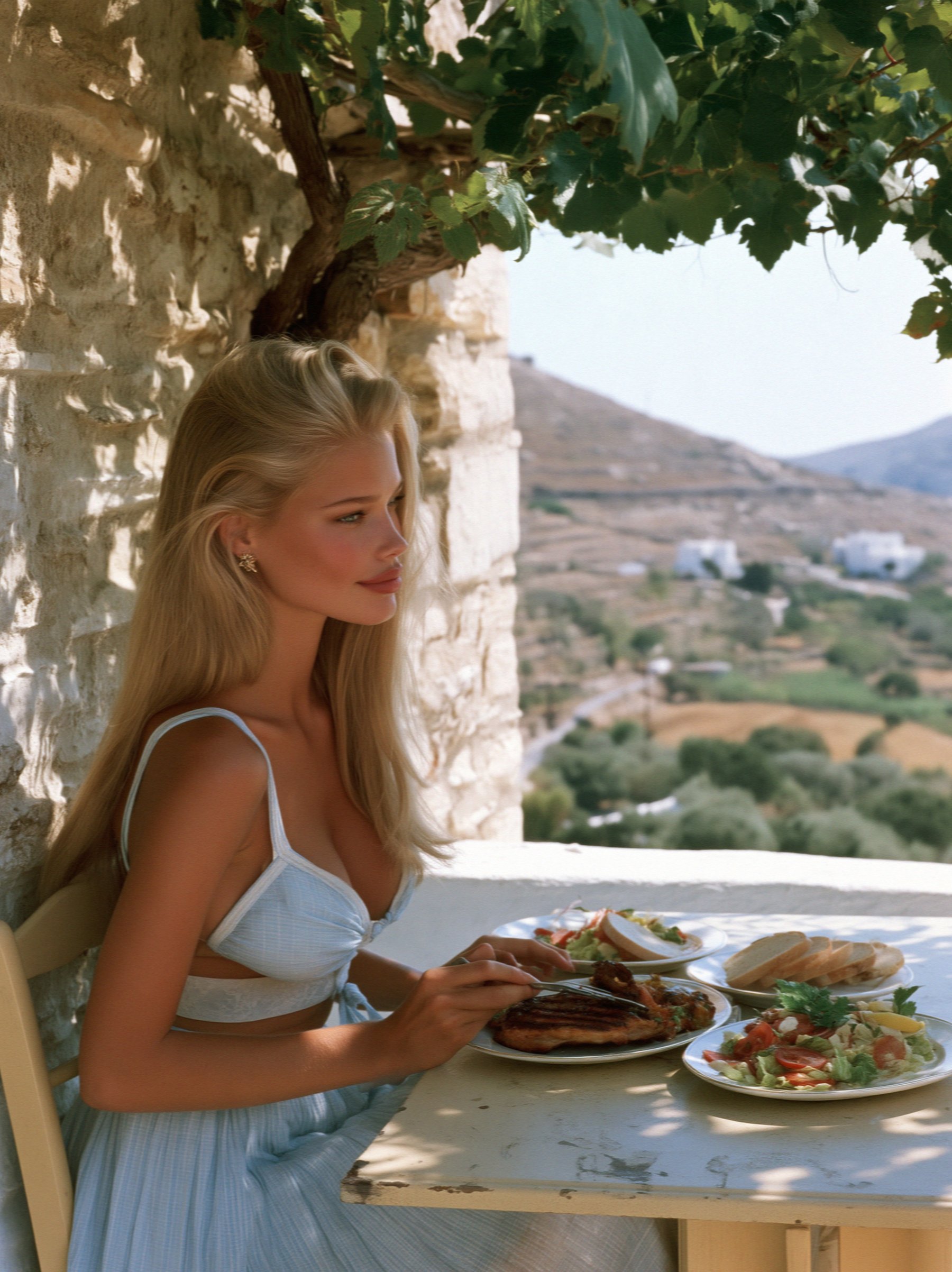
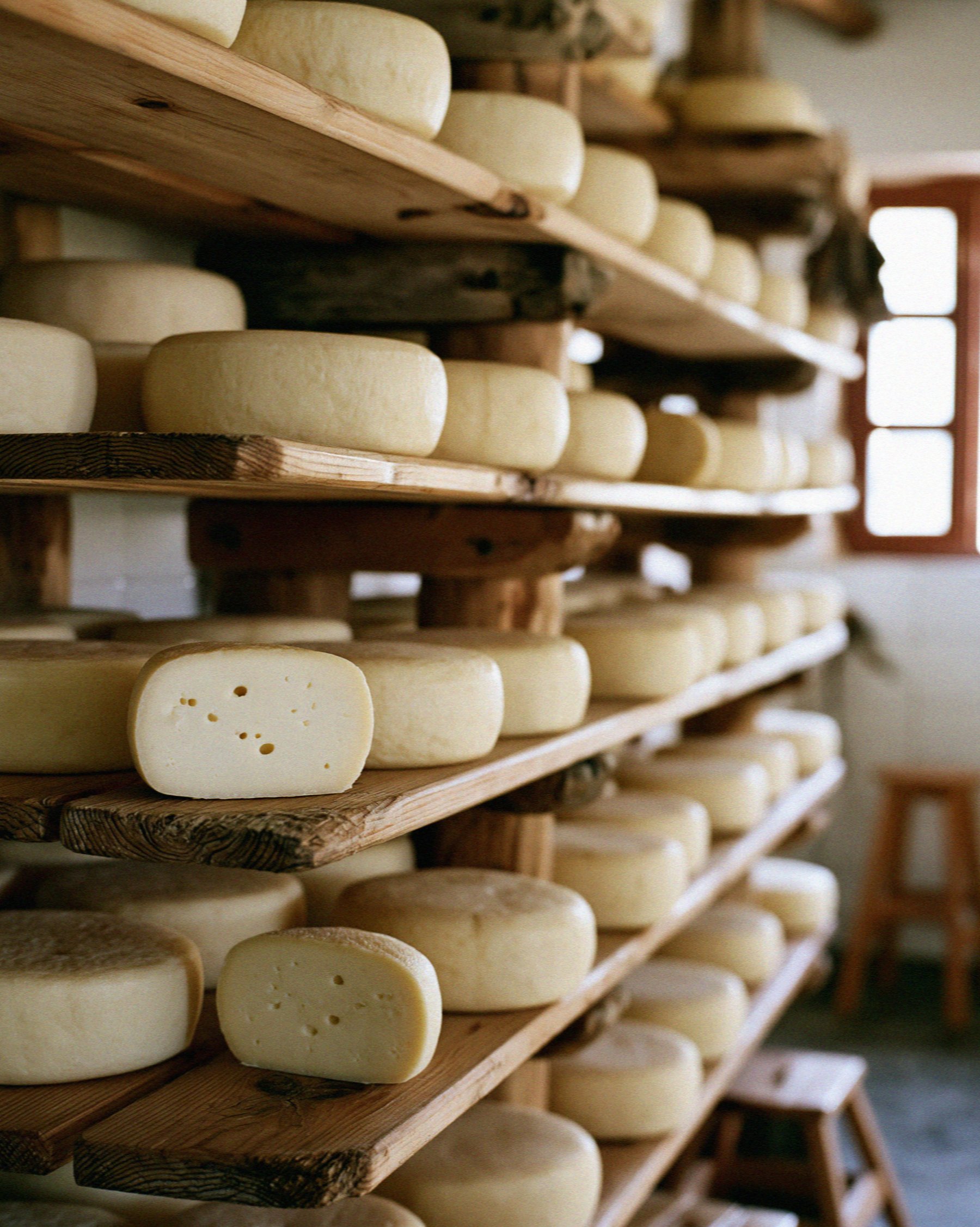
Start with the potatoes, which are famous across Greece and protected under their own name. They are simply fried and salted, and they are as good as the island insists they are. A stranger at the next table told me so on my first evening, and by lunch the next day I had to agree. Then the cheeses: graviera Naxou, a firm, sweet, mostly cow’s milk cheese with protected status; arseniko Naxou, sharp and salty, from sheep and goat milk, protected since 2020; and xynomyzithra, a fresh, sour white cheese.
Kitro Naxou, the island’s liqueur, comes in three styles. Green is the sweetest and lightest, clear sits in between, and yellow is the strongest. People will tell you firmly which one to drink. I was told the green, and preferred the yellow at the distillery in Halki, and in the end bought a bottle of the green to take away anyway.
In town, Metaxi Mas is popular and good value, Doukato has a leafy courtyard, and Oniro has a roof terrace under the Kastro. Inland from Kastraki, about twenty minutes from town, Axiotissa is famous across the island for its local meat. In the villages, look for O Yiannis in Halki, Platanos and Amorginos in Apeiranthos and Platsa in Koronos. On the beach, Paradise taverna at Agia Anna is an easy lunch. And on the way to an early ferry, the harbour bakery’s cheese pies will do very well.
What to order, where to go at every budget and how to book are in my guide to where to eat in Naxos and what to order.
Getting there and getting around
You can reach Naxos by ferry or by plane.
From Piraeus, the Blue Star conventional ferries take about five and a quarter to seven hours, usually calling at Paros first, with fares from roughly 45 to 55 euros depending on the date. The fast boats take about three and a quarter to four and a half hours, from about 62 euros. There are also sailings from Rafina and Lavrio in season, and in winter only a few boats a week. Naxos is well connected to its neighbours too: I came over from Mykonos in about forty minutes, which makes it an easy next stop after my guide to Mykonos. Flights from Athens take about 40 to 45 minutes, with two to four a day all year. The airport is about 4 km from town, and a taxi costs around 15 euros.
On the island, the KTEL buses leave from the port. The beach buses work their way south through Agios Prokopios, Agia Anna and Plaka, reaching Mikri Vigla in summer, for roughly 2 to 3 euros. Another climbs to the villages: Halki, Filoti and Apeiranthos. Buy tickets at the kiosk by the port, not on board, and check the time of the last bus back from the mountains before you go. For the far beaches, the north and a full day in the interior, a car is worth hiring; scooters and quads are common, but the mountain roads are steep and winding. Book a car ahead in August.
Ferries, flights, buses and car hire for both islands are in my guide to getting to Naxos and Paros, and between them.
A few days on Naxos
Three days is the minimum; five lets the island open up.
Give the first day to town: the Portara, the Kastro, the Old Market, a swim at Agios Georgios and dinner under the walls. The second goes to the mountain villages, with Halki, Drosiani, Apeiranthos and the kouros at Flerio. Spend the third on the west coast beaches, working south as far as you like. With a fourth, climb Zas in the morning and have a long lunch in Filoti afterwards. And with a fifth, take a boat, to Koufonisia, along the south coast or across to Paros.
I had about three days, which covered town, the mountain and the villages, with one swim. A fourth would have been for the beaches. The whole route, with costs and where to sleep for it, is in my Naxos itinerary.
Naxos or Paros, or both
The two islands sit side by side, less than an hour apart, and many people ask which to choose.
Naxos is bigger, wilder and more self-contained, with real mountains, a farming interior, long sandy beaches and very good food. It suits walkers, families, and anyone who wants to feel they could stay a month and not run out of roads. Paros is smaller, lower and softer, with prettier harbour towns, livelier evenings in Naoussa, and its own marble history in the quarries at Marathi. It suits people who want a little more polish and a little less driving.
My honest answer is both, if you have a week. Five days on Naxos and three on Paros, or the other way round, is about the right balance, and the ferry between them is so short and frequent that you lose almost nothing in moving. I took the big ferry across in about three quarters of an hour and wrote about the first afternoon in Ninety-Nine Doors. Everything on that island is in my complete guide to Paros.
Practical things to know
Money. Cards are widely accepted in town and at most hotels and restaurants. Carry some cash for bus tickets, village cafes and the smaller tavernas.
Opening days. The archaeological sites and museums close on Tuesdays, almost without exception, and the state sites close at 15:30 with last entry twenty minutes earlier. Plan your mountain day for any other day of the week.
Holidays. The state sites also close on 25 and 26 December, 1 January, 25 March and 1 and 2 May. Orthodox Easter, which falls on 2 May in 2027, is the biggest festival of the year, and 15 August is the busiest single day of the Greek summer.
The wind. Check the forecast the night before. A strong north wind means a south-coast or mountain day; a calm one means the west coast or a boat.
The climate fee. Hotels add Greece’s nightly per-room fee on top of the room rate: in summer roughly 2 euros at a simple place up to 15 euros at a five-star. It is a legal charge, not a hotel surcharge.
Dress. Cover shoulders and knees in churches, including Panagia Drosiani and the cathedral in the Kastro.
The season. Most beach hotels and many restaurants close from roughly November to April, and the ferries thin out. The town and the villages stay lived in all year.
What to pack
Walking shoes with a real sole, for Zas and the rough path to the upper kouros, and something lighter for the polished lanes of the Kastro, which are slippery when worn smooth. White tennis shoes, in my case, and sandals for the beach.
A hat, high-factor sun cream and a water bottle you can refill, because there is no shade on the mountain and not much on the beaches. A light jacket for the evenings, which are cool in the hills and breezy by the harbour in spring and autumn. Two swimsuits, because the west coast is hard to leave. And a hair tie, for the day the meltemi decides to arrive.
More images from Naxos








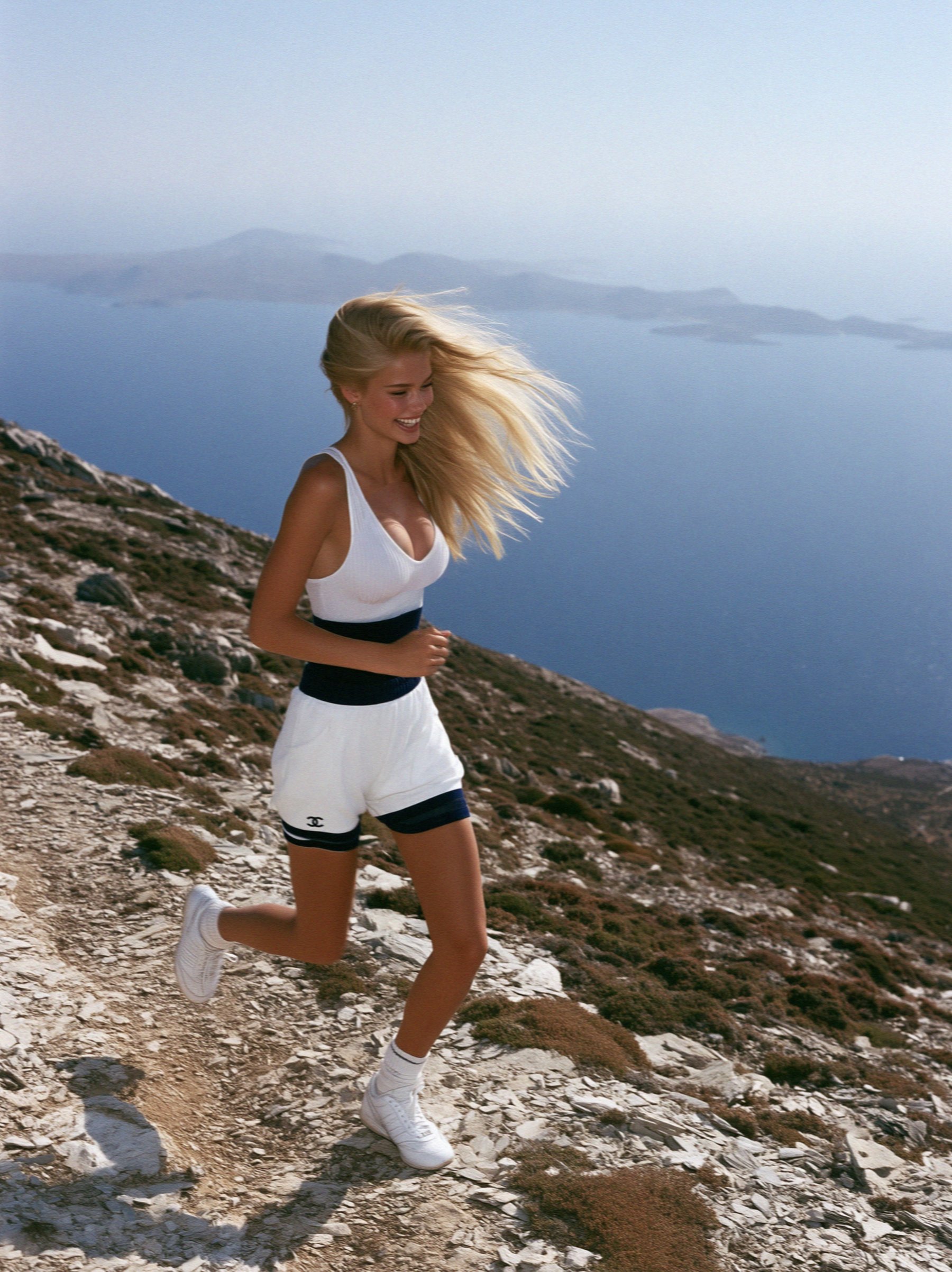
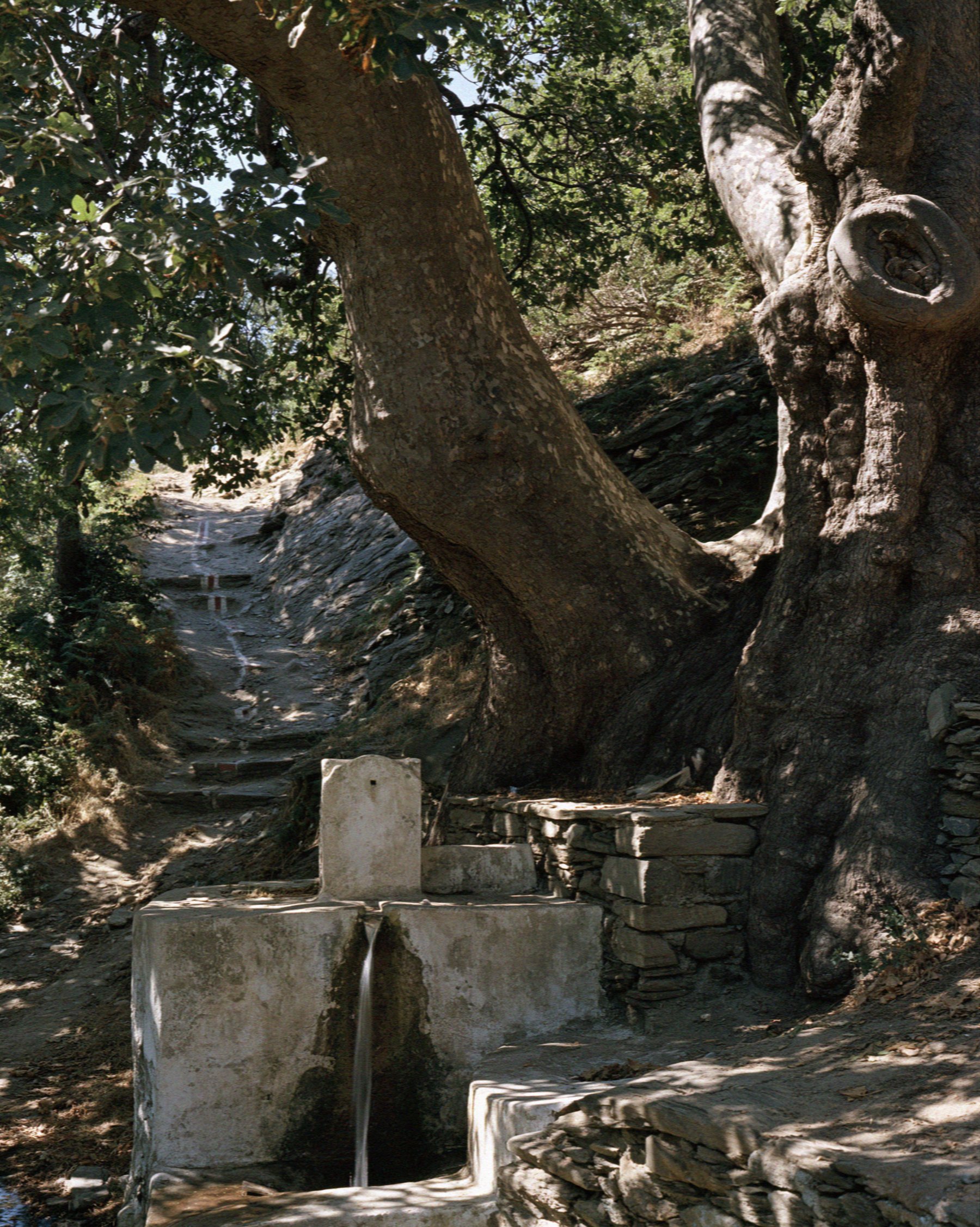


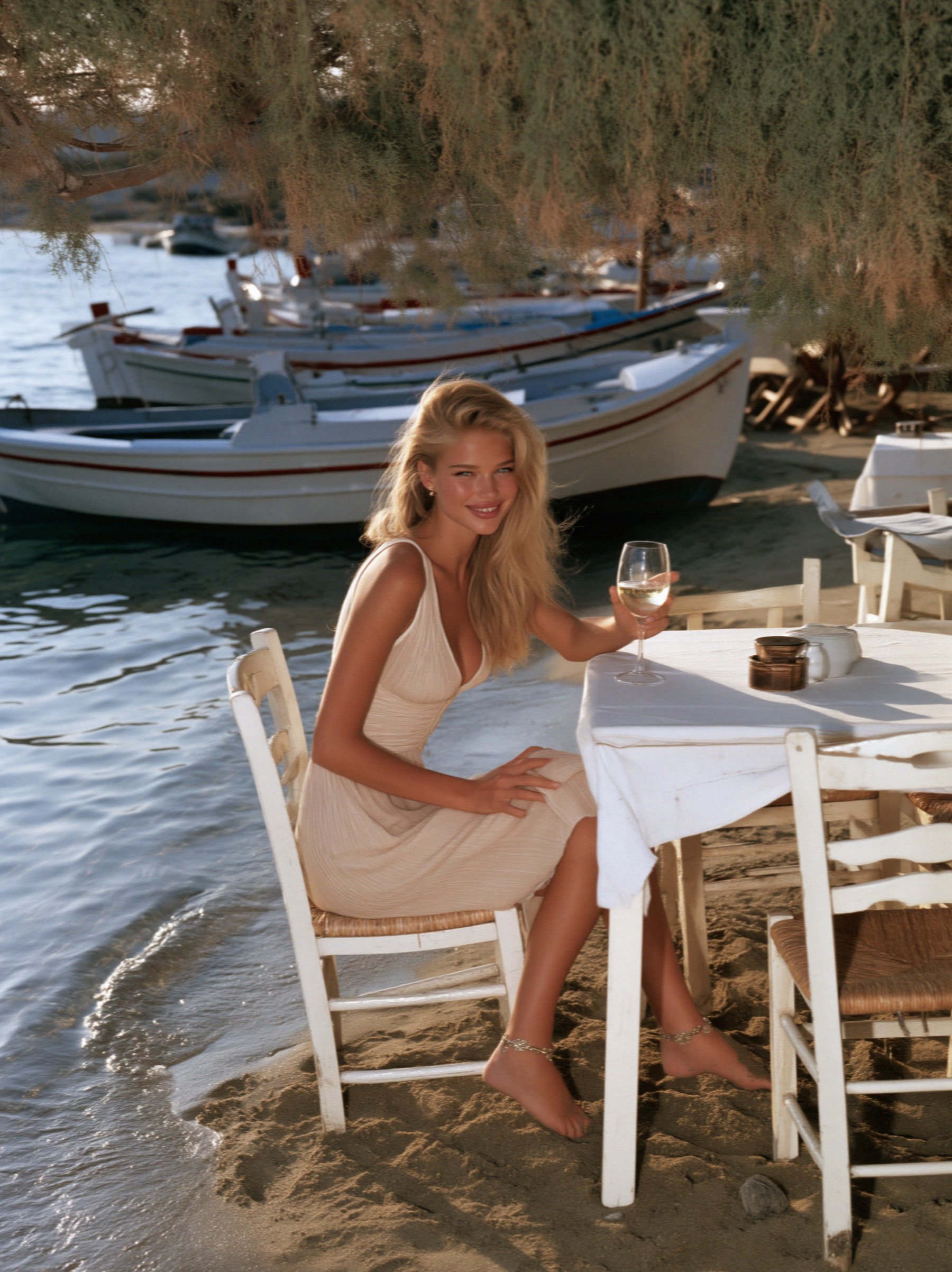


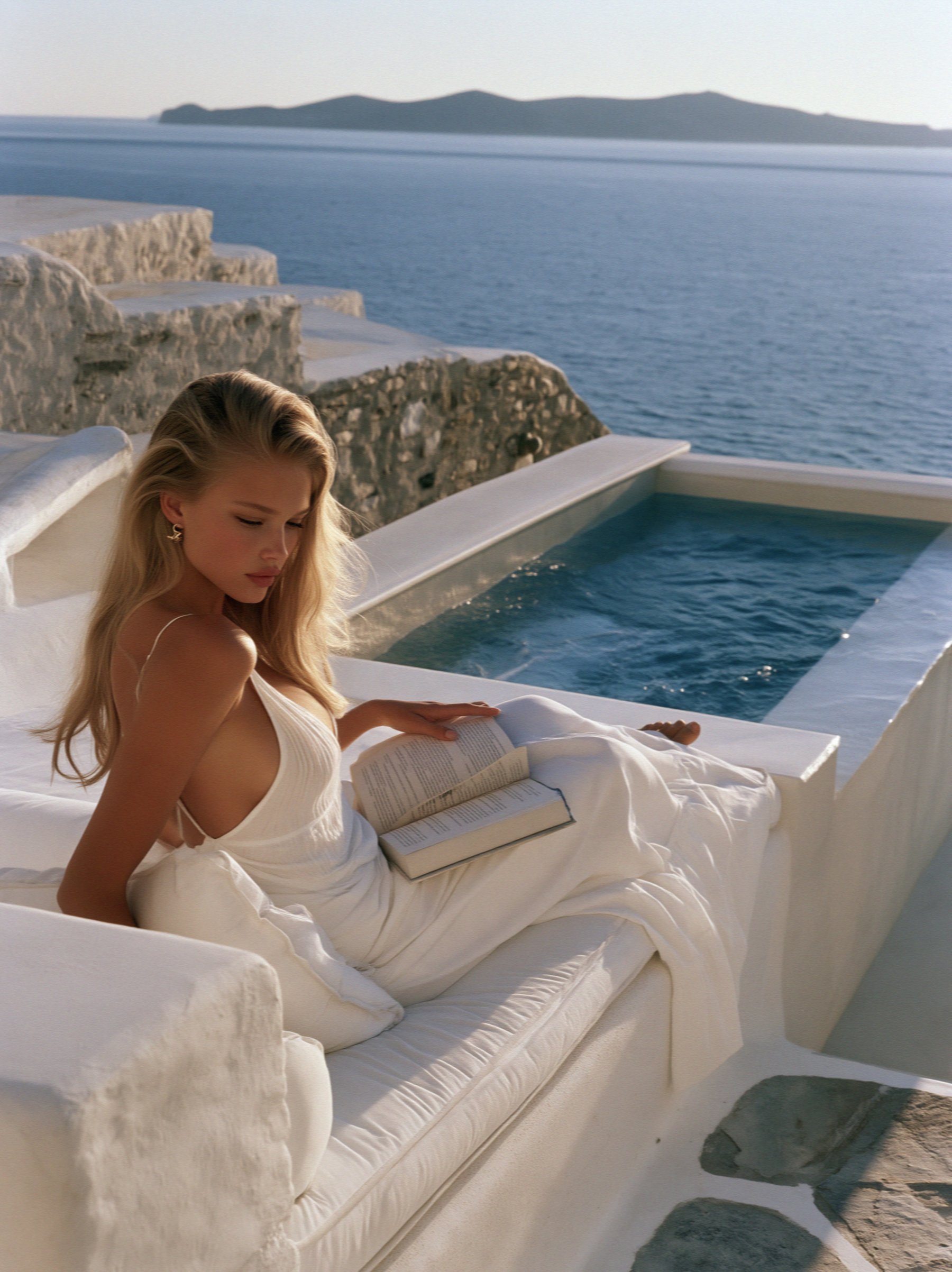



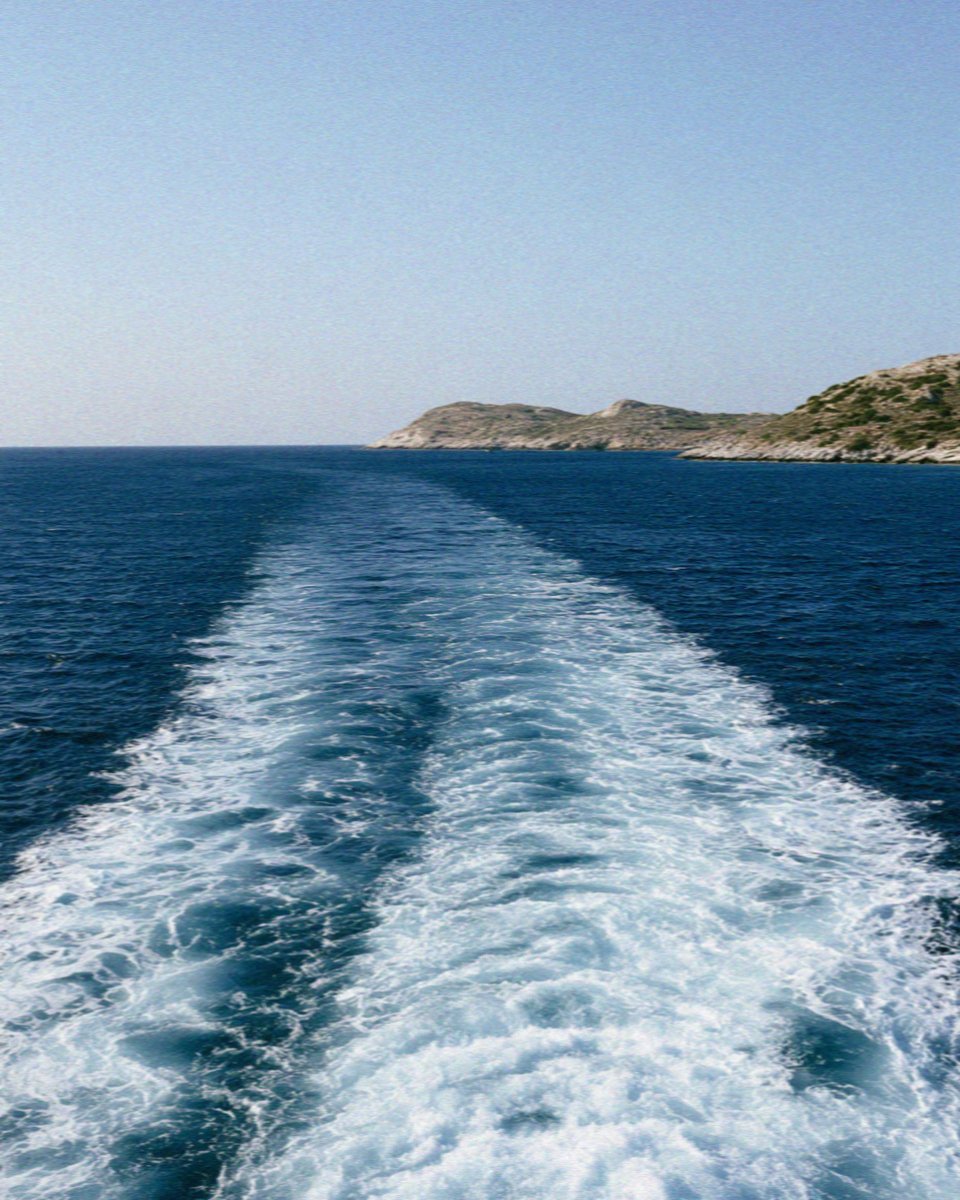

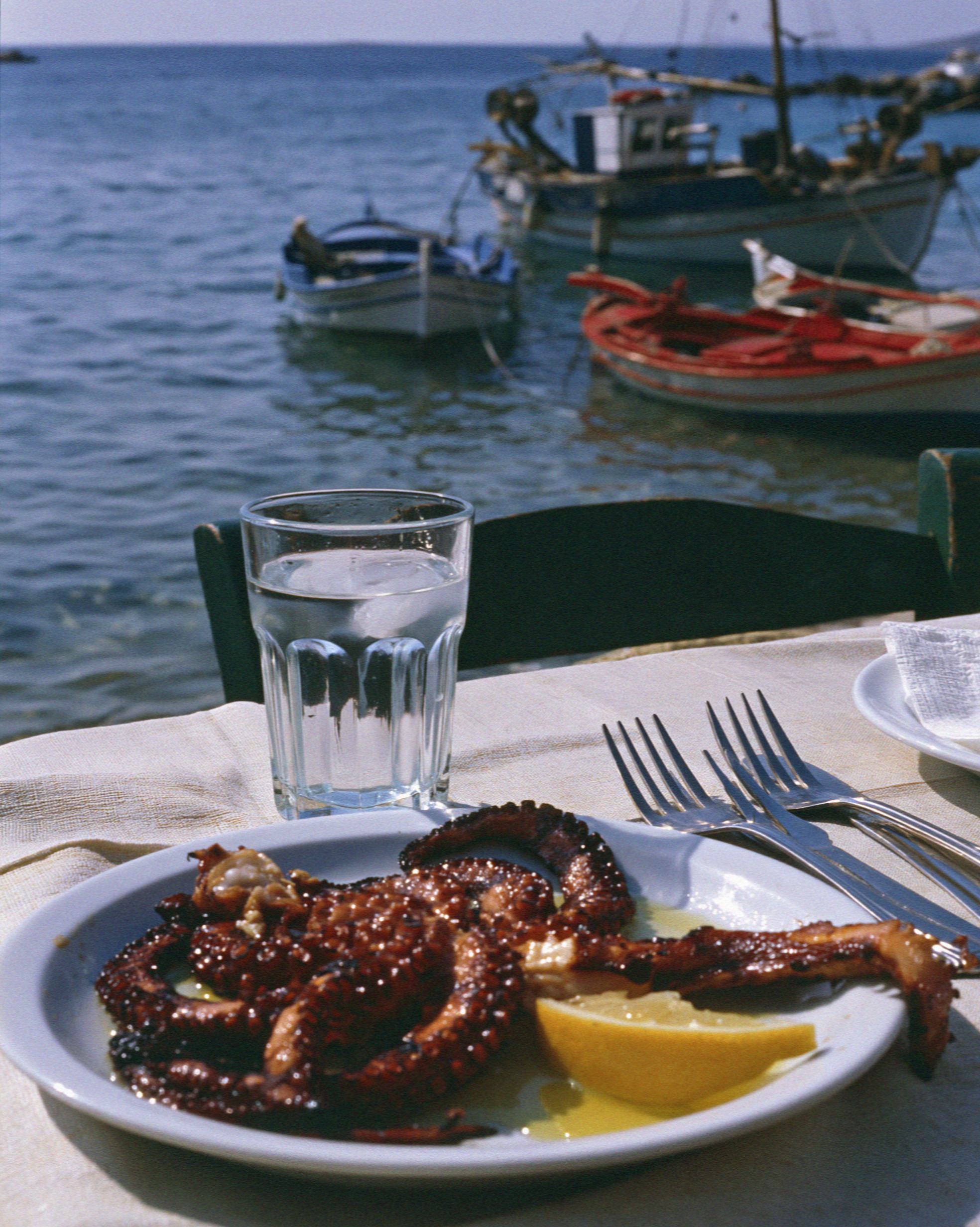


Your Naxos Guides
Everything here in detail, guide by guide.
- The Best Things to Do in Naxos
- Naxos Town: the Portara, the Kastro and the Old Market
- The Mountain Villages of Naxos: Halki, Filoti, Apeiranthos and the Kouroi
- Hiking Mount Zas on Naxos: Both Routes and the Cave of Zeus
- The Best Beaches in Naxos
- Where to Stay in Naxos: Town, Beach or Village
- Where to Eat in Naxos and What to Order
- The Best Day Trips and Boat Trips from Naxos
- A Naxos Itinerary: 3 to 5 Days
Naxos Travel Diaries
Frequently Asked Questions
How many days do you need on Naxos?
Three days covers Naxos Town, the mountain villages and a day on the west coast beaches. Five gives you time to climb Mount Zas and take a boat to Koufonisia or along the south coast.
What is the Portara on Naxos?
It is the marble doorway of a temple begun around 530 BC and never finished, standing on the islet of Palatia at the harbour mouth. It is joined to town by a causeway, free, always open and lit at night.
Do you need a car on Naxos?
No, if you are staying in town or on the west coast, where the buses do the job. For the mountain villages, the kouroi and the far beaches, a car for a day or two makes the island much easier. For the mountain villages, the kouroi and the far beaches, a car for a day or two makes the island much easier.
What are the best beaches on Naxos?
Agios Prokopios, Agia Anna and Plaka on the west coast, all long, sandy and shallow, with Mikri Vigla for kite and windsurf and Alyko for dunes and cedars. In a strong north wind, look for sheltered coves on the south and east coasts.
How hard is the Mount Zas hike?
From Aria spring above Filoti it is a steep climb of about 2.5 km to the 1,004-metre summit, roughly two and a half to three hours there and back. There is no shade, so start early and carry plenty of water.
Is the Archaeological Museum of Naxos open?
Only in part, while building works go on. A small temporary exhibition of Cycladic figurines and pottery runs in the former Ursuline convent nearby, free, 09:00 to 14:00, closed on Tuesdays.
How long is the ferry from Naxos to Paros?
Under an hour on the big ferry, usually 45 to 70 minutes, or about half an hour on a fast boat. In summer there are several crossings a day.
When is the best time to visit Naxos?
June and September, when the sea is warm and the island is open but not crowded. Early October is still warm enough to swim, and spring is best for walking.