Everyone sees the harbour first, and for good reason: a curve of tall, faded houses around still water, with a stone lighthouse at the end of a long arm of sea wall. What takes longer to notice is that the harbour is only the front room. Behind it, inside what is left of the Venetian walls, there are four or five distinct quarters, each with its own century, and the whole of it can be crossed on foot in about twenty minutes.
I came into Crete by ferry in October and spent my first afternoon here, and it was the lanes rather than the waterfront that told me what kind of town this is. This guide takes the old town piece by piece and then joins it up into one walk. For the rest of the island, from the gorges to the palaces, start with my complete guide to Crete.
How the old town fits together
Think of it as a rough square with the harbour along its northern edge. West of the harbour is Topanas, the old Venetian quarter of mansions, with the Firkas fortress on the point. Just inland from Topanas is Evraiki, the old Jewish quarter. In the middle, behind the harbour, rises Kastelli, the low hill where the first settlement stood and where the Venetians later built their administrative heart. East of that is Splantzia, the quarter that grew up under Ottoman rule, with its square and its plane tree. The covered market sits on the southern edge, where the walls used to run.
Cars barely belong in here: leave a hire car in one of the car parks on the edge and walk in.
The Venetian harbour
The Venetians held Crete from 1204 until the Ottomans took Chania in 1645, and the harbour is their shape: a half circle of houses three and four storeys high, painted in faded ochre, rose and cream, with cafés and tavernas spilling across the quay.
On the harbour front, unmistakable with its cluster of low domes, is the Mosque of the Janissaries (also called Küçük Hasan), built in the 17th century after the Ottoman conquest. It is now used for exhibitions.
A word on the restaurants directly on the water. Some are good, many lean on picture menus and a man at the door, and in almost all of them you are paying for the view. Have a drink there at sunset by all means; eat a lane or two back. My guide to where to eat in Chania names the places worth booking.
The lighthouse and the sea wall
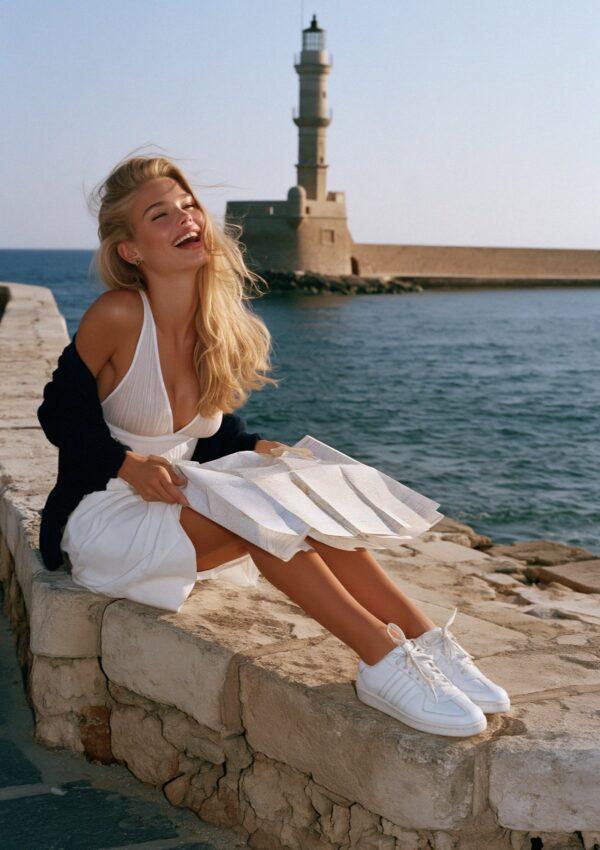
The lighthouse stands at the far end of the long breakwater that encloses the harbour. There has been a light here since the Venetians built one in the late 16th century. What you see now is largely a rebuild from the 19th century, made in the years when Egypt administered the island, which explains its silhouette: about 21 metres of pale stone on an octagonal base, tapering upward in a form that looks far more like a minaret than anything Venetian.
Go out in the early evening, when you get the whole harbour as one picture with the mountains behind it, which you cannot do from the quay. The wall is uneven and has no railing in places, so watch your step, especially with children.
At the opposite, western end of the harbour is the Firkas, the old Venetian sea fortress, which now holds the Maritime Museum of Crete. Opening hours change with the season, so check before you go.
The shipyards
Along the eastern side of the harbour stand the Neoria, the yards Venice built for building and repairing its galleys out of the water. There were originally seventeen vaulted bays. Seven still stand, a long row of tall stone arches under rounded roofs, and some of them are used for exhibitions and events. The largest building at the end, the Grand Arsenal, has been restored as the Centre for Mediterranean Architecture.
I walked them on that first afternoon, and the scale is the surprise: each bay was built to swallow a ship.

Topanas and the Venetian lanes
West of the harbour, Topanas is the prettiest part of town and also the most visited. Its lanes run uphill from the water between Venetian mansions with carved stone doorways, wooden shutters and flowering balconies, and many of those houses are now small hotels, which is why it is the obvious place to sleep. My guide to where to stay in Crete covers the old town hotels in detail.
The main lanes, Theotokopoulou and Zambeliou among them, fill with shops by mid-morning. Turn off them into the side streets that climb towards the old walls, ideally early or late; at noon in summer the narrow lanes trap the heat.
Splantzia
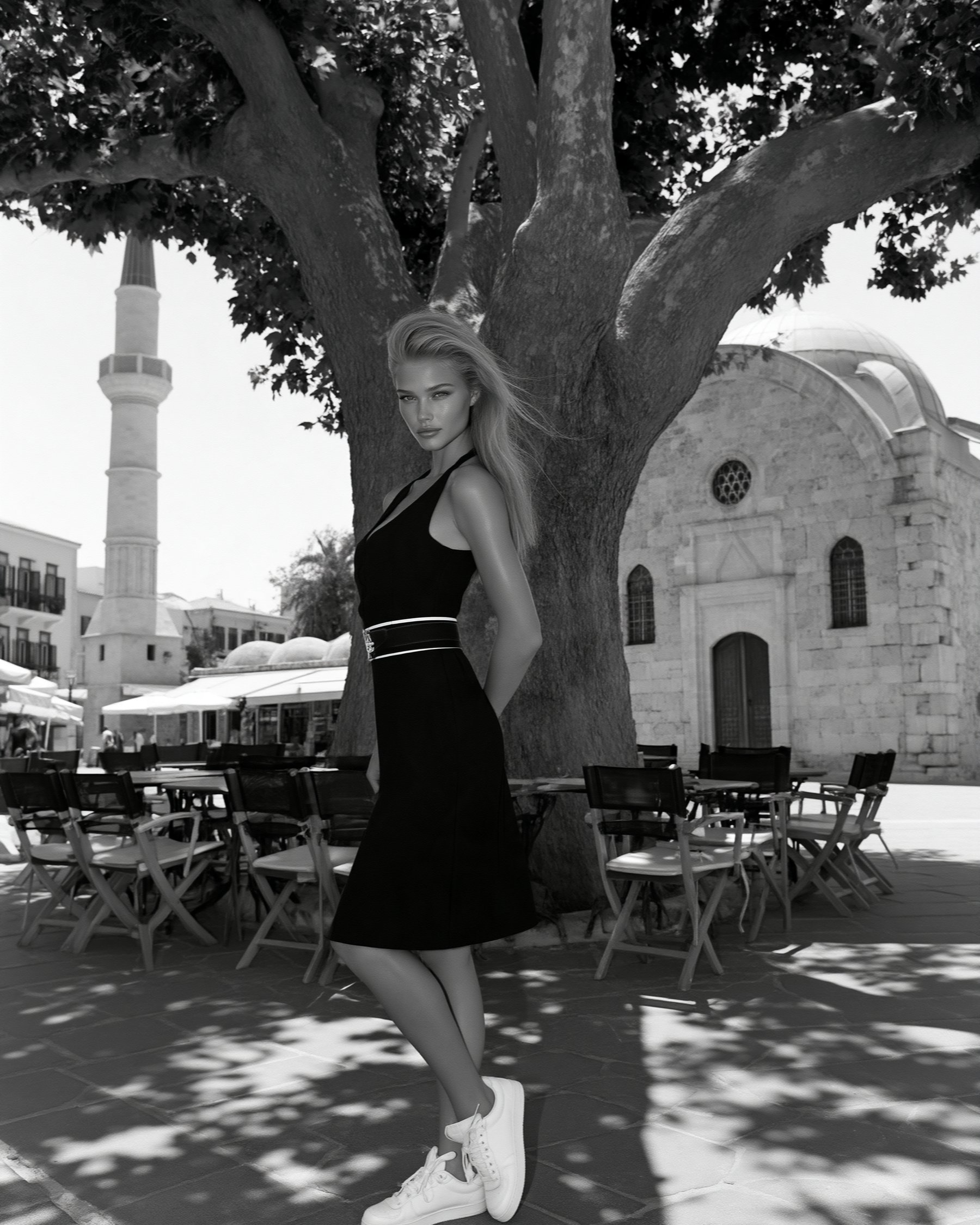
Splantzia, east of Kastelli, is where the town feels most lived in. Its centre is a small square under an enormous plane tree, with tables set out beneath it and a neighbourhood that treats the square as its sitting room.
On the square is the church of Agios Nikolaos, the best single building for understanding Chania. It began as a Venetian church, became a mosque under the Ottomans, and returned to being a church in 1918. It is one of very few churches anywhere with both a minaret and a bell tower, standing on either side of it as if neither had been told about the other.
The lanes around it are full of small workshops and neighbourhood tavernas. Come in the late afternoon.
The covered market and the knife makers
The Agora, the municipal market, is a large cross-shaped building with an entrance on each of its four sides. It was built between 1911 and 1913, modelled on the market in Marseille, and a long stretch of the Venetian walls was pulled down to make room for it. It closed in late 2021 for a lengthy restoration, and after years of work it is reopening in stages. The dates have slipped more than once, so check what is open when you arrive rather than planning a morning around it.
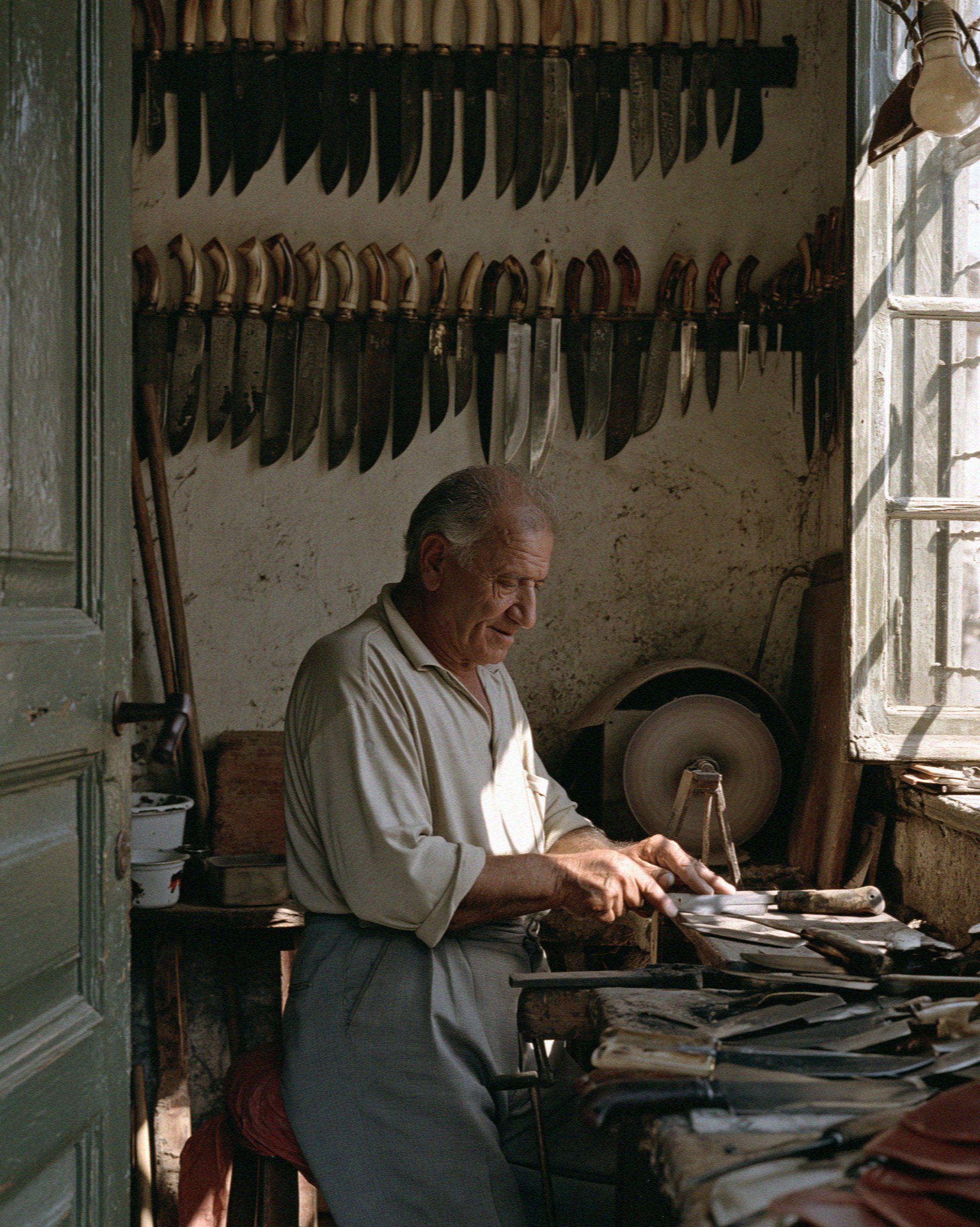
Behind the market, Sifaka street is the Machairadika, the knife makers’ street. Here Cretan knives are still made by hand in small workshops, with blades of steel and handles of horn, and some still carry a line of verse engraved on the blade. The cheap ones in the harbour shops are not the same thing, so ask where it was made. Nearby Skridlof street is the leather street, lined with sandals, belts and bags.
The walls and the old Jewish quarter
Much of the Venetian land wall has gone, but substantial pieces survive. On the western side the Schiavo bastion still stands high above the lanes, and on the east the old moat and the bastions around it give you a sense of how heavily the town was defended.
Inside the western walls, around Kondylaki street, is Evraiki, the old Jewish quarter. The Etz Hayyim synagogue here was restored and reopened in 1999 after decades of neglect, and it is a quiet, moving place with a small courtyard garden. Opening hours vary, so check before you go, and dress modestly.
Koum Kapi and the Tabakaria
East of the walls, the seafront at Koum Kapi is where Chania goes for coffee and an evening drink, with a row of cafés facing open sea rather than the harbour. It is cheaper than the waterfront and full of families on a warm evening.
Keep walking east along the water and you come to the Tabakaria, the old stone tanneries at Halepa, built right on the rocks so the hides could be washed in the sea. Some are roofless and abandoned, others now house bars and fish restaurants, and the mix of ruin and life is exactly the point.
Halepa, above them, was the 19th-century consular quarter, and the new Archaeological Museum of Chania opened here in April 2022, at 15 Skra street, about half an hour’s walk along the seafront from the harbour. Summer hours run from around 08:00 to 20:00, shorter in winter, and it is closed on Tuesdays; check before you go.
A walk that joins it all
Start early at the market, then the knife makers’ street. Cut north-east into Splantzia for coffee under the plane tree and a look at Agios Nikolaos. Drop down to the eastern harbour and walk the shipyards, then follow the quay round past the Mosque of the Janissaries.
At the western end, go up into Topanas, finish in the old Jewish quarter around Kondylaki street, have lunch, and rest through the heat.
In the early evening walk out to the lighthouse, then come back for dinner, and finish with a late drink at Koum Kapi.
One more thing for a hot afternoon: the town beach at Nea Chora is a short walk west along the front. I swam there in mid-October with the sea at about 23°C, and wrote about that first day in The Island That Keeps Going. For other beaches near town and further out, see my guide to the best beaches in Crete.
Frequently Asked Questions
How long do you need to see Chania old town?
One full day covers the harbour, the lighthouse, the shipyards, Topanas and Splantzia at an easy pace. Two days lets you add the Archaeological Museum in Halepa, the Tabakaria and a swim at Nea Chora without rushing.
Can you walk out to the Chania lighthouse?
Yes. The breakwater that leads to it starts on the eastern side of the harbour, past the shipyards. It is uneven, with no railing in places, but easy.
Is the Chania covered market open?
It closed in late 2021 for restoration and is reopening in stages after years of work. Check before you plan around it.
Where should you park to visit Chania old town?
Outside the walls. The old town lanes are narrow and largely pedestrian, and parking inside is very hard to find. Use one of the car parks on the edge of the old town and walk in.
What is the best area of Chania old town to stay in?
Topanas, the Venetian quarter west of the harbour, has the most character and many small hotels in old mansions. Splantzia is quieter and more local, and still a few minutes from the water.
Read also: Where to Eat in Chania and What to Order in Crete | Where to Stay in Crete: Chania, Rethymno, Heraklion or Elounda | Victoria’s Complete Guide to Crete