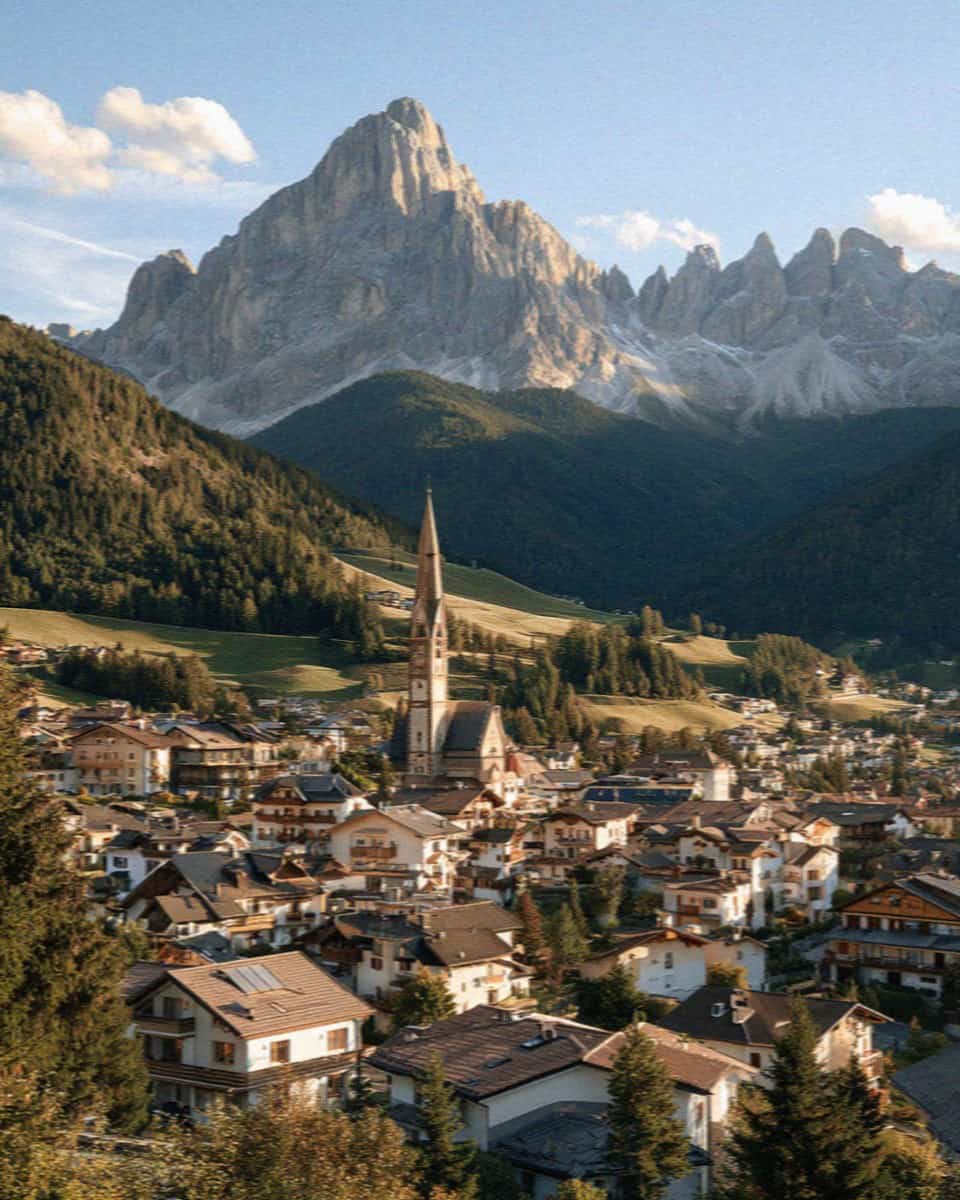
There is a particular kind of arrival that tells you a valley is going to be kind to you. You come up out of the Isarco gorge, the road tips over a lip near Ponte Gardena, and suddenly the world opens into meadow and spruce and, ahead, the pale sawtooth of the Odle. Val Gardena does this to everyone. It is three villages strung along one green valley, ringed by some of the most theatrical rock in the Alps, and it is the place I send people who have never seen the Dolomites and are quietly terrified of getting it wrong. You will not get it wrong here. That is rather the point of the whole valley.
What to book before you come
Val Gardena is a valley you stay in rather than visit, and staying here means the lifts and the trails, both of which you buy on the day at the bottom station. There is genuinely very little to book in advance, which I would rather say than pretend otherwise. Three things are exceptions.
- Lago di Braies, as a day tour. Rated 4.9. Braies is ninety minutes away over passes and has a summer access permit system that turns cars around at a barrier. Letting somebody else solve that is the whole value.
- An e-bike day up towards Seceda. Seceda is the ridge everybody photographs and the climb to it is brutal on a normal bicycle. On an e-bike it is a pleasant morning.
- The alpenglow sunset hike, with an aperitif. Enrosadira is the local word for the twenty minutes when these particular rocks turn pink, and it is not marketing. Being on a ridge for it is worth arranging.
Every trail in the valley is free and there are hundreds of kilometres of them. The lifts are not, and you pay at the bottom on the day.
The three villages, and the language nobody warns you about
Val Gardena is not a town but a trio. Ortisei, which you will also see written as St Ulrich and, in the local tongue, Urtijëi, is the handsome one: a pedestrianised centre of painted facades, a proper museum, more good coffee than a valley this size has any right to. Santa Cristina sits in the middle, smaller and calmer, the village I choose when I want the quiet. Selva, or Wolkenstein, is highest and most alpine, pressed right up against the Sella massif and the ski circuit that made the valley famous.
The three names in three languages are your first clue that something unusual is going on. This is Ladin country. Ladin is a Rhaeto-Romance language, older than either Italian or German and spoken here as a living everyday thing, on shop signs, in schools, over the counter at the bakery. You do not need a word of it, and English and German and Italian will carry you everywhere, but it lends the valley a quiet dignity that I find rather moving. These people were here, speaking this, long before the borders shifted around them.
Woodcarving grew out of the same deep roots. Through the long shut-in winters the Gardena families carved, and by the eighteenth century their saints and cribs and toys were being sold across Europe from Lisbon to Moscow. The tradition is still alive in Ortisei, where you will pass workshop windows full of half-finished angels, and it is beautifully told in the Museum Gherdëina in the centre of town. Give it an hour on a wet afternoon. It reframes everything you then see in the shop windows.
Plan Your Visit to the Dolomites
A few things I booked and loved. These help support the blog, at no cost to you.
- Where I stayed: search Dolomites hotels
- Rent a car to explore the area
- Stay connected: get a travel eSIM
This section contains affiliate links. If you book through them I may earn a small commission, at no extra cost to you.
Getting there
The valley is easier to reach than its remoteness suggests. Fly or take the train to Bolzano, which is the natural gateway, and from there Ortisei is roughly an hour by road. If you would rather not drive, the SAD public buses run up from Bolzano via Ponte Gardena, climbing the valley through all three villages. It is a handsome ride and it deposits you in the centre of things without a hire car to garage. That said, if your plan is early starts at far trailheads, a car earns its keep. I have done the valley both ways and been happy each time. For the wider picture of moving around the region, my complete guide to the Dolomites sets out the routes in full.
The lifts, and what each one gives you
Half the pleasure of Val Gardena is that the great sights are reached by cable car rather than by a punishing climb. Four lifts matter, and each opens a different world.
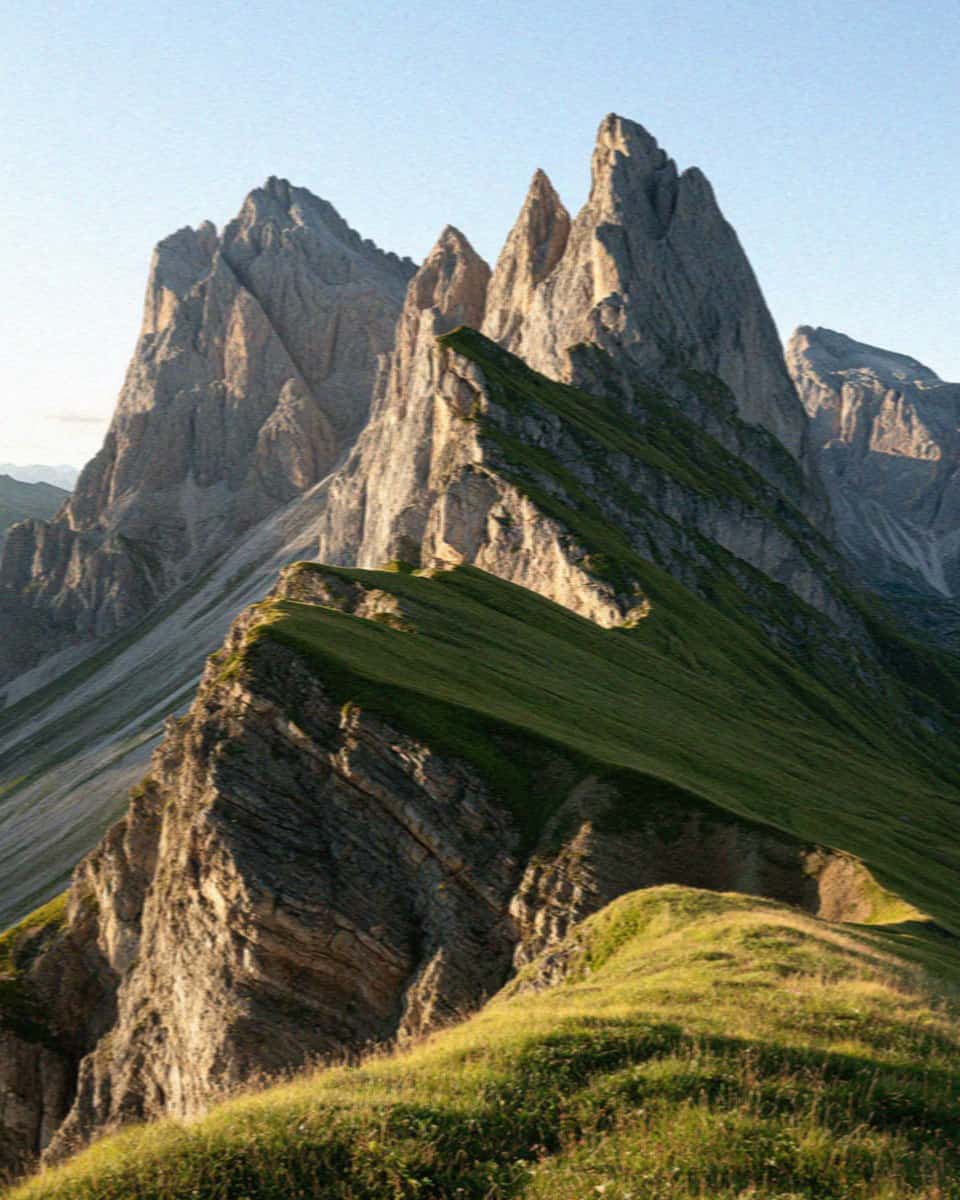
Seceda is the one on the postcards, and rightly. From Ortisei you ride a gondola to Furnes and then a cable car to the top, stepping out onto a tilted green ridge that drops away in one clean sweep to the jagged Odle. It is, quite simply, one of the finest viewpoints in the Alps, and you barely have to walk for it: about ten minutes uphill from the top station brings you to the famous edge. Be warned that access has changed. For summer 2026 the Ortisei-Furnes-Seceda cableway requires pre-booked timed tickets, released in April in half-hourly slots, and a return adult ticket now costs around €74, a steep jump from previous years. There is also a small turnstile charge at the ridge itself. Book ahead, go early, and treat the price as the cost of skipping the disappointment of arriving to a sold-out valley station.
The Alpe di Siusi is reached most elegantly from Ortisei by the Mont Sëuc cable car, which lifts you out of town straight onto Europe’s largest high alpine meadow. This is the gentle counterpoint to Seceda’s drama: rolling pasture, wooden hayhuts, the Sassolungo floating above it all. If you drive rather than ride the cable car, note the meadow’s long-standing traffic rules. Cars are banned on the plateau road through the middle of the day, roughly nine until five, and parking at the edge runs to about €30 for the day. The cable car sidesteps all of that, which is why I use it.
Col Raiser rises from Santa Cristina, and it is my quiet favourite. It lands you in gentle high meadow beneath the Odle from the other side, and from here you can walk the balcony path around to Seceda without the crowds who came straight up from Ortisei. If you want one uncomplicated day of pure Dolomite beauty, this is it.
Selva’s lift is Dantercepies, and it is the local gateway to the Sellaronda, the celebrated circuit of the Sella massif that skiers loop in winter and cyclists tackle in summer. You do not need to ride the whole thing to feel its pull, but standing at the top of Dantercepies with the great passes laid out around you, you understand why Selva keeps people coming back.
What I would actually do
If you gave me three clear days, here is how I would spend them.
I would give the first to Seceda, booked for a mid-morning slot, with a slow lunch at a rifugio on the ridge and the whole afternoon to sit and stare. There is no better introduction to the scale of this landscape.
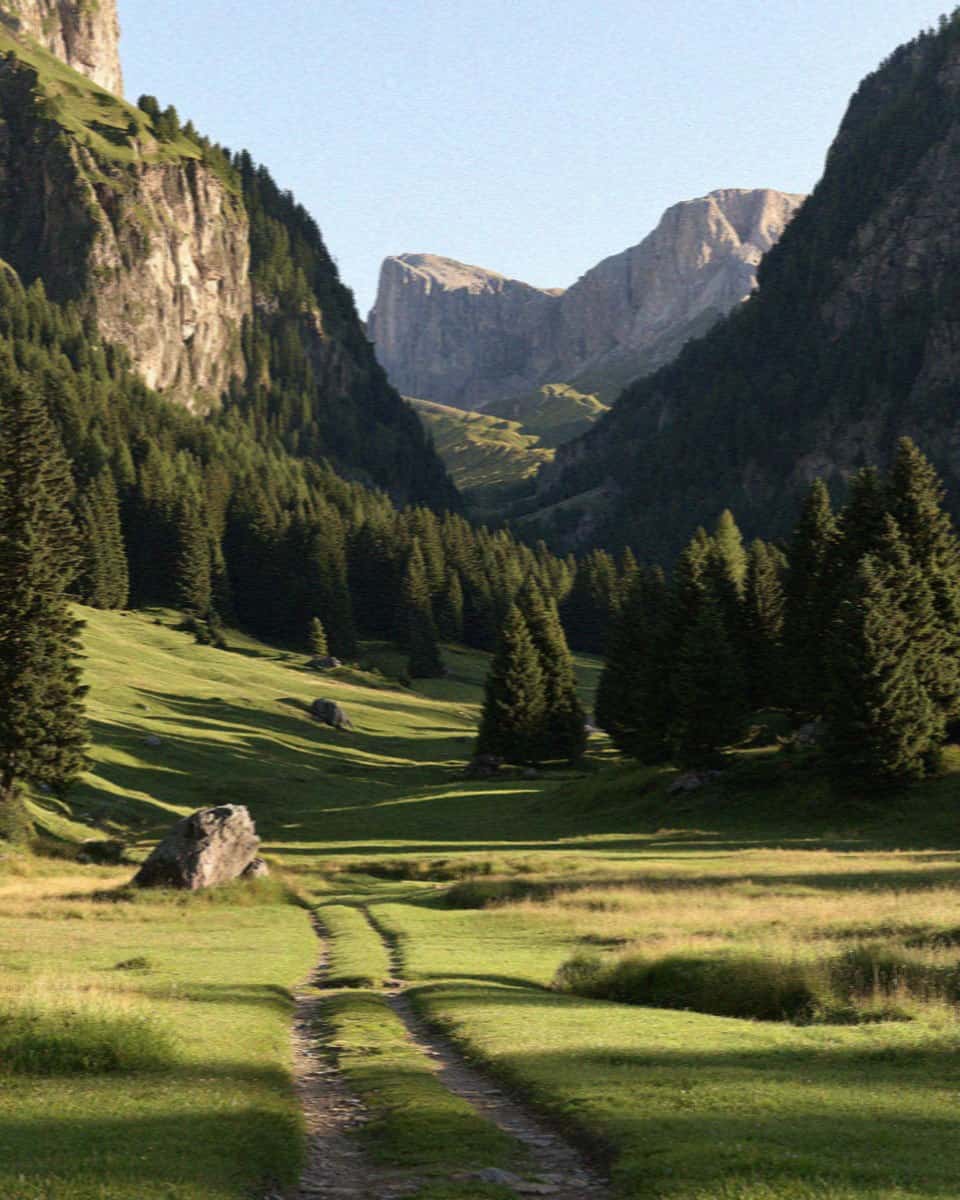
The second I would keep gentle. The Vallunga walk from Selva is the loveliest easy outing in the valley, a broad flat-bottomed glacial valley that you stroll straight into on a good path, walls of pale rock rising on either side, the going almost level. Families do it, grandparents do it, and it is no less beautiful for that. Turn round whenever you like. In the afternoon I would wander Ortisei’s pedestrian centre, look in the carvers’ windows, and spend an hour in the Museum Gherdëina.
The third day I would spend on the Alpe di Siusi, up the Mont Sëuc cable car, following the soft meadow paths with the Sassolungo for company and a hut lunch in the middle. For those who want more strenuous days and a taste of the cabled walkways, my guide to the best hikes and via ferrata points the way up.
Where to stay across the three villages
The valley suits every budget, and where you sleep shapes your trip. Ortisei is the liveliest and most convenient, walkable in the evening and close to the Seceda and Mont Sëuc stations; expect mid-range guesthouses from roughly €120 to €200 a night in summer, with polished four-star houses and a scattering of five-star spa hotels climbing well beyond €350. Santa Cristina is the value pick and the calm one, with comfortable three-star and B&B rooms often in the €90 to €160 band. Selva is the skier’s choice and the most alpine in feel, its hotels priced much like Ortisei’s, a little dearer in the winter high season. Book early for July, August and the ski weeks. For a fuller comparison across the whole region, see my notes on where to stay in the Dolomites.
Where to eat
Eat Ladin at least once. The valley’s kitchens do the South Tyrolean canon beautifully: barley soup, canederli dumplings, cheese-stuffed schlutzkrapfen, and the game and polenta that suit the mountain air. Ortisei has the widest choice, from unfussy pizzerias to serious hotel dining rooms, and it is where I go for a proper dinner. Up the mountains, the rifugi serve the food I remember longest, a plate of dumplings and a glass of local wine with a thousand metres of rock at your elbow. Book the smart places in high season and simply turn up at the huts.
The best time to come
Val Gardena keeps two seasons and does both superbly. Summer, from late June to September, is for walking, with the lifts running, the meadows in flower and long light evenings. Winter turns the valley into one of the great ski destinations of the Alps, wired straight into the Sellaronda and the vast Dolomiti Superski network. The shoulder weeks of June and late September are my own preference, quieter and cheaper with the mountains at their clearest. I have set out the trade-offs in detail in my guide to the best time to visit.
That range is exactly why I keep sending first-timers here. In one gentle valley you have a genuine cultural town, four lifts reaching four different worlds, walks for every pair of legs, and beds and dinners at every price. Come to Val Gardena and let it teach you the Dolomites slowly. Everything else in the range will make more sense afterwards.
Frequently asked questions
Do I need a car in Val Gardena?
Not necessarily. The SAD bus from Bolzano via Ponte Gardena links all three villages, and once you are in the valley the local ski and hiking buses plus the cable cars cover most of what you will want to see. A car helps only if you plan early starts at trailheads outside the valley.
How far ahead should I book Seceda for summer 2026?
As soon as you can. Timed tickets are released in April in half-hourly slots with limited capacity, and popular mid-morning slots go quickly. A return adult ticket is around €74. Book online, aim early, and you will avoid a wasted trip to a sold-out valley station.
Which of the three villages should I base myself in?
Ortisei for convenience, nightlife and the museum; Santa Cristina for quiet and better value; Selva for skiing and the most alpine setting. For a first visit I would choose Ortisei, since everything is walkable and both the Seceda and Alpe di Siusi lifts are close at hand.